23 Paper Plate Crafts for Kids That Are Easy and Fun
Paper plate crafts for kids are a wonderful way to turn simple household supplies into colorful animals, playful characters, seasonal decorations, and imaginative works of art. With inexpensive paper plates, washable paint, construction paper, glue, and a few basic craft supplies, children can enjoy creative projects without complicated preparation.
These easy paper plate crafts are suitable for a variety of ages, from toddlers exploring colors and textures to preschoolers practicing fine motor skills and older children experimenting with more detailed designs. Some projects involve simple painting and sticking, while others introduce cutting, folding, layering, and imaginative storytelling.
Whether you’re planning a rainy-day activity, a classroom art session, a playdate, or a quiet afternoon at home, these 23 ideas offer plenty of inspiration. Choose projects that match your child’s abilities, prepare the materials in advance, and let their creativity guide the finished design.
1. Colorful Paper Plate Lions
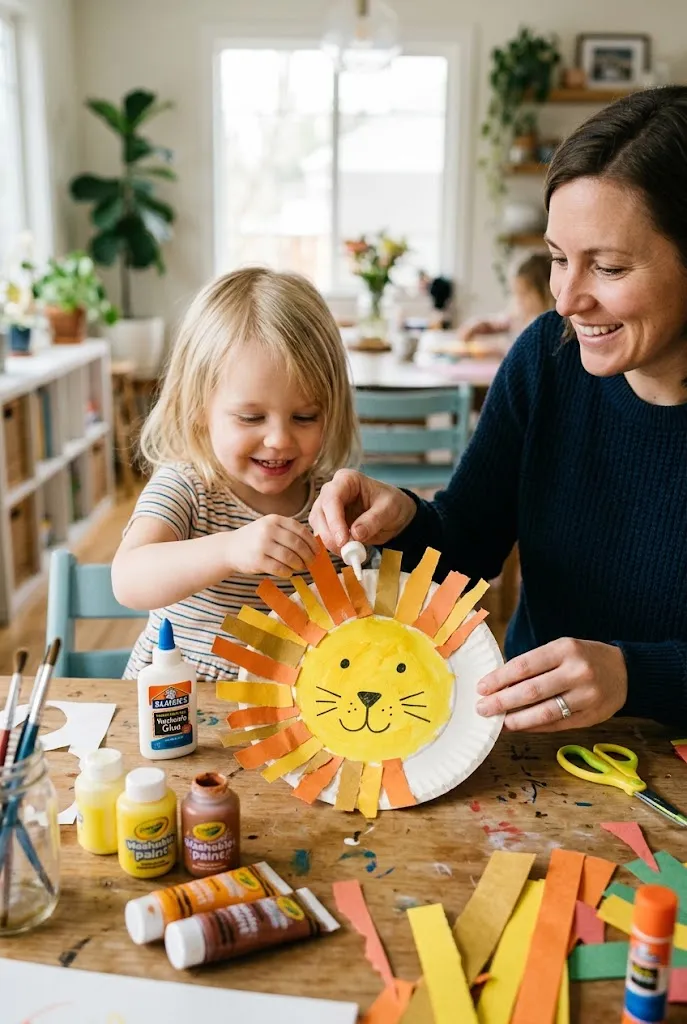
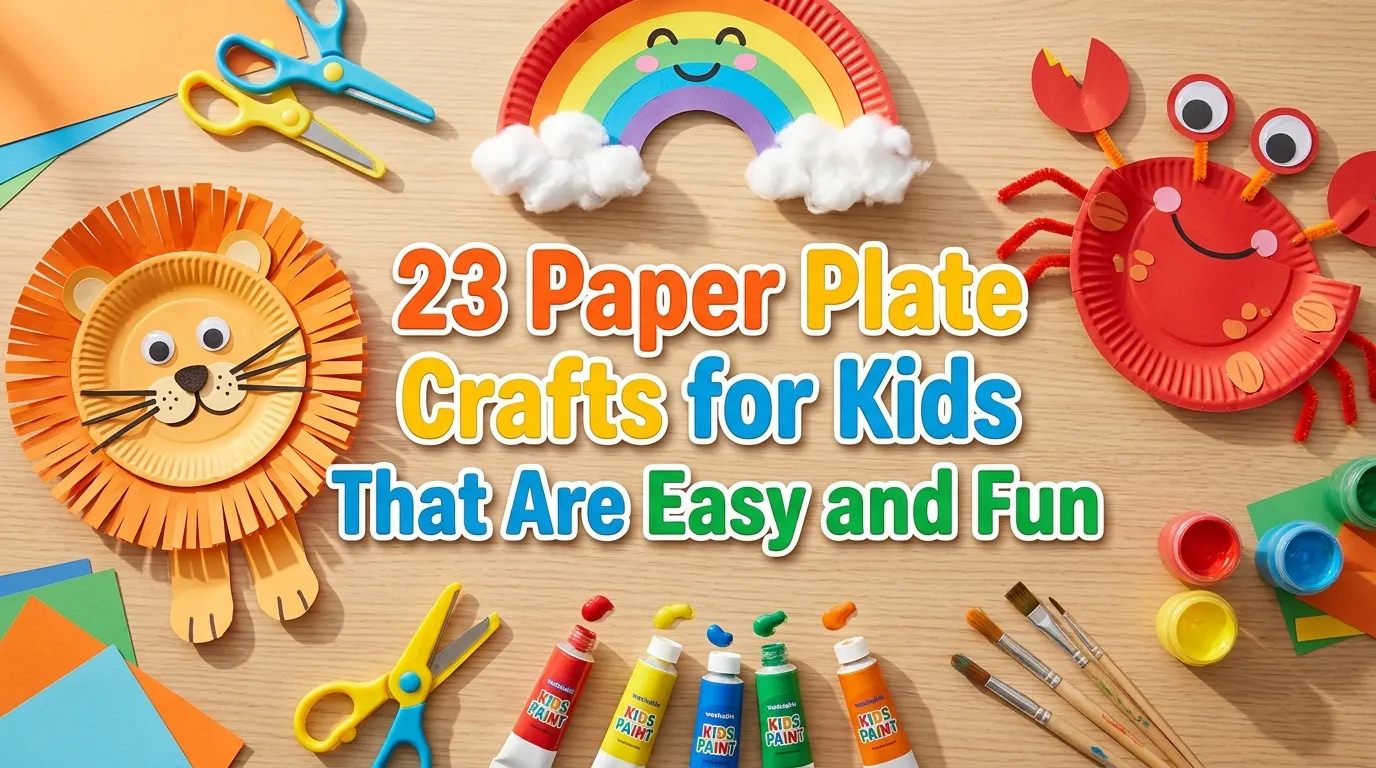
A paper plate lion is a cheerful animal craft that lets children experiment with color, texture, and simple cutting techniques. The round plate becomes the lion’s face, while strips of yellow, orange, and golden-brown paper create a full mane around the edge.
Start by painting the plate a warm yellow or using a yellow paper circle as the face. Once it dries, attach short paper strips around the perimeter. Children can draw a friendly nose, whiskers, and a smiling mouth, then add eyes to complete their lion.
Materials to gather:
- White paper plate
- Yellow and orange construction paper
- Washable paint or crayons
- Child-safe scissors and glue
- Markers for facial details
Quick Tip: Vary the lengths and shades of the mane strips to make each lion look different. Adults should handle any cutting that is beyond a child’s ability.
2. Paper Plate Rainbow Craft
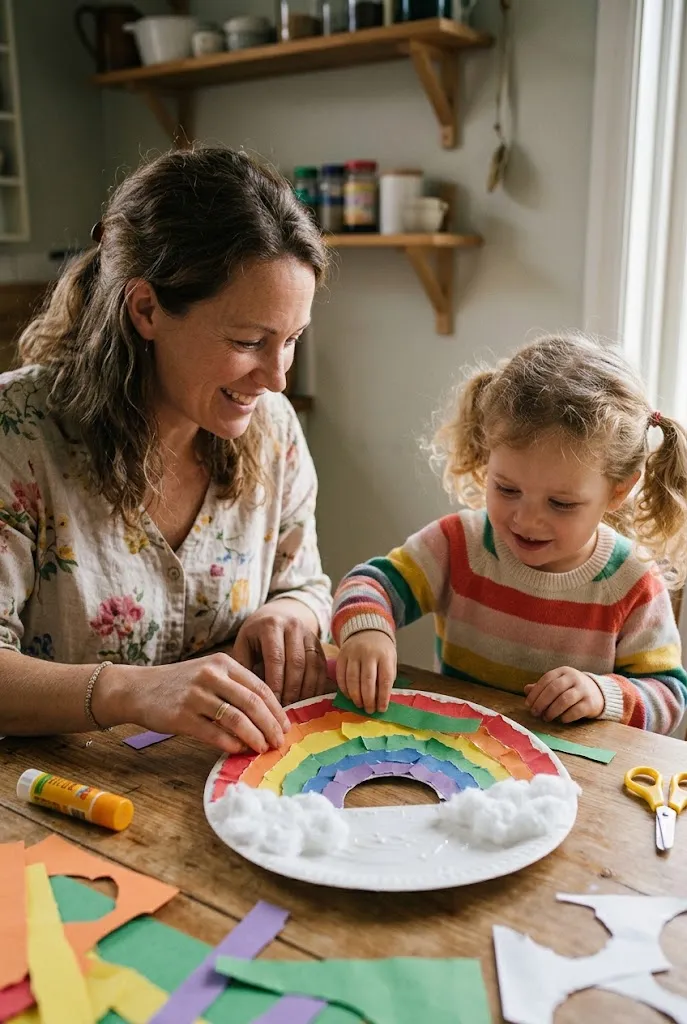
Bring a little sunshine indoors with a paper plate rainbow. This bright project is especially useful for introducing colors and practicing simple patterns with preschoolers.
Cut a paper plate in half and let children paint or cover it with rainbow-colored strips. Arrange the colors in sequence, using red, Paper Plate Crafts orange, yellow, green, blue, and purple. Add cotton-ball clouds at both ends for a soft, fluffy finish.
For younger children, prepare the paper strips beforehand and let them choose where each color belongs. Older kids can cut their own arches and create a more layered effect.
Make it more engaging: Ask children to name each color as they work or find objects around the room that match the rainbow.
3. Paper Plate Butterflies
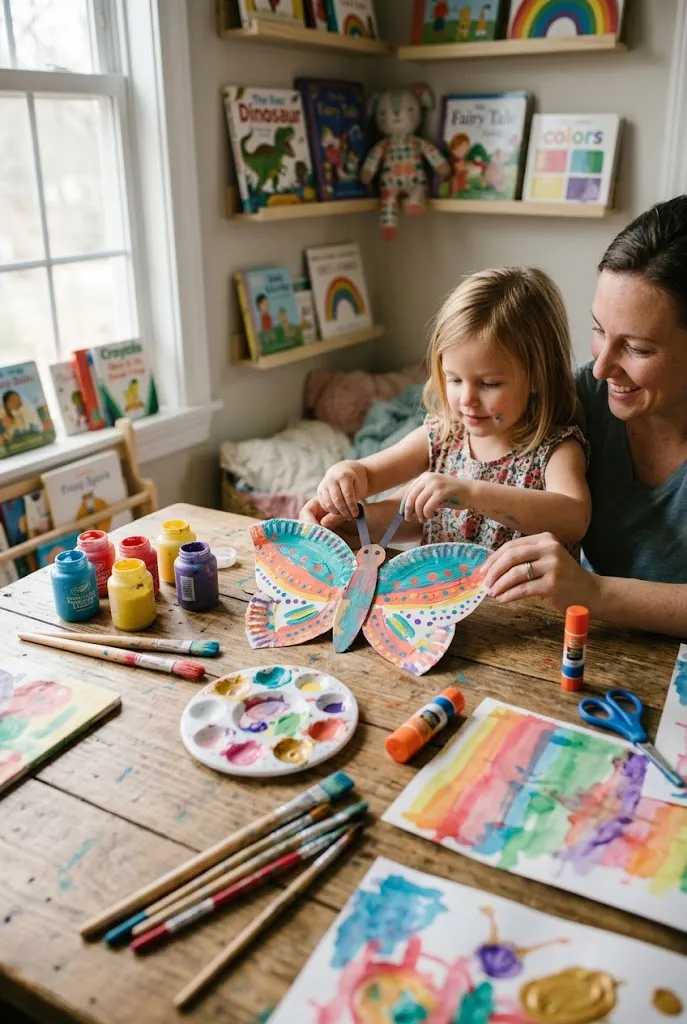
Butterflies are ideal for children who love bright colors and decorative details. A paper plate provides a sturdy base for creating symmetrical wings, while paint, markers, stickers, and paper shapes add personality.
Fold a plate in half and draw a butterfly-wing outline along the folded edge. An adult can help cut the shape if necessary. Open the plate, then decorate both wings with colorful patterns.
Try pairing complementary colors or letting children invent their own combinations. Pipe cleaners or paper strips can form antennae, while a narrow strip of construction paper creates the butterfly’s body.
Tips for a balanced design:
- Use matching patterns on both wings.
- Add dots, stripes, or simple flower shapes.
- Keep decorations lightweight so the wings remain easy to handle.
4. Paper Plate Fish With Colorful Scales
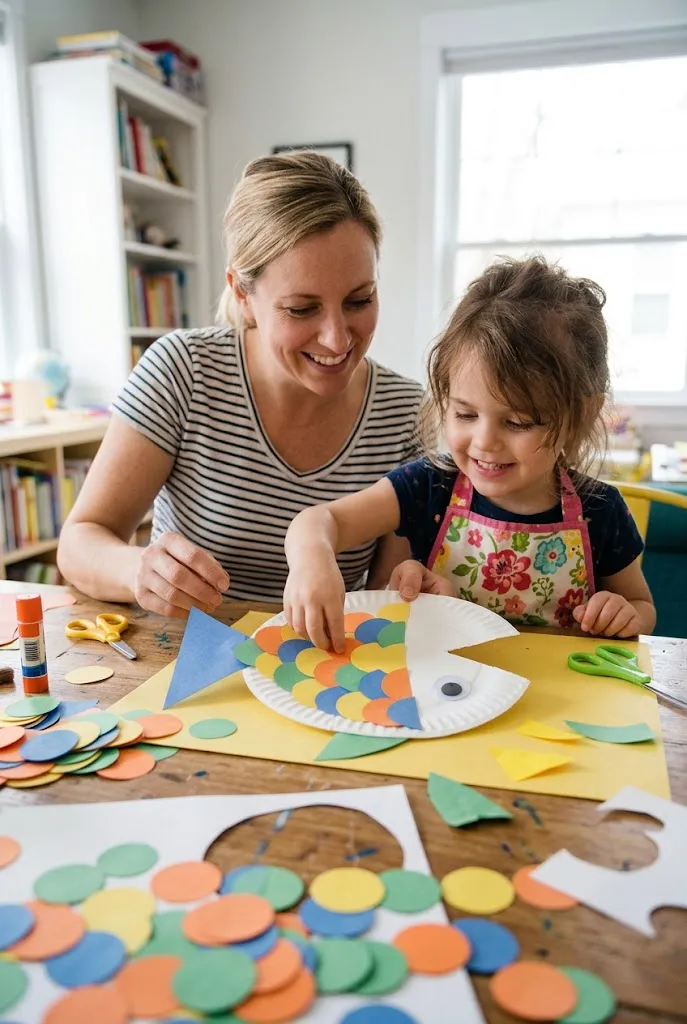
Create an underwater-inspired craft with a paper plate fish. This project works well for ocean-themed lessons, summer activities, or a creative afternoon at home.
Cut a small triangle from one side of the plate to form the fish’s mouth. Attach the triangle at the opposite end to make a tail. Paint the plate blue, orange, pink, or another favorite color, then add overlapping paper circles for scales.
A large eye and contrasting fins help the fish stand out. Children can also make several fish in different colors to create an imaginary aquarium display.
Quick Tip: Overlap the scales from the tail toward the head so the finished fish has a layered, textured appearance.
5. Paper Plate Flower Garden
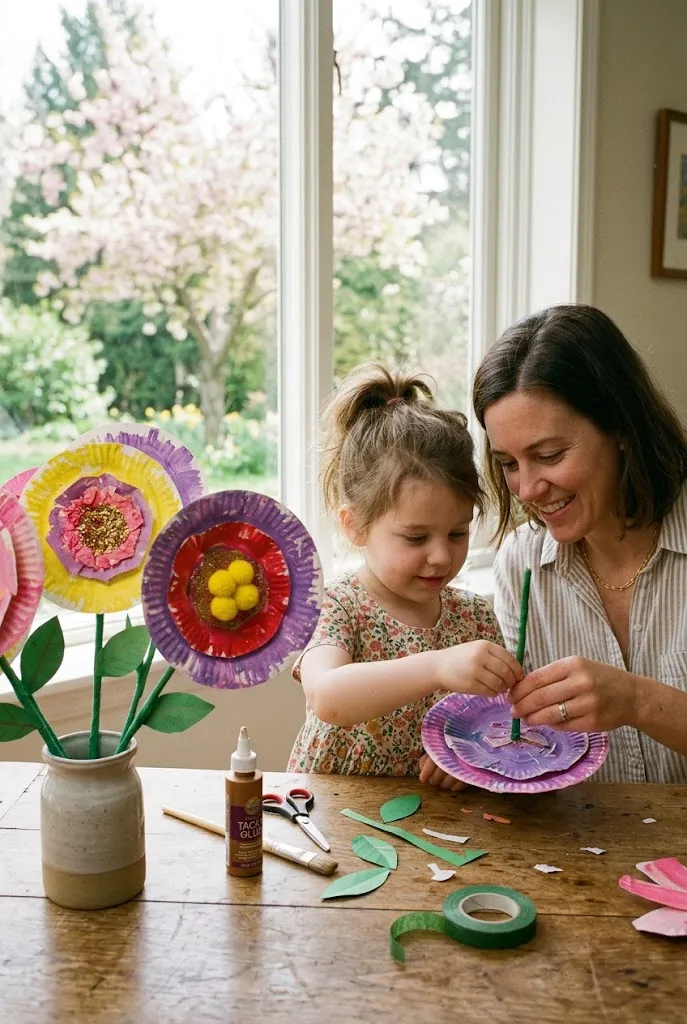
Paper plate flowers let children create a cheerful garden that never needs watering. They are also a good way to explore flower shapes, color combinations, and the differences between petals and leaves.
Cut around the rim of a plate to create broad petals, or attach individual paper petals around a circular center. Paint the flower in bright pink, yellow, purple, or red. Add a green paper stem and leaves, then display several finished flowers together.
For a more dimensional design, layer smaller petals over larger ones and use a crumpled paper circle for the flower’s center.
Try different variations:
- Sunflowers with yellow petals and brown centers
- Pink flowers with layered petals
- Fantasy flowers in unexpected colors
- White daisies with yellow centers
6. Paper Plate Ladybugs
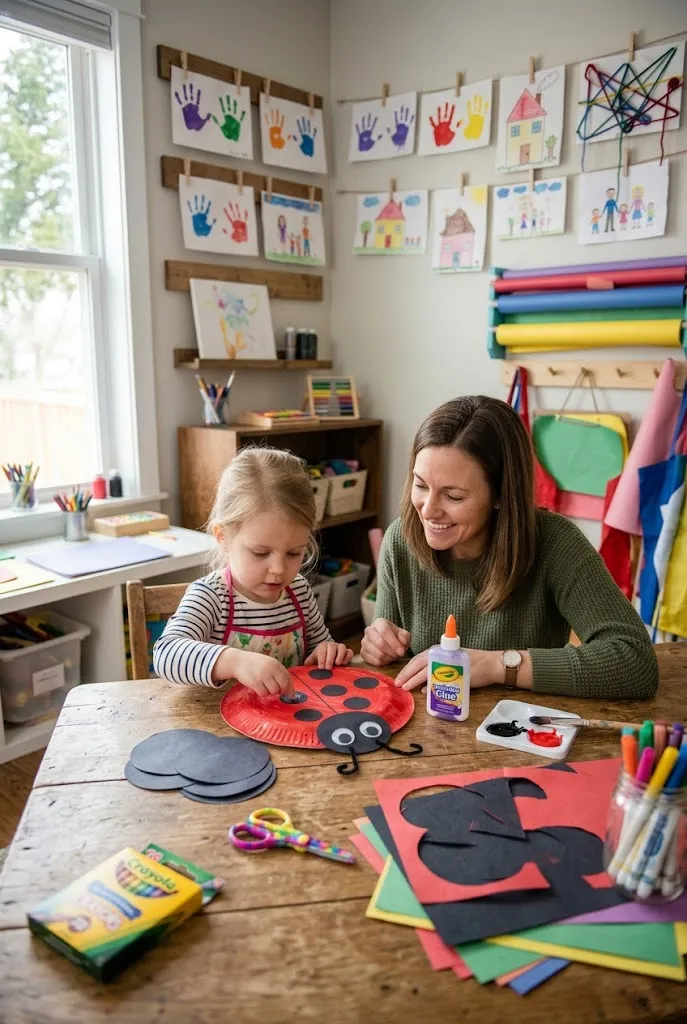
A paper plate ladybug is a simple project for children learning about insects. Its recognizable red shell and black spots make it easy to create, even with a small collection of supplies.
Paint the plate red and allow it to dry. Add black paper circles or painted spots across the surface, then attach a small black head and simple antennae. Children can decide how many spots their ladybug should have.
This activity also provides an opportunity to discuss patterns and counting. Invite children to count the spots on their finished insects or arrange them in matching pairs.
For toddlers: Use larger, pre-cut spots that are easier to grasp and place.
7. Paper Plate Turtle With a Textured Shell
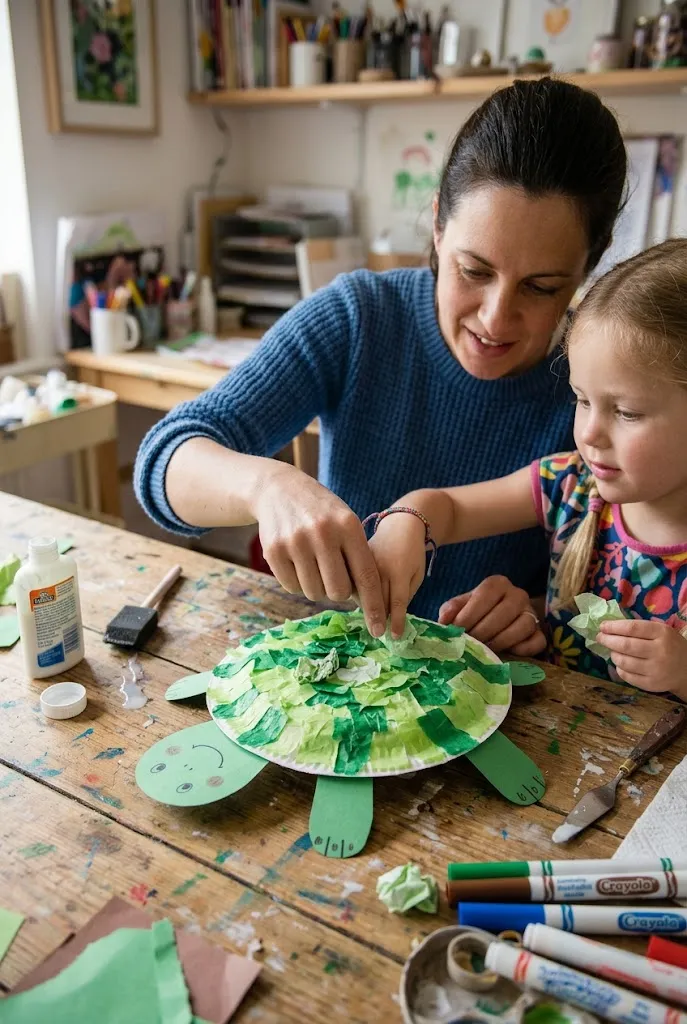
A paper plate turtle offers more opportunities for texture than a simple painted craft. The curved plate becomes the shell, while a green paper head, four legs, and a small tail complete the animal.
Paint the plate green or cover it with pieces of green tissue paper. Add darker green shapes to create a shell pattern, then attach the head and legs underneath the edges.
For a more tactile activity, use small pieces of crumpled tissue paper or torn construction paper. This is particularly useful for children who enjoy sticking, layering, and experimenting with different materials.
Common mistake: Covering the entire shell with too many bulky decorations can make the turtle difficult to handle. Keep the layers light and secure.
8. Paper Plate Sun With Rays
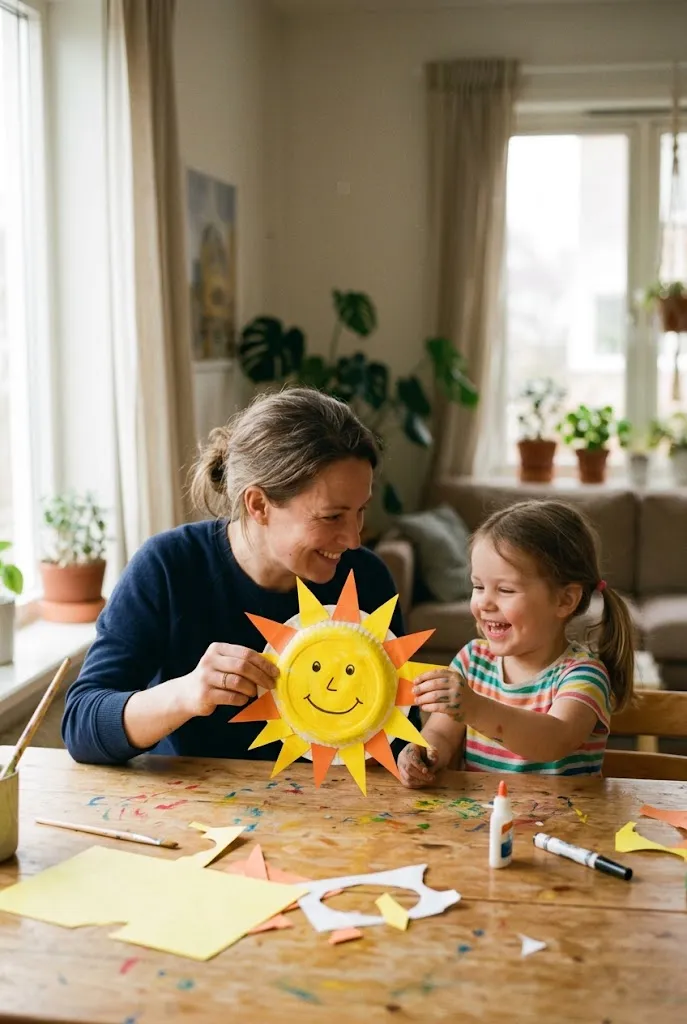
A paper plate sun is an easy way to brighten a bedroom, classroom, or playroom. Its bold shape and warm colors make it particularly appealing for young children.
Paint a plate bright yellow and let it dry. Attach triangular rays made from yellow or orange construction paper around the outer edge. Draw a smiling face in the center, or use simple paper shapes to create the eyes and mouth.
Older children can experiment with alternating long and short rays or paint a soft orange border around the plate.
Quick Tip: Punch a small hole near the top and add a string for hanging, with adult assistance.
9. Paper Plate Peacock With Colorful Feathers
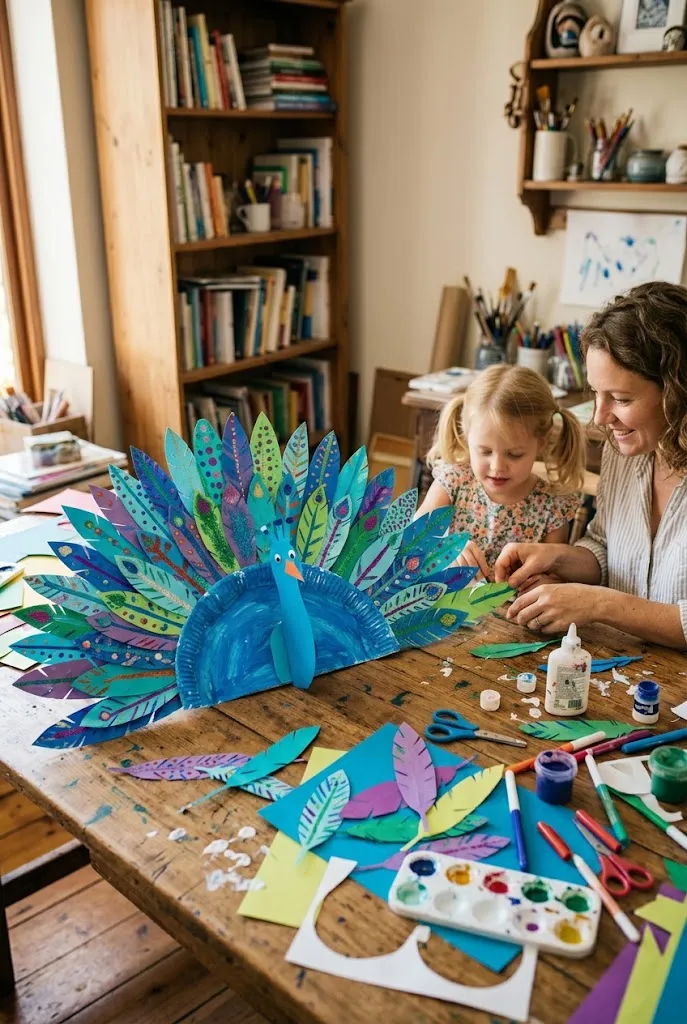
A paper plate peacock gives children the chance to explore patterns and vibrant colors. Its fan-shaped tail creates a strong visual effect, making this craft especially suitable for older preschoolers and elementary-age children.
Cut a plate into a fan shape or use the full plate as the tail. Paint it blue or green, then attach paper feathers decorated with small contrasting circles. Add a narrow body, a small head, and a beak.
For an interesting variation, let children choose a different color scheme, such as purple and teal or green and gold.
10. Paper Plate Owl With Big Eyes
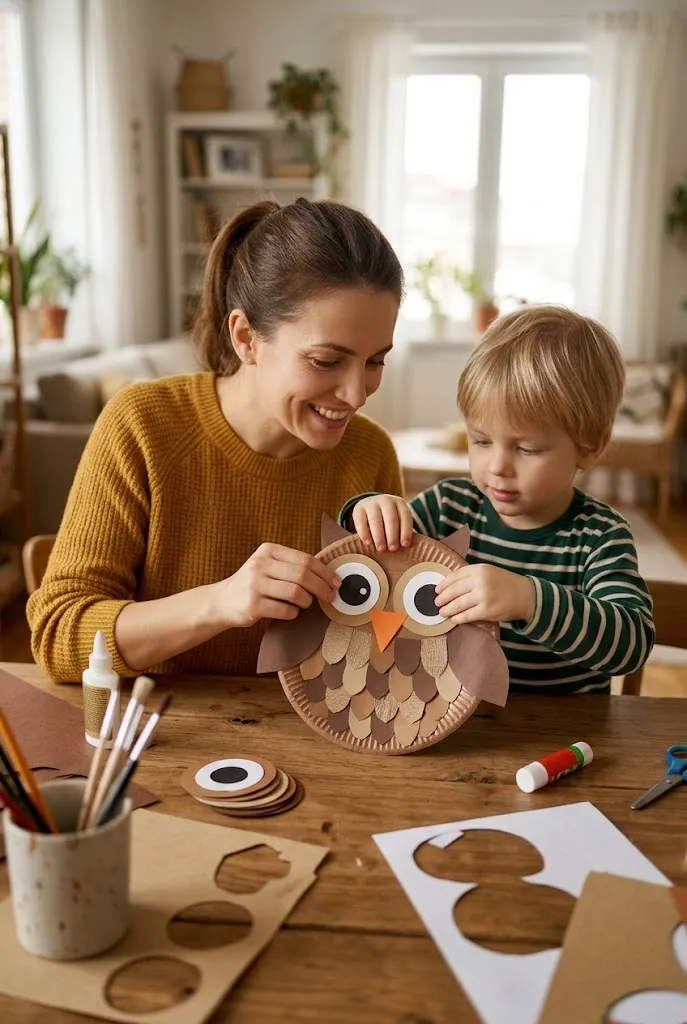
An owl craft is a fun option for autumn activities, woodland themes, or animal-themed lessons. Children can turn a plate into a round owl body and decorate it with paper feathers, oversized eyes, and a small triangular beak.
Paint the plate brown, gray, or a color of your child’s choice. Attach overlapping feather shapes around the body, then add two large circular eyes and an orange beak.
Fold the top edges of the plate slightly forward to suggest ear tufts, or add small paper triangles instead.
Materials that work well: Brown construction paper, large paper circles, washable paint, glue, and child-safe scissors.
11. Paper Plate Jellyfish
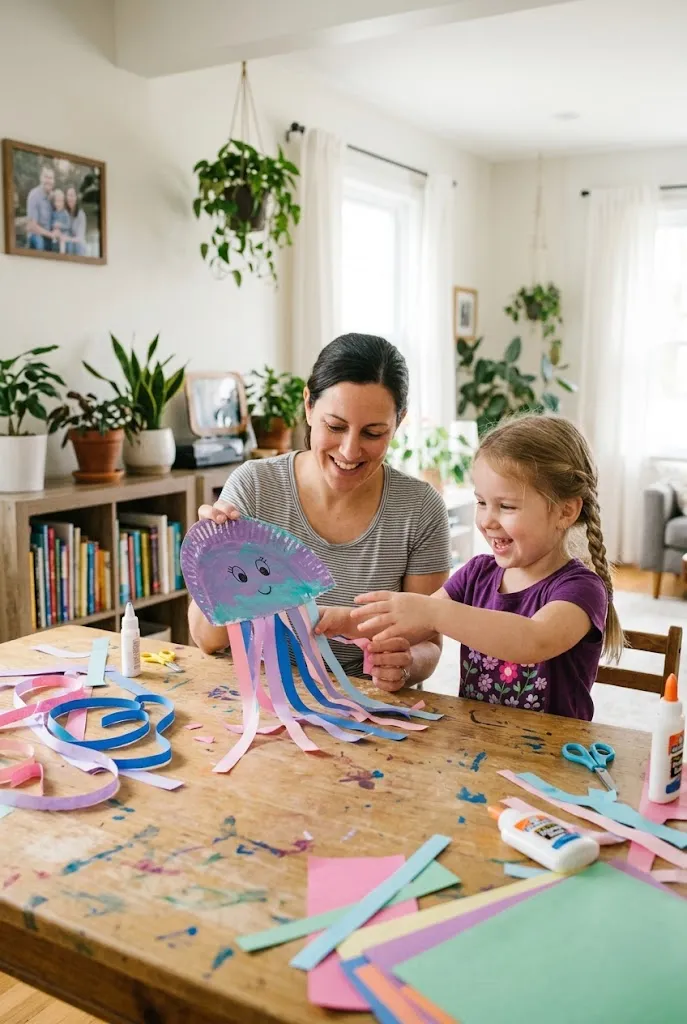
A paper plate jellyfish is a playful craft with movement and flowing shapes. The plate becomes the rounded top of the jellyfish, while long paper strips or ribbons hang underneath as tentacles.
Paint the plate in a favorite ocean color. Once dry, attach strips of crepe paper, ribbon, or lightweight construction paper along the lower edge. Add two eyes and a friendly expression.
Hang the finished jellyfish where the tentacles can move gently in the air. Several jellyfish in different colors can form a charming underwater display.
Quick Tip: Use lightweight strips of varying lengths to create movement without making the decoration too heavy.
12. Paper Plate Frog With a Wide Smile
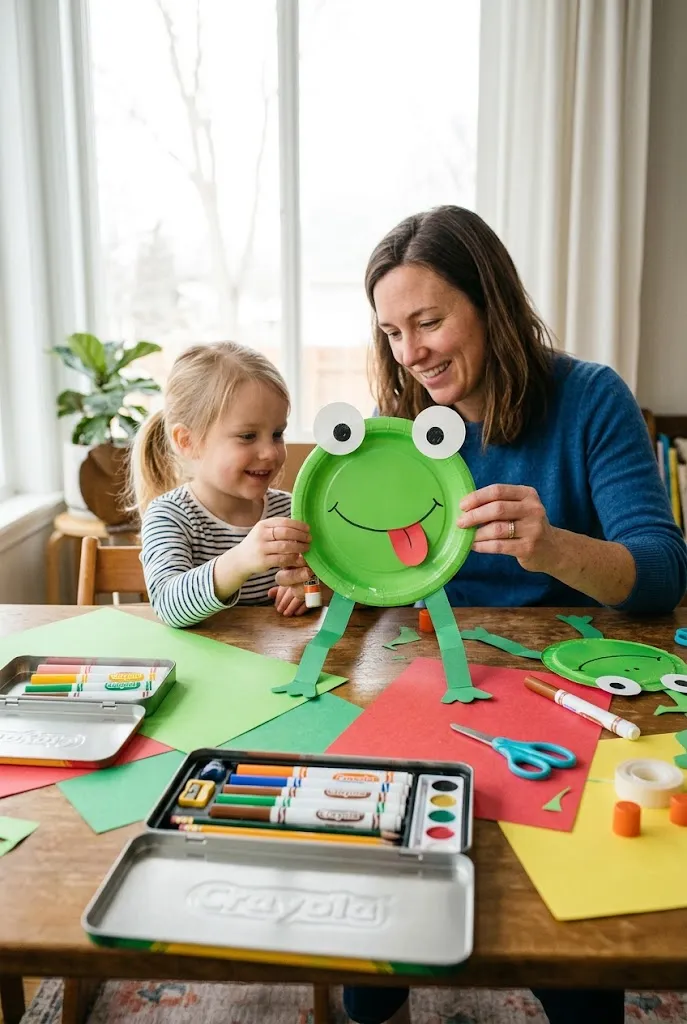
This cheerful frog is a good project for children who enjoy expressive animal faces. A green paper plate forms the body, while raised eyes, a wide mouth, and long paper legs bring the character to life.
Paint the plate green and add two large eyes near the top. Draw a curved smile or cut a mouth shape from dark construction paper. Finish with a red paper tongue and two long legs.
Older children can add a pond scene using blue paper and green lily pads, turning one craft into a small storytelling activity.
13. Paper Plate Dinosaur
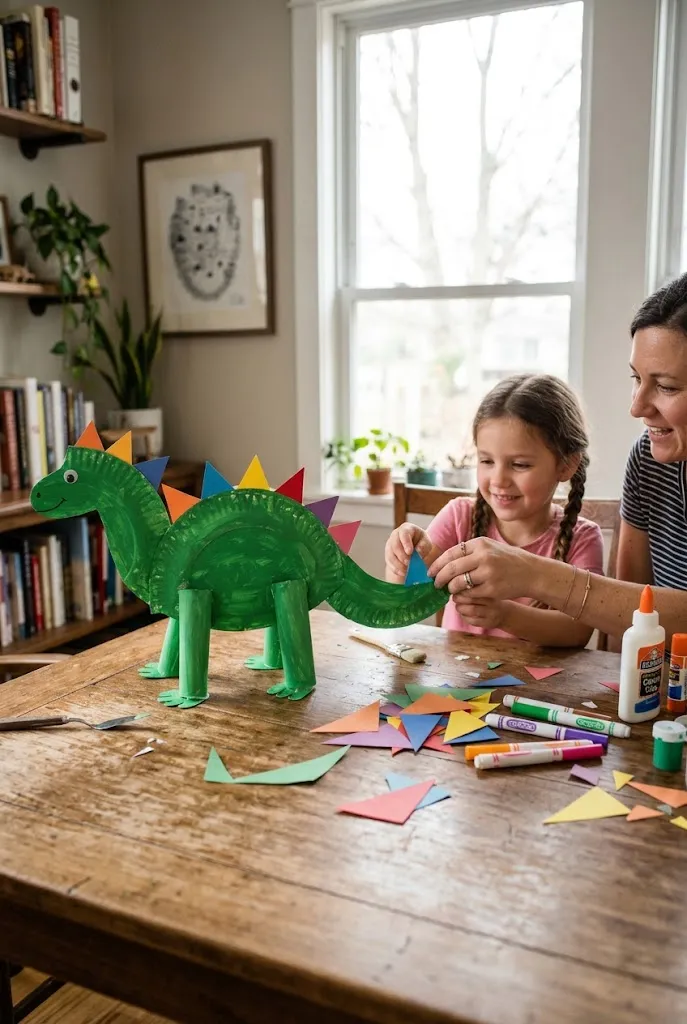
For children fascinated by prehistoric creatures, a paper plate dinosaur is an imaginative project with plenty of room for personalization.
Fold or cut the plate into a body shape, then add a long tail, four legs, and a row of colorful spikes along its back. A green dinosaur is a classic choice, but purple, orange, or blue can make the craft feel more playful.
Children can decide whether their dinosaur is friendly, sleepy, or fierce by changing the eyes, mouth, and posture.
A useful variation: Create different dinosaur silhouettes, such as a long-necked dinosaur or a spiky-backed dinosaur, instead of making every project look the same.
14. Paper Plate Penguin
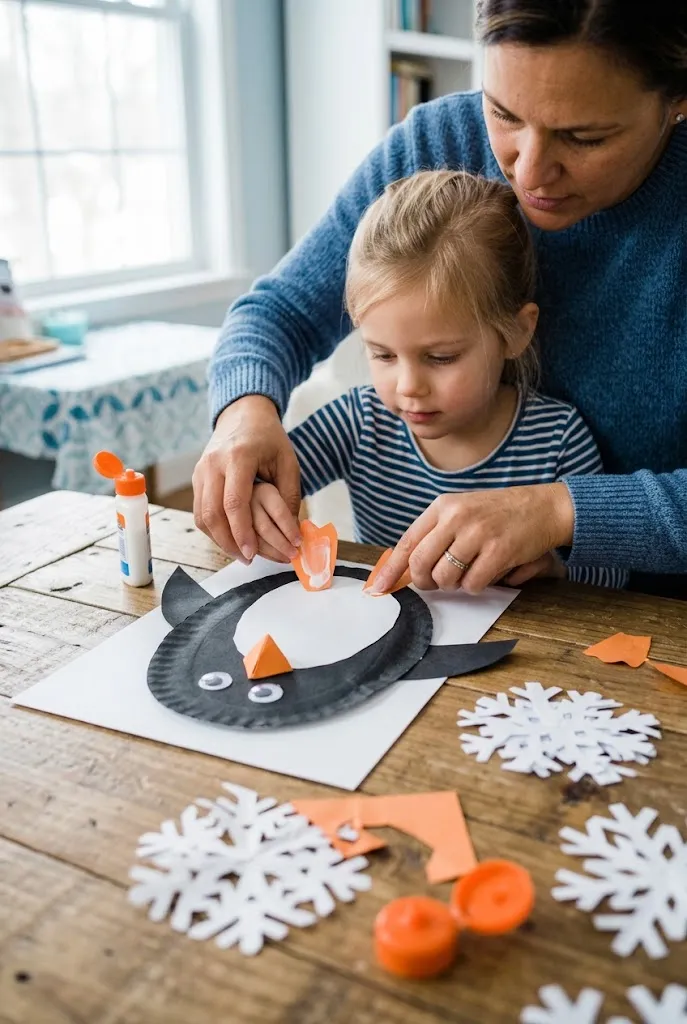
A paper plate penguin combines simple shapes with a recognizable black-and-white color pattern. It is a suitable winter craft, although children can enjoy making penguins at any time of year.
Paint the plate black or cover the sides with black paper, leaving a white oval or heart-shaped area in the center. Add two eyes, an orange beak, and orange paper feet.
For a winter scene, attach a few paper snowflakes or place the penguin on a blue paper background.
Do / Don’t
- Do: Keep the white belly clearly visible against the dark body.
- Don’t: Add so many decorations that the penguin’s basic silhouette disappears.
15. Paper Plate Hedgehog With Paper Spikes
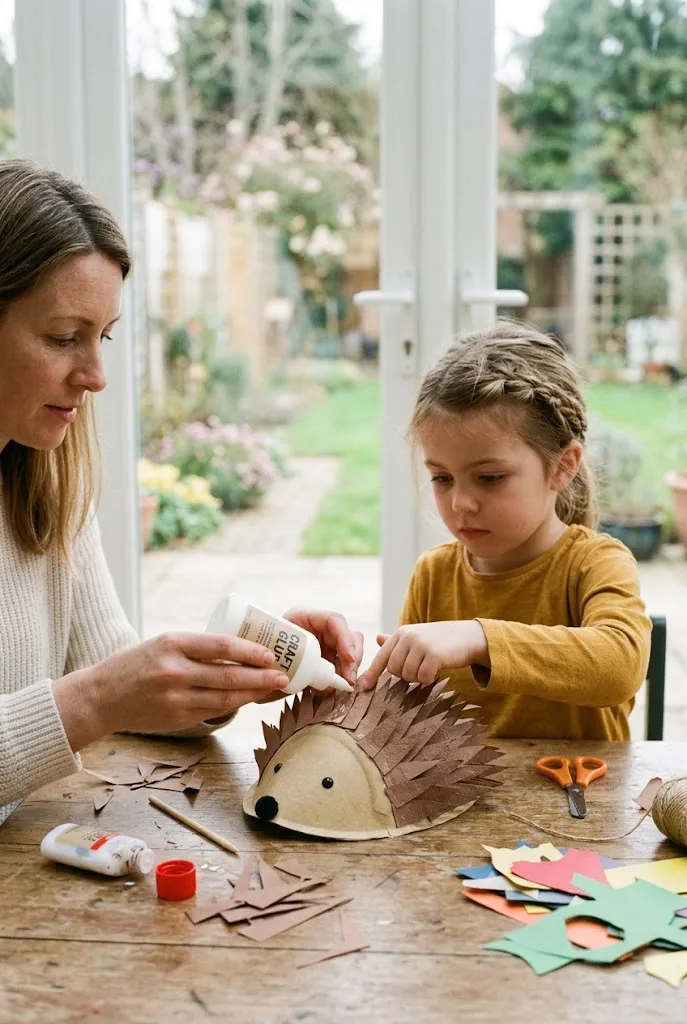
This hedgehog craft is a great opportunity to explore texture using simple paper materials. The plate creates a rounded body, while narrow brown strips become the hedgehog’s distinctive spikes.
Cut the plate into a half-circle and attach paper spikes along its curved edge. Add a beige face, a small dark nose, and a simple eye. Children can arrange the spikes in different directions for a more textured appearance.
Younger children may prefer larger paper strips that are easier to glue. Older kids can layer narrower strips for extra detail.
16. Paper Plate Apple for Fall
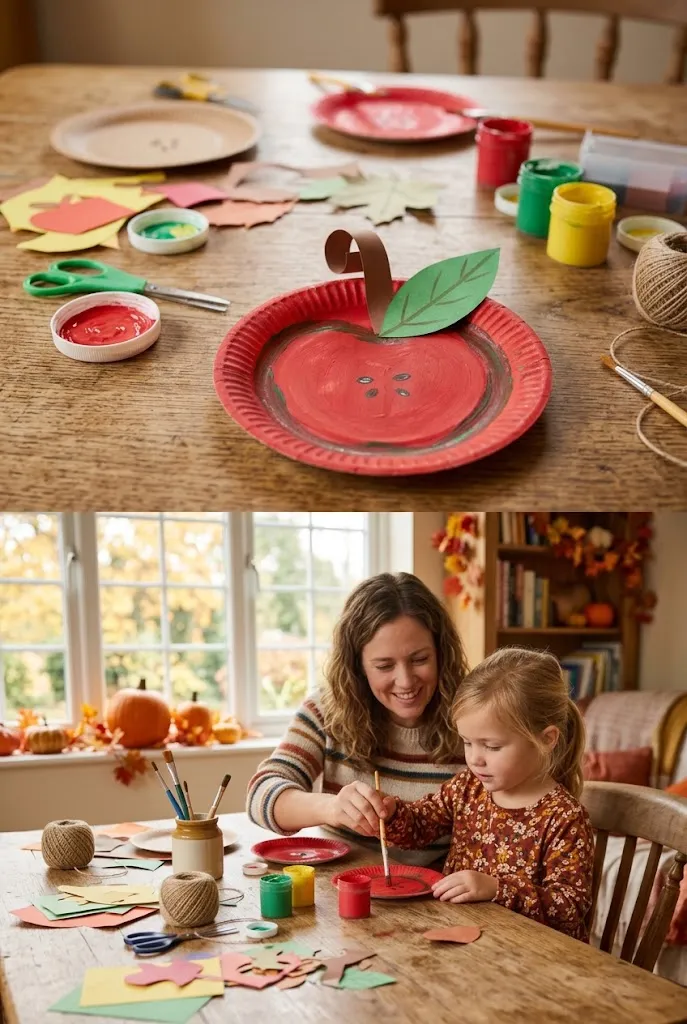
A paper plate apple is an easy seasonal craft for fall, harvest celebrations, or classroom activities about fruit. Its simple shape makes it suitable for younger children who are still developing their cutting and painting skills.
Paint the plate red, green, or yellow. Add a brown paper stem and a green leaf at the top. Children can draw tiny spots or use small paper shapes to create a decorative pattern.
For a classroom display, make several apples in different colors and arrange them together like a paper orchard.
Quick Tip: Invite children to compare their craft apples with real apples, noticing the differences in color, size, and shape.
17. Paper Plate Spider Web
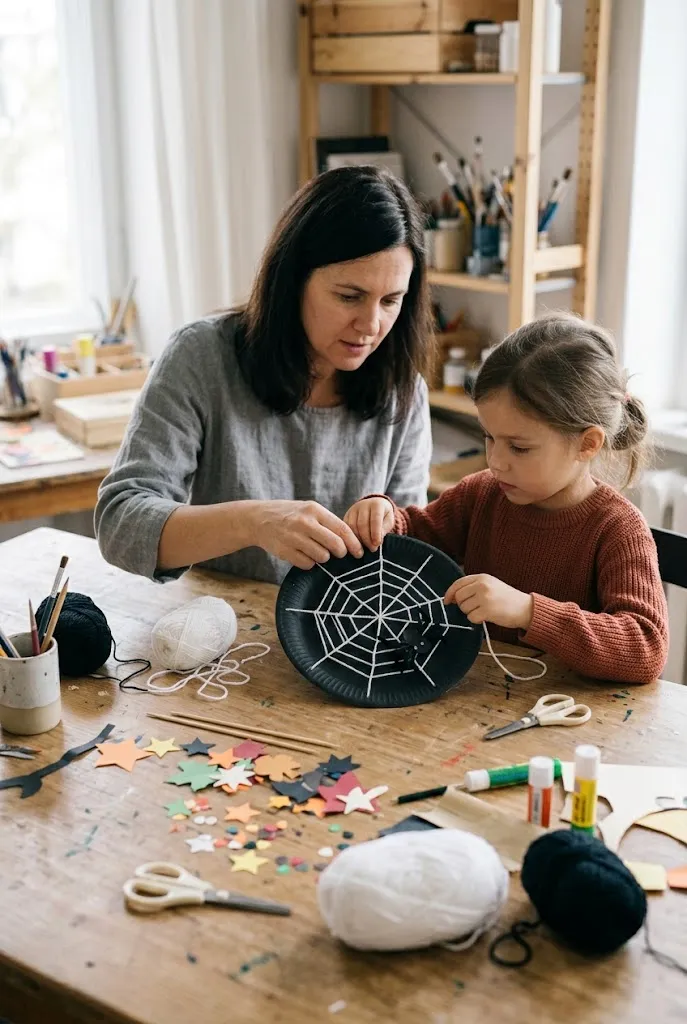
A paper plate spider web introduces children to threading and pattern-making while creating a Halloween decoration.
Paint the plate black or use a dark-colored plate. With adult assistance, make evenly spaced holes around the edge and weave white yarn through them to form a web. Add a small paper spider with eight simple legs.
Younger children may need help with the holes and threading, while older children can create more elaborate web patterns.
Safety note: Keep yarn lengths manageable and supervise young children throughout threading activities. Store loose string safely when the craft is not being used.
18. Paper Plate Christmas Wreath
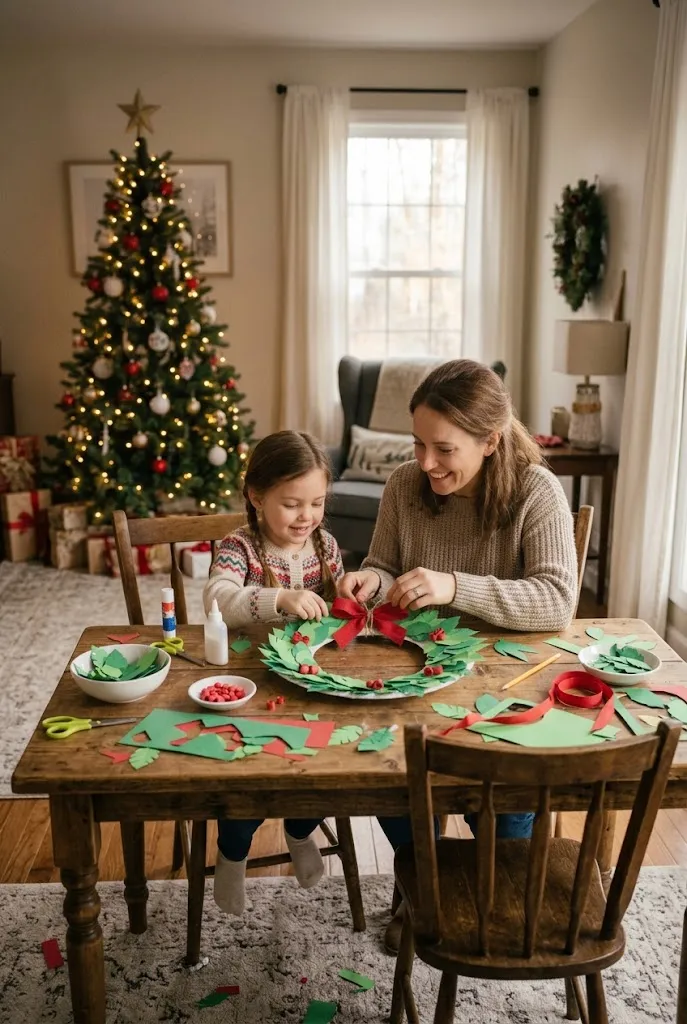
A paper plate wreath makes a festive decoration for a child’s bedroom, classroom, or family craft afternoon during the holiday season.
Cut out the center of the plate to create a ring. Paint it green or cover it with small green paper leaves. Add red paper berries, a bow, and a few lightweight decorative shapes.
Children can make a traditional red-and-green wreath or experiment with a winter palette of white, silver, and blue.
Materials to prepare:
- Paper plate
- Green paint or construction paper
- Red paper circles
- Decorative ribbon or paper bow
- Glue and child-safe scissors
Use a hole punch and ribbon to hang the finished wreath with adult assistance.
19. Paper Plate Birthday Party Masks
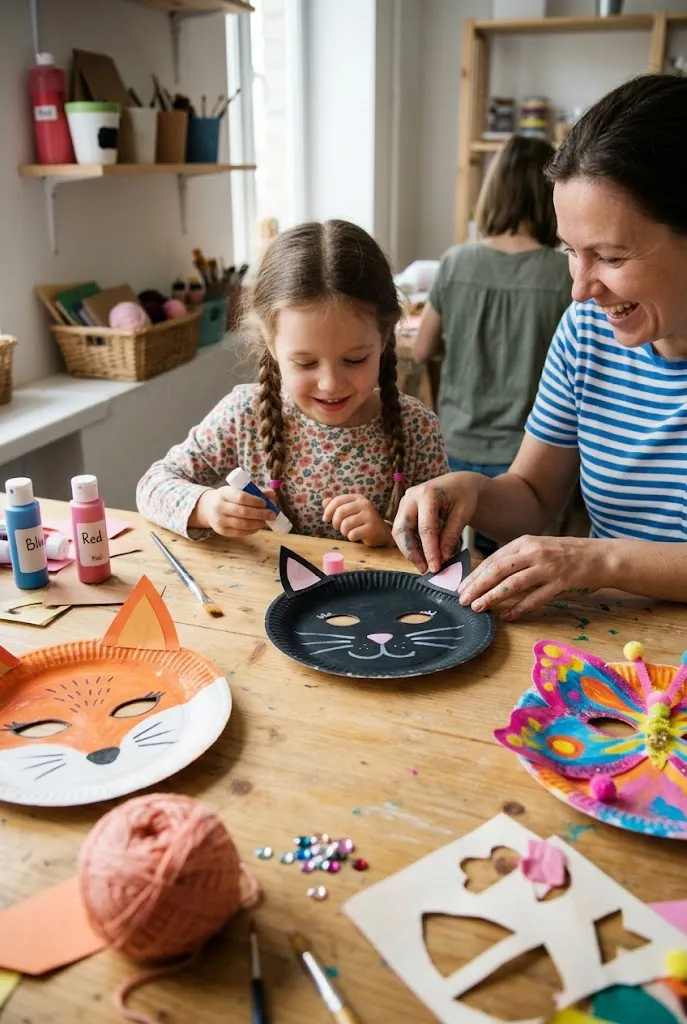
Paper plate masks can turn an ordinary afternoon into a pretend-play adventure. Children can create animal faces, imaginative characters, or colorful masquerade masks using inexpensive materials.
Start by drawing a face or mask shape on a plate. An adult should cut the eye openings and any difficult shapes. Let children paint the mask, add paper ears or feathers, and decorate it with markers and lightweight embellishments.
Attach a craft stick as a handle, or use elastic only when properly fitted and safely supervised. Never leave young children unattended with cords or elastic around the neck.
Ideas to try:
- Fox or cat masks
- Butterfly masks
- Colorful fantasy characters
- Safari animal faces
20. Paper Plate Hot Air Balloon
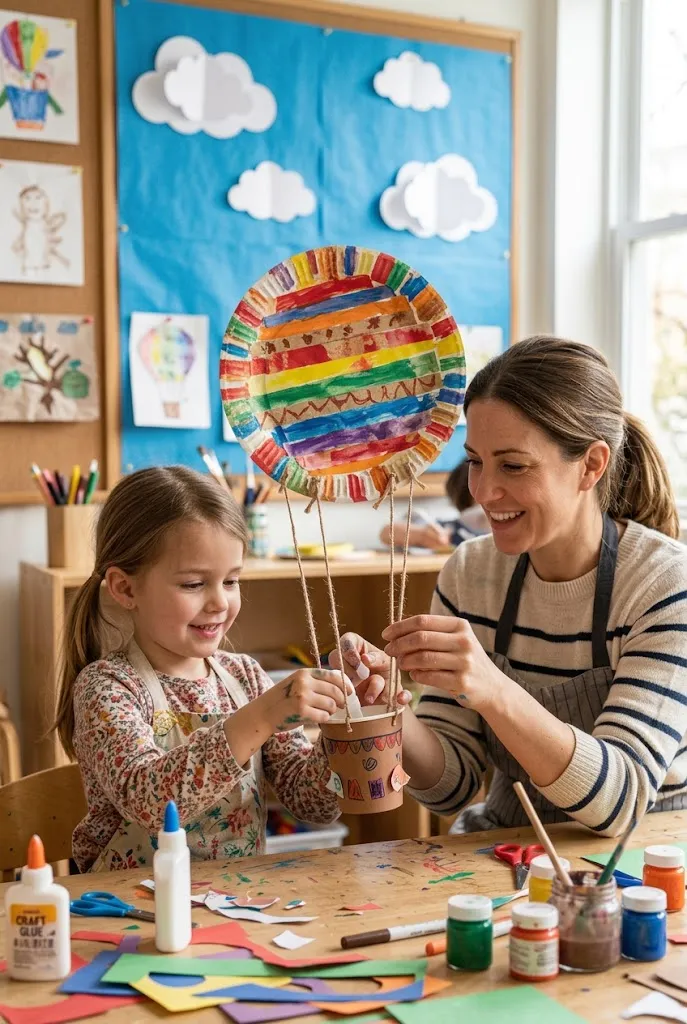
A paper plate hot air balloon combines painting, simple geometry, and imaginative storytelling. The plate becomes the balloon, while a small paper basket hangs below it.
Paint the plate in bold stripes or divide it into colored sections. Attach two or more short lengths of yarn or paper strips beneath it, then add a small basket made from brown construction paper.
Children can decorate the balloon with dots, hearts, stars, or abstract patterns. Mount it on blue paper with fluffy white paper clouds to create a finished sky scene.
21. Paper Plate Peacock-Style Fan
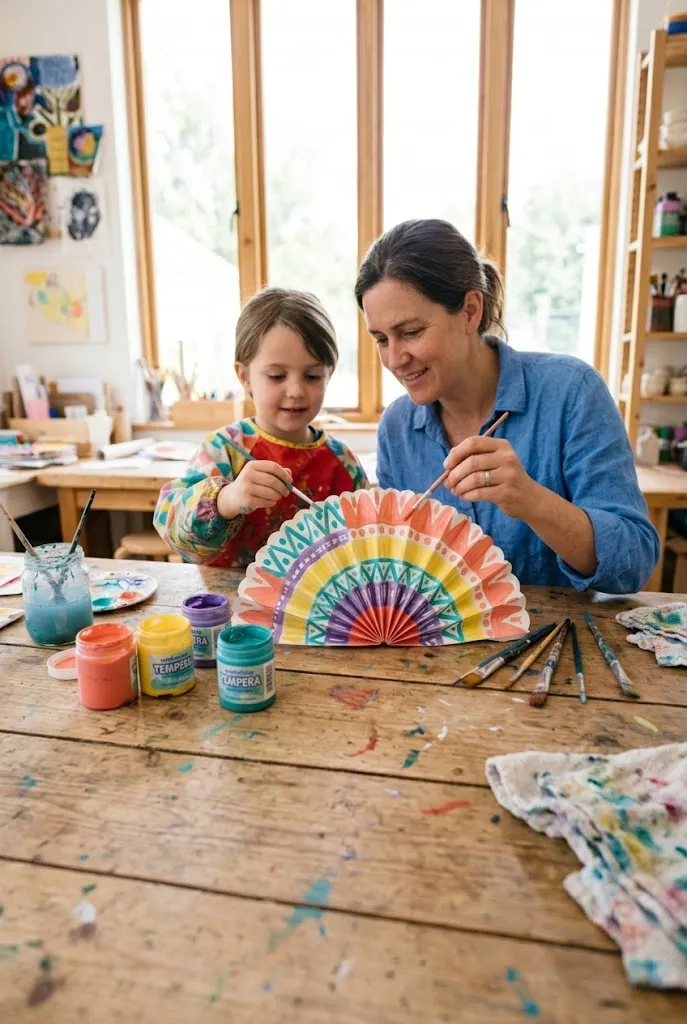
A decorative paper plate fan is a simple way to explore repeated patterns and color arrangements. Unlike the peacock craft, this project focuses on the fan itself rather than an animal.
Fold a paper plate into broad sections or cut a semicircular shape. Decorate it with stripes, dots, painted flowers, or geometric designs. Attach a sturdy craft stick along the bottom as a handle.
Children can make matching fans for a pretend party or create a collection with different colors and patterns.
Quick Tip: Use lightweight decorations and avoid adding too much glue or heavy embellishment, which can make the fan difficult to hold.
22. Paper Plate Moon and Stars
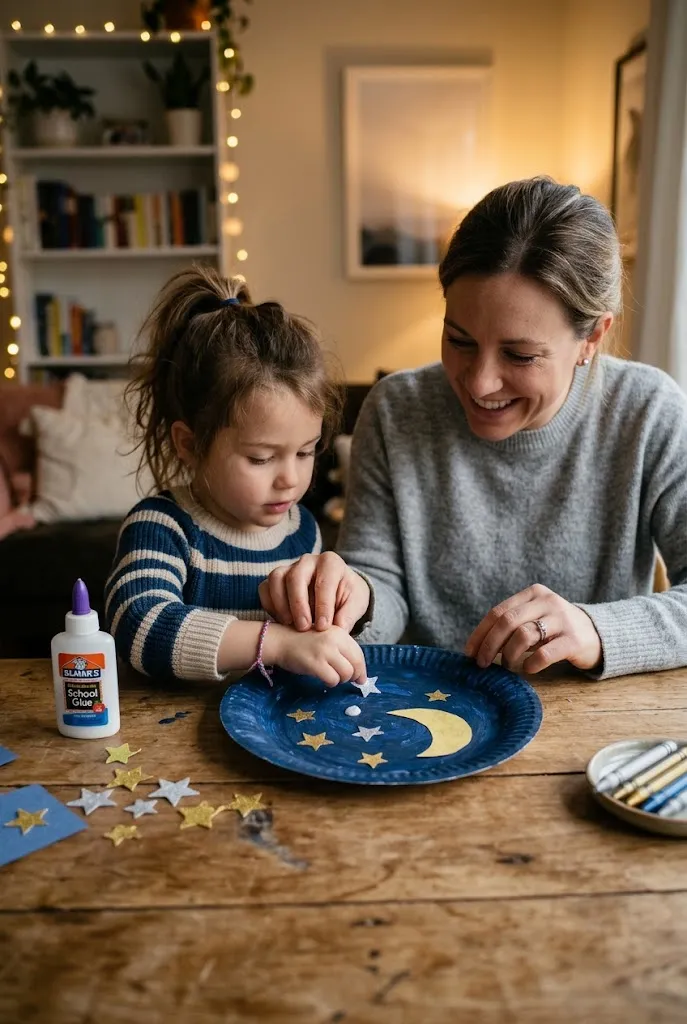
A moon-and-stars craft brings a little nighttime magic to a children’s art session. It can also complement bedtime stories or a space-themed learning activity.
Paint a plate navy blue or cover it with dark construction paper. Add a crescent moon cut from yellow or white paper, followed by stars in different sizes. Silver or gold crayons can provide extra detail without adding much weight.
Older children might create constellations or arrange the stars into their own imaginary patterns.
Variation: Use a dark purple background and add a paper planet or small rocket for a broader space scene.
23. Paper Plate Dream Catcher-Inspired Decoration
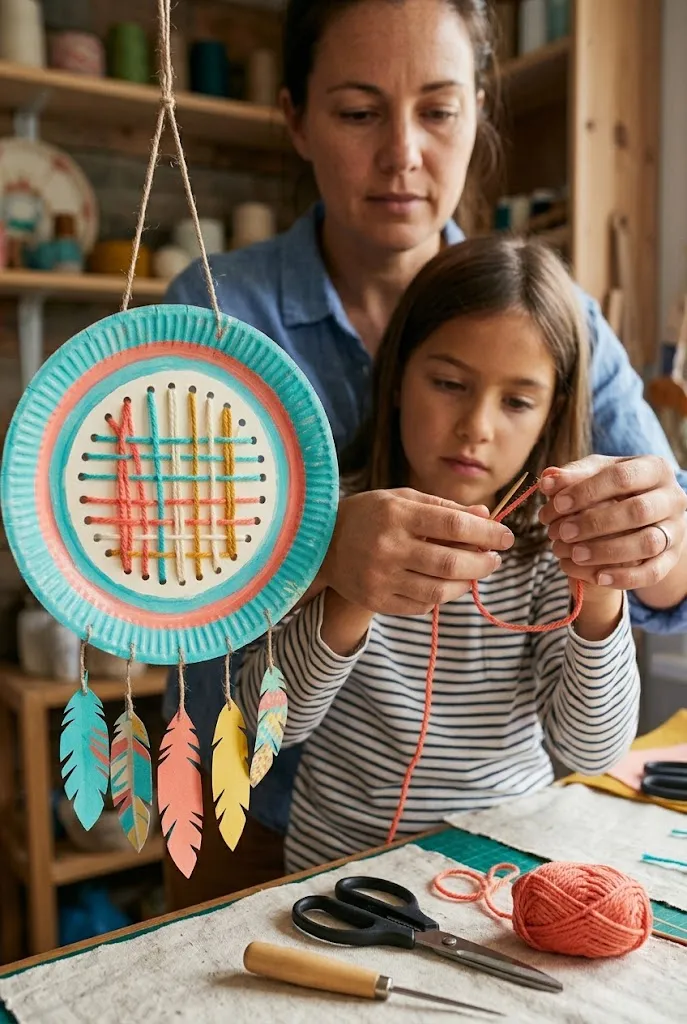
Finish the collection with a decorative hanging inspired by circular woven art. A paper plate ring provides the base, while yarn, paper shapes, and lightweight decorations create a colorful display.
Cut out the center of the plate with adult assistance. Punch several holes around the ring, then weave yarn or ribbon across the opening. Add lightweight paper feathers or colorful shapes along the lower edge.
For a child-friendly version, focus on simple weaving and geometric patterns rather than trying to reproduce culturally significant traditional designs. Encourage children to invent their own colors and decorative motifs.
Tips for success:
- Use a sturdy plate so the ring holds its shape.
- Keep yarn short enough for safe, supervised crafting.
- Choose lightweight decorations for easy hanging.
- Let children design an original pattern.
Tips for Making Paper Plate Crafts Easier for Kids
A little preparation makes these activities easier to manage, particularly with toddlers and preschoolers.
- Prepare cutting tasks ahead of time. Adults can cut eye holes, small shapes, and plate centers before the activity begins.
- Choose suitable materials. Washable paint, child-safe glue, large paper shapes, and sturdy paper plates are useful starting points.
- Protect the work surface. Use a washable table covering or scrap paper beneath the project.
- Let children make creative decisions. Unusual colors and imperfect shapes are part of the fun.
- Allow for drying time. Painted plates may need to dry before paper features can be attached securely.
For children under three, avoid small detachable decorations that could pose choking hazards, and supervise all craft activities. Choose age-appropriate scissors and materials.
Which Paper Plate Craft Should You Try First?
For a quick activity with younger children, start with the paper plate sun, apple, or ladybug. If your child enjoys adding details and experimenting with different textures, the turtle, peacock, and hedgehog offer more opportunities for layering and decoration. Seasonal options such as the Christmas wreath and spider web can also become part of a family tradition.
The best paper plate crafts are the ones children can adapt to their own ideas. Set out a few supplies, choose a project that suits their abilities, and let the finished creations reflect their individual personalities.