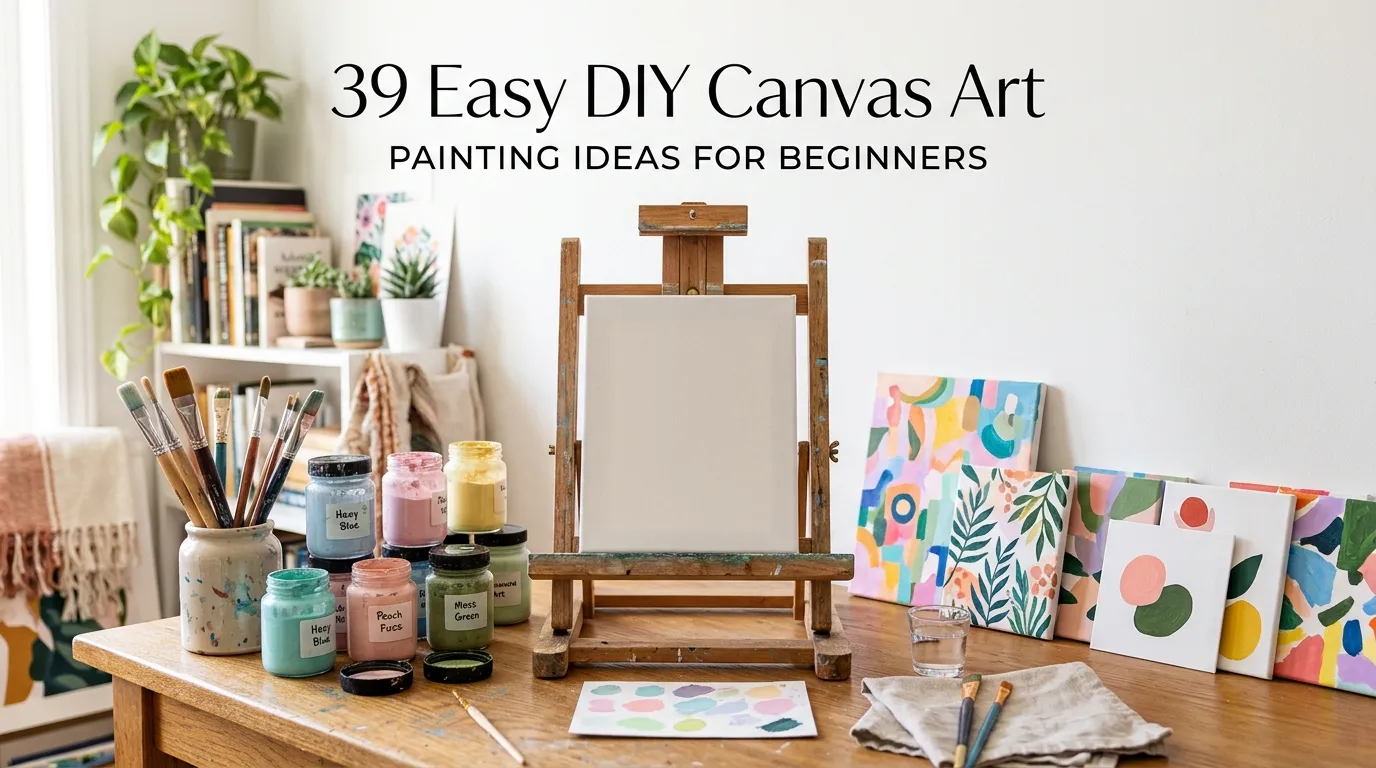
35 Easy DIY Canvas Art Painting Ideas for Beginners
Easy DIY Canvas Art Painting Ideas Blank canvases can feel intimidating when you’re just starting out, but creating your own wall art doesn’t require advanced painting skills. With a few acrylic paints, basic brushes, and a little experimentation, you can make artwork that suits your home, color palette, and personal style.
These easy DIY canvas art painting ideas for beginners range from simple geometric designs and loose florals to dreamy sunsets, textured abstracts, and minimalist landscapes. Some projects use only two or three colors, while others introduce approachable techniques such as sponge painting, palette-knife texture, and paint layering.
Acrylic paint is a practical starting point because it works well for many beginner projects and generally dries faster than oil paint. You can practice on inexpensive canvases, cardboard canvas panels, or scrap paper before moving to a larger piece. Choose an idea that feels manageable, gather your supplies, and enjoy making art that’s uniquely yours.
Before You Start: Basic Supplies and Helpful Tips
Most of these projects can be made with a small collection of supplies:
- Canvas: Stretched canvas or canvas panels in your preferred size.
- Paint: Acrylic paints in a few colors, plus white and black if needed.
- Brushes: A small flat brush, a medium flat brush, and a round detail brush.
- Mixing tools: A palette, disposable plate, or palette paper.
- Other tools: Pencil, ruler, painter’s tape, sponge, palette knife, and water container.
- Protection: A drop cloth or scrap cardboard to protect your work surface.
Prepare the canvas according to the manufacturer’s instructions. Many commercially primed canvases are ready to paint, but check the label first. Use thin layers when possible, allow each layer to dry before adding details, and follow the paint manufacturer’s guidance for drying and any varnish or protective finish.
Work in a ventilated area, protect your clothing, and keep paint and small tools away from children and pets. If you use a palette knife, handle its edges carefully. Never mix household chemicals or use an unapproved coating to speed up drying.
1. Minimalist Neutral Abstract Art
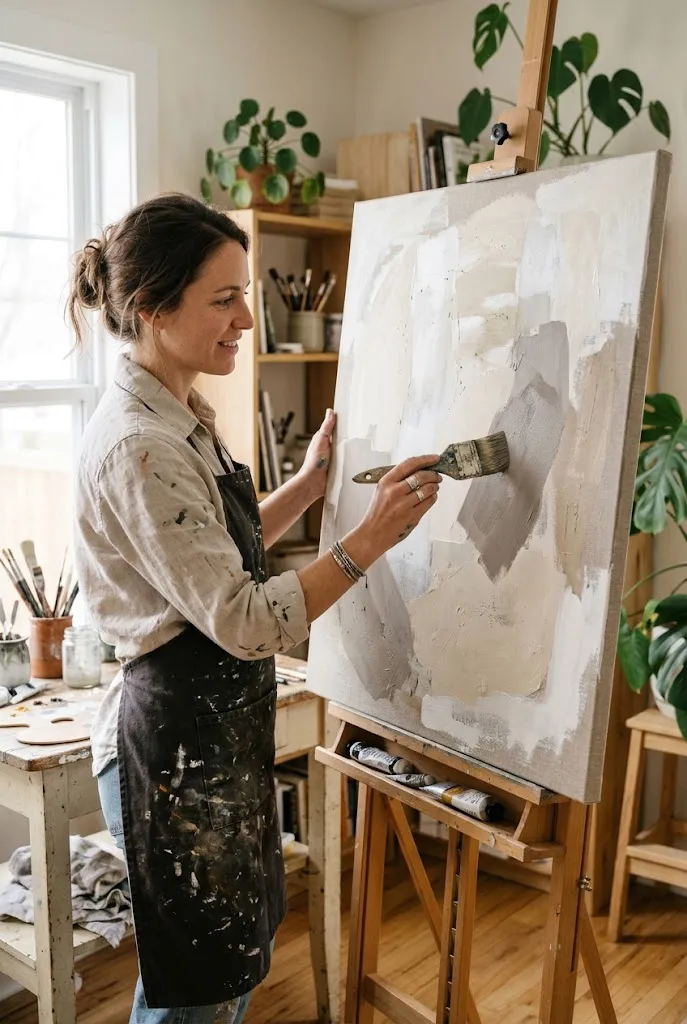
Neutral abstract art is an easy starting point because it doesn’t depend on precise drawing. A limited palette of ivory, sand, warm gray, and muted brown creates a calm, contemporary look that works well in bedrooms, living rooms, and home offices.
Start with a light background, then use a wide brush to add a few broad shapes. Leave some open canvas showing so the composition feels balanced rather than crowded. Try overlapping soft rectangles, curved strokes, or a single large organic form.
How to make it: Paint the background and let it dry. Add two or three larger shapes, then introduce a darker accent sparingly. Step back from the canvas occasionally to check the balance.
Quick Tip: Repeat one color already present in your room perhaps from a rug, cushion, or wood finish to help the artwork feel connected to the space.
2. Simple Color-Block Canvas Art
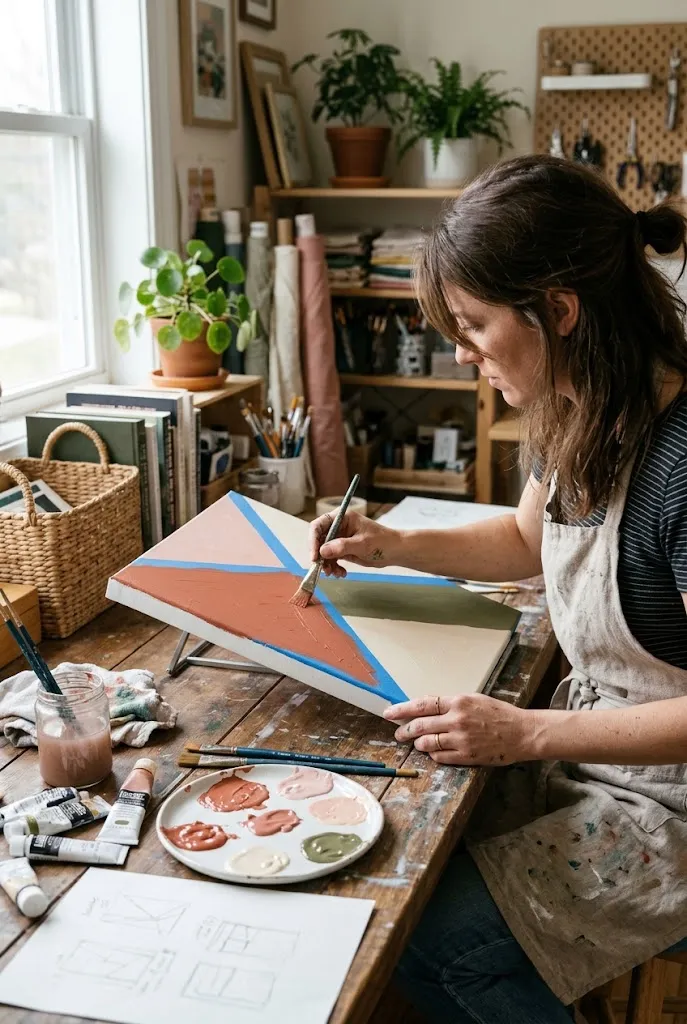
Color blocking uses clearly defined areas of color to create a bold design without requiring detailed drawing. It’s especially useful if you like modern wall decor, mid-century-inspired palettes, or graphic artwork.
Choose three or four complementary colors, such as terracotta, blush, cream, and olive green. Sketch a few rectangles, arches, or large angular shapes with a pencil, or use painter’s tape to mark straight edges. Paint each section and allow it to dry before removing the tape or applying another color.
For a softer effect, use rounded shapes instead of strict rectangles. For a more graphic composition, combine one large block with several smaller shapes.
Do: Keep the palette limited and let one color dominate.
Don’t: Add so many small sections that the overall design loses its simple, readable structure.
3. Easy Sunset Canvas Painting
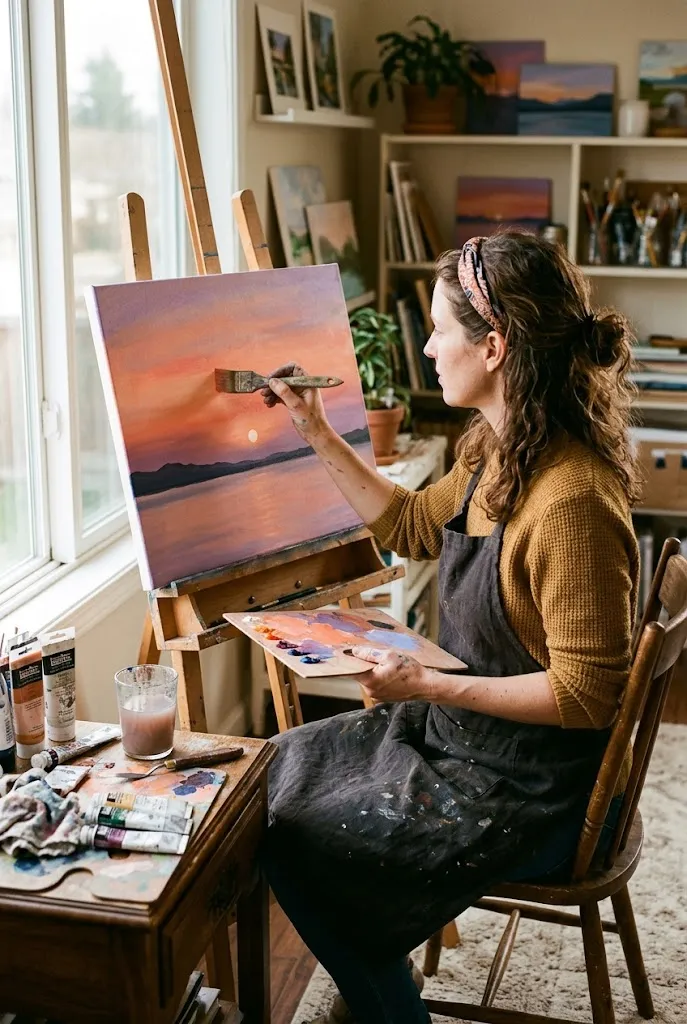
A sunset is a forgiving subject for beginners because blended colors and imperfect edges can make the scene feel atmospheric. You can create a simple horizon with bands of coral, peach, pink, lavender, and deep blue.
Cover the canvas with the lightest sky color first. While the paint is still workable, blend neighboring colors gently where they meet. Add a darker horizontal band near the bottom for distant land or water, then paint a small sun if you like.
Acrylics can dry quickly, so work in manageable sections and avoid repeatedly scrubbing a layer that has begun to set. If the colors become muddy, let the painting dry and add a fresh, thin layer.
Try this variation: Use a muted peach and dusty-blue palette for a softer, less saturated sunset that suits a bedroom or reading nook.
4. Loose Abstract Floral Painting Easy DIY Canvas Art Painting Ideas
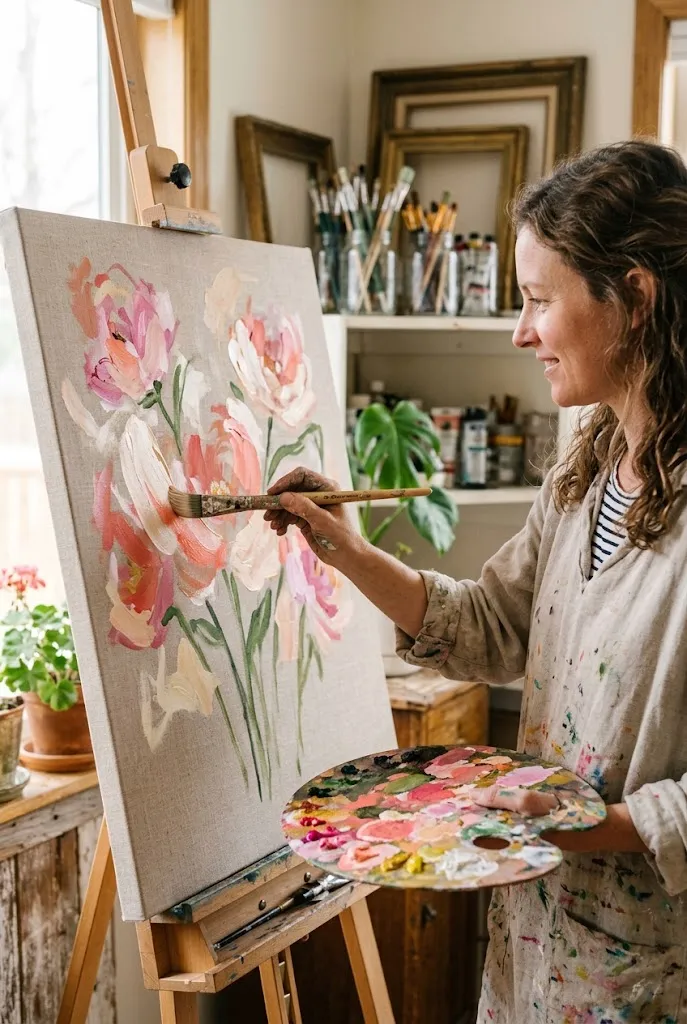
Loose florals are ideal if you enjoy flowers but don’t want to draw every petal. Instead of aiming for botanical accuracy, use clusters of brushstrokes to suggest blossoms and leaves.
Begin with a pale background. Add a few dark green stems, then use pink, coral, cream, or lilac strokes to create flower heads. Vary the size and direction of each bloom so the arrangement looks natural. A few small dots or short lines can suggest centers without requiring intricate detail.
- Use a larger brush for broad petals.
- Add smaller strokes only after the main flower shapes dry enough to stay distinct.
- Leave gaps between clusters to give the composition breathing room.
- Try a limited palette if the finished piece will hang above patterned furniture.
Editor’s Note: The charm of loose floral art comes from the overall movement of the arrangement, not from making every flower look identical.
5. Modern Black-and-White Line Art
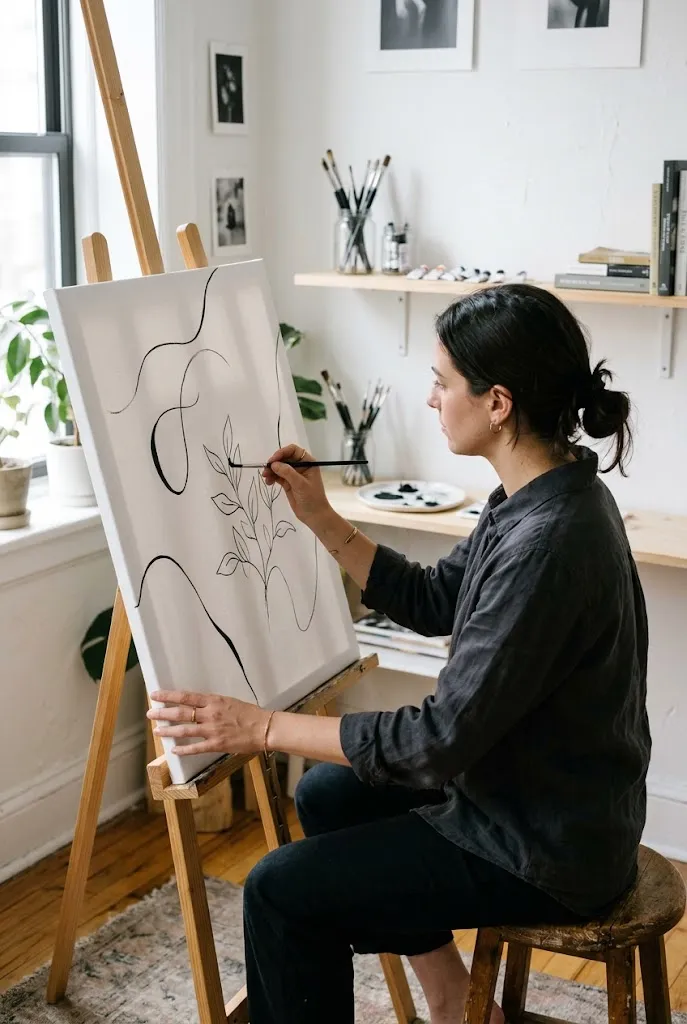
Black-and-white line art is a strong option for a minimalist room or gallery wall. Its simplicity makes the placement of each line more important than the number of details.
Paint the canvas white or use a ready-primed white surface. Lightly sketch a continuous abstract outline, a simple face profile, a curved botanical stem, or a series of intersecting lines. Use a small brush and black acrylic paint, keeping your wrist relaxed as you move.
If you prefer a cleaner design, practice the line on paper first. You can also use a black paint marker designed for canvas, following its label for surface compatibility and drying instructions.
Common Mistake: Making every line equally thick can leave the drawing looking stiff. Varying the line weight slightly can give it more movement.
6. Easy Mountain Landscape
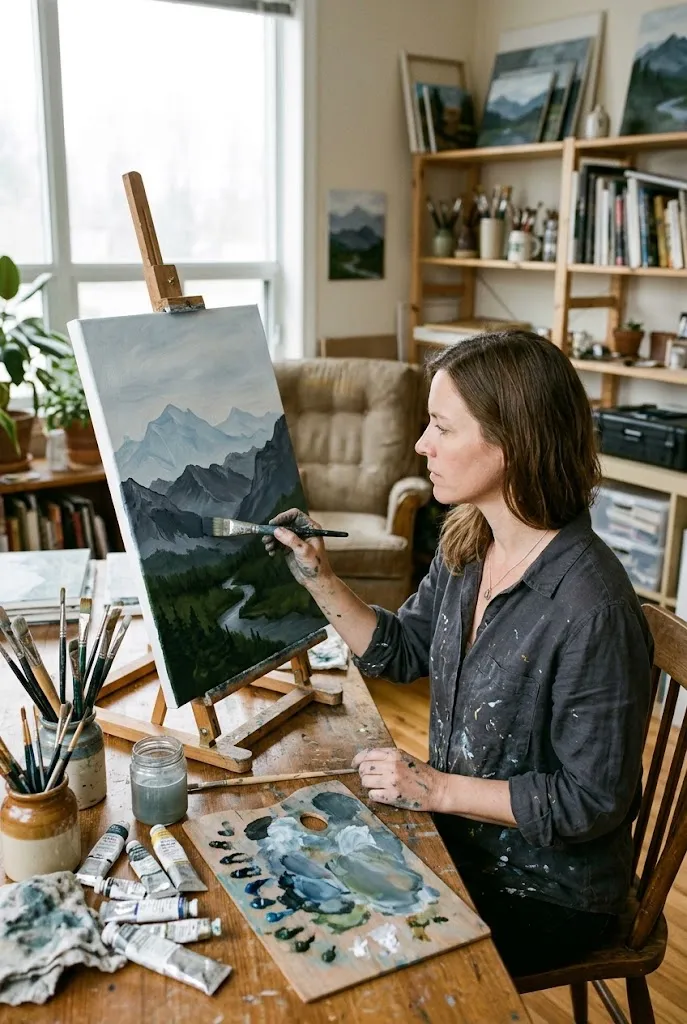
Layered mountains can look impressive without complicated perspective. The trick is to create several overlapping silhouettes rather than paint every rock and tree.
Paint a light sky, then add a distant mountain range in a pale blue-gray. Once it dries, paint a darker range in front, followed by a foreground in deep green, slate, or charcoal. Slight variations in the mountain peaks help the scene feel less repetitive.
Keep distant shapes lighter and less detailed than the foreground. You can leave the landscape bare for a minimalist look or add a few tiny tree shapes along the bottom edge.
Quick Tip: A wide flat brush is useful for broad mountain silhouettes, while a small round brush helps with distant trees or narrow ridge details.
7. Soft Pastel Ombre Art
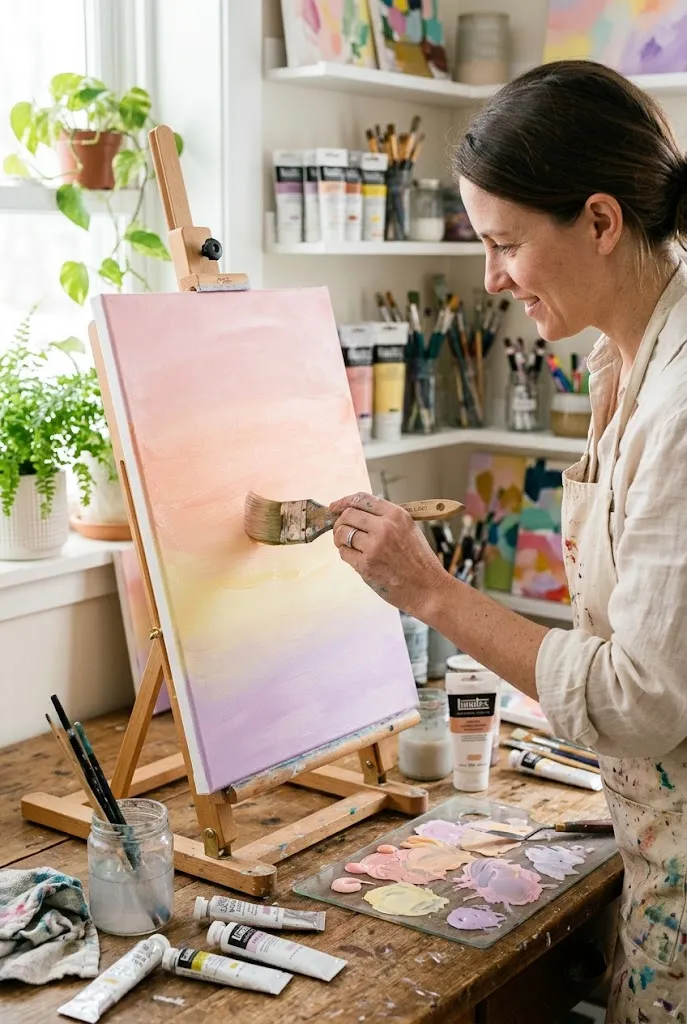
An ombre canvas uses a gradual shift from one color to another, making it one of the simplest abstract painting techniques to try. Easy DIY Canvas Art Painting Ideas Pastel shades create a light, airy effect, while deeper hues produce a moodier finish.
Choose two or three neighboring colors, such as blush, peach, and pale yellow. Apply them in broad horizontal bands, then blend the edges gently with a clean, slightly damp brush while the paint is still workable. Keep the brush moving lightly to avoid lifting paint from the canvas.
Acrylics may set before you finish blending, especially in a warm or dry room. If that happens, allow the surface to dry and use another thin layer rather than repeatedly working over tacky paint.
8. Bold Terracotta and Cream Arches
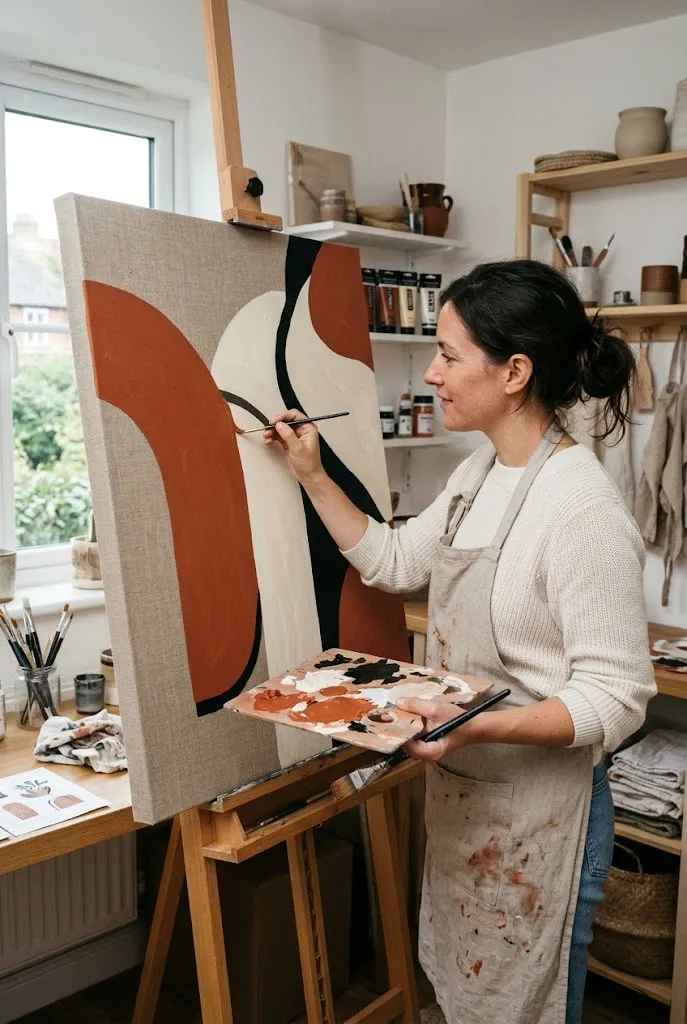
Painted arches create a contemporary look with just a few curved shapes. Terracotta against warm cream feels earthy and welcoming, while rust, dusty rose, and muted peach offer slightly different moods.
Sketch one large arch or overlap two arches of different heights. To create a rounded top, draw around a plate or another circular household object, then extend the sides downward with a ruler. Fill in the shapes with a flat brush, keeping the surrounding background relatively simple.
- Paint the background and let it dry.
- Lightly mark the arch outlines.
- Fill each shape with thin, even coats, letting the first coat dry before adding another.
- Refine the edges with a small brush.
The finished canvas works well on a shelf, above a small desk, or as part of a gallery wall.
9. Easy Ocean Wave Painting
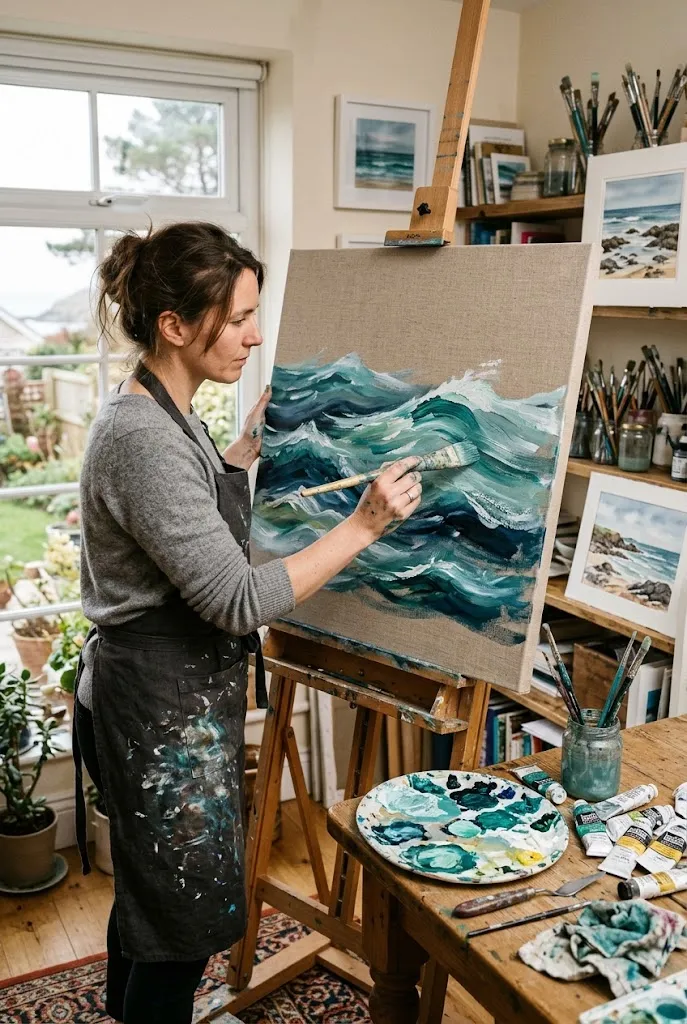
Ocean-inspired art brings movement and cool color to a room without requiring a realistic seascape. Try deep navy, turquoise, muted sea green, and white for a design that suggests waves through sweeping strokes.
Paint a blue background, then use a curved brushstroke to establish the main wave. Add a few lighter bands along its edge, allowing some of the darker color to remain visible. White foam can be suggested with broken strokes rather than a solid, perfectly outlined line.
For a calmer interpretation, use pale blue and gray-green with very little white. For a more dramatic canvas, concentrate the darkest tones near one corner and let the lighter strokes move diagonally across the surface.
Do: Use a few confident strokes and preserve the contrast between the wave and the water.
Don’t: Cover every area with white foam; leaving open water makes the composition easier to read.
10. Textured Palette-Knife Abstract
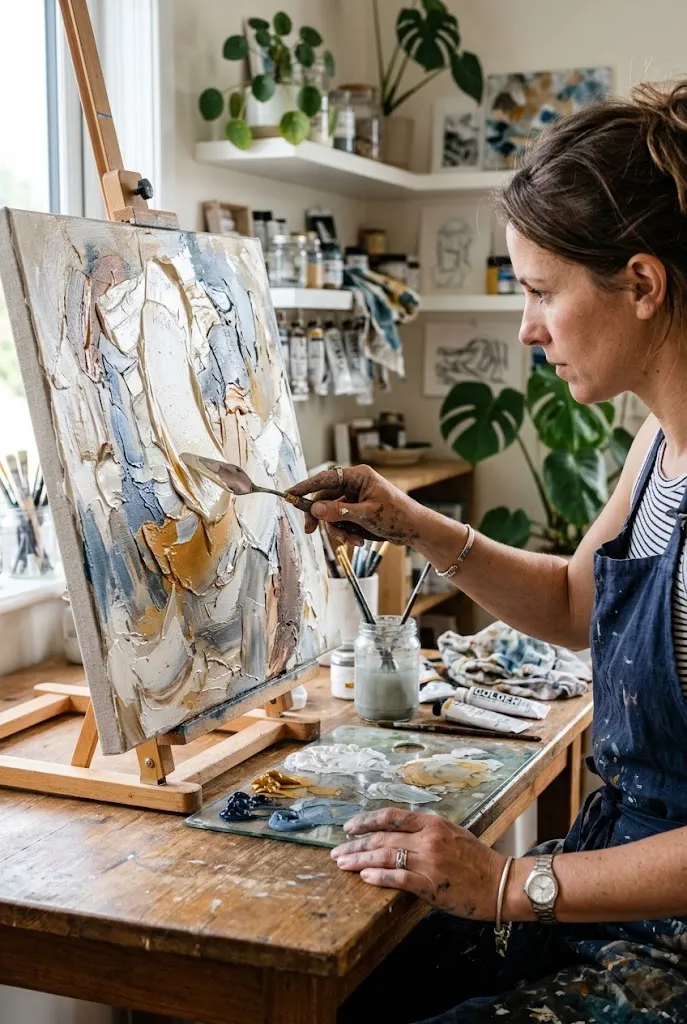
A palette knife creates raised ridges and irregular marks that give abstract artwork a sculptural quality. This approach is less about drawing and more about spreading, lifting, and layering paint.
Use acrylic paint that is suitable for the technique, and check the product label before mixing in a texture medium. A little white mixed with muted blue, ochre, or warm gray can create a layered, mineral-like palette.
- Spread paint in short, overlapping strokes.
- Change the direction of the knife to create variation.
- Leave some areas flatter so the raised texture stands out.
- Allow the piece to dry fully before handling or applying any compatible finish.
Thick applications may take longer to dry than thin brushwork. Follow the paint or medium manufacturer’s instructions rather than assuming the surface is dry because the top feels firm.
11. Sponge-Painted Abstract Circles
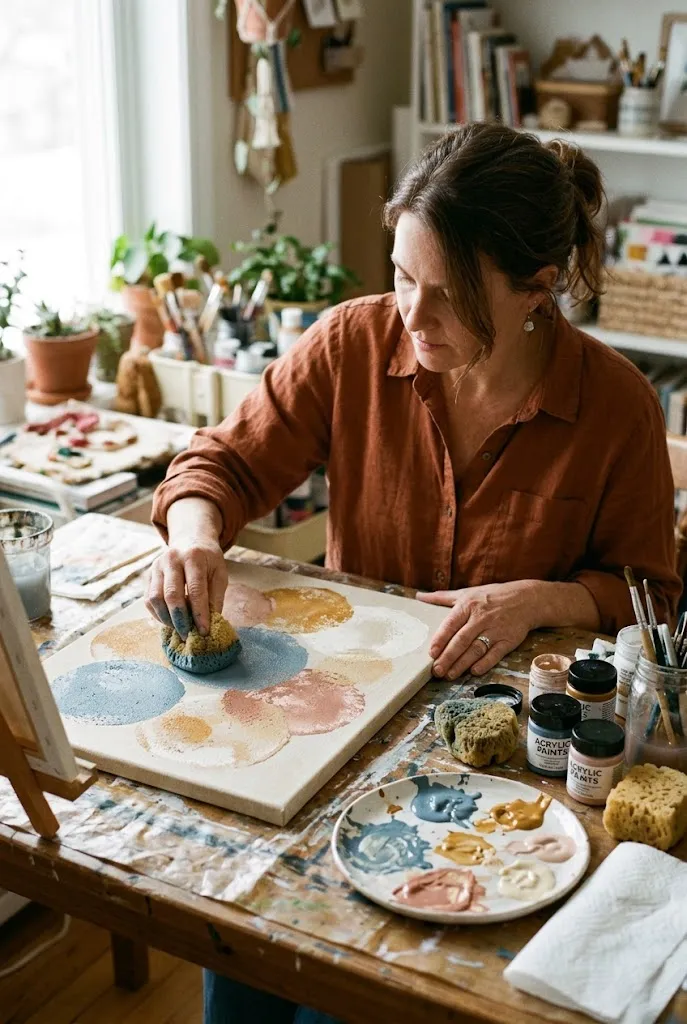
Sponge painting is a beginner-friendly way to create repeating shapes with soft, slightly irregular edges. The circles can look playful, modern, or understated depending on the palette and spacing.
Cut a clean household sponge into a manageable shape or use a craft sponge. Dab a small amount of paint onto it, then press it onto the canvas without twisting. Practice first on scrap paper so you can judge how much paint creates a clear impression.
Arrange the circles in a loose grid, a clustered composition, or a sweeping curve. Use different sizes to make the pattern feel intentional. A palette of dusty blue, ochre, blush, and cream can add color without becoming too busy.
Quick Tip: Make a few test marks before working on the final canvas. A heavily loaded sponge can create a solid blob rather than a defined print.
12. Easy Daisy Canvas Art
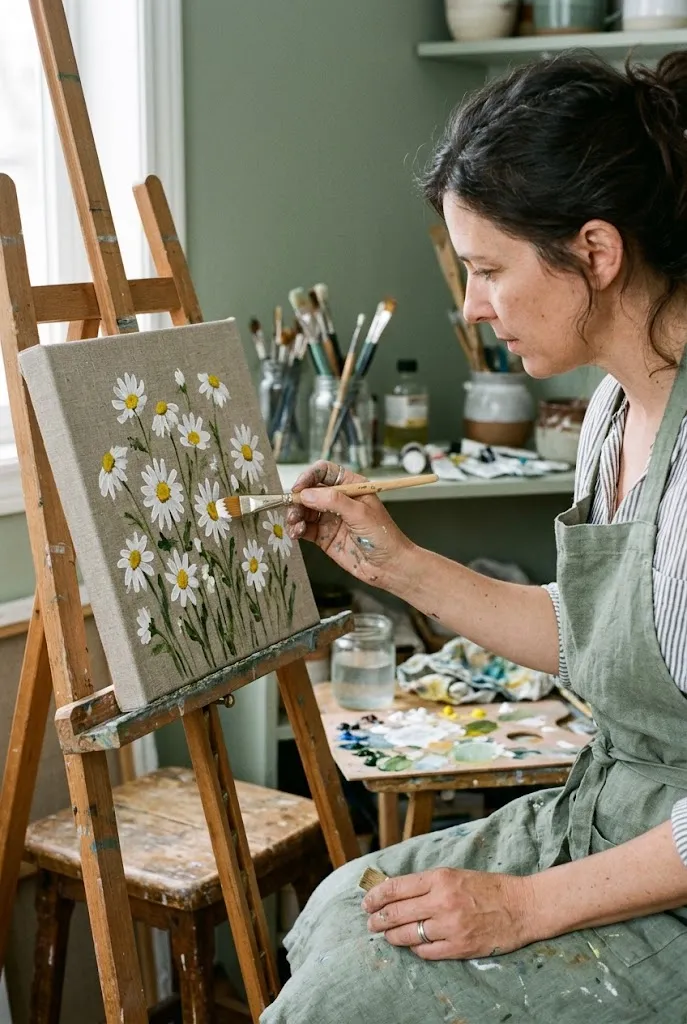
Daisies are easy to recognize, so a simplified version can look charming without requiring advanced painting skills. White petals, sunny yellow centers, and green stems stand out against a pale blue, muted sage, or soft pink background.
Paint the background first and let it dry. Use a small flat brush to make short white strokes radiating outward from each flower center. Add the yellow centers once the petals are dry enough to keep their shape, then finish with a few slender stems and leaves.
Vary the size and angle of the flowers instead of lining them up evenly. A loose arrangement feels more natural, while a single large daisy creates a simple focal point.
Common Mistake: Painting every petal the same length can make the flowers look like symbols. Slight variations in shape and spacing help them feel hand-painted.
13. Minimalist Leaf and Botanical Art
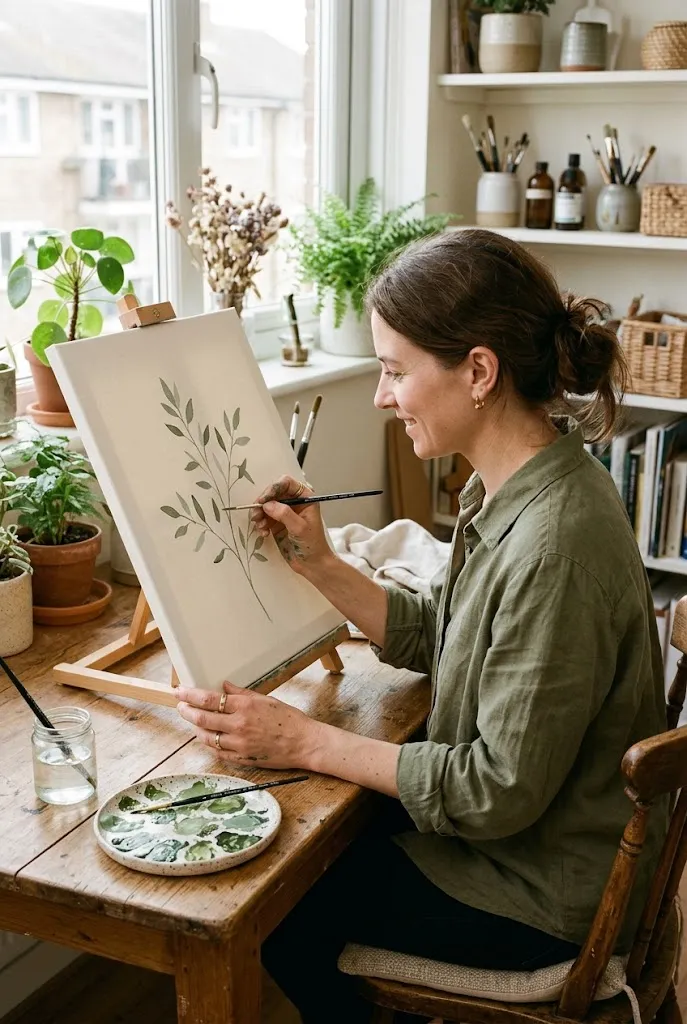
Botanical canvas art offers a natural look without the complexity of a detailed plant illustration. Simple branches, rounded leaves, and slender stems work well in bedrooms, bathrooms, or quiet reading spaces.
Start with a warm-white background. Sketch one or two stems lightly, Easy DIY Canvas Art Painting Ideas then use a small round brush to add paired leaves in sage, olive, or deep green. You can make the leaves symmetrical for a graphic look or vary their direction for a more relaxed design.
If you want a more contemporary composition, place the branch off-center and leave a large area of blank canvas around it. This negative space is part of the design, not an area that needs filling.
14. Easy Moon and Night-Sky Art
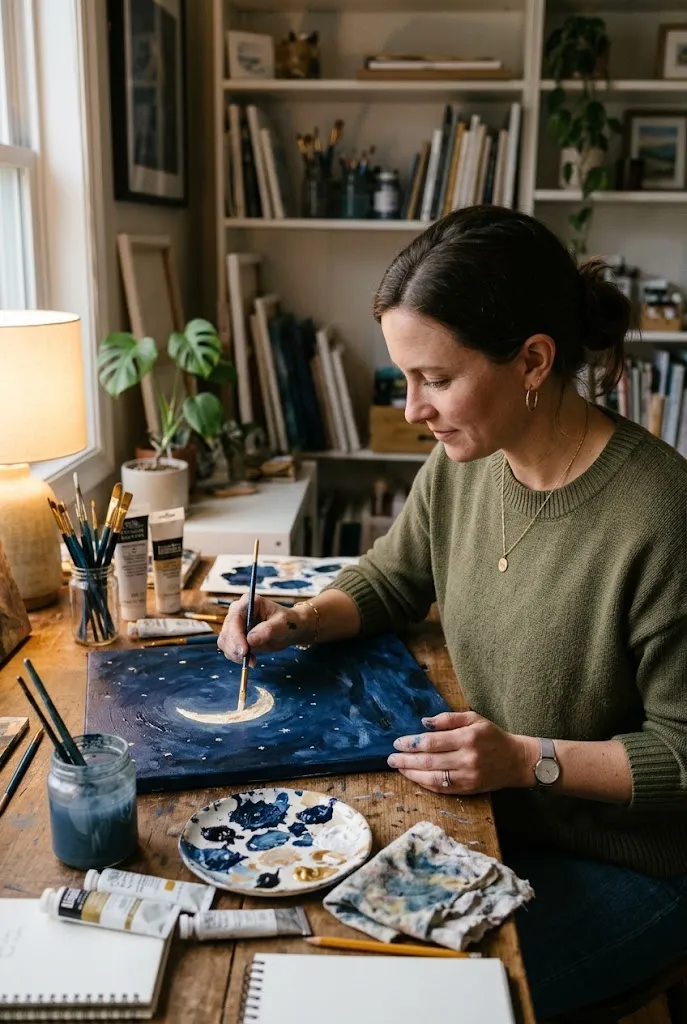
A moonlit sky is a forgiving subject because the design can be symbolic rather than realistic. Deep navy, indigo, and muted blue create a dark background for a pale crescent moon and a scattering of small stars.
Paint the background in a few closely related blues, blending lightly if you want a cloudy night-sky effect. Once dry, use a small brush or the tip of a suitable painting tool to add the moon and stars. Keep the number of details limited so the main shape remains the focus.
For a softer bedroom piece, use a dusty-blue background and warm ivory moon. For a more dramatic design, use midnight blue with small metallic-looking accents painted in an appropriate acrylic color.
15. Simple Rainbow Arch Art
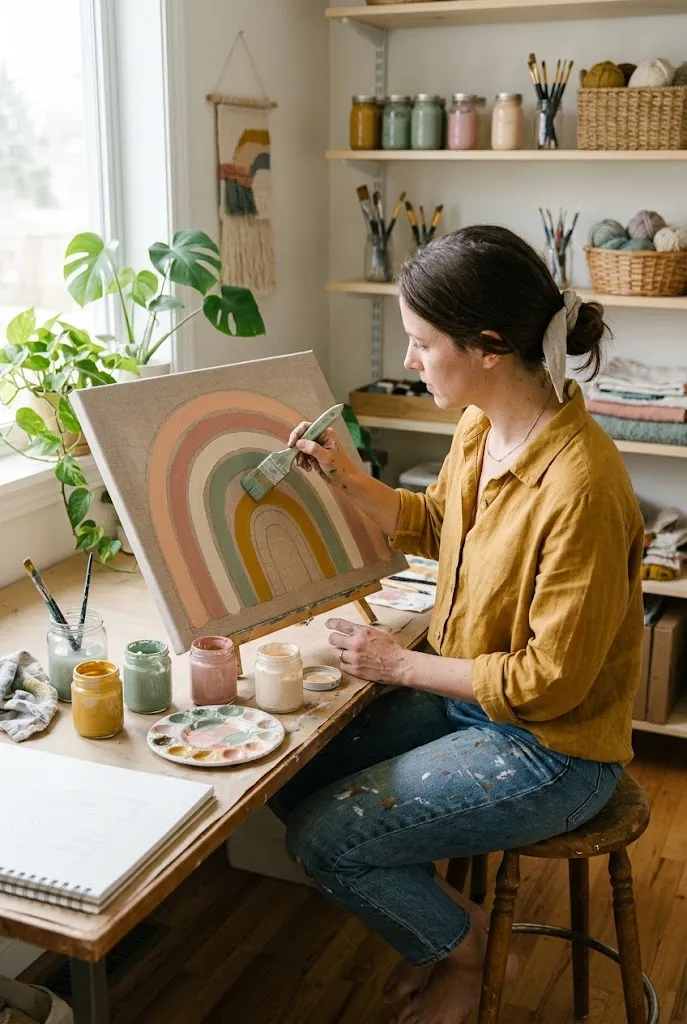
Rainbow arches can be colorful without feeling overly bright. Muted peach, mustard, sage, dusty pink, and cream make a warm palette for a bedroom, playroom, or casual family space.
Sketch nested arches lightly before painting. Use a round object to help mark the curves, then extend the sides with a ruler. Paint the outer arch first and work inward, allowing each band to dry before filling an adjacent section.
You can also paint separated arches rather than a complete rainbow. Easy DIY Canvas Art Painting Ideas An asymmetrical arrangement of two or three curved forms feels more abstract and suits adult living spaces as well as children’s rooms.
Do: Leave enough space between bands for each color to remain visible.
Don’t: Make the inner curves so narrow that the brush cannot fill them neatly.
16. Drip and Splatter Abstract Art
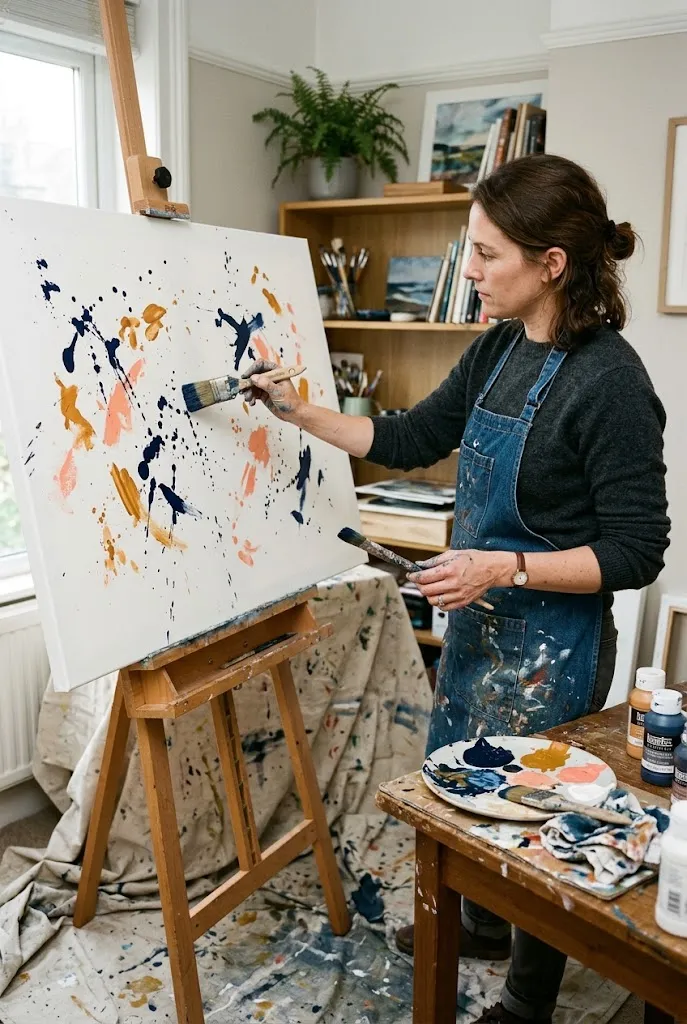
Drip and splatter art creates an energetic, expressive result with relatively little drawing. It works best when the marks feel deliberate rather than random.
Begin with a dry background in white, charcoal, or a muted color. Select two or three accent shades, then test your technique on scrap paper. Use a brush to flick small amounts of paint toward the canvas or let a little paint trail from a loaded brush. Easy DIY Canvas Art Painting Ideas Keep the canvas and surrounding area protected.
Avoid using excessive force or spraying paint toward other people, pets, or unprotected surfaces. Keep the activity controlled and follow the paint label’s handling guidance.
Before / After Logic: A plain background gives splatter marks room to stand out; too many colors and layers can make the same composition feel visually noisy.
17. Textured Sand and Stone-Inspired Art
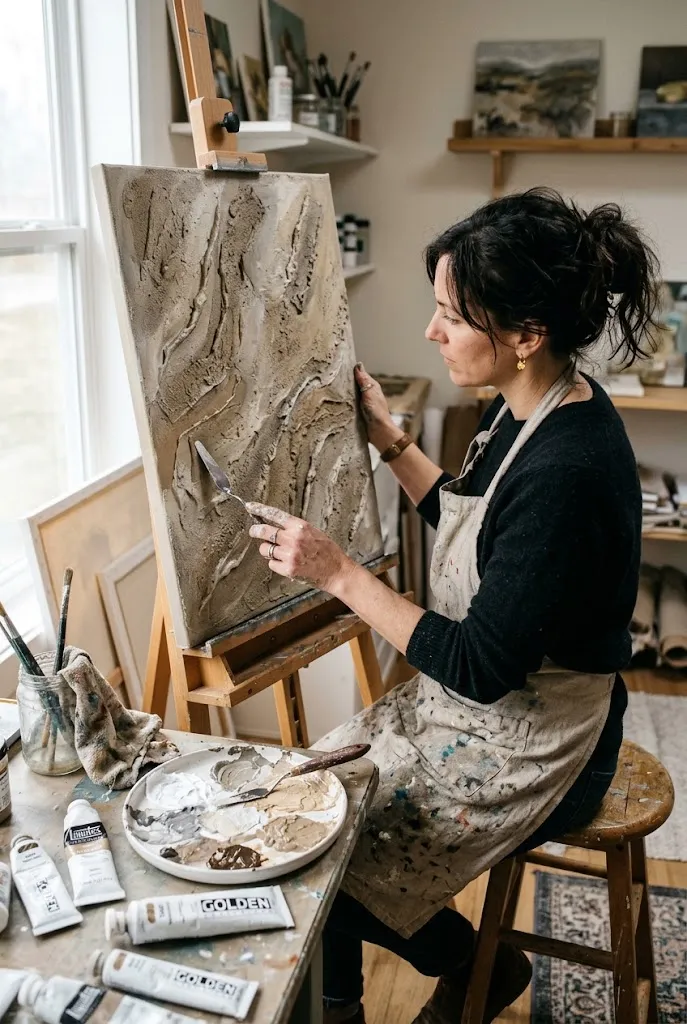
Earthy artwork can suggest stone, sand, or weathered plaster through layered color and texture. You don’t need actual sand or heavy construction materials to get the effect. Use acrylic paint and a compatible texture medium designed for painting, following its instructions.
Build a base in warm beige, gray, or off-white. Add a few uneven layers with a palette knife, allowing some darker color to show through. Keep the texture varied: flatter areas can sit beside raised ridges, giving the canvas depth without making the surface uniformly thick.
This style pairs naturally with wood furniture, woven textiles, ceramic accessories, and other materials that have visible texture.
Editor’s Note: Before applying a finish, make sure the paint and any texture medium are fully dry according to their labels. A thick surface can take longer to dry throughout.
18. Easy Checkerboard Canvas
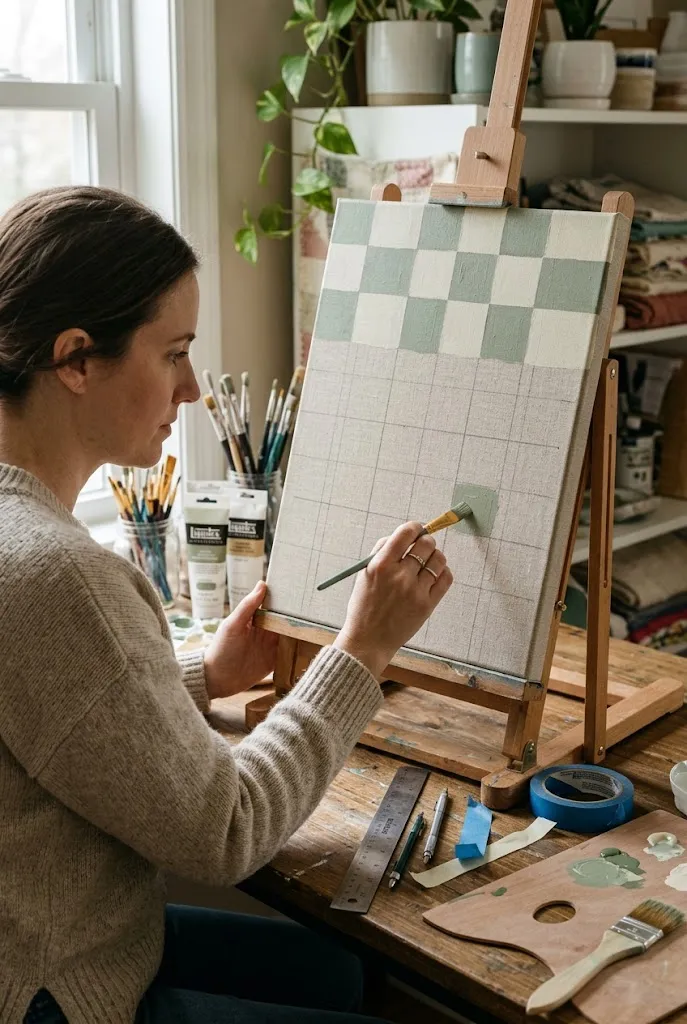
A checkerboard canvas brings graphic pattern into a room and can be customized to almost any color scheme. Traditional black and white feels bold, while sage and cream or dusty blue and warm beige creates a softer result.
Use a ruler and pencil to mark a grid. Keep the squares consistent in size, then paint alternating squares. Painter’s tape can help with straight edges, but remove it carefully according to the tape and paint instructions to avoid lifting the finish.
For a looser, handmade version, skip the tape and embrace slightly irregular edges. That approach works particularly well with earthy colors and casual decor.
19. Easy Abstract Heart Canvas
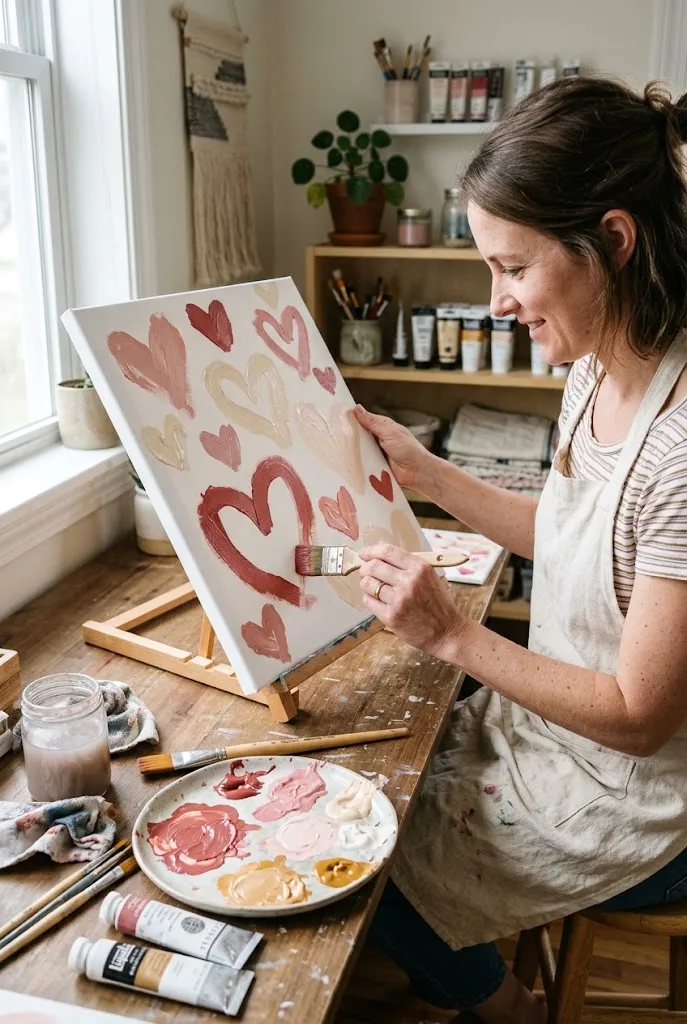
Heart art can feel playful, romantic, or modern depending on its treatment. Instead of drawing a perfect symmetrical heart, use two broad curved shapes or overlapping brushstrokes to create a looser interpretation.
A blush, muted red, and cream palette works for a bedroom, creative corner, or handmade gift. Easy DIY Canvas Art Painting Ideas A single large heart creates a clear focal point, while several small hearts in varied sizes make the composition more energetic.
Lightly sketch the outline before filling it in, or paint directly with a broad brush if you prefer an expressive shape. Add a contrasting outline only if the design needs definition.
20. Simple Sunburst Canvas Art
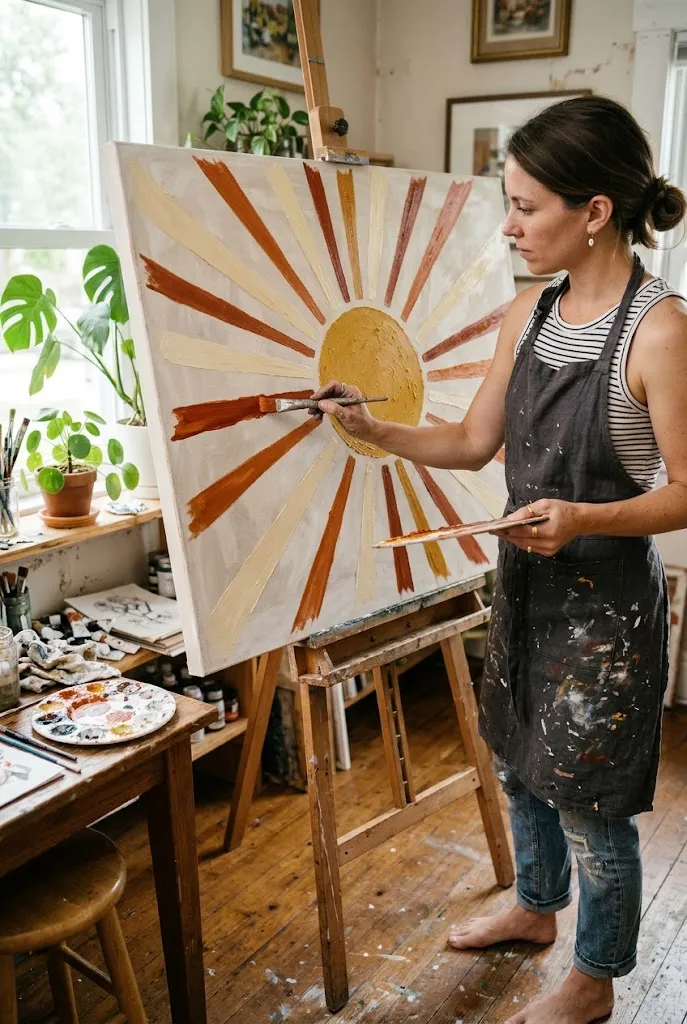
Sunburst art uses radiating lines or tapered shapes to create a focal point. The design can feel retro, cheerful, or understated depending on the colors and the number of rays.
Mark a small central circle with a pencil, then lightly sketch rays extending outward. Paint the shapes in alternating colors, or use one shade against a contrasting background. Mustard, rust, and cream create a warm vintage-inspired look; pale yellow against white feels lighter.
Vary the ray lengths slightly if you want a handmade effect. If you prefer a cleaner graphic finish, use a ruler to guide straight edges and keep the spacing consistent.
21. Easy Abstract Tree Silhouette
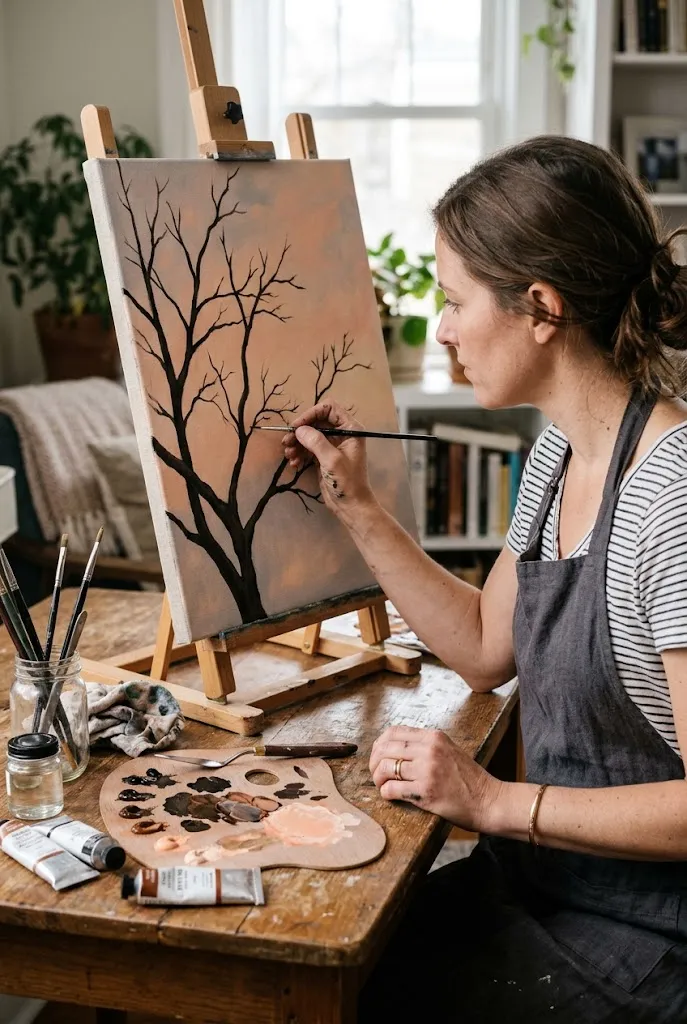
A tree silhouette combines a simple background with a strong foreground shape. It can suggest a peaceful landscape without requiring realistic leaves or detailed branches.
Paint a gradient or solid background in pale peach, soft blue, or warm gray. After it dries, use a small round brush to paint a dark trunk and branches. Start with the main trunk, then divide it into thinner branches rather than trying to paint every twig at once.
For a minimalist result, leave the tree slightly off-center. A small line of ground at the bottom can anchor the composition and prevent the tree from appearing to float.
22. Easy Lavender Field Painting
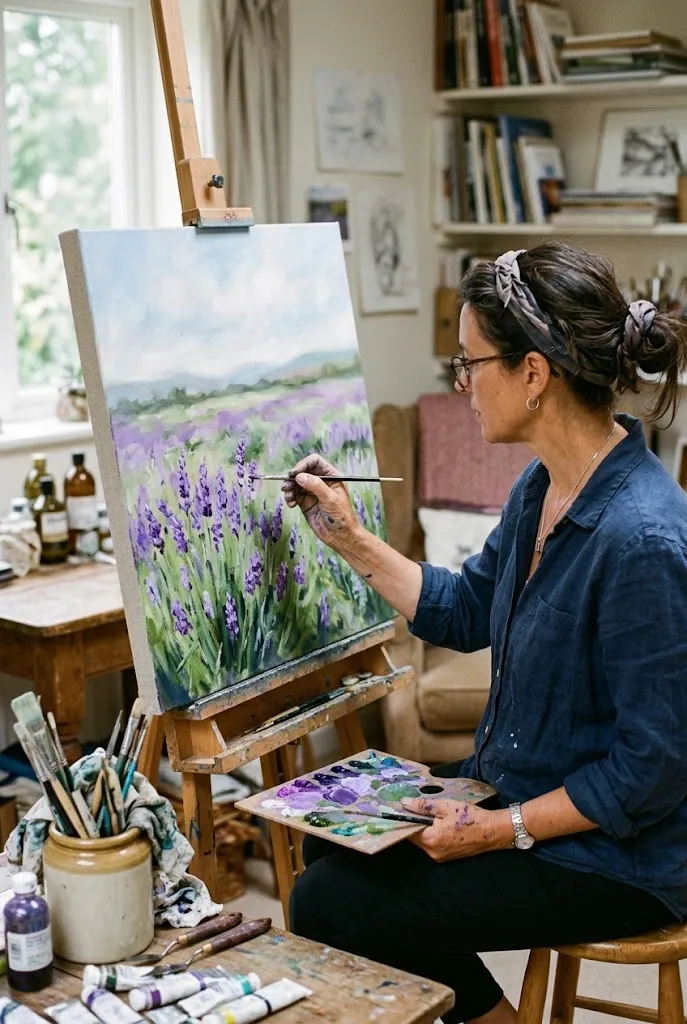
A lavender field can be built from repeated short strokes rather than individual flower details. This makes it accessible to beginners while still producing a recognizable landscape.
Paint a pale sky and a simple green foreground. Use different purple shades to create clusters of vertical flower marks, placing darker strokes closer to the viewer and softer ones farther away. Add a few green stems, but don’t outline every bloom.
A diagonal path or narrow strip of lighter color can guide the eye into the scene. If you want a simpler composition, skip the path and let the lavender fill most of the lower canvas.
23. Easy Geometric Triangle Art
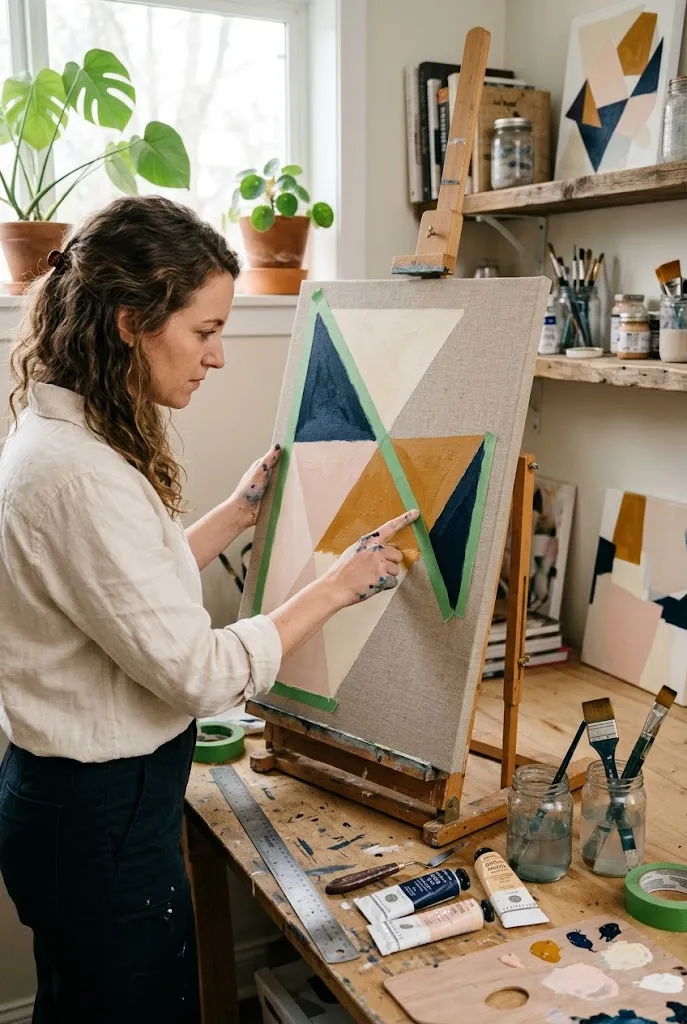
Triangles are easy to arrange into a balanced composition and work well with bold or muted colors. Use painter’s tape for crisp edges or paint freehand for a more relaxed look.
Choose a palette before starting. Navy, ochre, blush, and cream create contrast, while sage, gray, and ivory feel quieter. Lightly sketch a few large triangles first, then add smaller ones only where the layout needs balance.
Paint one section at a time and let it dry before painting an adjacent shape if the colors might mix. Removing painter’s tape slowly and carefully can help preserve clean edges, though the result also depends on the canvas texture and the tape used.
Quick Tip: A few large shapes usually read more clearly than many tiny triangles on a small canvas.
24. Easy Rainy-Day Window Scene
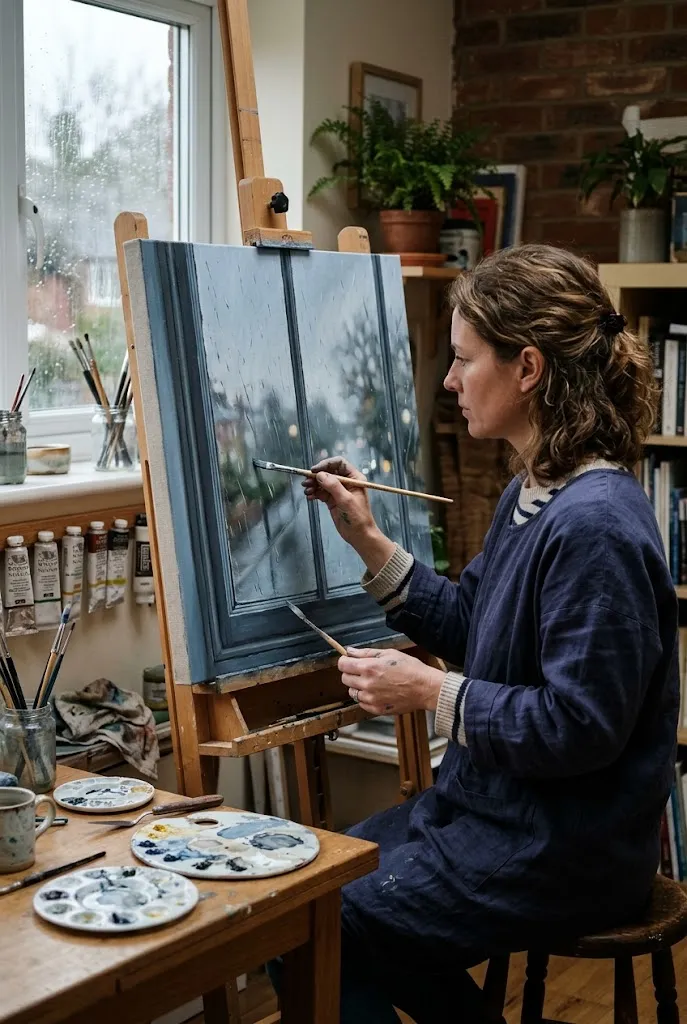
A rainy-window painting creates a quiet, atmospheric scene with a few simple shapes. Use muted blue-gray, charcoal, and warm white to suggest glass, rain, and a cloudy view.
Paint the background in soft gray-blue, then add a few darker window-frame lines. Once the main area is dry, use thin vertical strokes to suggest rain on the glass. A blurred shape beyond the window can imply trees or buildings without requiring detailed scenery.
For a cozier version, include a small warm-colored area at the bottom or side to suggest an interior reflection. Keep the contrast gentle if you want the canvas to suit a calm reading corner or bedroom.
25. Easy Speckled Terrazzo-Inspired Art
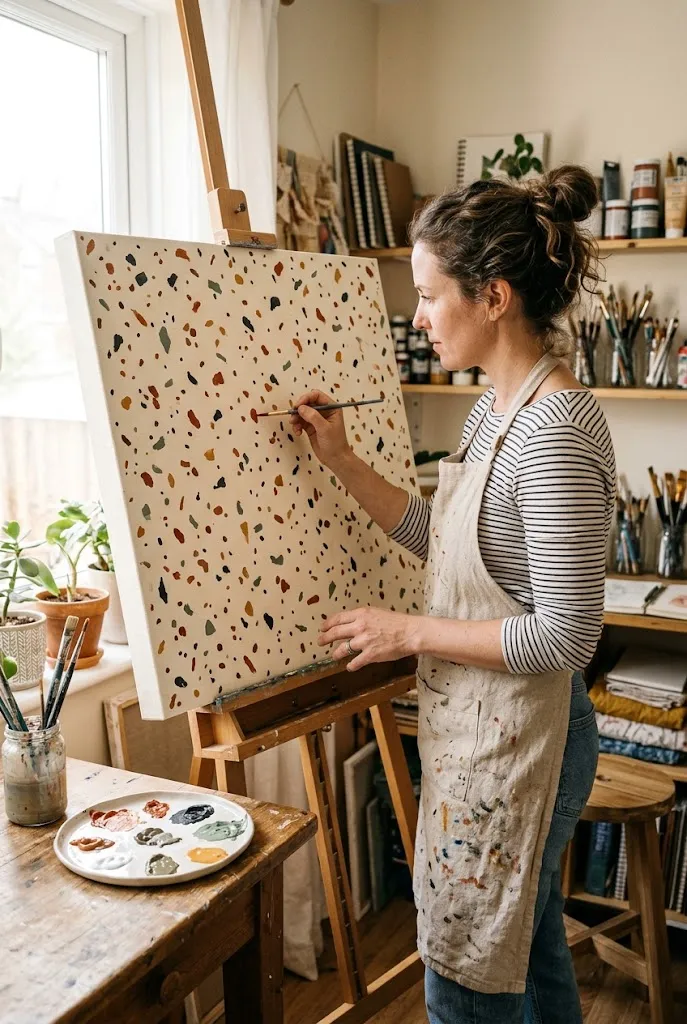
Terrazzo-inspired art uses scattered flecks and irregular shapes to create a lively pattern. A warm cream background with small accents of rust, charcoal, sage, and ochre works well with contemporary decor.
Paint the background first and allow it to dry. Then use a small brush to add irregular short marks, tiny dots, and larger angular flecks. Distribute the colors across the canvas rather than concentrating them in one area. Some open space between marks helps the pattern stay readable.
You don’t need to make the pieces identical. The variation is part of the look, so avoid spending too much time perfecting each fleck.
26. Simple Two-Tone Abstract Waves
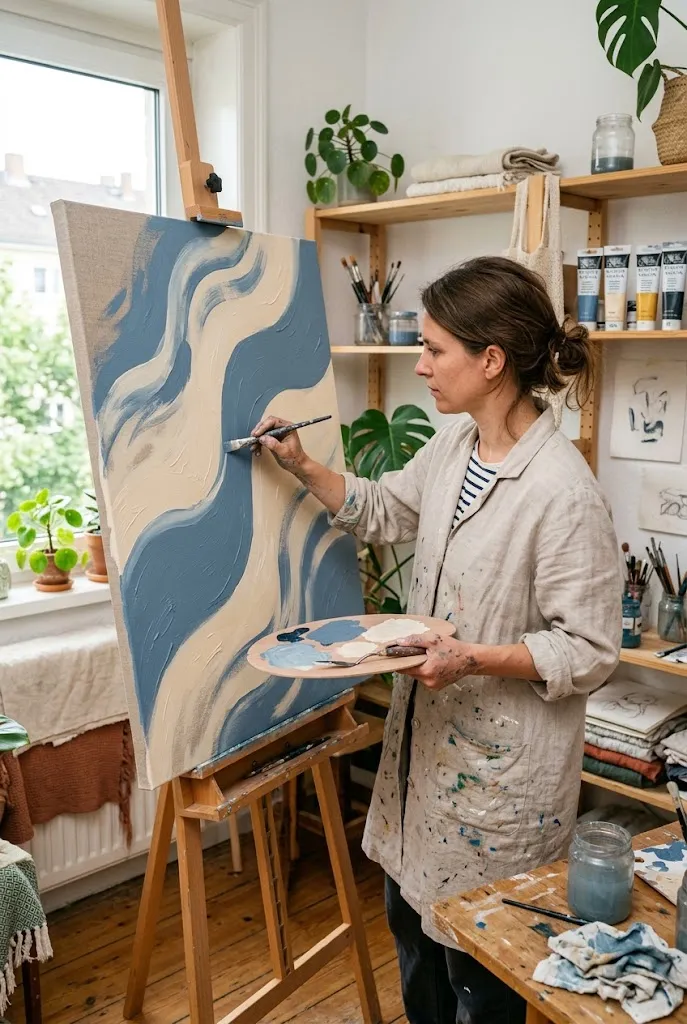
Two-tone wave art offers movement without a complicated subject. Use a light and dark version of the same color, or pair two complementary shades such as dusty blue and cream.
Sketch a few long, flowing curves across the canvas. Fill the shapes with a flat brush, keeping the curves broad enough to paint comfortably. If the edges look uneven, refine them with a smaller brush after the main areas have dried.
This approach works especially well when the wave shapes vary in width. One wide curve can anchor the design, while a narrower line creates contrast and leads the eye across the painting.
27. Easy Wildflower Meadow
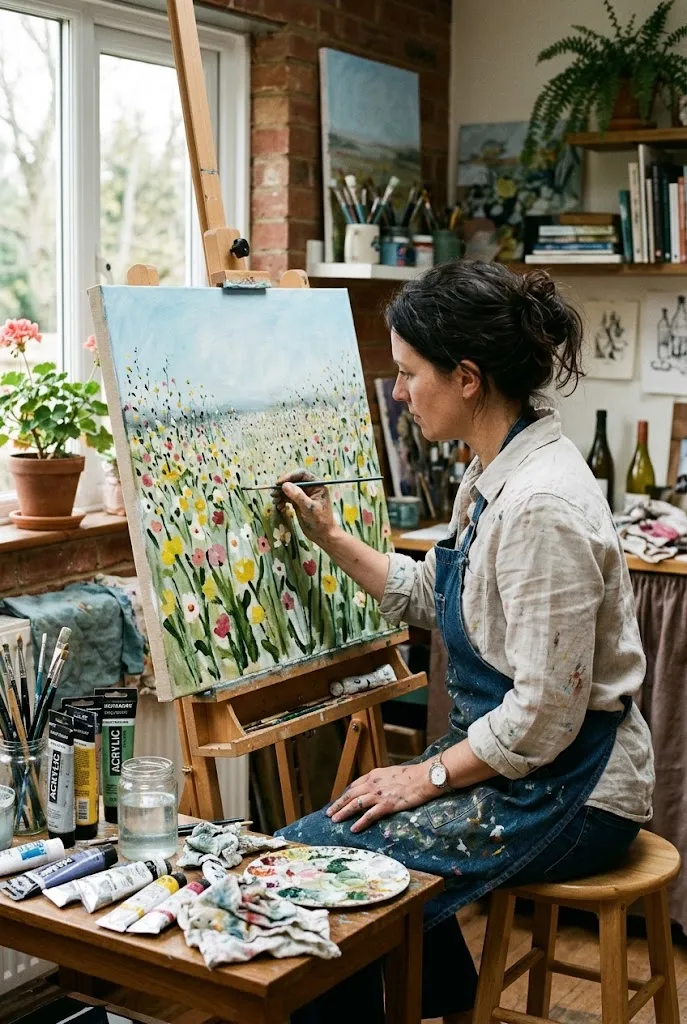
A wildflower meadow is more forgiving than a formal flower arrangement because the plants can vary in height, spacing, and color. The aim is to suggest a field of blooms rather than paint each flower individually.
Start with a soft green base and add a few darker green vertical strokes for stems. Use small dabs of yellow, white, pink, and muted red to suggest blossoms. Keep the flowers smaller toward the horizon and larger near the bottom to create a sense of depth.
For a modern interpretation, limit the palette to two flower colors and one green. For a more playful piece, allow the colors to vary while keeping the overall composition loose.
28. Minimalist Half-Sun Canvas
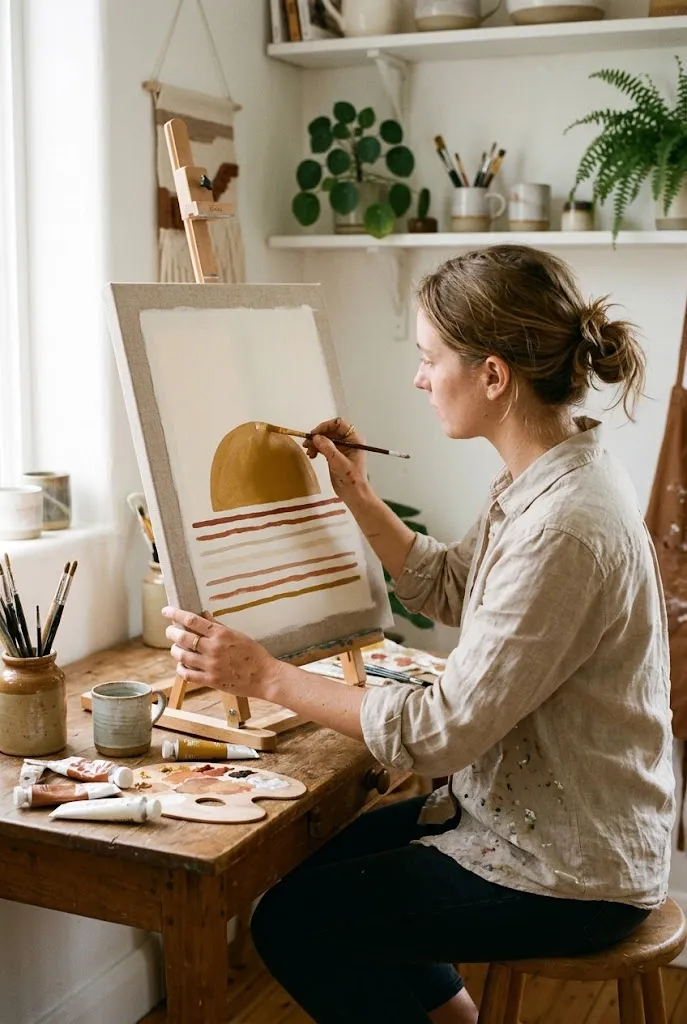
A half-sun design is one of the simplest ways to create graphic wall art with a clear focal point. A semicircle rising above horizontal lines can suggest a sunrise, horizon, or abstract landscape.
Use a warm white or pale sand background. Sketch a half-circle near the lower middle of the canvas, then fill it with ochre, rust, or muted orange. Add a few horizontal lines beneath it, leaving enough space between them to keep the design open.
This style looks especially effective in a small frame or as part of a pair. One canvas can use rust and cream, while a companion piece uses a complementary muted-blue palette.
29. Easy Birch Tree Painting
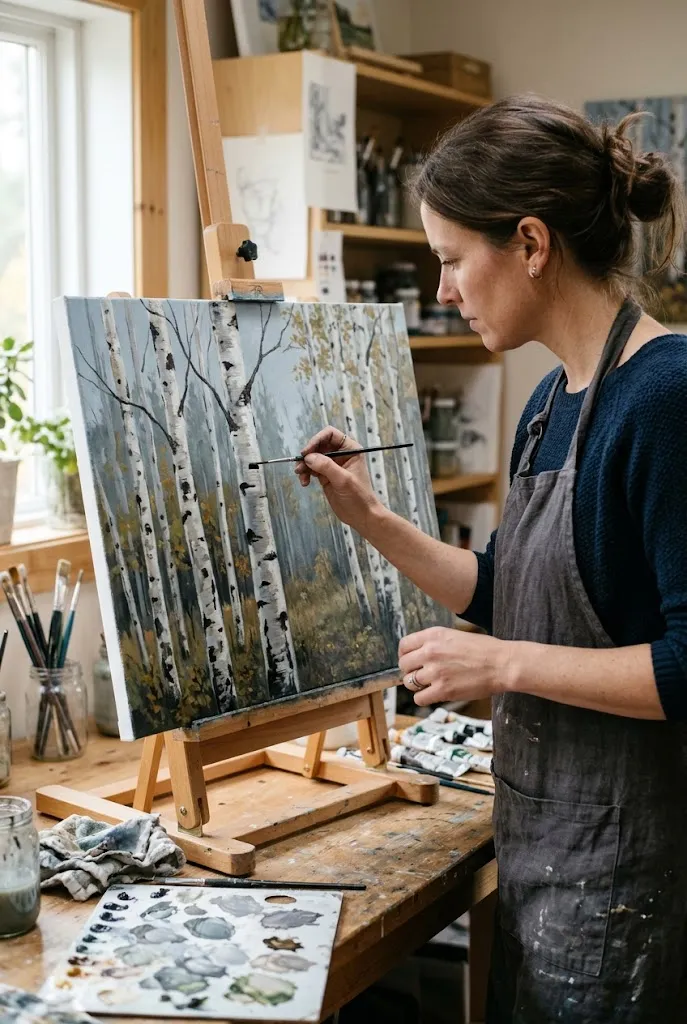
Birch trees can be suggested with a few pale trunks and dark, broken markings. The technique is simple enough for beginners and produces a woodland scene that feels different from a mountain or meadow landscape.
Paint a blue-gray or muted green background. Add several narrow white or pale-gray vertical trunks, varying their height and spacing. Once those shapes dry, use a small brush to add short dark marks across the trunks. A few loose branches or darker trees in the distance can add depth.
Keep the marks irregular rather than making them into uniform stripes. The natural rhythm of the trunks matters more than fine detail.
30. Easy Abstract Paint-Pour-Inspired Design
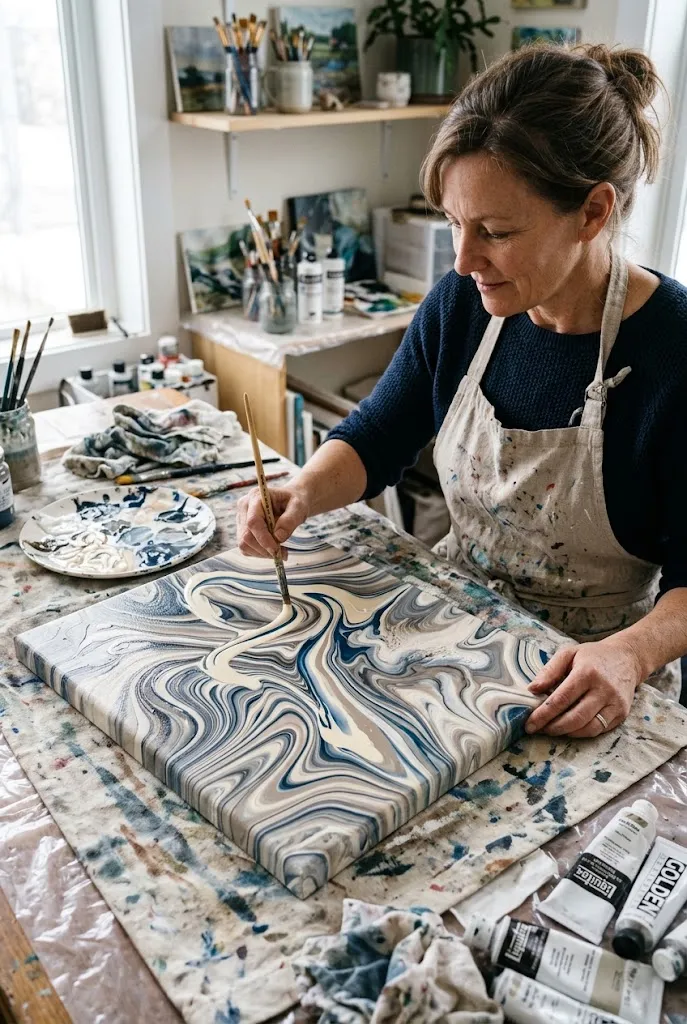
Flowing abstract patterns can resemble marbling or paint pouring, but a beginner can create a related effect with a brush by dragging wet colors together in controlled curves. This avoids needing to pour large quantities of paint or buy specialized equipment.
Choose two or three compatible acrylic colors and check whether the products require a specific medium for the effect you want. Paint broad ribbons or curved bands, then lightly pull the edges together with a clean brush. Stop before the colors become muddy.
For a simpler version, use cream, blue, and gray. For a bolder piece, try rust, blush, and deep plum. Keep the background and the number of colors restrained so the movement remains the focal point.
Common Mistake: Overworking the wet paint can blur every color into one another. A few distinct ribbons often create more visual interest.
31. Easy Poppy Flower Painting
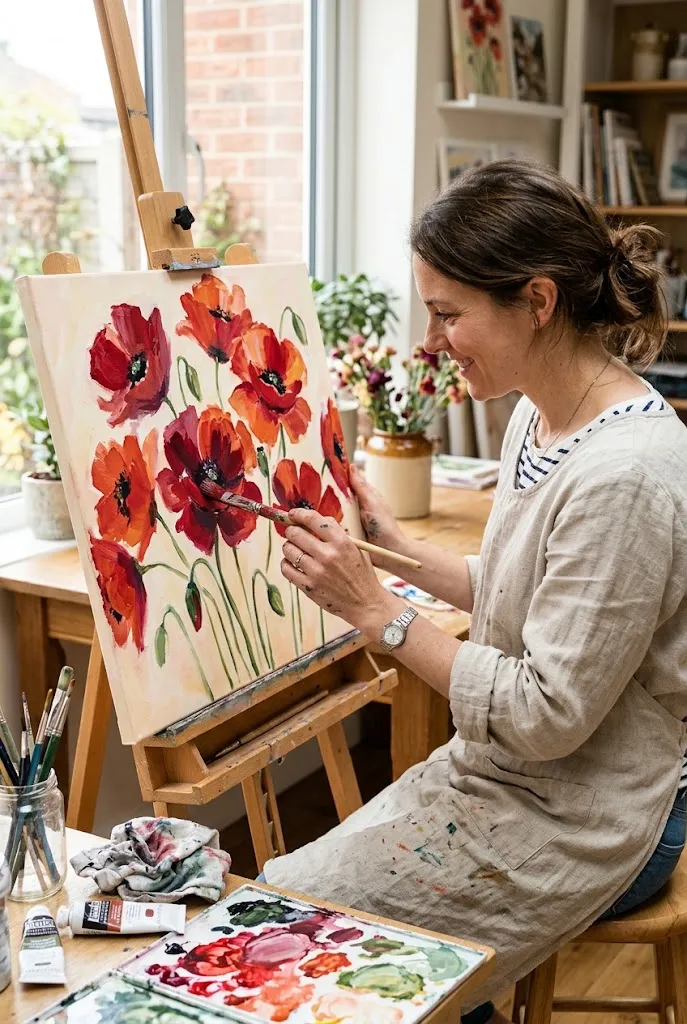
Poppies are recognizable from their broad, open petals and dark centers. You can paint a stylized version using red, orange-red, or coral shapes without drawing intricate botanical details.
Begin with a pale background, then use a medium brush to create broad petal marks around each flower center. Leave small gaps between some of the strokes so the petals remain distinct. Add dark centers once the brighter paint is dry enough to prevent unwanted blending, then finish with a few green stems.
For a graphic composition, use only two large blooms. For a fuller meadow effect, add several smaller flowers near the bottom of the canvas.
32. Easy Blue-and-White Coastal Abstract
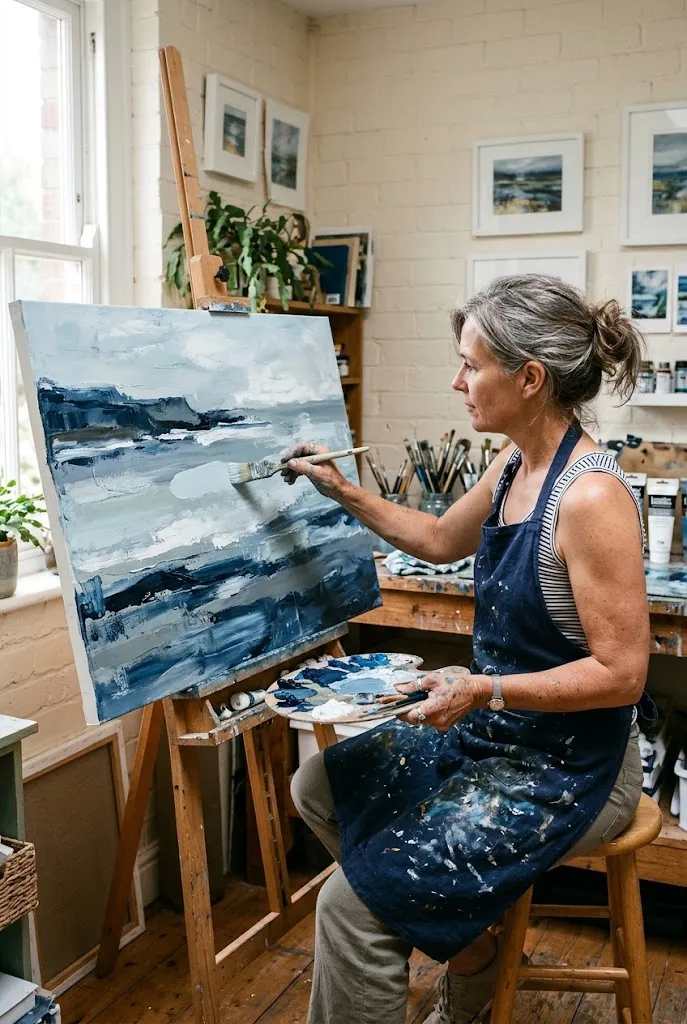
Blue-and-white artwork can suggest sea, sky, and coastal light without depicting a specific beach. It suits rooms with natural wood, woven accessories, and crisp white textiles, but it also works as a simple color accent in a modern apartment.
Use a palette of navy, muted blue, pale blue, and white. Paint broad, uneven horizontal bands, then add a few curved or broken strokes to suggest movement. Leave some areas less layered so the composition has visual breathing room.
For a more relaxed look, allow the bands to vary in width. If you prefer a cleaner design, use a ruler to lightly guide the horizontal placement before painting.
33. Easy Textured Floral Canvas
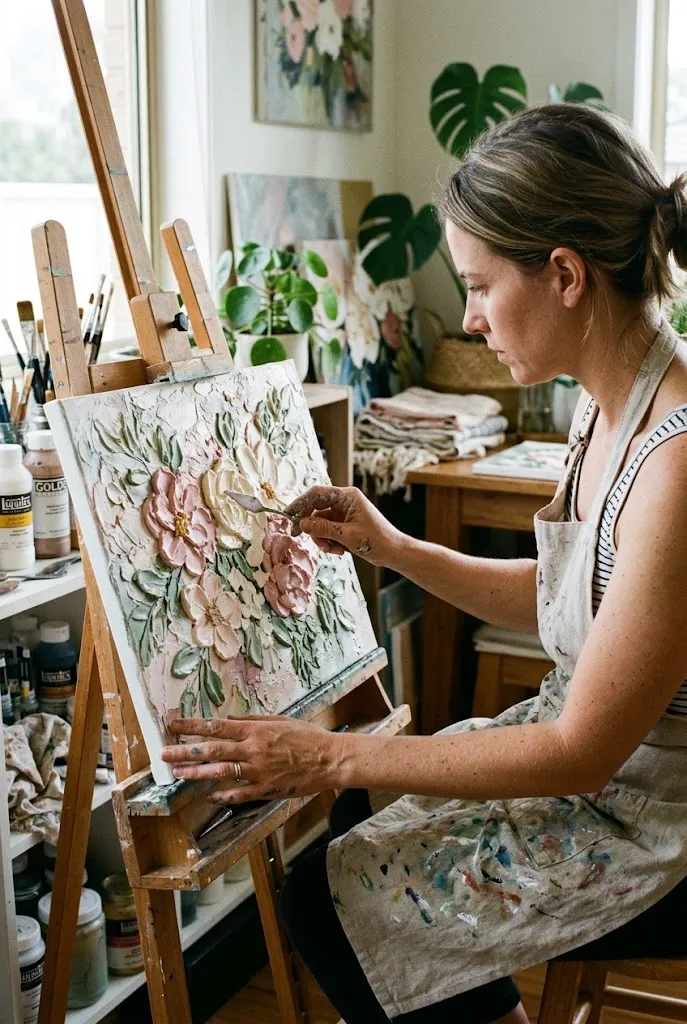
If you like floral art with more dimension, add a little texture to the petals instead of painting everything flat. A compatible acrylic texture medium can help create raised details; follow its instructions for mixing, application, and drying.
Paint the background and the basic flower shapes first. Once those areas are ready for another layer, use a palette knife or stiff brush to add a few raised petal marks. Keep the thickest texture concentrated on the flowers, with flatter stems and leaves to provide contrast.
This technique can be subtle with cream and blush, or more colorful with coral, lilac, and sage. Because thicker paint layers may dry more slowly, place the canvas somewhere it can remain undisturbed.
34. Easy Abstract Circle and Line Composition
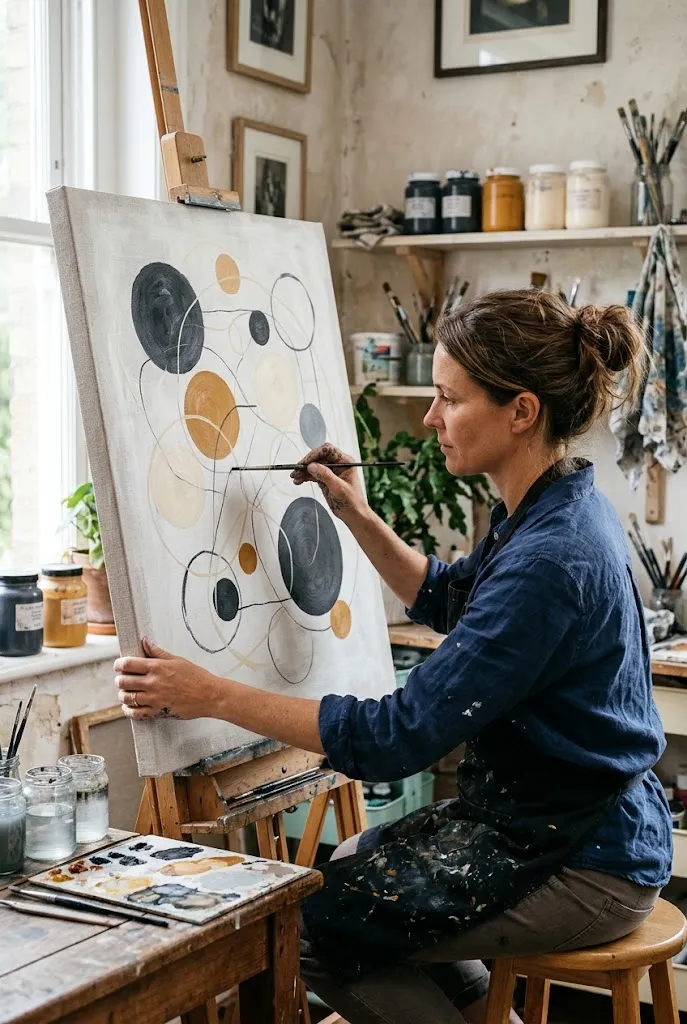
Circles and lines create a balanced abstract design using just a few basic shapes. This is a good option if you like contemporary art but want a project that relies on arrangement rather than detailed drawing.
Paint a solid or softly varied background. Add two or three circles in different sizes, then introduce thin lines that cross the canvas or stop near the shapes. Use a limited palette such as charcoal, ochre, and cream, or swap in muted blue for a cooler look.
Consider the visual weight of each element. A large dark circle may need a few smaller marks on the opposite side to keep the composition from feeling lopsided.
Quick Tip: Arrange paper cutouts of the shapes before painting if you’re unsure where to place them.
35. Personalized Initial or Monogram Canvas
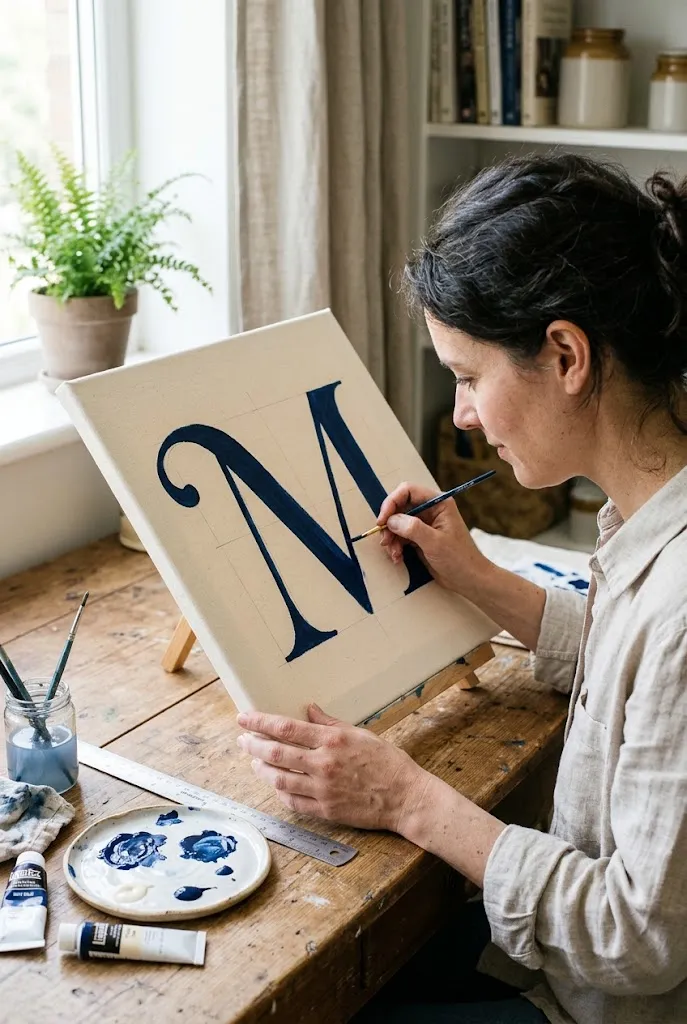
A personalized canvas can make a bedroom, entryway, or handmade gift feel more individual. A single initial or monogram is straightforward to paint, especially if you choose a simple letterform rather than ornate lettering.
Lightly sketch the letter in pencil, use a ruler for straight sections, and choose a brush that suits the size of the shape. Paint the main letter in one or two thin coats, allowing each coat to dry before adding another. A muted navy initial on cream feels classic, while terracotta on pale pink or black on white looks more graphic.
If freehand lettering feels difficult, trace a printed letter onto the canvas using a method appropriate for the surface. Keep the design simple enough that the letter remains easy to read from across the room.
Do: Test your color and brush on scrap material first.
Don’t: Apply a heavy coat to hide every uneven edge at once; a second controlled layer usually offers better control.
Tips for Making Beginner Canvas Art Look Finished
You don’t need to paint like a professional to create artwork you’ll want to display. A few practical choices can make a noticeable difference.
Choose a canvas size that suits the design
- Small canvas: Ideal for initials, botanical branches, simple suns, and compact geometric designs.
- Medium canvas: A flexible choice for abstracts, florals, sunsets, and small landscapes.
- Large canvas: Gives broad brushstrokes, color blocking, and expressive shapes room to breathe.
If you’re unsure about scale, cut a piece of paper to the approximate canvas dimensions and temporarily place it where you plan to hang the finished work.
Limit your color palette
Three or four coordinated colors are often easier to manage than a large collection of unrelated shades. Start with one dominant color, one supporting color, and a smaller accent. White can lighten many colors, while a darker shade adds contrast.
Remember that adding white can make a color look lighter but may also change its character. Mix small amounts at a time and test the result before applying it to the canvas.
Let the paint dry between layers
Acrylic paint often dries relatively quickly, but drying time varies with the paint, application thickness, room conditions, and any mediums used. Follow the product label and allow thicker or textured sections additional time.
Don’t stack, frame, or seal a painting until it is sufficiently dry for the next step. If you choose a varnish, make sure it is compatible with the paint and any mediums in the artwork, and follow the manufacturer’s directions.
Decide whether the painting needs a frame
A stretched canvas can be displayed unframed if its edges are neatly finished. A simple wood frame can give a minimalist painting a more defined border, while a narrow black frame may suit graphic artwork. Canvas panels generally need a frame or another suitable mounting solution.
A protective coating is optional, not a requirement for every piece. If you use one, test compatibility and follow the manufacturer’s instructions rather than assuming all finishes work with every acrylic painting.
Common Beginner Painting Mistakes to Avoid
Overworking the paint: Repeatedly brushing paint that is beginning to dry can create streaks or muddy colors. Let the layer dry and make a fresh pass when needed.
Using too many colors: A busy palette can make a simple design difficult to read. Start with a few colors and add more only if the composition needs them.
Skipping a test sketch: For designs involving arches, letters, or geometric shapes, a quick pencil plan can prevent awkward spacing. Keep the sketch light so it doesn’t show through thin paint.
Painting every part equally: Art often benefits from a clear focal point. One larger shape, flower, or contrasting color can anchor the composition while quieter areas give it room to breathe.
Applying a finish too soon: A dry-looking surface doesn’t always mean a thick painting is ready for a protective coating. Check the paint and finish instructions, especially when texture mediums are involved.
How to Choose the Right DIY Canvas Art Idea
If you’re still deciding what to paint, match the project to the time and tools you have available.
| If you want… | Try these ideas |
|---|---|
| A simple first project | Neutral abstract, pastel ombre, half-sun |
| Clean, modern wall art | Color blocks, line art, geometric triangles |
| A nature-inspired design | Botanical leaves, mountain landscape, wildflower meadow |
| A colorful statement piece | Sunset, ocean waves, rainbow arches |
| More texture and dimension | Palette-knife abstract, textured floral, stone-inspired art |
| Personalized artwork | Initial canvas, abstract hearts, circle-and-line composition |
Start with one canvas rather than planning a complete gallery wall immediately. Once you’ve settled on a technique and palette, you can create a second piece that shares a color or shape with the first.
The goal isn’t to make every brushstroke flawless. It’s to create a piece that feels intentional, suits your space, and gives you a technique you can build on in your next project.