
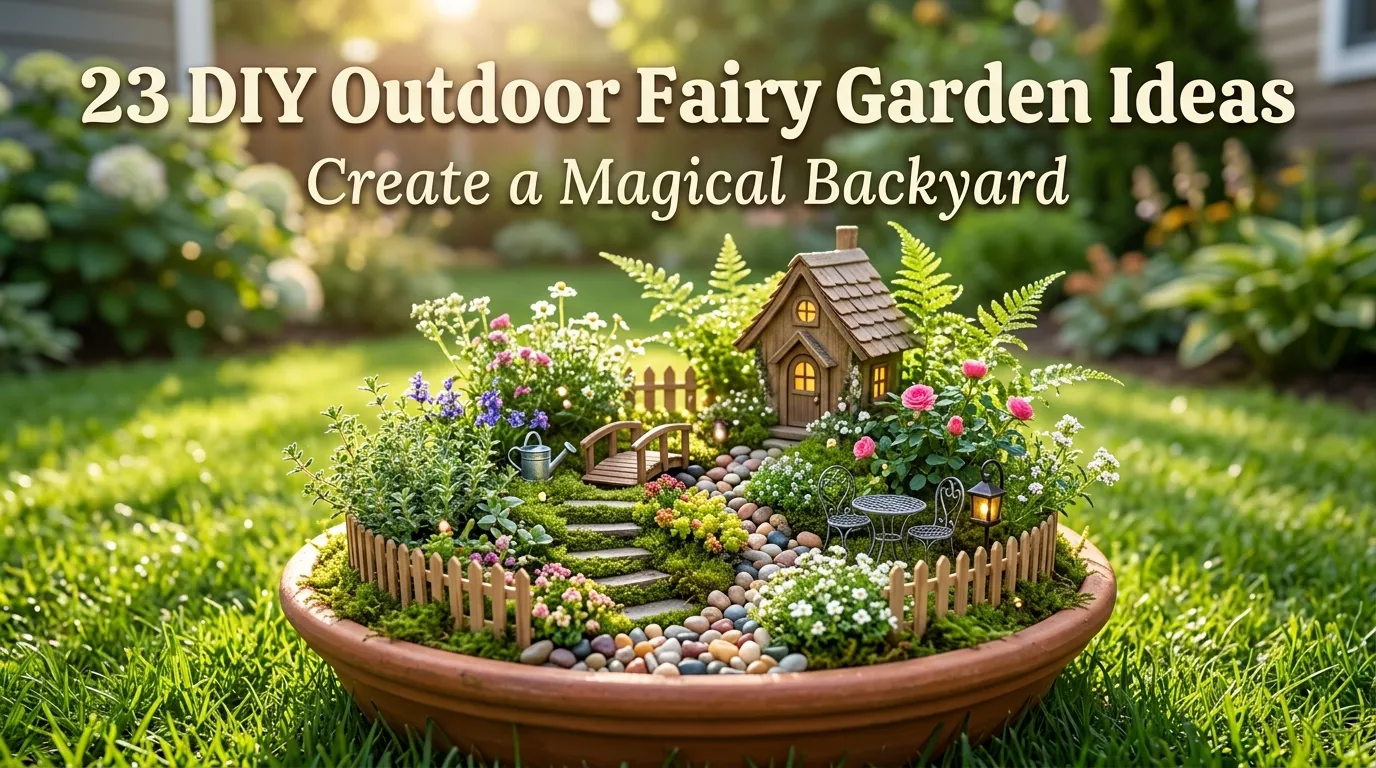
23 DIY Outdoor Fairy Garden Ideas to Create a Magical Backyard
A little corner of the backyard can become something special with a miniature fairy garden. Tiny cottages, winding stone pathways, miniature bridges, and small flowering plants bring a storybook feeling to ordinary outdoor spaces without requiring a complete garden makeover.
These DIY outdoor fairy garden ideas range from simple container projects to elaborate miniature landscapes built beneath trees, beside garden paths, or along a sunny patio. Some use inexpensive materials such as pebbles, twigs, and recycled pots, while others incorporate handcrafted wooden houses, decorative arches, and layered planting arrangements.
The key is to balance miniature decorations with appropriately sized plants and realistic outdoor materials. Choose a location that suits your plants’ light requirements, provide adequate drainage, and use weather-resistant decorations where possible. Whether you’re creating a weekend craft project with your family or adding a whimsical detail to an established backyard, these ideas offer plenty of inspiration.
1. Create a Classic Miniature Fairy Cottage Garden
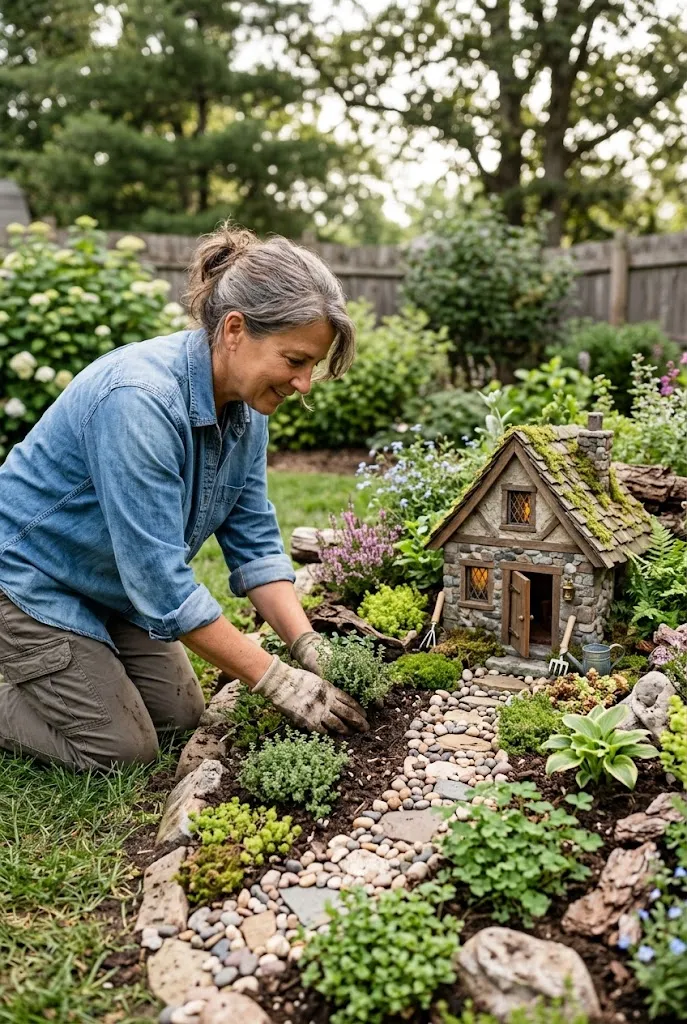
A tiny cottage surrounded by miniature plants is a charming starting point for an outdoor fairy garden. Choose a small wooden or resin house with a pitched roof, then arrange it among low-growing plants, moss, and a narrow pebble pathway.
Position the cottage slightly off-center rather than directly in the middle. This creates room for a little garden, a miniature bench, or a small stone feature nearby. Natural materials in earthy colors help the scene feel connected to the surrounding landscape.
For an accessible version, use a small weather-resistant decorative house and a few plants in a shallow garden bed. You don’t need dozens of accessories; a well-placed cottage and a winding path can tell the entire story.
Materials to consider:
- A miniature cottage suitable for outdoor use
- Small plants appropriate for the location
- Fine gravel or tiny pebbles
- Weather-resistant miniature accessories
2. Turn a Large Terracotta Pot Into a Fairy Garden DIY Outdoor Fairy Garden Ideas
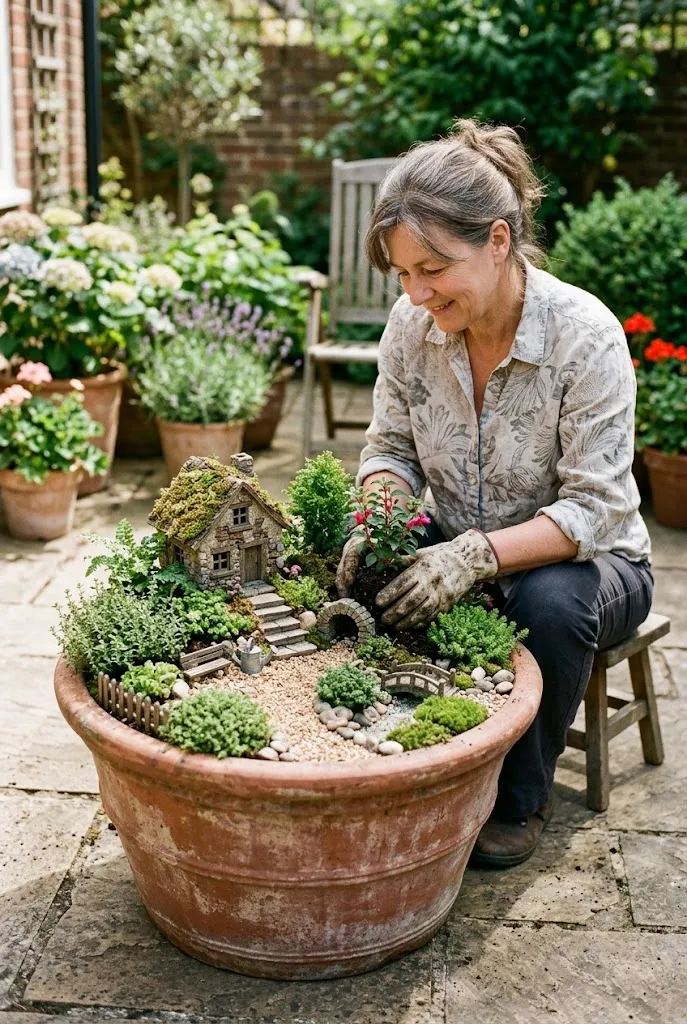
A broken-looking miniature landscape inside a large terracotta pot offers a practical option for patios, balconies, and small yards. Start with a container that has drainage holes, then add suitable potting mix and arrange a tiny house on one side.
Use the remaining space for a miniature path, small plants, and a few carefully selected decorations. You can create a gentle slope with the planting medium and use flat stones to form tiny terraces.
Quick Tip: Choose plants with compatible light and watering needs. A container placed in full sun may need a very different plant selection from one sitting beneath a shaded porch.
The advantage of a pot garden is that it establishes a clear boundary for the miniature scene. It also makes the arrangement easier to reposition when the weather or seasonal conditions change.
3. Build a Fairy Garden Beneath a Shade Tree
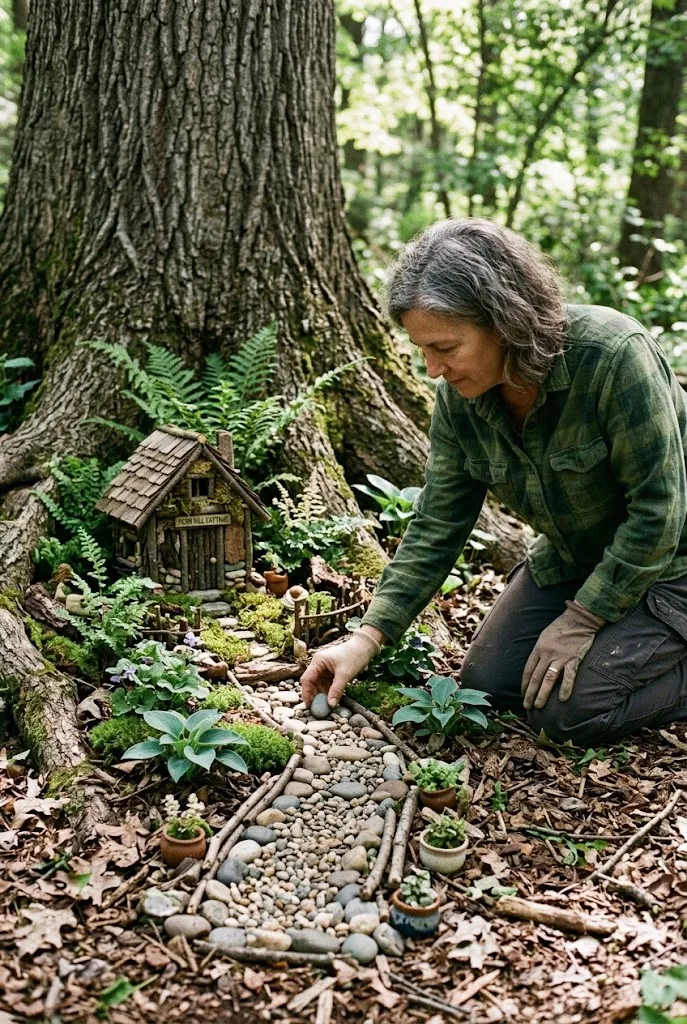
The base of a mature tree can provide a naturally sheltered setting for a woodland-inspired fairy garden. Place a miniature wooden cottage near the trunk, then create a narrow path that winds between small stones, shade-tolerant plants, and a few pieces of weathered wood.
Keep the tree’s roots in mind. Avoid digging deeply or piling soil against the trunk, and do not compact the root area while arranging decorations. A small freestanding container beside the tree may be preferable if the roots are close to the surface.
For a woodland atmosphere, use muted greens, brown wood, gray stones, and a simple cottage with natural-looking finishes.
Editor’s Note: A shaded location is not automatically suitable for every plant. Select varieties according to the actual light, soil moisture, and local growing conditions.
4. Make a Fairy Garden in a Wooden Crate
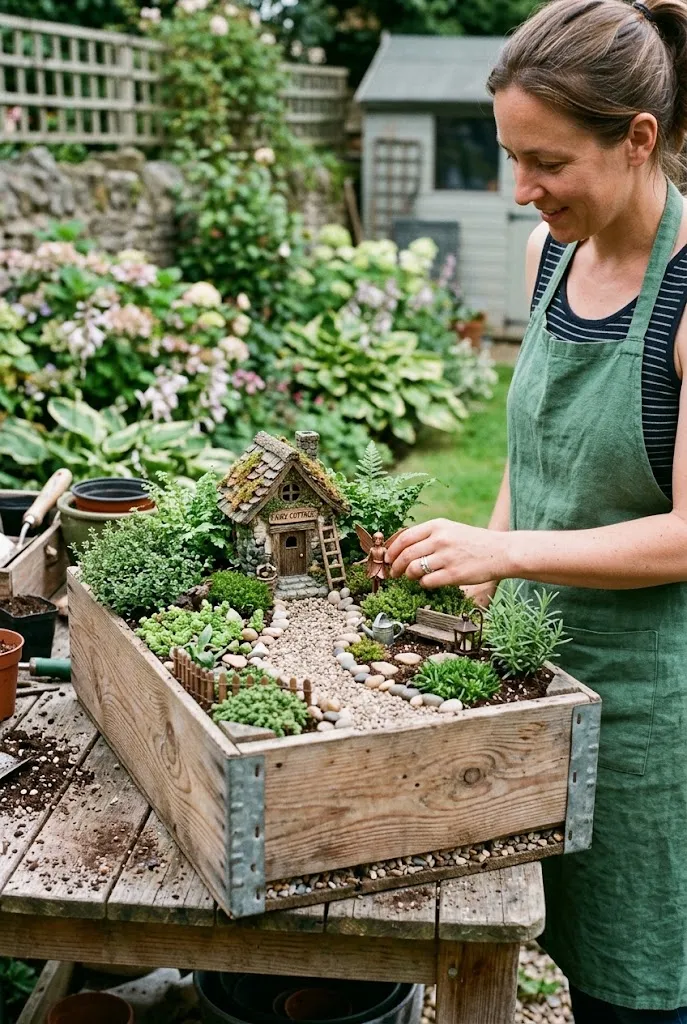
A wooden crate gives a miniature garden a rustic, handcrafted appearance. Choose a sturdy crate with adequate drainage, or use a removable planting container inside it to protect the wood from constant moisture.
Fill the planting area with suitable potting mix and arrange a miniature house, a few compact plants, and a small path. A crate with slatted sides can also create visual interest by allowing the wooden structure to remain visible.
This project works particularly well on a patio table, a low outdoor bench, or a sheltered porch. Keep the decorations small enough that the planting area remains the main feature.
5. Design a Fairy Garden With a Curved Pebble Path
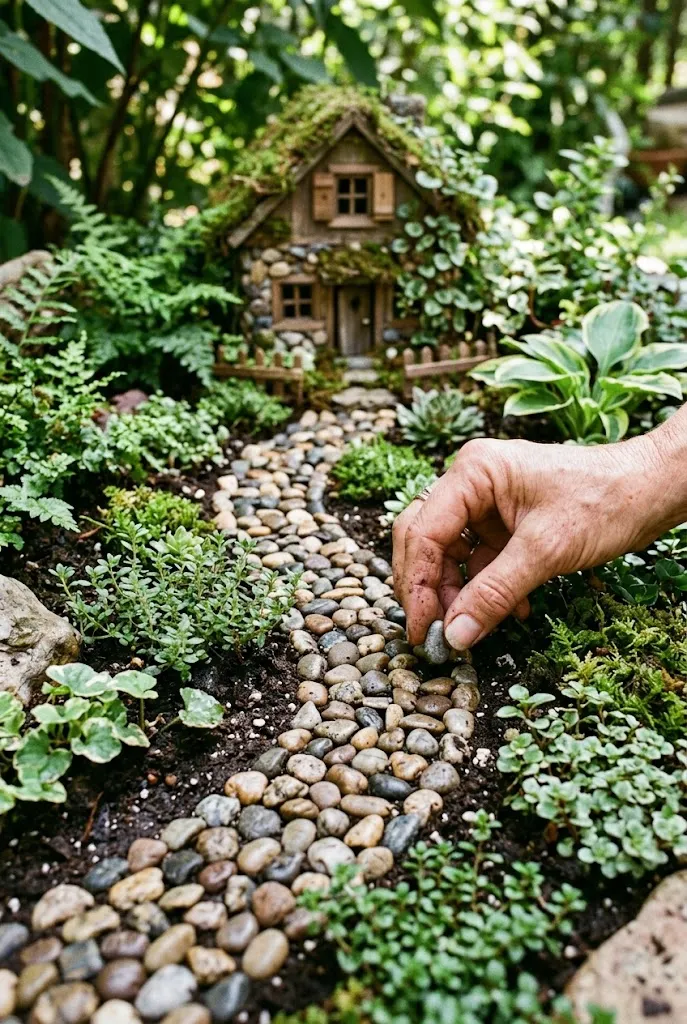
A curved path creates movement and gives even a small fairy garden a sense of depth. Use tiny flat stones, smooth pebbles, or fine gravel to form a winding route from the front edge of the garden toward the cottage.
Keep the path narrow in relation to the miniature house. If it becomes too wide, the garden can look more like a gravel bed than a miniature landscape.
How to arrange it:
- Place the cottage where it will serve as the focal point.
- Lay out the path loosely before securing the stones.
- Add compact plants along the outer curves.
- Fill small gaps with gravel or additional stones.
A gentle curve is usually more natural-looking than a perfectly straight path, especially when paired with irregular stones and varied foliage.
6. Create a Whimsical Fairy Garden Around an Old Tree Stump
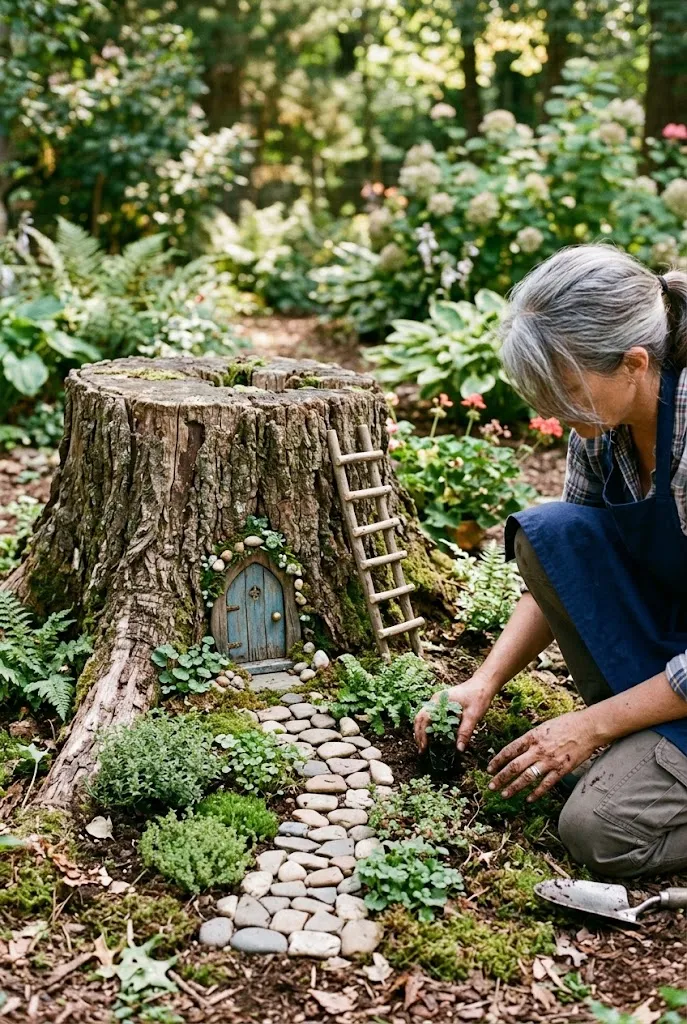
An existing tree stump can become the centerpiece of a woodland fairy garden. Place a miniature door against the stump’s surface, then arrange small stones, compact plants, and a narrow path around its base.
A tiny window or a small wooden ladder can add detail without requiring a complicated construction. Weathered wood naturally complements the miniature setting, while small plants soften the edges.
Only use an existing stump that is stable and appropriate for the location. Avoid attaching decorations in ways that could create hazards, and keep the surrounding area accessible for normal garden maintenance.
7. Make a Fairy Garden in a Broken Flowerpot
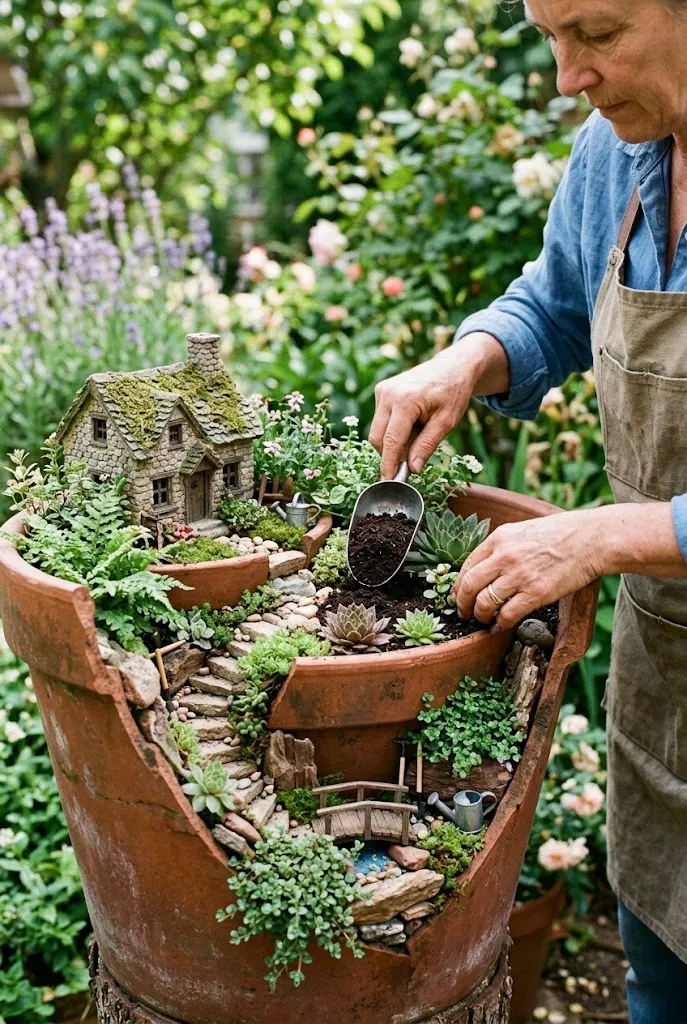
A chipped or cracked flowerpot can become an imaginative miniature landscape instead of being discarded. If the pot has a stable broken section, use the opening to create a small raised garden with miniature steps, plants, and a tiny house.
Arrange the largest remaining section at the back and use the smaller levels to form terraces. Add potting mix suitable for the chosen plants, keeping drainage in mind.
Handle broken ceramic or terracotta carefully because sharp edges can cause cuts. If the container is unstable or has hazardous edges, use a purpose-made broken-pot planter or a safely prepared alternative.
Do: Let the broken sections create distinct planting levels.
Don’t: Force delicate ornaments into unstable gaps or leave sharp edges exposed where children or pets could reach them.
8. Build a Miniature Fairy Bridge Over a Pebble Stream
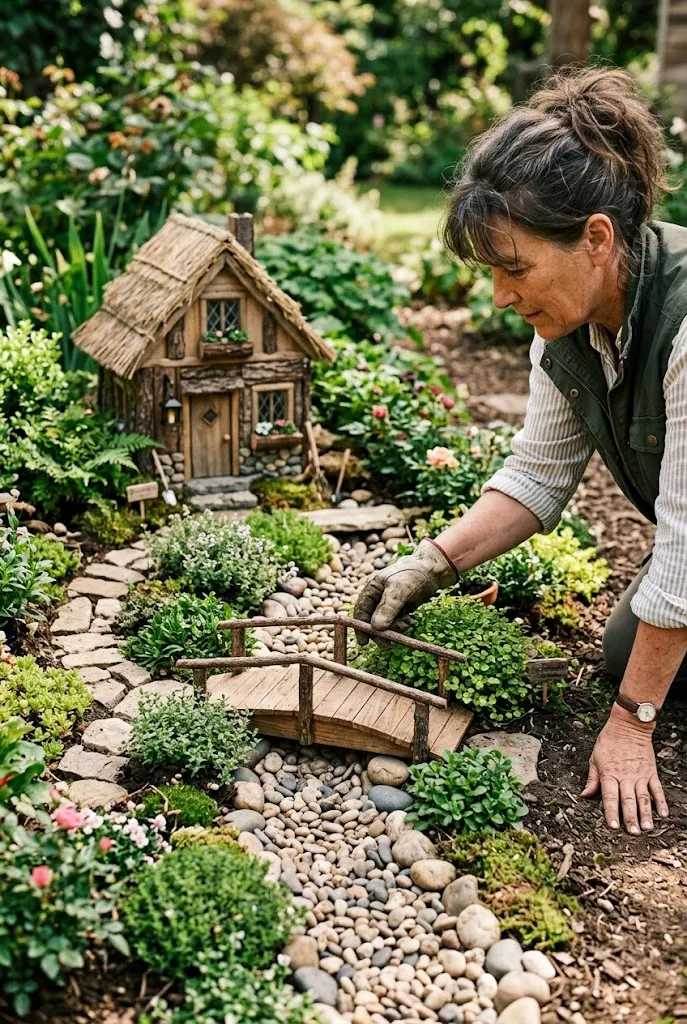
A small bridge can make a fairy garden feel like a complete miniature landscape. Create a dry stream using smooth pebbles, DIY Outdoor Fairy Garden Ideas then place a miniature wooden or stone-look bridge across its narrowest point.
Compact plants along the banks help soften the edges. A small cottage at the end of the path gives the bridge a purpose within the scene.
For an outdoor arrangement, choose a bridge made from materials suitable for exposure to moisture and temperature changes. A dry pebble stream is also easier to maintain than an actual water feature, particularly in a small container.
9. Create a Fairy Garden in a Shallow Bowl
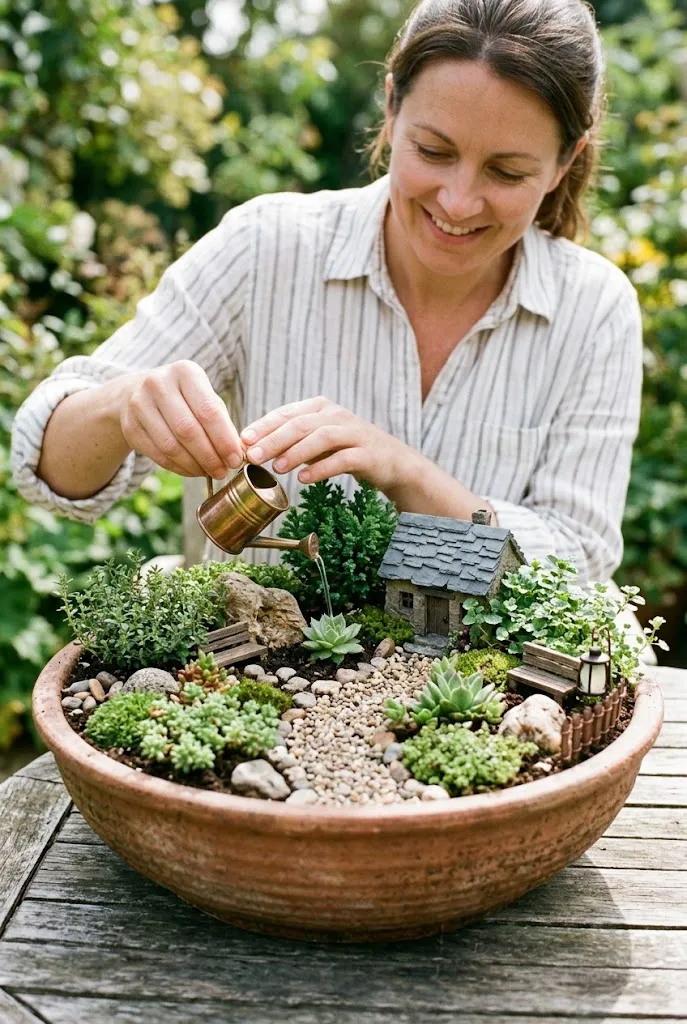
A shallow, wide bowl can accommodate a simple fairy garden when the selected plants have suitable root space and the container provides drainage. Choose a weather-resistant planter or a bowl designed for planting.
Arrange a miniature cottage at the back, then use a small gravel path and a few compact plants to fill the remaining space. Leaving some open ground around the cottage makes the miniature scene easier to appreciate.
Shallow containers dry out more quickly than deeper planters in many conditions, so monitor moisture and choose plants accordingly. A container without drainage holes needs an appropriate planting setup rather than being filled directly with wet soil.
10. Make a Fairy Garden With a Tiny Wooden Fence
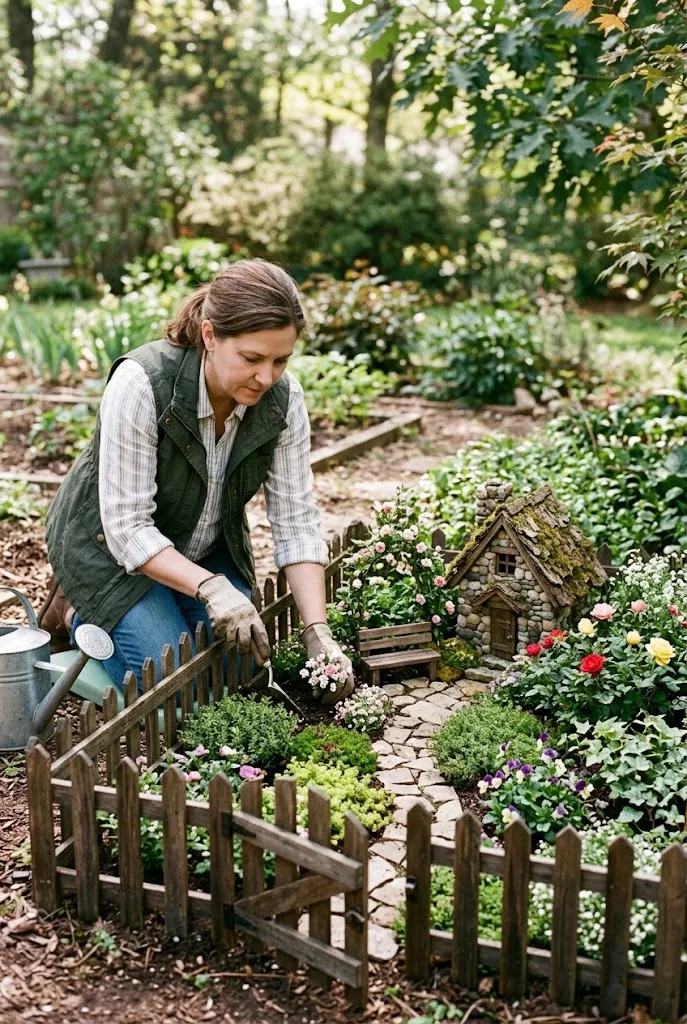
A miniature fence can define a garden boundary and make the fairy landscape feel like a small residential setting. Use short wooden pickets or weather-resistant miniature fencing to surround a cottage, flower patch, or little vegetable garden.
Leave a small opening for the path rather than fencing in every side. A few tiny flower clusters and a miniature bench can make the enclosure look complete.
Natural wood works well with green foliage, while painted white fencing creates a cottage-garden appearance. Make sure the finish is suitable for outdoor exposure and safe for the intended planting environment.
11. Add a Miniature Fairy Vegetable Garden
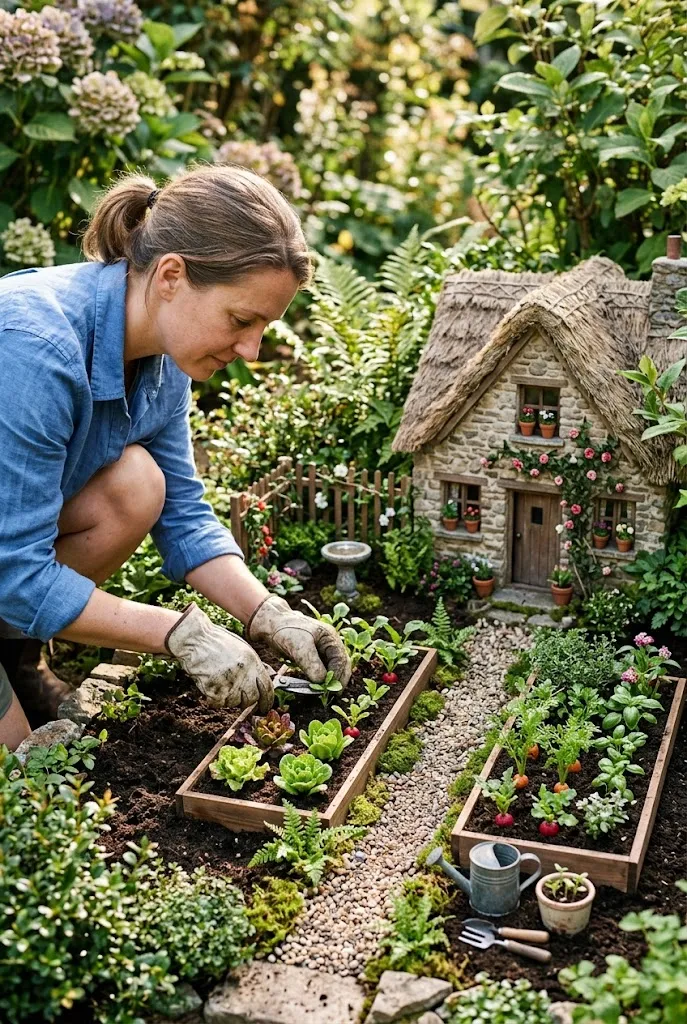
A tiny vegetable garden introduces a practical, playful detail to a fairy landscape. Create miniature raised beds from thin weather-resistant wood, or use small rectangular planters to represent vegetable plots.
Arrange tiny rows of compact plants, add a narrow gravel path, and place a miniature watering can beside the cottage. If you use real edible plants, choose varieties suited to the container size and local conditions rather than expecting every plant to remain miniature.
The raised-bed layout looks especially effective from a slightly elevated viewpoint, where the little rows and paths are easy to see.
12. Design a Fairy Garden With Colorful Flowers
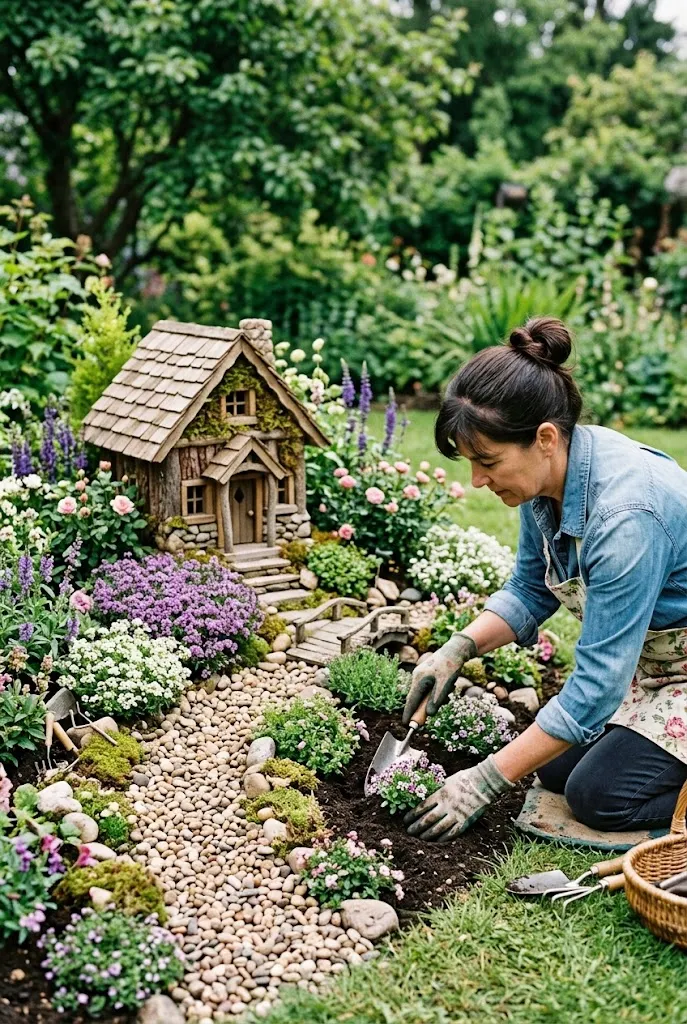
Flowering plants can bring seasonal color to a fairy garden without requiring elaborate decorations. Choose compact varieties that suit the location’s light and climate, then arrange them around a cottage or along the edge of a container.
Use a restrained palette for a coordinated appearance. Soft pink and white flowers create a gentle cottage look, while purple and yellow blooms provide stronger contrast against green foliage.
Keep the flowers proportional to the miniature house. A few well-placed blooms can look more convincing than a dense planting that hides the cottage and pathways.
Quick Tip: Check the mature size of each plant before purchasing it. A plant that starts small may eventually overwhelm a miniature garden.
13. Make a Fairy Garden in an Upcycled Metal Tub
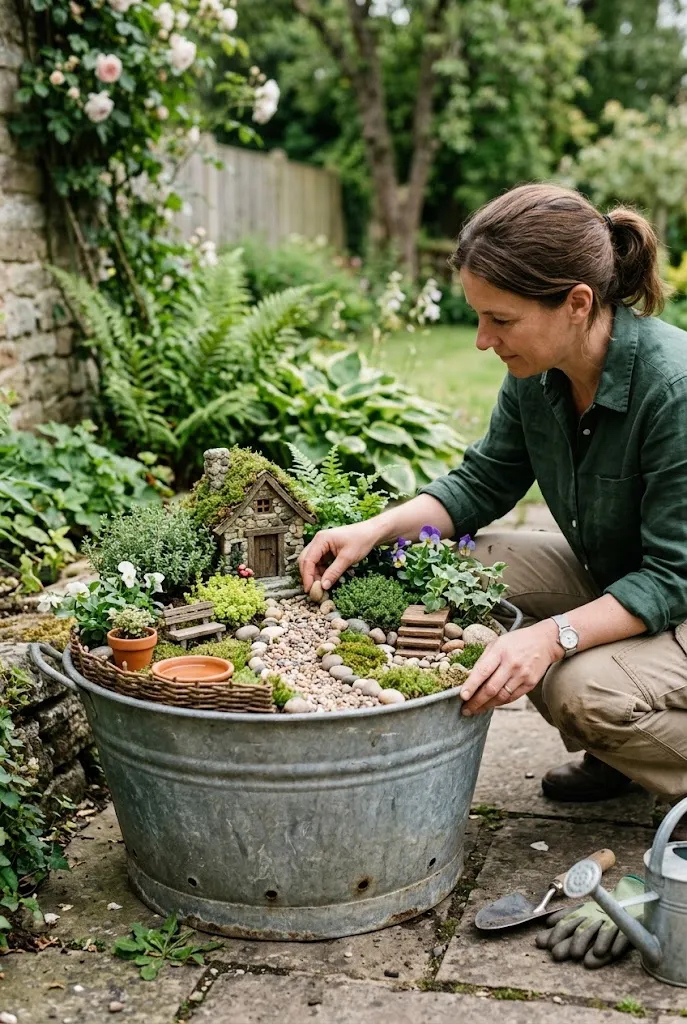
An old metal tub can provide a spacious container for a miniature garden, especially on a patio or beside an outdoor seating area. Clean the container thoroughly, check for sharp edges, and ensure it has suitable drainage before adding planting mix.
Arrange the cottage near the back, then create a path through small plants and pebbles. The metal finish contrasts nicely with green foliage and warm terracotta-colored accessories.
Galvanized metal, painted metal, and weathered finishes produce different visual effects. Select a container in sound condition and use a suitable liner or planting insert when needed.
14. Create a Fairy Garden With a Tiny Stone Archway
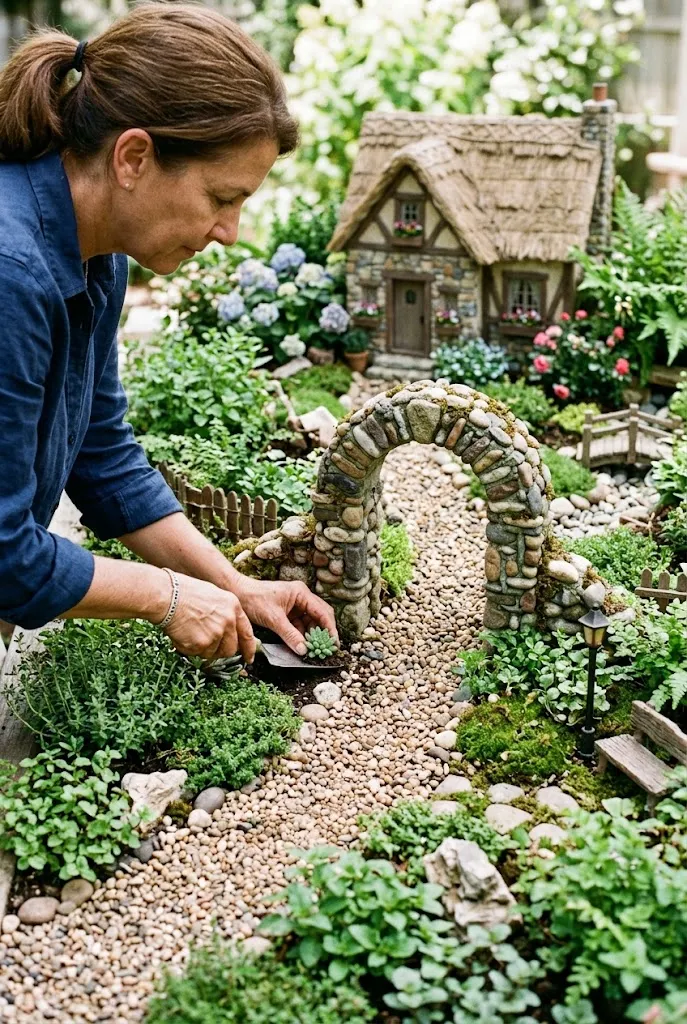
A miniature stone archway creates an architectural focal point and makes a simple fairy garden feel more detailed. Place it over a short section of the pathway, then arrange compact plants on both sides to frame the entrance.
Choose a scale that works with the cottage and other ornaments. The arch should look like a natural part of the miniature landscape, not a structure that dominates the entire garden.
If the arch is heavy or intended for outdoor use, position it on a stable base so it cannot topple during normal garden maintenance or windy conditions.
15. Build a Fairy Garden on a Tiered Plant Stand
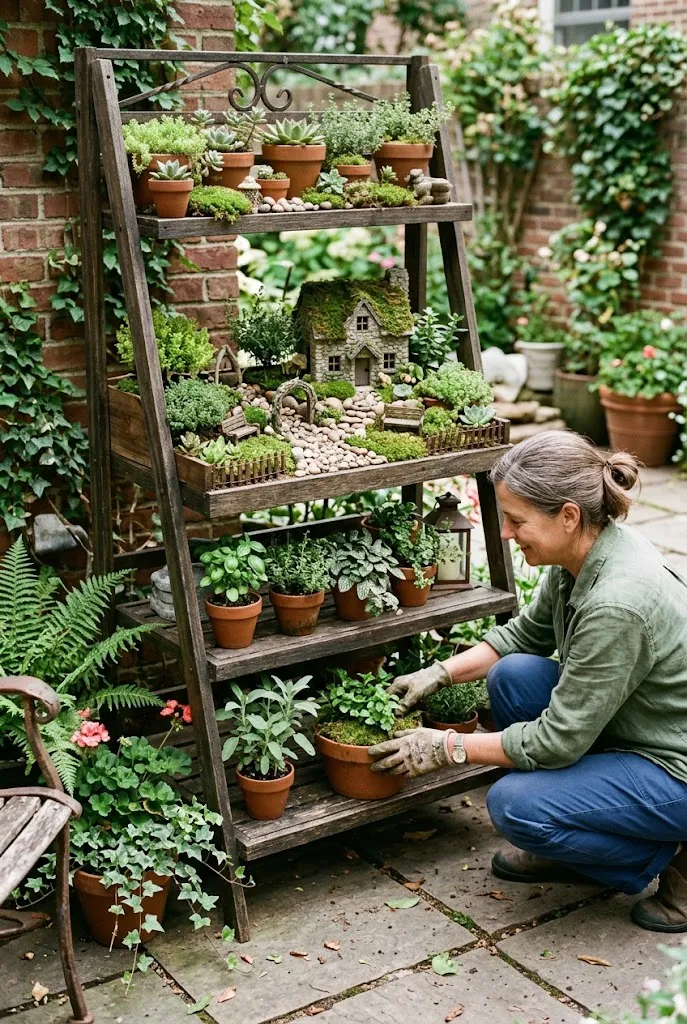
A tiered plant stand can turn a small patio corner into a vertical fairy garden. Use one level for the main cottage scene and the other levels for small companion planters, miniature trees, or complementary decorations.
This arrangement is useful where ground space is limited. Choose a stable stand suitable for outdoor conditions, and make sure each planter can drain without damaging the surface below it.
Keep the most detailed miniature scene at eye level or on the easiest level to access. Smaller supporting arrangements can occupy the remaining shelves without competing for attention.
16. Make a Fairy Garden With a Miniature Wooden Ladder
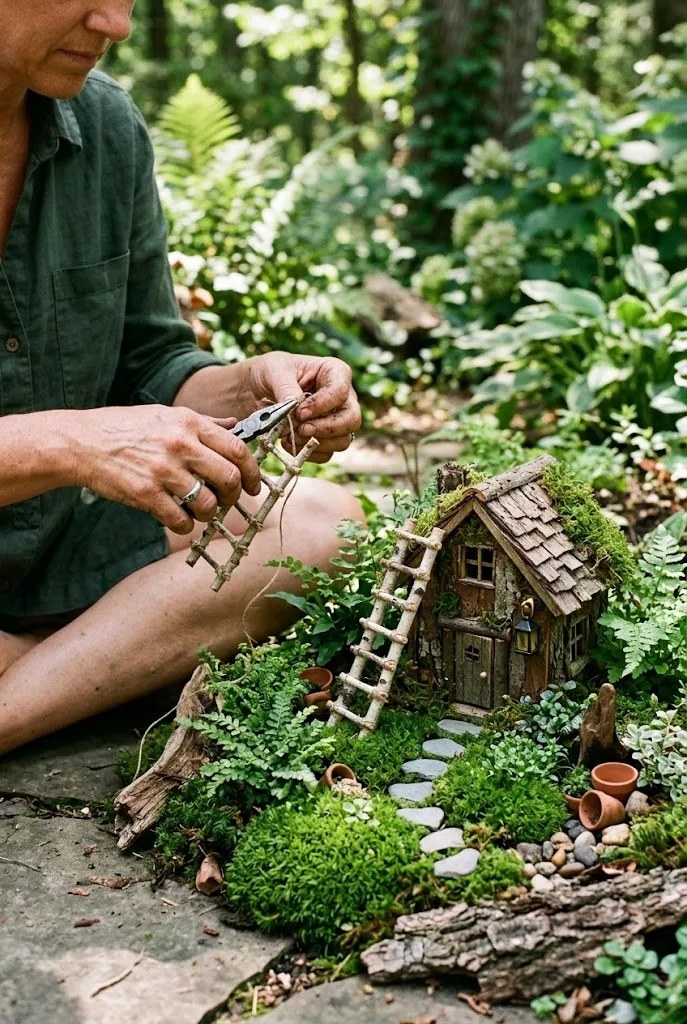
A miniature ladder can add height and a playful handmade detail to a fairy garden. Lean it securely against a cottage wall, a stable stump, or a low decorative structure.
Pair the ladder with compact plants, a small wooden bench, and a few stepping stones. Keep the surrounding arrangement relatively simple so the ladder remains visible.
Natural twig ladders are a useful DIY option, but use clean, sound twigs and secure the joints with a suitable craft adhesive or binding method. For a garden exposed to rain, choose materials and fasteners intended for outdoor use.
17. Create a Fairy Garden With a Miniature Pond
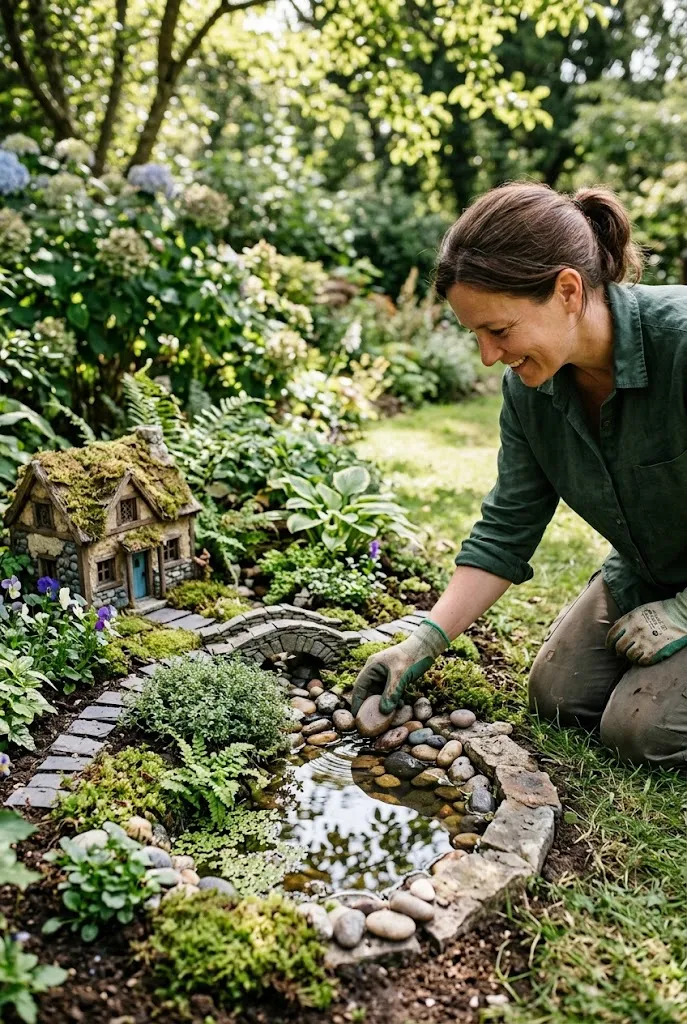
A tiny pond can become a striking focal point in a fairy garden. For a simpler and more manageable project, use a small watertight insert or a shallow decorative pond feature surrounded by pebbles and compact plants.
Position the cottage nearby and add a few flat stones to suggest a little shoreline. If you choose a real water feature, consider maintenance, safe placement, and whether it could attract mosquitoes or create a hazard for children or pets.
A dry blue-glass or blue-stone feature can suggest water without introducing standing water. This option is particularly practical for small container gardens.
18. Make a Fairy Garden Using Natural Twigs and Bark
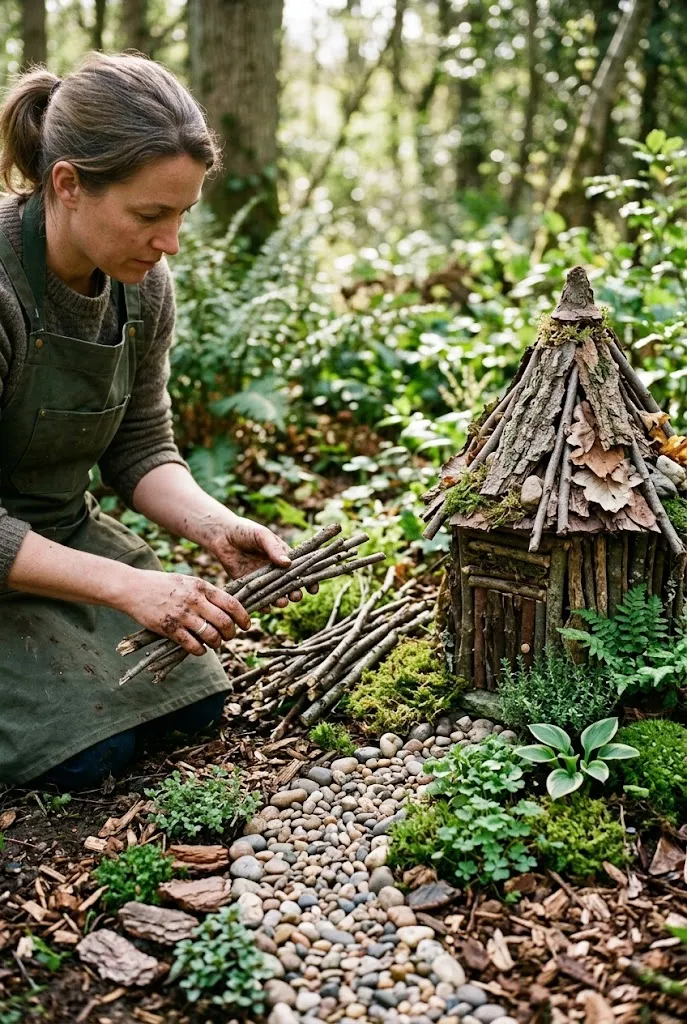
Twigs and bark provide an earthy alternative to purchased miniature decorations. Use small branches to create a rustic fence, a tiny shelter, or a simple boundary around the garden.
Combine these materials with pebbles, leaf litter, and compact plants for a woodland-inspired scene. Choose sound, clean materials and avoid collecting from protected areas or disturbing living trees.
Because natural materials can break down outdoors, check the arrangement periodically and replace damaged pieces before they become unstable.
19. Design a Fairy Garden With a Miniature Mushroom House
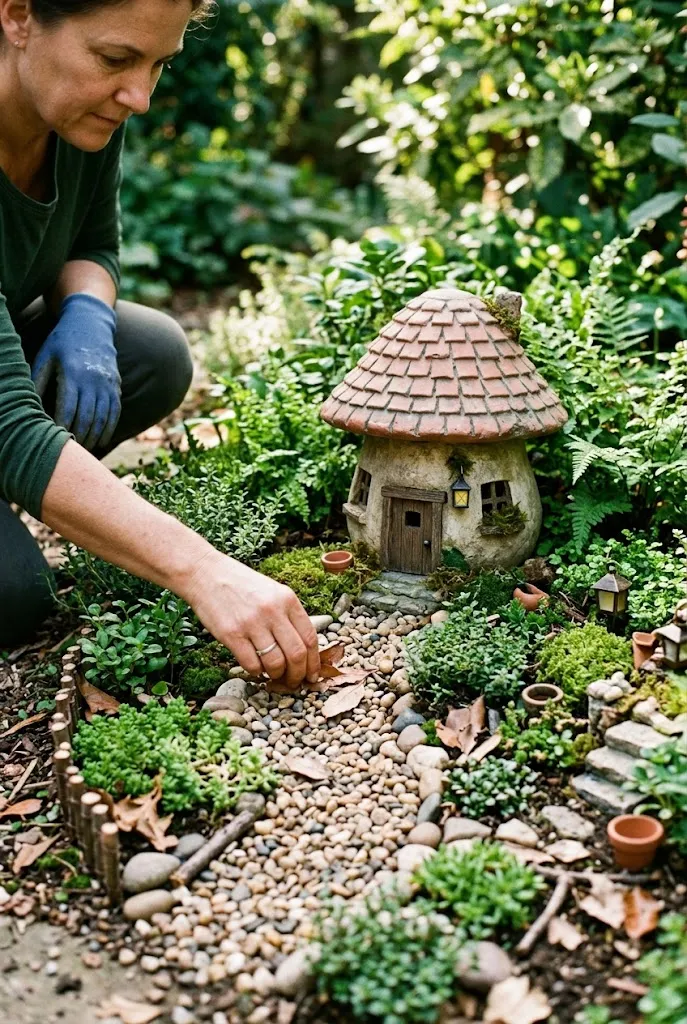
A mushroom-shaped miniature house gives a fairy garden a playful focal point. Choose one with weather-resistant materials and pair it with simple green plants, a few tiny stones, and a narrow pathway.
Red, terracotta, or muted cream mushroom roofs can provide a pop of color against the foliage. Avoid overcrowding the scene with too many competing fantasy ornaments; one distinctive house can do most of the visual work.
For a more natural result, place the mushroom house partly among low plants rather than leaving it isolated in a bare patch of soil.
20. Create a Fairy Garden Along a Backyard Border
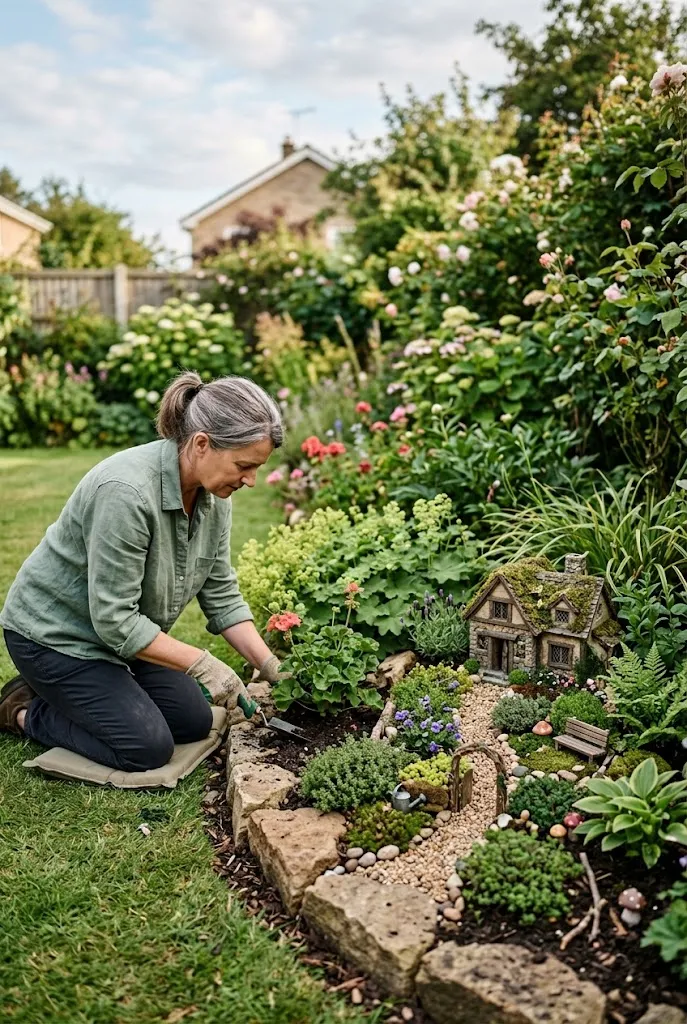
An established garden border can accommodate a miniature fairy scene without requiring a separate container. Select a small area between suitable plants and position a weather-resistant cottage near the back.
Use a short pebble path to connect the cottage to the front of the arrangement, then add a miniature bench or low fence if space permits. Keep the scene away from frequently used mowing or edging routes so it does not become an obstacle during regular maintenance.
The best location is one where the miniature details can be viewed comfortably without stepping into delicate planting beds.
21. Make a Fairy Garden With a Miniature Seating Area
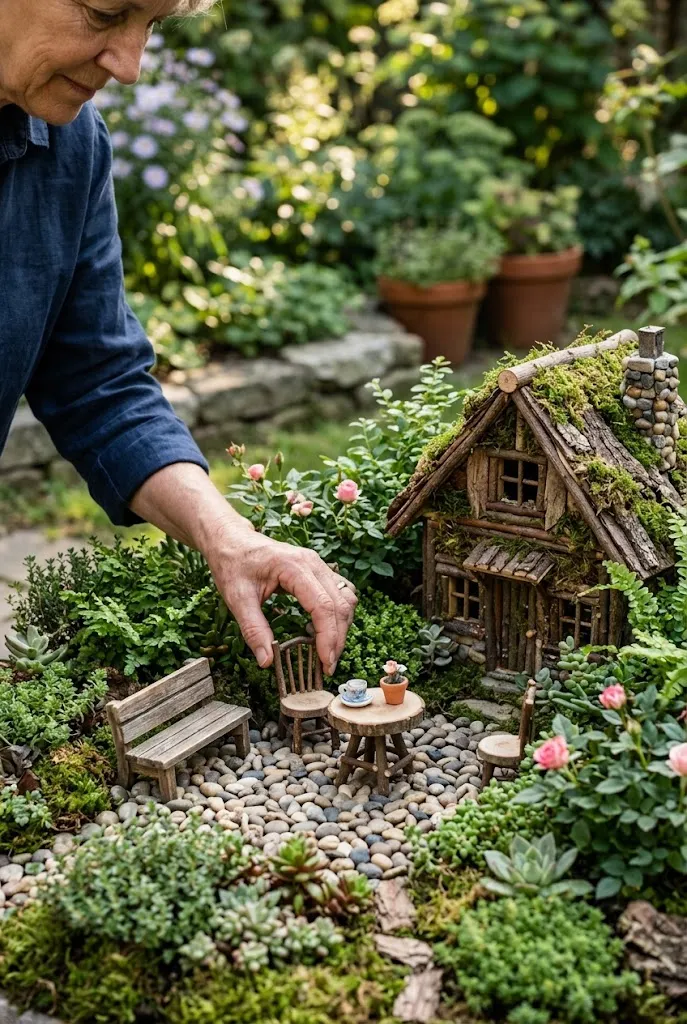
A tiny seating area gives a fairy garden the feeling of a miniature outdoor living space. Add a small bench, a low table, or two miniature chairs beside the cottage or along a curved path.
Surround the seating with compact plants rather than placing it in an empty patch of soil. A few flat stones can suggest a patio, while small flowering plants add color without taking over the scene.
Choose furniture that matches the scale of the house and pathway. If the chairs are too large, they can make the entire garden feel visually unbalanced.
22. Create a Seasonal Fairy Garden With Autumn Details
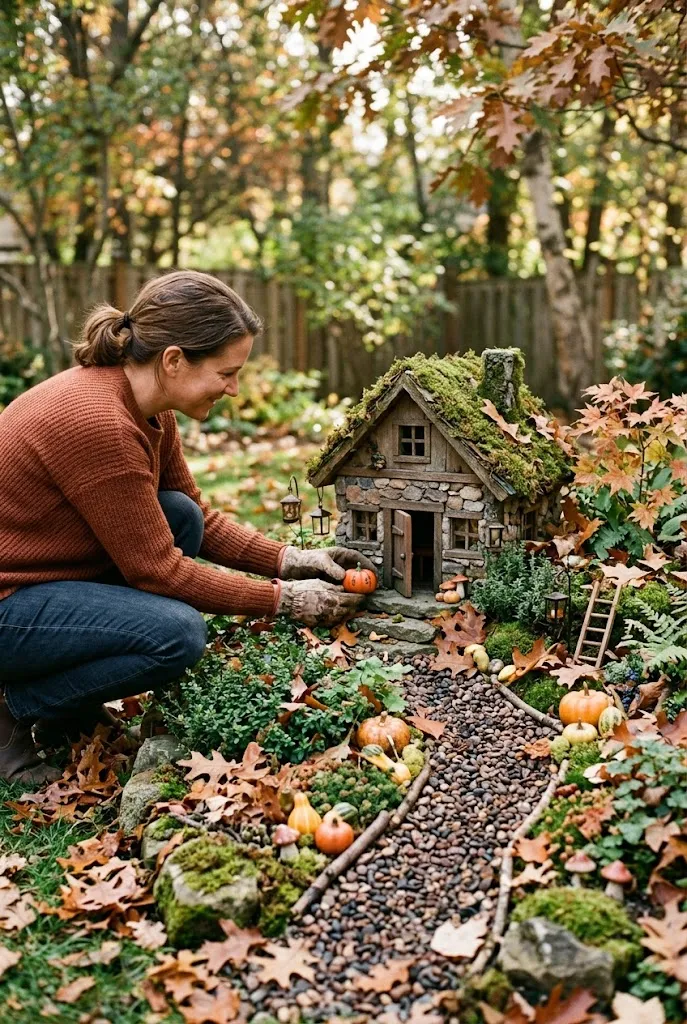
An autumn fairy garden can use seasonal colors and natural materials to create a cozy miniature landscape. Arrange a small cottage among compact plants, then add a few tiny pumpkins, fallen leaves, and a pebble path.
Choose decorations that remain proportional to the cottage. A handful of small pumpkins looks more natural than a crowded display that hides the house.
For a garden that stays outdoors through changing weather, use durable miniature accessories and avoid materials that deteriorate quickly when wet. Seasonal details can be changed as the weather shifts, allowing the main garden structure to remain in place.
23. Build a Complete Fairy Village With Connected Paths
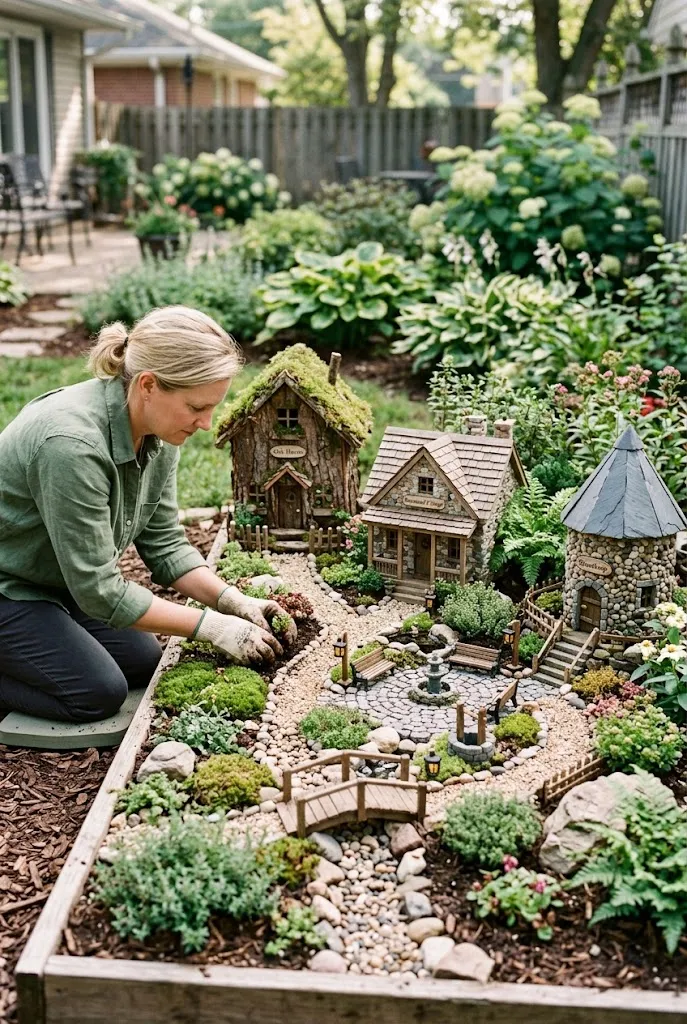
If you have more space, turn the fairy garden into a miniature village with two or three small houses connected by winding paths. Give each house a slightly different appearance, such as a woodland cottage, a mushroom home, or a simple wooden cabin.
Use small planting groups to separate the houses without hiding them. Add a shared courtyard, a miniature bridge, or a tiny seating area to create a sense of connection between the different parts of the village.
Plan the layout before installing the decorations. Place the largest cottage first, position the smaller houses around it, and use the paths to connect the main features. Leave enough open space to maintain the plants and remove fallen leaves.
Tips & Tricks
- Limit the number of focal points so the village remains easy to read.
- Repeat a few materials, such as natural stone and wood, to create visual unity.
- Vary the height of the houses while keeping their scale believable.
- Choose plants according to the available light and the mature size of each variety.
The result can feel like a tiny community tucked into an ordinary backyard corner, with enough detail to reward a closer look.
How to Choose the Best Location for Your Outdoor Fairy Garden
Before starting your project, consider how the garden will fit into your outdoor space. A container on a patio offers more control over placement, while a garden border or shaded tree area can make the miniature landscape feel naturally integrated into the yard.
Use this quick comparison to narrow down your options.
| Location | Best For | Main Consideration |
|---|---|---|
| Patio container | Small spaces and movable displays | Drainage and watering |
| Shaded tree area | Woodland-inspired gardens | Protecting tree roots |
| Raised planter | Easy access and defined planting space | Container depth and stability |
| Garden border | A naturally integrated landscape | Routine garden maintenance |
| Tiered plant stand | Compact patios and vertical displays | Weight and weather resistance |
Tips for Maintaining Your DIY Outdoor Fairy Garden
A fairy garden still needs ordinary gardening care, even if the plants and decorations are miniature.
- Check soil moisture: Containers may dry out faster than garden beds. Water according to the plants’ needs rather than following a rigid schedule.
- Provide drainage: Use suitable drainage holes and planting media to avoid waterlogged roots.
- Choose suitable plants: Match plant varieties to the available sunlight, climate, and growing space.
- Secure decorations: Anchor lightweight structures and choose outdoor-appropriate materials.
- Trim as needed: Keep plants from covering the cottage, pathways, and other important details.
- Refresh seasonal accents: Replace weathered ornaments and remove fallen leaves or damaged plant material.
A simple arrangement that is easy to maintain will usually be more enjoyable than a complicated display filled with fragile decorations.






One Comment