
25 Creative DIY Cat Toys to Keep Your Kitty Happy, Active & Entertained
Cats love exploring, chasing, batting, hiding, and discovering new things around the house. However, keeping an indoor kitty entertained doesn’t mean you need to spend a fortune on store-bought toys. For more creative ideas, helpful guides, and practical tips, explore our Education STZ website.
These creative DIY cat toys include everything from cardboard puzzles and homemade tunnels to soft catnip pillows and interactive treat games. Many projects use inexpensive materials you may already have in your recycling bin or craft drawer.
Whether you have a playful kitten, a curious adult cat, or a senior feline who prefers gentler activities, there’s something here to try. The best part? You can personalize each project around your cat’s favorite textures, movements, and play habits.
A quick safety note: Introduce homemade toys under supervision. Avoid loose strings, yarn, rubber bands, small detachable decorations, and anything your cat might swallow. Inspect toys regularly and discard damaged ones. Put away interactive toys with cords after playtime.
1. Cardboard Toilet Paper Roll Treat Puzzle
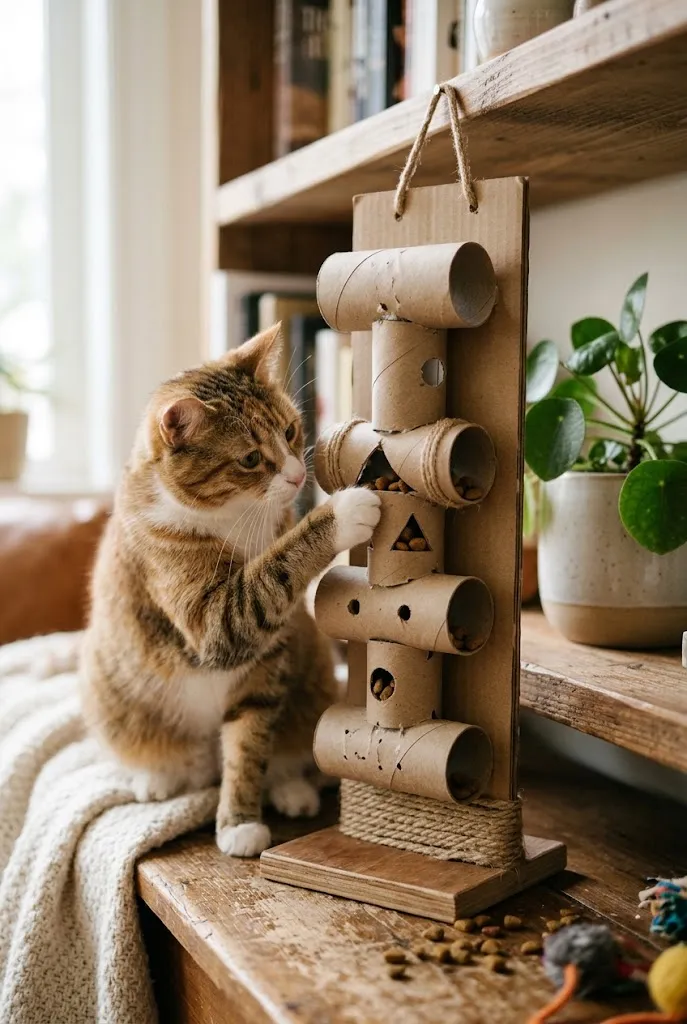
An empty cardboard toilet paper roll can become a simple treat puzzle that encourages your cat to investigate and work for a little reward. Instead of throwing away cardboard tubes, turn them into an inexpensive enrichment activity.
What You’ll Need:
- One clean, empty cardboard toilet paper roll
- A few appropriately sized cat treats
- Scissors
How to Make It:
- Flatten the cardboard tube gently.
- Cut a few small openings large enough for treats to fall through.
- Fold both ends inward to keep the treats inside.
- Add a few treats and place the toy on the floor.
- Let your cat investigate and bat the tube to release the rewards.
Start with larger openings so your kitty doesn’t become frustrated. Supervise the activity and remove the tube if your cat begins chewing or swallowing cardboard.
2. DIY Cardboard Creative DIY Cat Toys
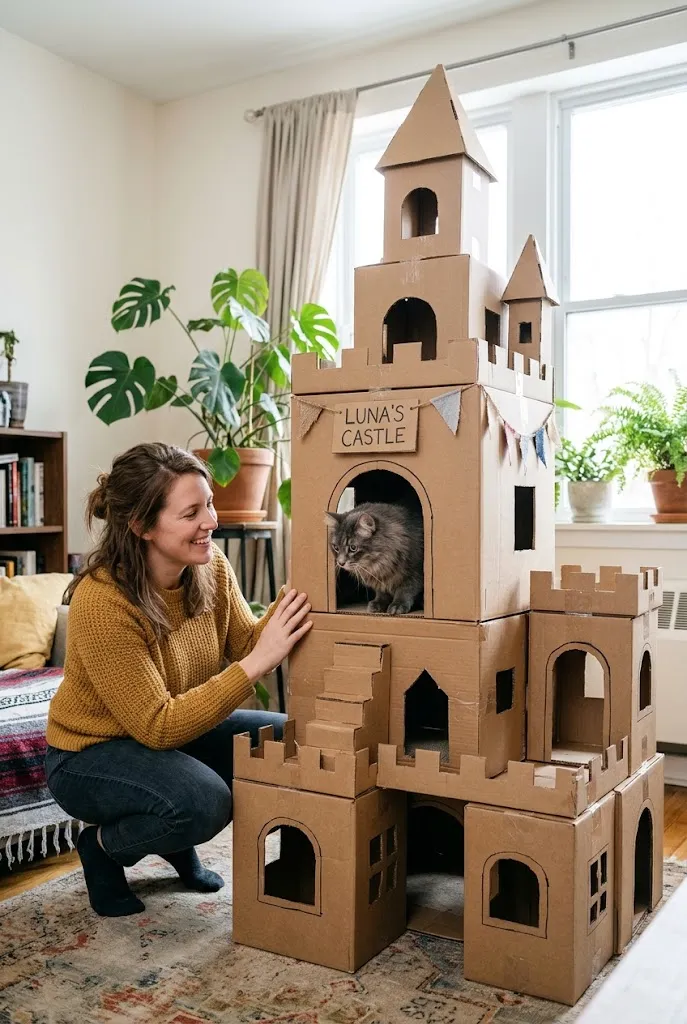
If your cat loves hiding inside delivery boxes, a cardboard castle might become a favorite play area. This project creates multiple entrances, hiding spots, and exploration spaces without requiring expensive cat furniture.
Collect two or three sturdy cardboard boxes in different sizes. Cut large doorways and connecting openings so your cat can move comfortably between sections.
Helpful Details:
- Use boxes with sturdy, clean walls.
- Remove staples, loose tape, and plastic packaging.
- Make entrances large enough to prevent your cat from getting stuck.
- Keep the structure low and stable.
- Avoid stacking heavy boxes where they could fall.
For a playful finish, add a separate cardboard scratcher or a soft resting blanket.
3. Soft DIY Catnip Sock Pillow
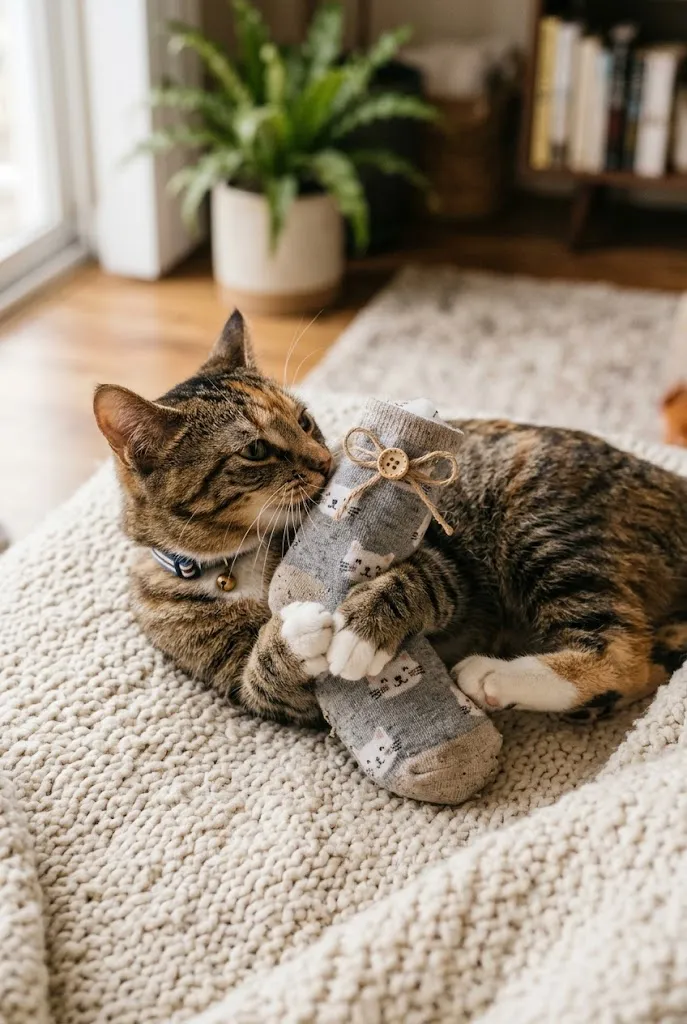
Turn a clean, unused sock into a soft little pillow for cats who enjoy carrying, cuddling, or kicking their toys. Adding a small amount of catnip can make the toy more interesting for cats who respond to its scent.
Materials:
- One clean cotton sock
- Pet-safe stuffing
- A small amount of catnip, optional
- Needle and thread
Fill the sock lightly, add catnip if desired, and securely sew the opening closed. Avoid loose knots, dangling threads, buttons, and decorative eyes.
Quick Tip: Not every cat responds to catnip. If yours isn’t interested, try the same toy without it.
4. Homemade Cardboard Cat Tunnel
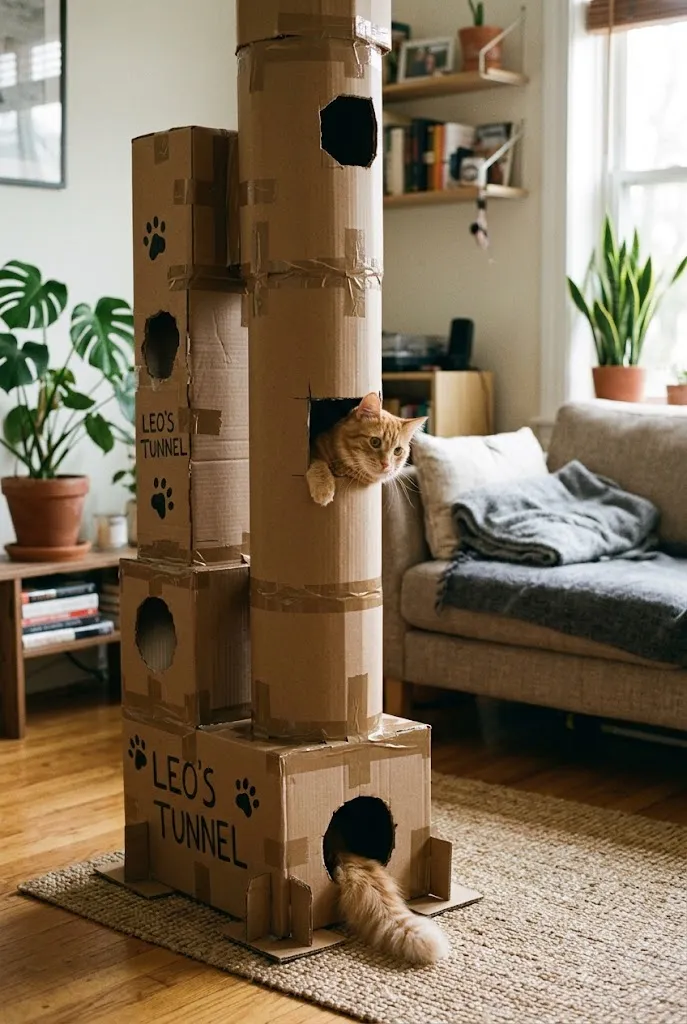
A cardboard tunnel gives curious cats a place to hide, crawl, and surprise their favorite humans. It’s especially useful for indoor cats who enjoy exploring enclosed spaces.
Join two or three wide cardboard boxes or sturdy cardboard sections to create a tunnel. Cut generous openings and make sure the structure stays open and stable.
You can create:
- A straight crawling tunnel.
- A short tunnel with a side entrance.
- A simple hide-and-seek tunnel.
- A wider tunnel with two exit points.
Avoid narrow passages and loose tape that your cat could chew.
5. DIY Crinkle Paper Play Box
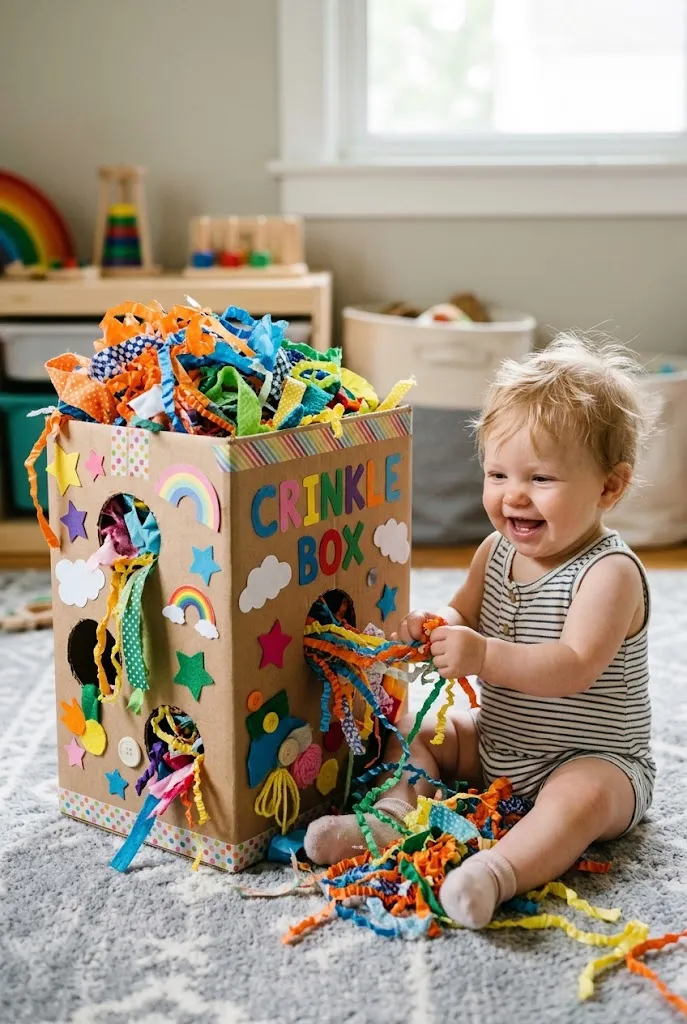
Some cats are fascinated by the soft rustling sound of paper. A simple play box filled with loosely crumpled, plain packing paper can create an interesting sensory experience.
You’ll Need:
- A shallow cardboard box
- Clean, uncoated packing paper
- A few larger paper balls
Crumple the paper loosely and place it inside the box. Let your cat investigate, paw through the layers, and discover the paper balls.
Do / Don’t
- Do: Use plain paper without staples, coatings, or plastic.
- Don’t: Use shredded paper that could get tangled around paws or be swallowed.
Keep the activity supervised and remove the paper when playtime ends.
6. Homemade Felt Fish Cat Toy
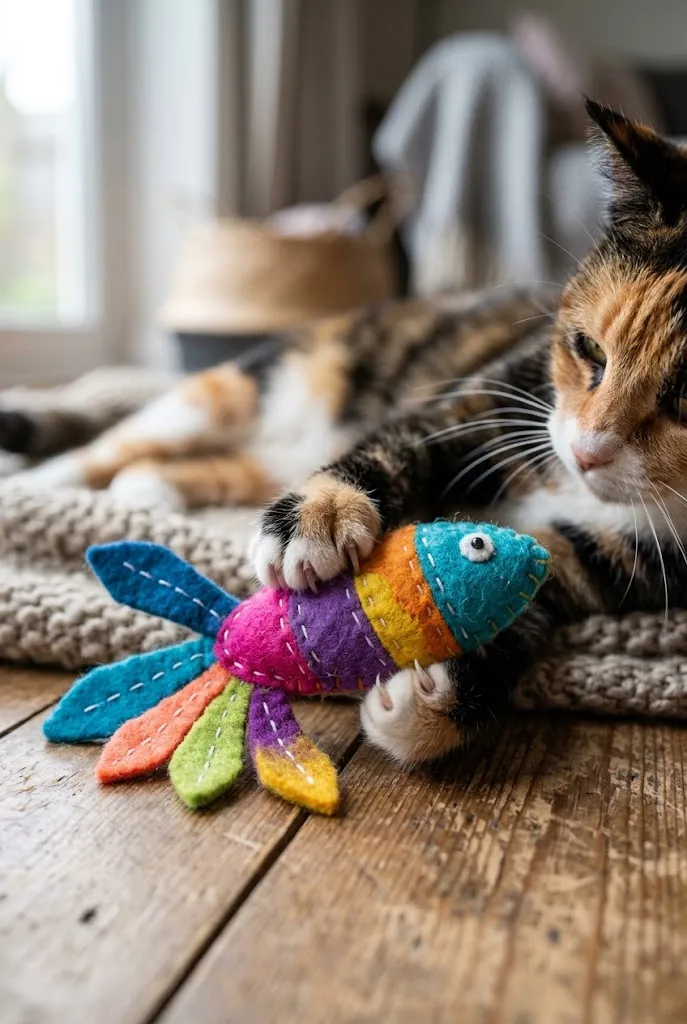
A soft fish-shaped toy is a lovely beginner sewing project. Its recognizable shape makes it visually appealing, while the soft fabric gives cats something comfortable to bat around.
Materials:
- Two pieces of sturdy felt
- Pet-safe stuffing
- Needle and strong thread
- Catnip, optional
How to Make It:
- Draw a simple fish outline on felt.
- Cut two matching shapes.
- Stitch around the edges securely, leaving a small opening.
- Add stuffing and optional catnip.
- Sew the opening completely closed.
Skip plastic eyes, beads, buttons, and loose fins. Inspect the seams before offering it to your cat.
7. DIY Cardboard Ball Track
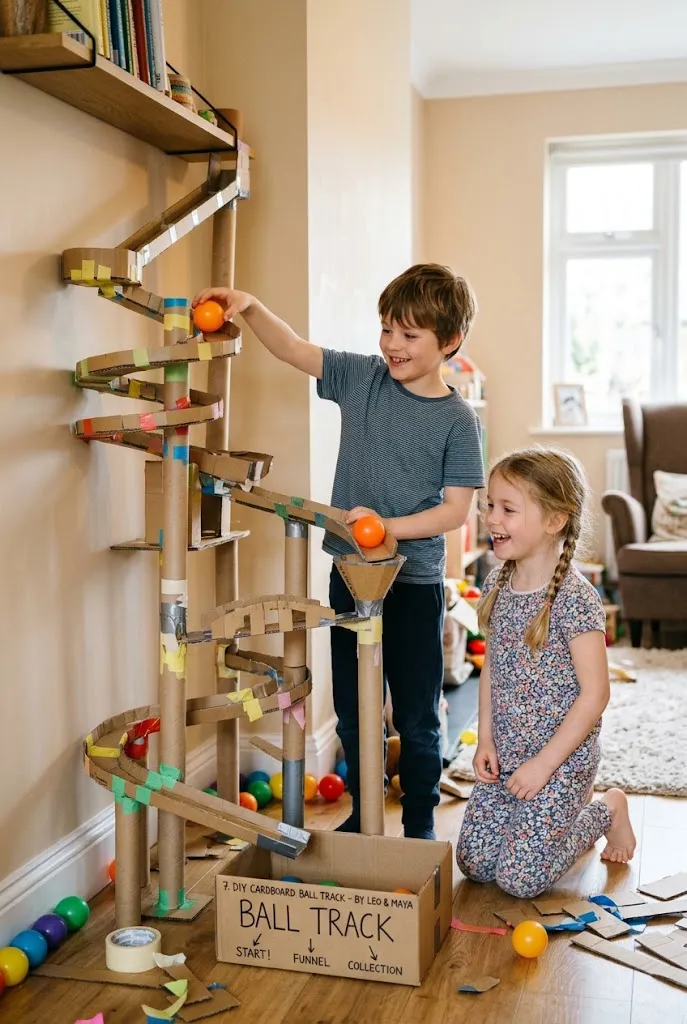
A cardboard ball track turns an ordinary box into an interactive game. Cats can watch the ball move through openings and try to reach it with their paws.
Choose a shallow, sturdy cardboard box and create a wide circular track or several connected channels. Use a lightweight, appropriately sized ball that cannot be swallowed.
Make It More Interesting:
- Create two or three different pathways.
- Add wide viewing openings.
- Use a contrasting ball for better visibility.
- Keep all edges smooth.
- Avoid narrow spaces that could trap paws.
A simple design is often more enjoyable than an overly complicated one.
8. DIY Cat Treat Treasure Hunt
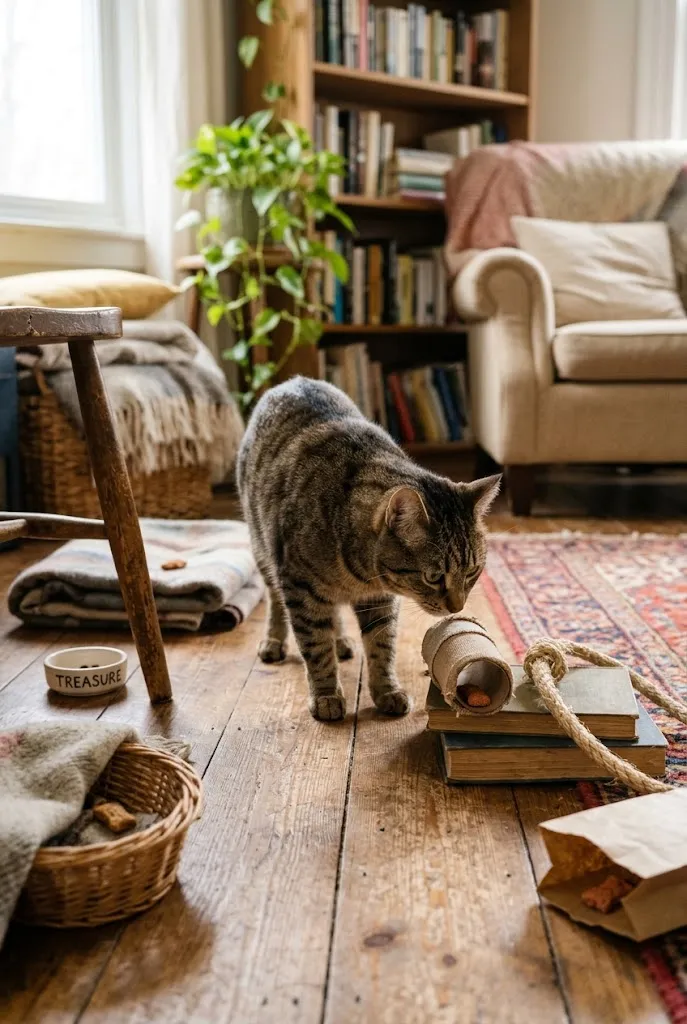
Turn snack time into an exciting little adventure with a homemade treat treasure hunt. This activity encourages your cat to explore different safe locations and use its natural curiosity.
How to Set It Up:
- Choose several safe, accessible hiding places.
- Place a tiny portion of your cat’s usual treats in each location.
- Start with easy-to-find rewards.
- Encourage your cat to investigate.
- Gradually change the hiding places.
Good locations include an open cardboard box, a shallow puzzle tray, or a safe corner of a room.
Editor’s Note: Include treats in your cat’s daily food allowance rather than adding unlimited extras.
9. DIY Paper Ball Chase Toy

You don’t need complicated supplies to create an entertaining chase game. A large, tightly crumpled paper ball can provide an inexpensive way for your cat to practice batting and chasing.
Take a sheet of clean, plain paper and shape it into a compact ball. Make sure it is large enough that your cat cannot swallow it.
Tips for Better Play:
Play together and observe whether your cat prefers short rolls or faster movements.
10. Homemade Cardboard Puzzle Board
A cardboard puzzle board is a creative way to give your cat something to investigate. Instead of placing treats in one obvious location, create several shallow compartments for a simple discovery game.
Use a sturdy cardboard tray and arrange a few securely fitted cardboard dividers to create separate spaces. Place a small amount of treats in selected sections.
A Simple Design:
- Three or four wide compartments.
- Different opening shapes.
- Enough room for comfortable paw movement.
- No sharp edges or loose pieces.
Supervise your cat throughout the activity and remove the board if it begins chewing the cardboard.
11. DIY Catnip Felt Heart

A handmade felt heart offers a cute alternative to traditional stuffed toys. It is also a fun craft for using leftover felt from other DIY projects.
Cut two matching heart shapes from sturdy felt. Sew the edges together, add a little pet-safe stuffing, and include catnip if your cat enjoys it. Close the seam securely.
Design Ideas:
- Soft beige heart.
- Dusty pink heart.
- Sage green heart.
- Two-tone felt heart.
Keep the design simple. Avoid decorative buttons, glued embellishments, and dangling threads.
12. DIY Muffin Tin Treat Puzzle
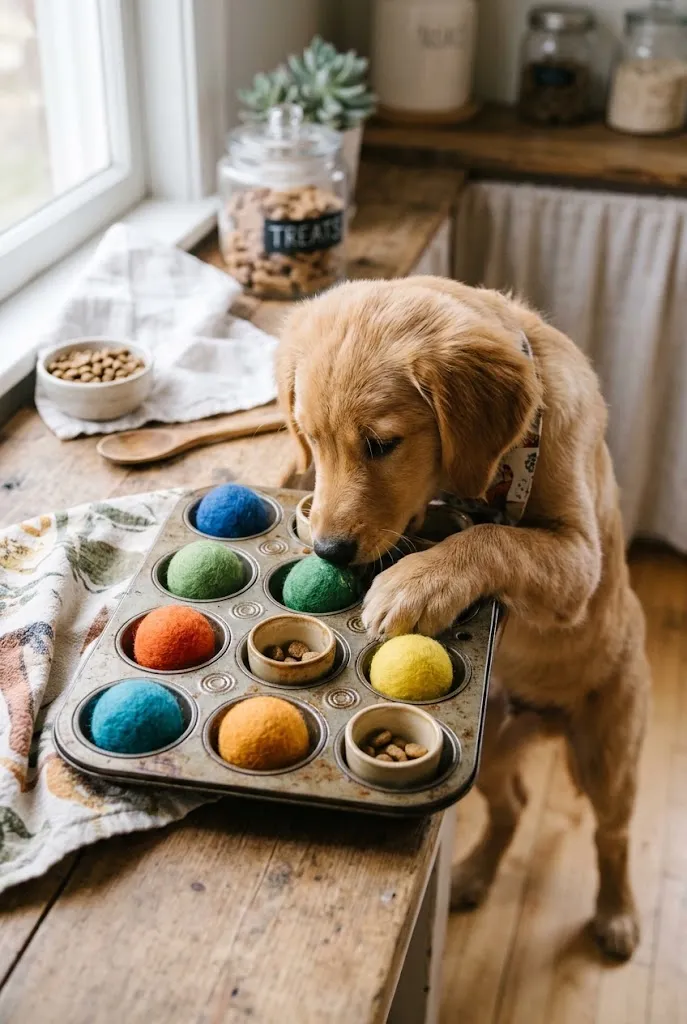
A clean muffin tin can become a simple interactive feeding game. It gives your cat several small spaces to investigate instead of presenting every treat in one open dish.
What You’ll Need:
- A clean metal muffin tin
- A few appropriately sized treats
- Large, lightweight toy balls that cannot be swallowed
Place a few treats in separate cups. If using covers, choose balls large enough not to become choking hazards and supervise the entire game.
Let your cat discover how to reach the rewards.
Quick Tip: Start without covers if your cat is new to food puzzles.
13. DIY Fabric Kicker Toy
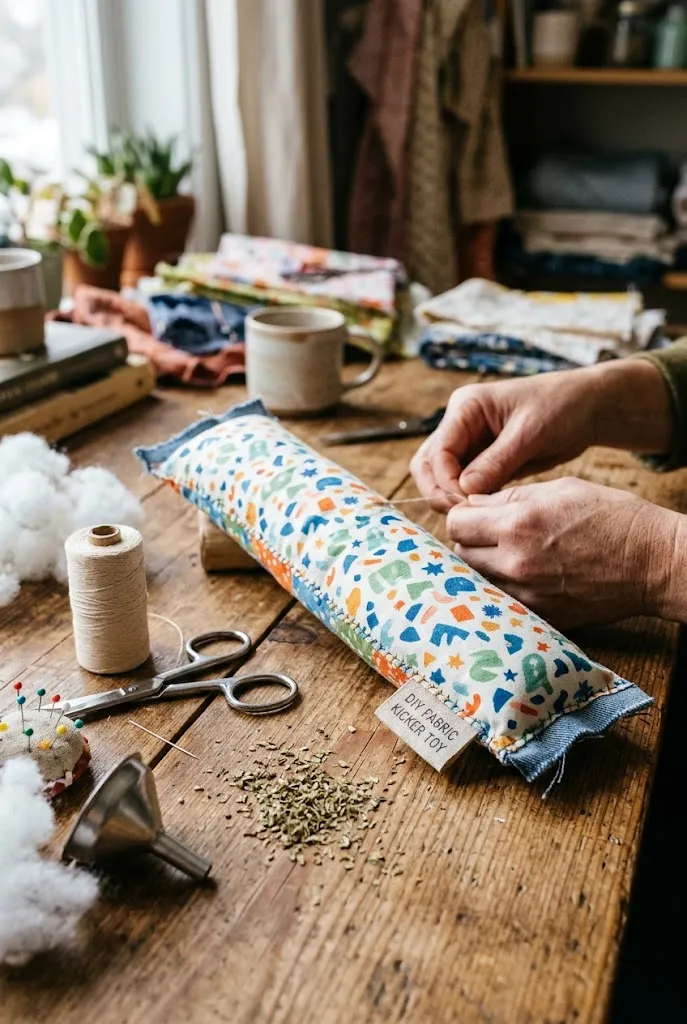
Some cats enjoy grabbing a soft toy with their front paws and kicking it with their back legs. A fabric kicker gives them a larger toy to wrestle with.
Use two pieces of durable, washable fabric to create a long rectangular shape. Sew the edges securely, add suitable stuffing, and close the final opening with reinforced stitching.
Choose:
- Durable cotton fabric.
- Soft fleece without loose fibers.
- A simple rectangular shape.
- Securely closed seams.
Avoid long ribbons, loose attachments, and decorative pieces.
14. DIY Cardboard Hide-and-Seek Puzzle
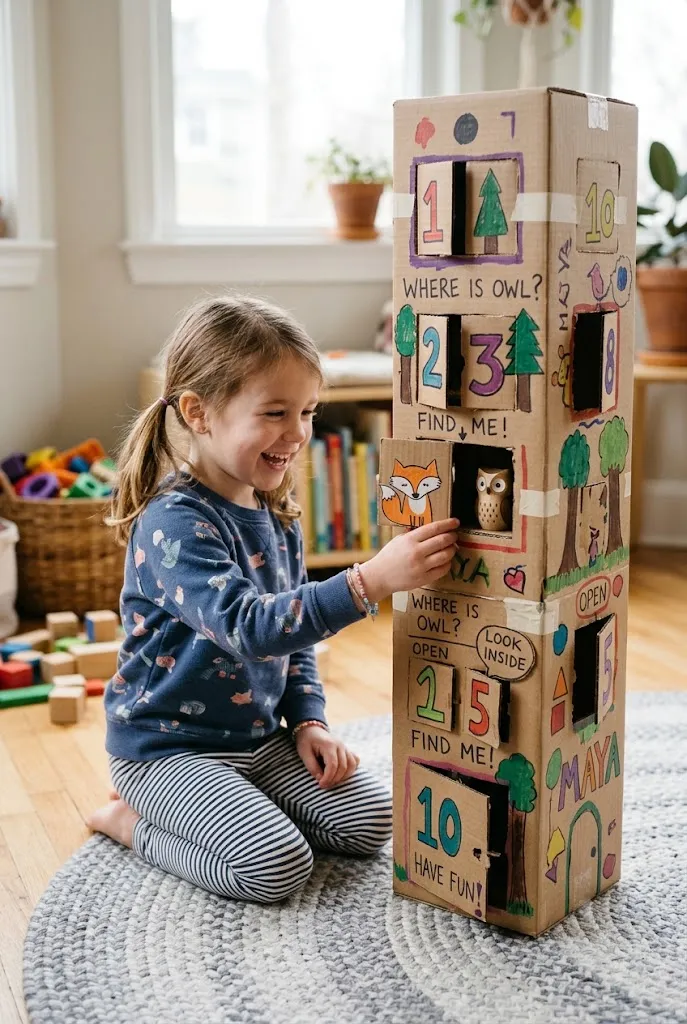
Cats often enjoy investigating small spaces, especially when something interesting is hidden inside. A cardboard hide-and-seek puzzle combines a familiar box with a little discovery.
Take a shallow box and create several wide openings along the top and sides. Place a large soft toy inside, leaving enough room for your cat to reach it comfortably.
You can also hide a few treats in separate corners.
Common Mistake: Making the openings too small.
Better Approach: Keep every opening comfortably large and make sure your cat can easily leave the box.
15. DIY Cat Toy Basket
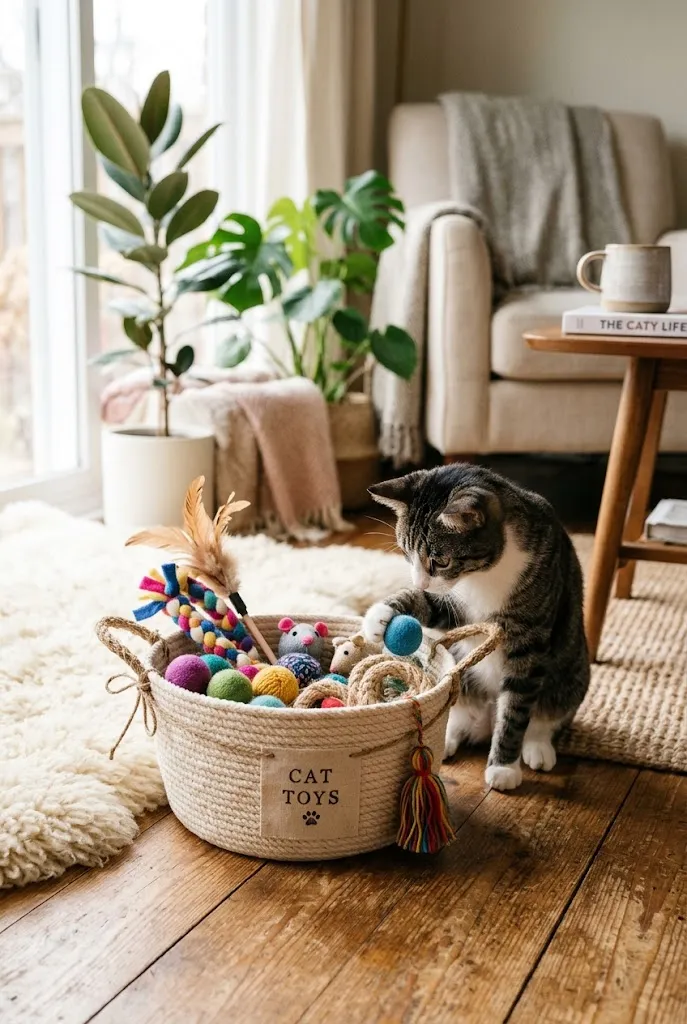
Sometimes the best DIY project is a simple way to organize all the toys your cat already loves. A dedicated toy basket makes it easy to rotate playthings and keep your living space tidy.
Choose a shallow, sturdy basket with smooth edges and no loose woven strands. Fill it with a small selection of safe toys.
What to Include:
- One soft stuffed toy.
- One sturdy fabric kicker.
- A large lightweight ball.
- A washable play toy.
- One favorite comfort toy.
Keep potentially hazardous interactive toys, especially corded wand toys, stored separately.
16. DIY Cat Puzzle With Paper Cups
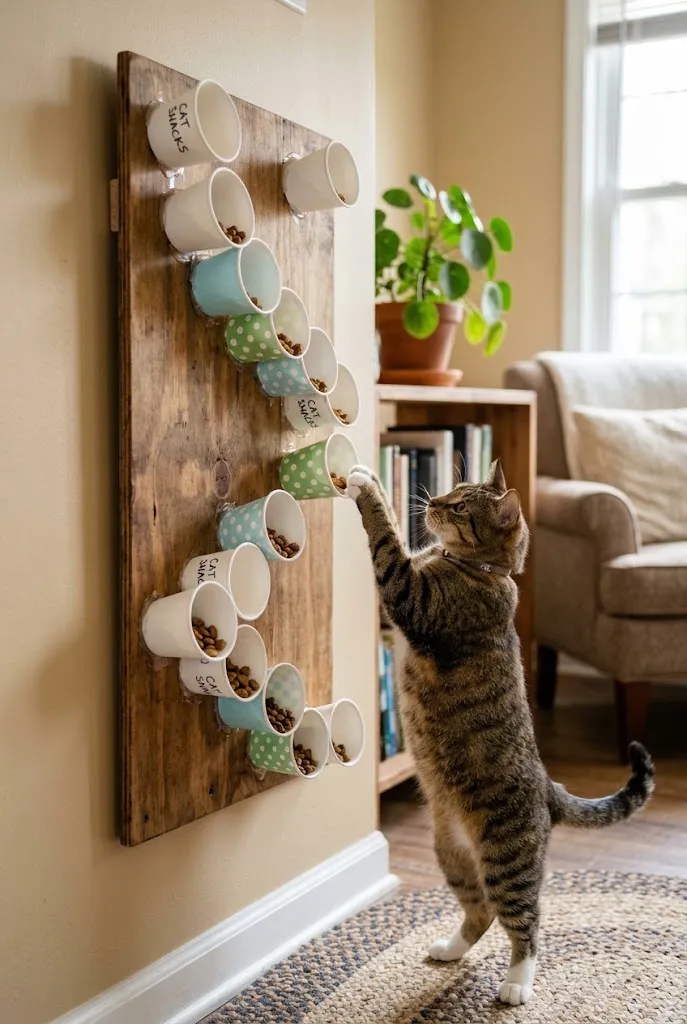
Paper cups can make a simple treat-discovery game when arranged on a flat surface. Your cat can investigate the cups and discover which ones contain a reward.
How to Create It:
- Choose clean, plain, uncoated paper cups.
- Check that there are no sharp or loose edges.
- Place a small treat under one or two cups.
- Arrange them upside down on a flat floor.
- Let your cat explore.
Use sturdy cups that won’t collapse into pieces. Remove them if your cat starts biting or tearing the paper.
17. DIY Cat Window Watching Station
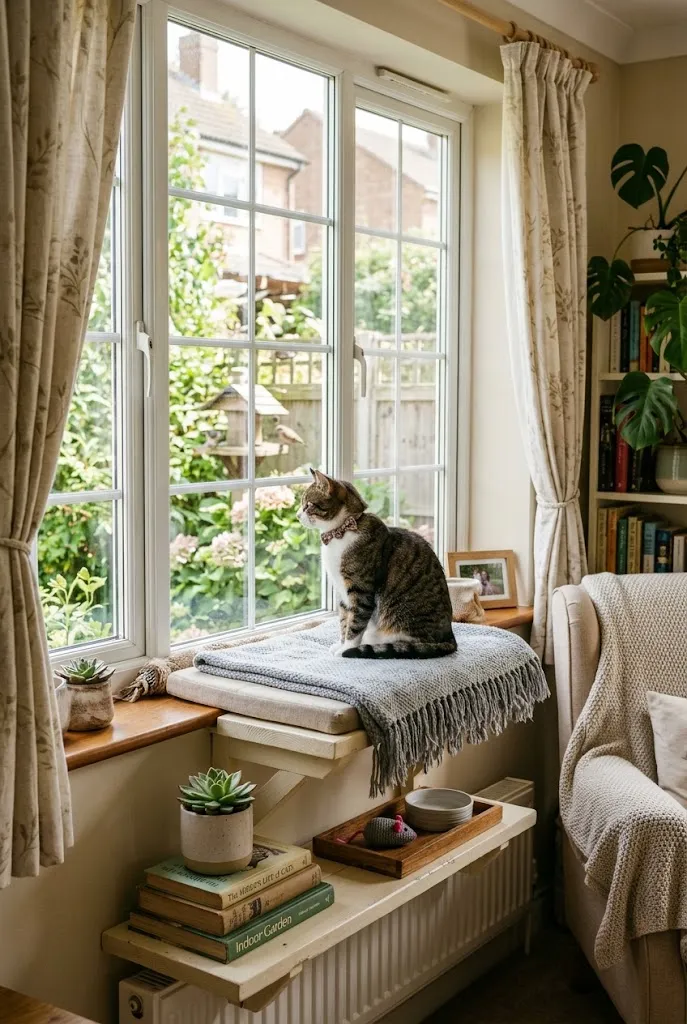
Not every homemade cat toy needs to move. A small window activity station can give your kitty a comfortable place to watch outdoor movement and enjoy a change of scenery.
Create a simple resting area using a secure, appropriately sized pet perch or a stable piece of cat furniture near a window.
Add a soft washable cushion and a favorite toy nearby.
Important Considerations:
- Make sure the perch is securely installed.
- Keep windows and screens properly secured.
- Avoid dangling cords and blind strings.
- Provide enough room for your cat to sit and turn comfortably.
18. DIY Cardboard Scratching Board
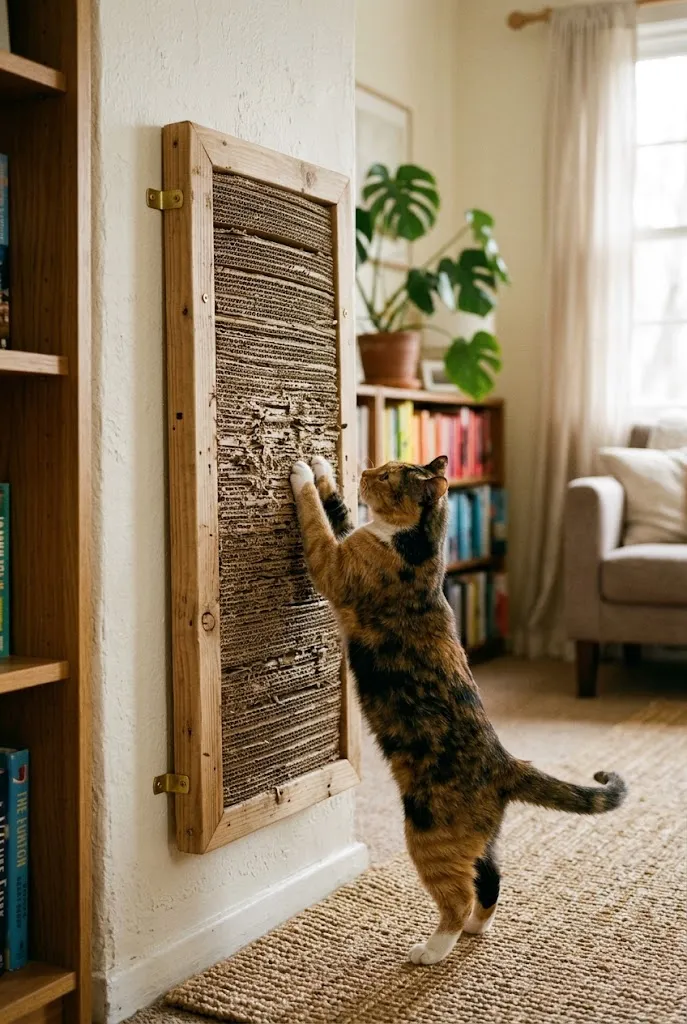
A cardboard scratching board is a practical project that can give your cat an appropriate surface for scratching and stretching.
Use layers of sturdy corrugated cardboard fitted tightly inside a shallow, stable tray. Keep the cardboard secure without leaving exposed adhesive or loose pieces that can be chewed off.
Ways to Personalize It:
- Make a wide rectangular scratcher.
- Create a shallow oval design.
- Use a neutral-colored outer tray.
- Place it near an area your cat already enjoys scratching.
Replace the scratcher when it becomes damaged or starts shedding loose pieces.
19. DIY Soft Catnip Mouse

A little fabric mouse is another enjoyable sewing project for cat owners. Its small animal-inspired shape makes it visually interesting, while its soft construction gives your kitty something to carry and bat around.
Cut two matching mouse-shaped fabric pieces, stitch them together, add a small amount of suitable stuffing, and close the opening securely.
For a Simple Finish:
- Use sturdy cotton fabric.
- Choose contrasting fabric colors.
- Keep the shape rounded.
- Avoid plastic eyes and buttons.
- Do not add a loose tail or ribbon.
Only offer a size-appropriate toy that your cat cannot swallow.
20. DIY Cat Exploration Box With Safe Objects
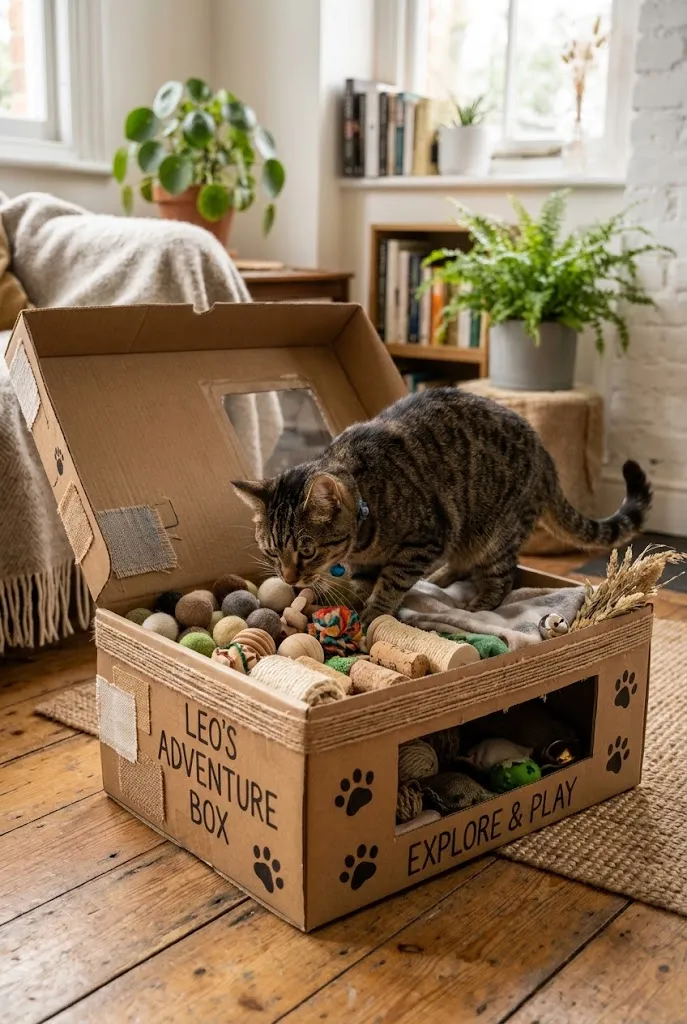
An exploration box provides a changing collection of textures and shapes for curious cats. It can be refreshed regularly using safe household materials.
Start with a shallow cardboard box and add a few larger, secure objects such as:
- A sturdy cardboard divider.
- A large fabric toy.
- A clean paper ball.
- A soft washable cushion.
- An empty cardboard tube.
Allow your cat to investigate at its own pace.
Editor’s Note: Avoid adding plastic packaging, rubber bands, small caps, loose string, or anything that could break into swallowable pieces.
21. DIY Cardboard Peekaboo Toy
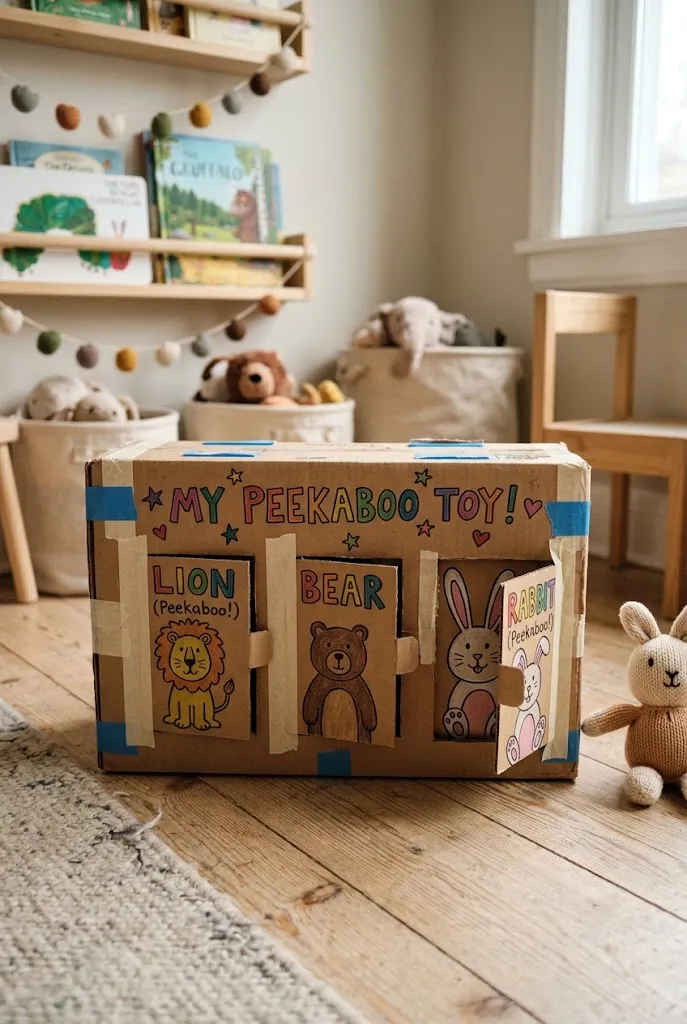
A peekaboo toy is a simple way to encourage your cat to watch, reach, and investigate. It uses the natural curiosity cats often show toward objects appearing and disappearing.
Use a sturdy cardboard box with several large openings. Place a large soft toy inside, partially visible through one opening. Move the toy gently by hand while your cat watches.
Keep your fingers away from excited paws and teeth, and never leave the box with loose attachments.
22. DIY Cat Treat Puzzle Drawer
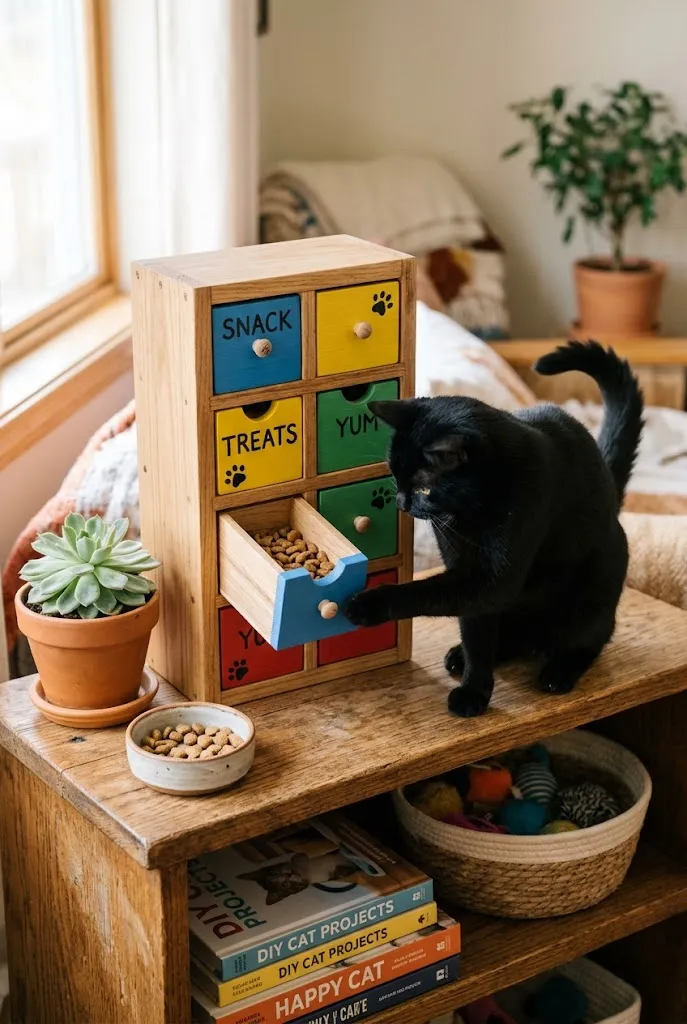
A shallow cardboard drawer can turn a few treats into a small problem-solving activity. The idea is to create a compartment that slides open easily without trapping paws.
Use a sturdy shallow box and a second piece of cardboard as a removable cover. Keep the cover loose and lightweight so it cannot trap your cat.
Make It More Engaging:
- Place a few treats inside.
- Leave the drawer partially open.
- Let your cat investigate.
- Encourage gentle paw movements.
- Remove the project if cardboard begins breaking apart.
23. DIY Large Rolling Ball Game
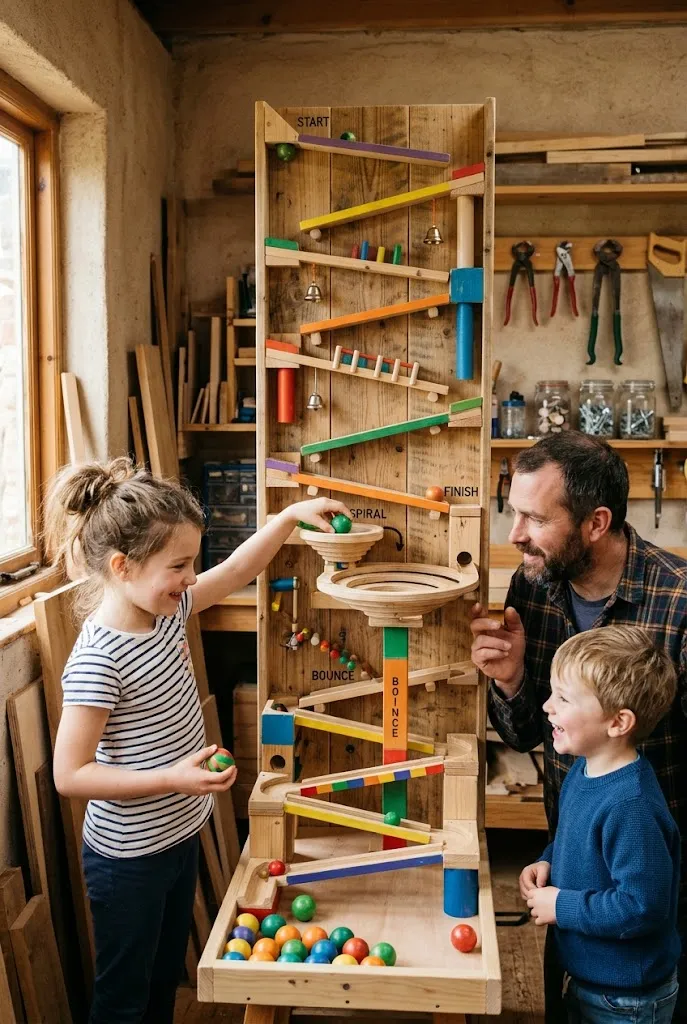
Some cats love chasing objects that roll across the floor. A large lightweight ball can provide a simple activity without complicated construction.
Create a play area using a clear section of smooth flooring. Choose a sturdy ball designed for pet play or a large, durable ball that cannot fit inside your cat’s mouth.
Roll it gently across the floor and let your cat decide whether to chase it.
Quick Tip: Change the direction and speed occasionally to make the activity more interesting.
Never use small decorative balls, loose bells, or objects that can break apart.
24. DIY Cat Activity Box With Multiple Levels
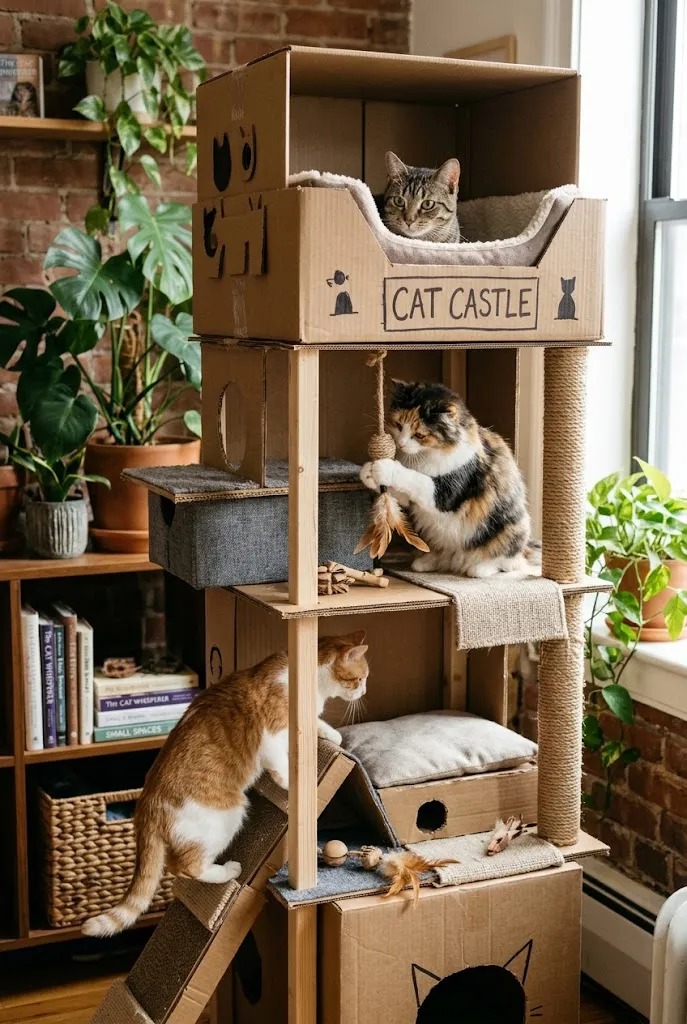
If your cat enjoys climbing and exploring, a low cardboard activity box with different platforms can provide an interesting homemade play area.
Use several sturdy cardboard sections to create low steps and broad platforms. Secure the structure so it cannot tip, and keep the heights modest.
Design Features:
- Wide climbing surfaces.
- Large entrance openings.
- A comfortable hiding corner.
- Stable lower platforms.
- No sharp edges or exposed fasteners.
Avoid high structures, unstable stacking, and narrow spaces.
25. DIY Cat Toy Rotation Station
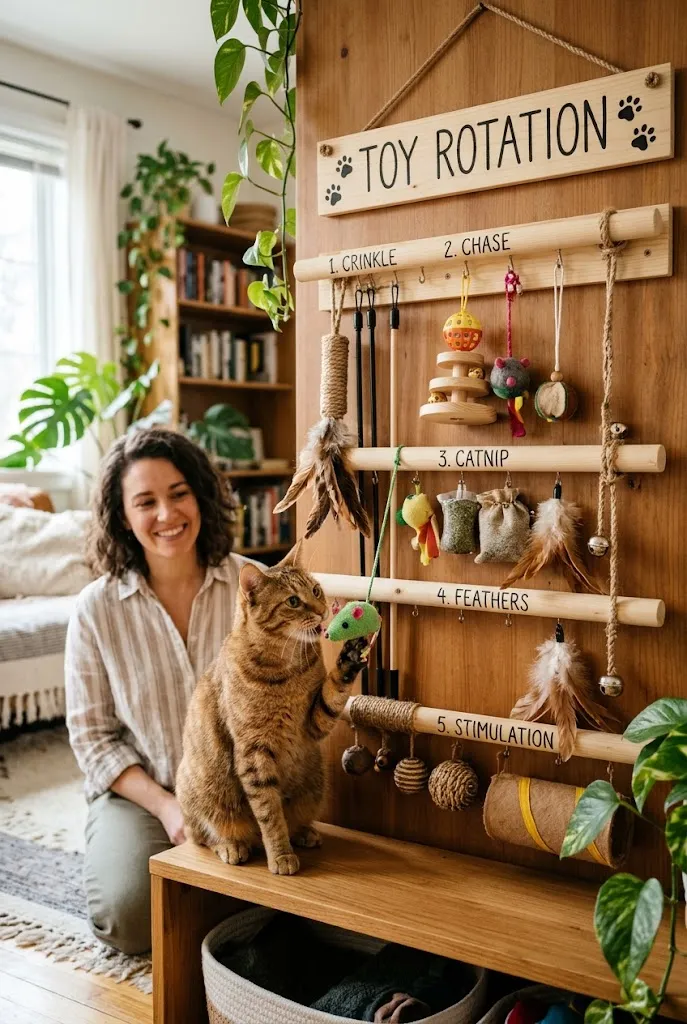
A toy rotation station is a simple way to make familiar playthings feel interesting again. Instead of leaving every toy on the floor, keep a small selection available and change it periodically.
How to Organize It:
- Collect your cat’s existing safe toys.
- Separate them into a few small groups.
- Keep only a handful accessible at once.
- Store the others in a closed, clean container.
- Switch the selection periodically and observe which toys your cat enjoys.
Keep your cat’s favorite comfort toy available if it is safe and in good condition.
A rotation station also helps you inspect toys and remove anything that has become damaged.
How to Keep Homemade Cat Toys Safe
Making toys at home is fun, but choosing suitable materials is just as important as the design. Cats often chew, scratch, and pull at their toys, so homemade projects need regular inspection.
Keep these guidelines in mind:
- Avoid loose strings and yarn: Swallowed string can cause serious intestinal injuries.
- Skip small decorations: Buttons, beads, bells, and loose pieces can become choking or ingestion hazards.
- Choose suitable materials: Use clean, sturdy cardboard and washable fabrics.
- Supervise new toys: Watch how your cat interacts with unfamiliar materials.
- Inspect regularly: Replace toys with loose seams, damaged cardboard, or exposed filling.
- Store interactive toys properly: Put away wand toys and anything with cords after supervised play.
- Rotate playthings: Offer a small selection and change it periodically to maintain interest.
For more inspiration, you can also explore 7 Easy DIY Cat Toys Your Kitty Will Love from Diamond Pet.
Frequently Asked Questions
1. What household items can I use to make DIY cat toys?
Clean cardboard boxes, toilet paper rolls, plain paper, sturdy fabric scraps, and clean cotton socks can be useful materials. Always consider whether your cat might chew or swallow parts of the finished toy.
2. How can I make DIY cat toys without spending much money?
Start with materials you already have at home. Empty cardboard boxes, paper tubes, and leftover fabric can become simple puzzles, tunnels, and soft toys without requiring expensive supplies.
3. Are homemade cat toys safe for kittens?
They can be suitable when designed for a kitten’s size, chewing habits, and activity level. Avoid small parts, loose threads, and anything that could be swallowed. Supervise play and ask your veterinarian if you’re unsure about a particular material.
4. How often should I replace homemade cat toys?
There isn’t one fixed replacement schedule. Inspect toys regularly and replace them whenever they become damaged, develop loose seams, expose stuffing, or start breaking into small pieces.
5. How do I keep my cat interested in homemade toys?
Try offering different activities, such as chasing, hiding, batting, and treat discovery. Rotate safe toys periodically and pay attention to the types of play your cat naturally enjoys.