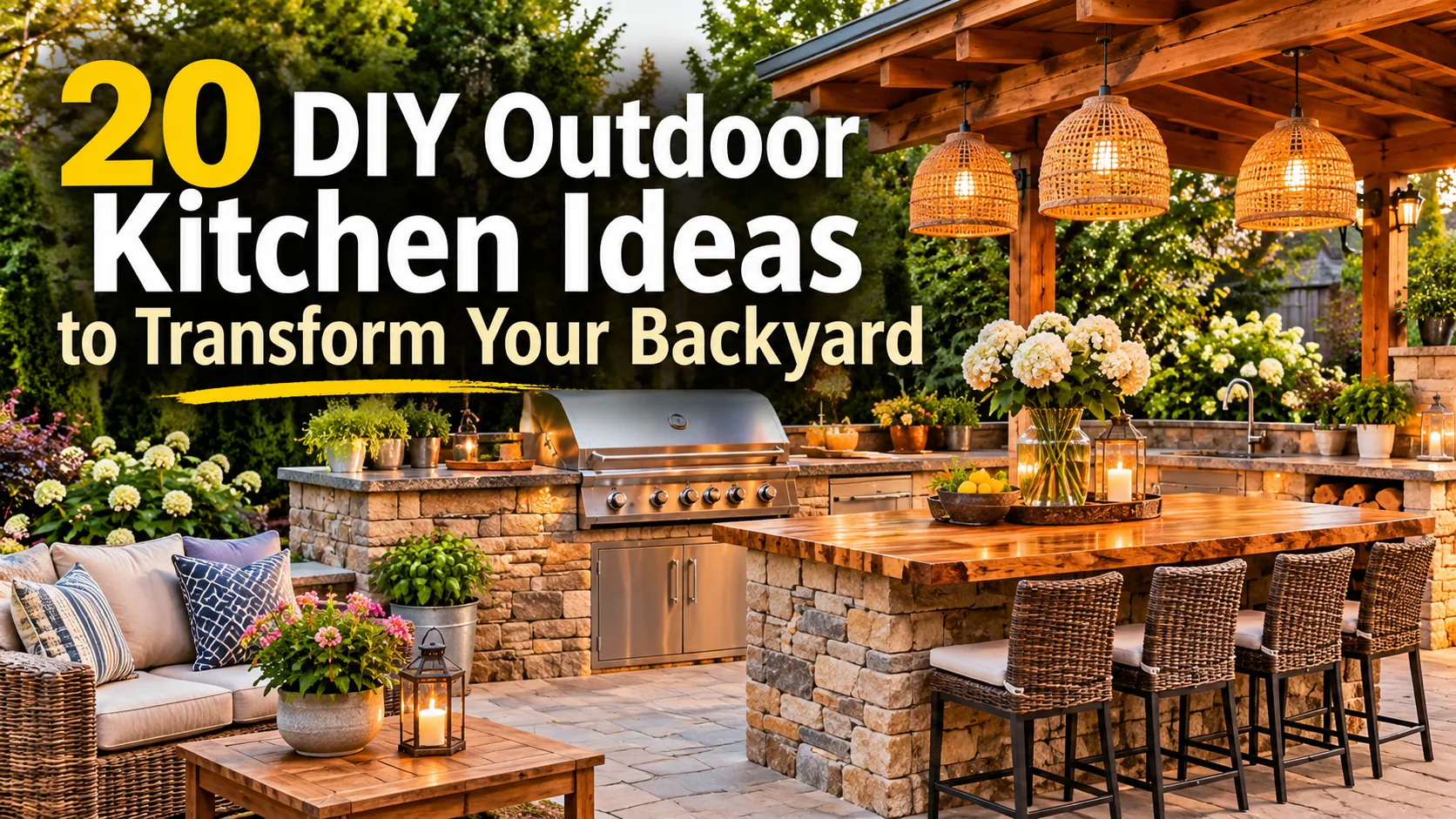
20 DIY Outdoor Kitchen Ideas to Transform Your Backyard
An DIY Outdoor Kitchen Ideas can make a backyard feel more welcoming and give you a comfortable place to cook, entertain, and enjoy time outside. You don’t need an enormous patio or a professionally designed setup to create one. With thoughtful planning, practical materials, and a little DIY creativity, even a small backyard can accommodate a functional cooking area.
These DIY outdoor kitchen ideas cover a range of styles, from simple grilling stations and repurposed wood counters to built-in appliances, stone finishes, and covered cooking spaces. Some projects are suitable for handy homeowners, while others are better approached with professional help for gas, electrical, or structural work. The goal is to find a design that fits your available space, cooking habits, and budget while making your outdoor area more enjoyable.
1. Build a Simple Wooden Outdoor Grill Station
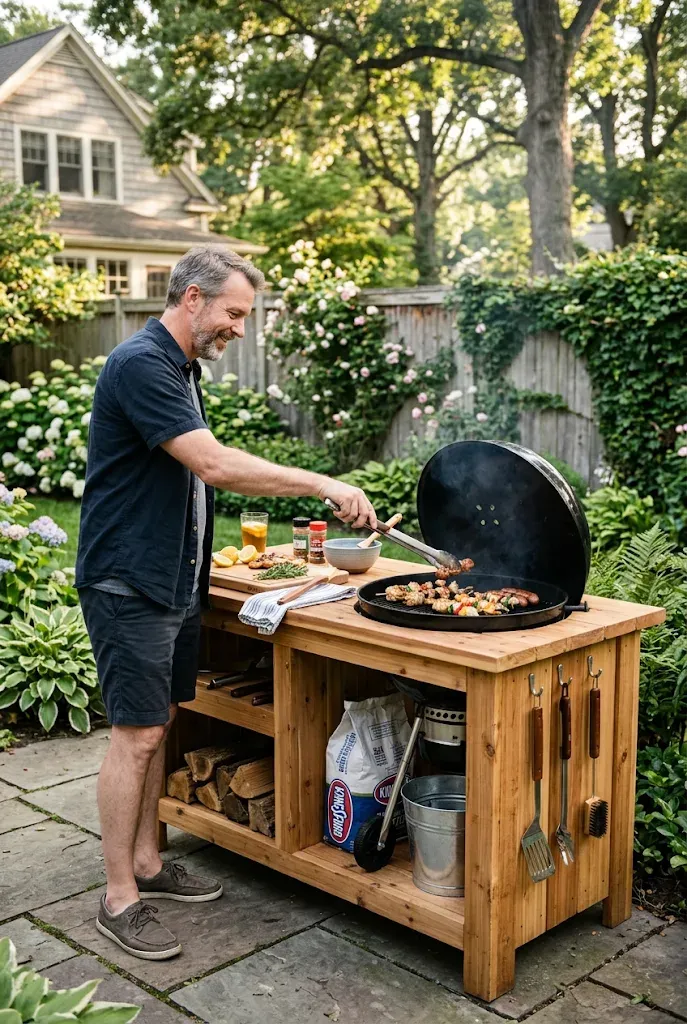
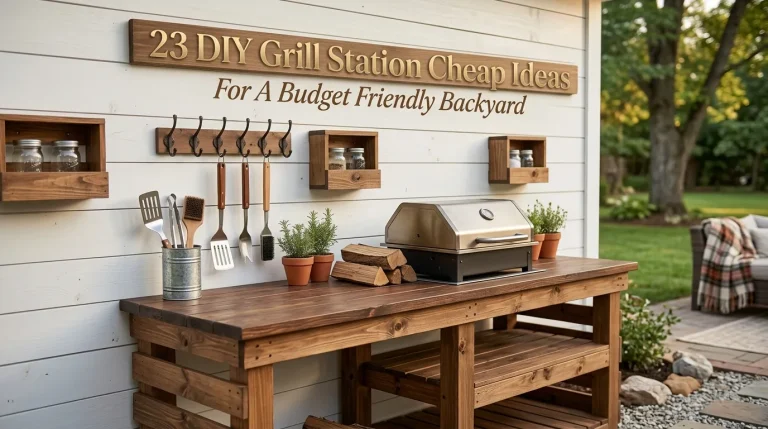
A wooden grill station is a practical starting point for anyone who wants an outdoor cooking area without committing to a complete kitchen renovation. It provides a dedicated place for grilling tools, serving trays, seasonings, and food preparation.
Use weather-resistant lumber for the non-heat-exposed portions of the structure, with a durable outdoor-rated countertop. Cedar and naturally durable exterior wood are popular choices for outdoor projects. Keep combustible framing and wood surfaces outside the grill manufacturer’s required clearance zone.
A useful layout includes:
- A dedicated space for a freestanding grill.
- A countertop for food preparation.
- Shelving for cooking accessories.
- A lower storage area for weather-resistant containers.
Quick Tip: Apply an appropriate exterior finish and plan for a fitted cover to protect the wood from moisture and sun exposure.
2. Create a Budget-Friendly Cinder Block Kitchen
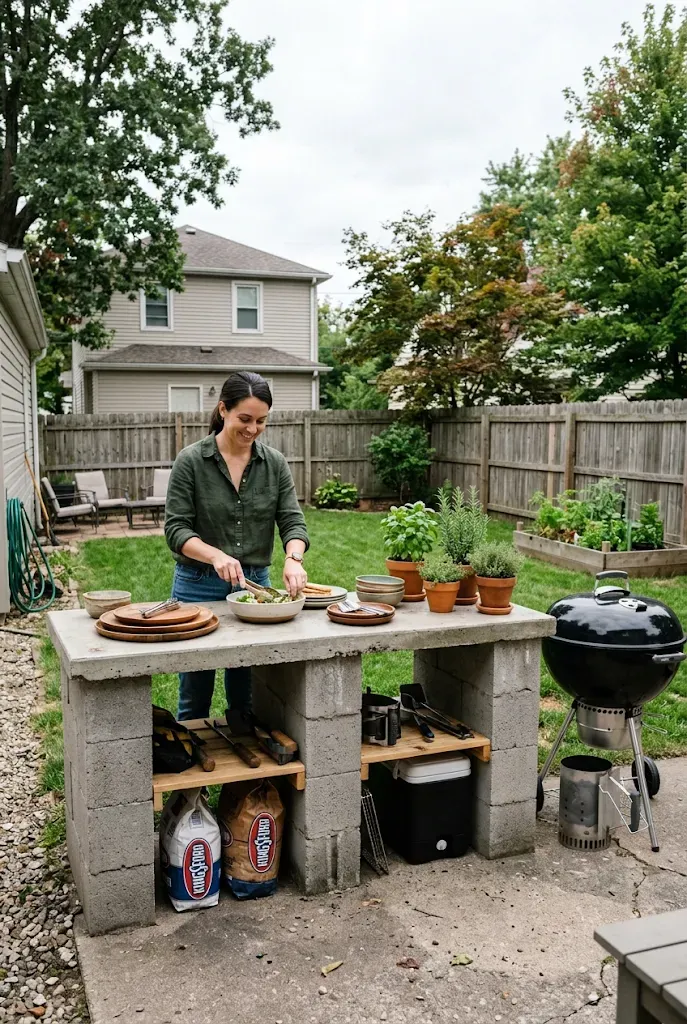
Cinder blocks offer a straightforward way to create a sturdy base for an outdoor kitchen. Their simple rectangular shape makes them useful for building a compact island, a grilling counter, or a basic preparation station.
Arrange the blocks into a stable structure with properly supported openings for storage. Finish the top with an appropriately rated concrete countertop or another outdoor-suitable surface. You can leave the blocks in their natural gray finish for an industrial look or apply a compatible masonry coating.
Materials to consider:
- Concrete masonry blocks.
- Suitable masonry mortar or an engineered dry-stack system.
- Outdoor-rated countertop material.
- Exterior-grade masonry coating.
- Storage baskets or noncombustible shelves.
Common Mistake: Don’t assume a stack of loose blocks is a safe structural base. The foundation, stability, and countertop support need proper planning, particularly around heavy appliances.
3. Design a Rustic Stone Outdoor Kitchen
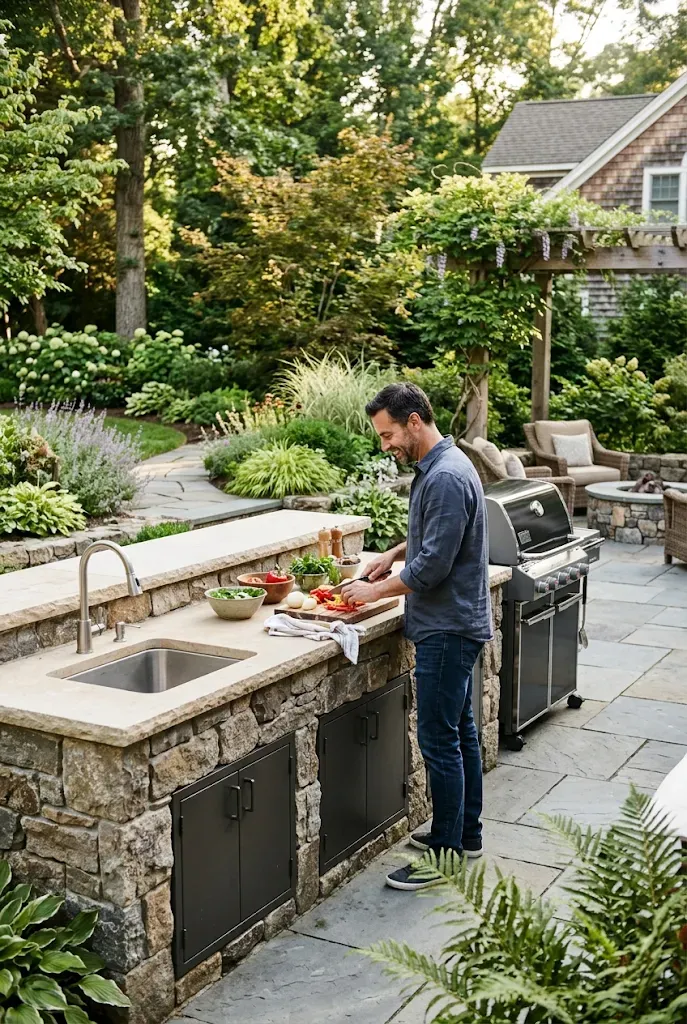
Natural stone brings texture and visual weight to an outdoor cooking area. A stone-faced kitchen island can complement patios with gravel, flagstone, brick, or traditional landscaping.
For a more accessible project, consider a properly engineered masonry base with a manufactured stone veneer. It can provide the appearance of a substantial stone structure without requiring every surface to be built from solid stone.
Pair the stone with:
- A neutral concrete or granite-look countertop.
- Dark metal cabinet doors.
- Warm outdoor lighting.
- Simple wooden serving accessories.
- A few large planters.
Choose finishes that coordinate with the existing patio rather than introducing too many competing textures.
4. Make a Small Outdoor Kitchen With a Compact Layout
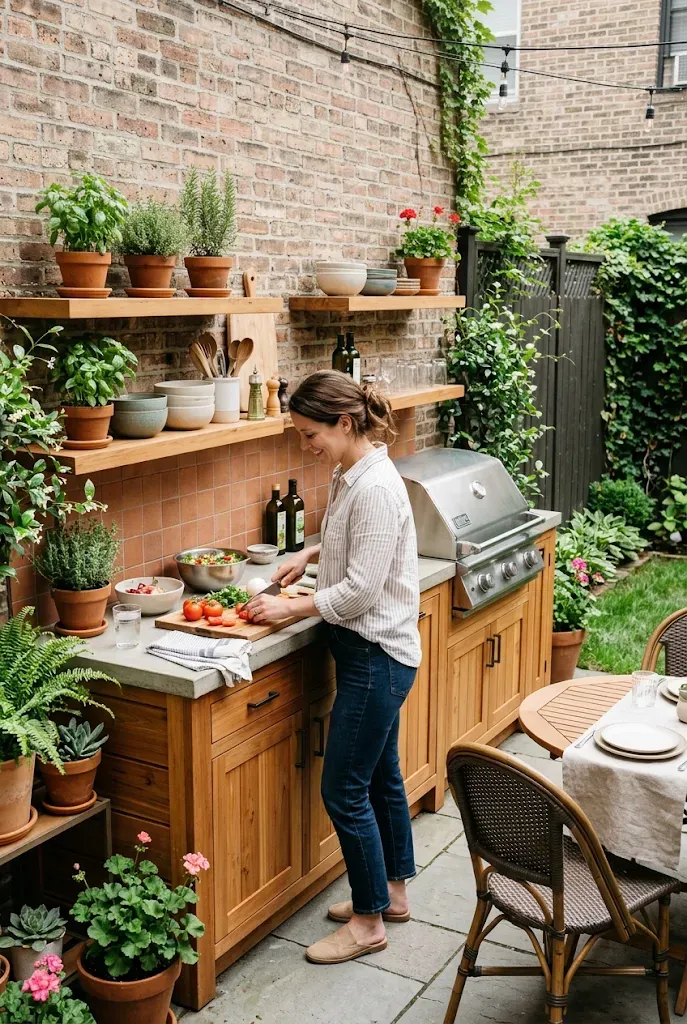
A small backyard doesn’t need a large island to accommodate outdoor cooking. A straight-line kitchen positioned along an appropriate exterior wall or patio edge can provide the essentials while leaving room for seating and movement.
Start by measuring the available space and considering how people will move between the grill, preparation counter, and dining area. A narrow counter with a freestanding grill and a few storage compartments may be enough for everyday meals.
Useful space-saving choices:
- A slim preparation counter.
- Vertical storage for grilling accessories.
- Compact weather-resistant cabinets.
- A small rolling serving cart.
- Foldable outdoor seating.
Avoid crowding the cooking area with decorative items. A clean layout is usually more useful than squeezing in every possible feature.
5. Build an Outdoor Kitchen With a Concrete Countertop
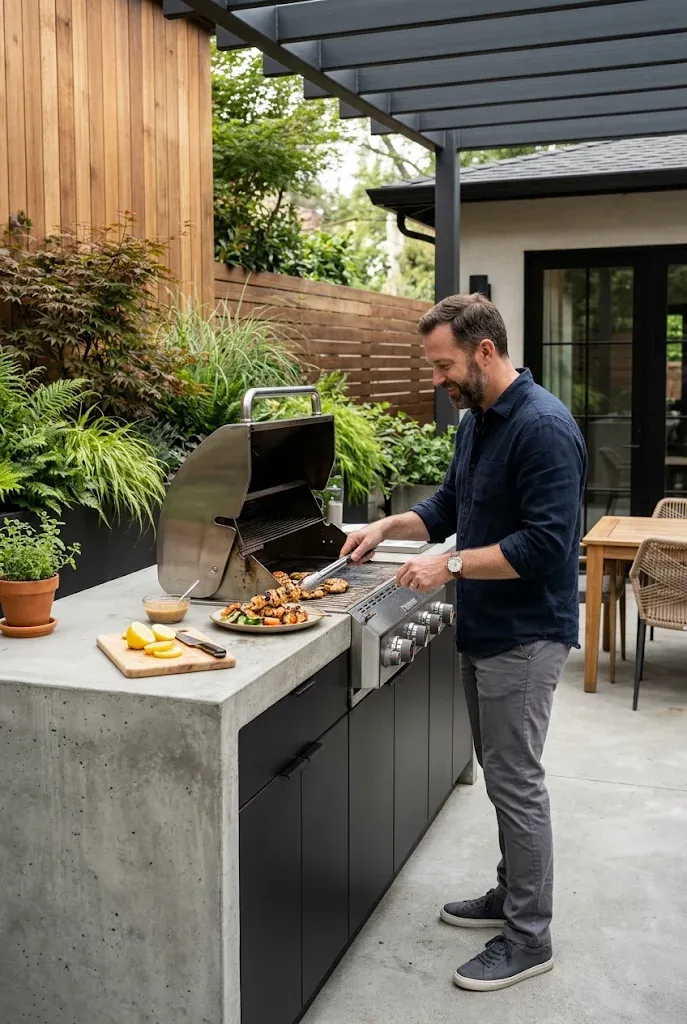
Concrete countertops work particularly well in outdoor kitchens with contemporary, industrial, or minimalist styling. Their understated appearance pairs nicely with dark metal, wood accents, brick, and masonry.
A poured concrete countertop can be a DIY project for someone familiar with formwork, reinforcement, and proper curing. Precast outdoor-rated concrete countertops are another option if you want a more predictable installation.
For a successful result, consider:
- Proper support beneath the countertop.
- Suitable exterior sealing.
- Drainage and water exposure.
- Expansion and movement.
- Smooth, rounded edges where practical.
Editor’s Note: Concrete can develop hairline cracks or surface changes over time. Plan for maintenance instead of expecting it to remain completely unchanged outdoors.
6. Add a Wooden Pergola Over the Cooking Area
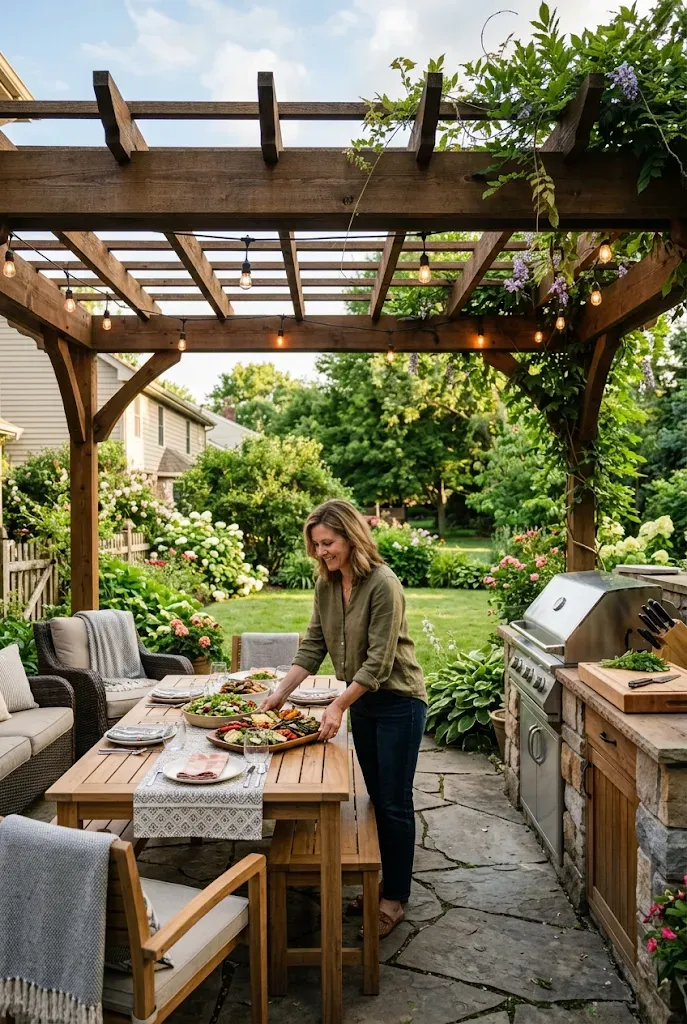
A pergola can visually define an outdoor kitchen and create a more finished connection between the cooking and dining areas. Its overhead beams add architectural interest without making the patio feel completely enclosed.
Choose a pergola design that complements your home’s exterior. Natural wood suits rustic and farmhouse-inspired spaces, while painted structures work well with contemporary homes.
You can finish the surrounding area with:
- Weather-resistant dining furniture.
- Outdoor pendant lighting rated for the location.
- Large planters.
- A separate preparation island.
- Comfortable chairs or a small dining table.
Important: A pergola is not automatically a safe cover for a grill. Keep cooking appliances away from combustible overhead structures and follow the grill’s clearance requirements. Never enclose a grill in a poorly ventilated area.
7. DIY Outdoor Kitchen Ideas Kitchen Using Reclaimed Bricks
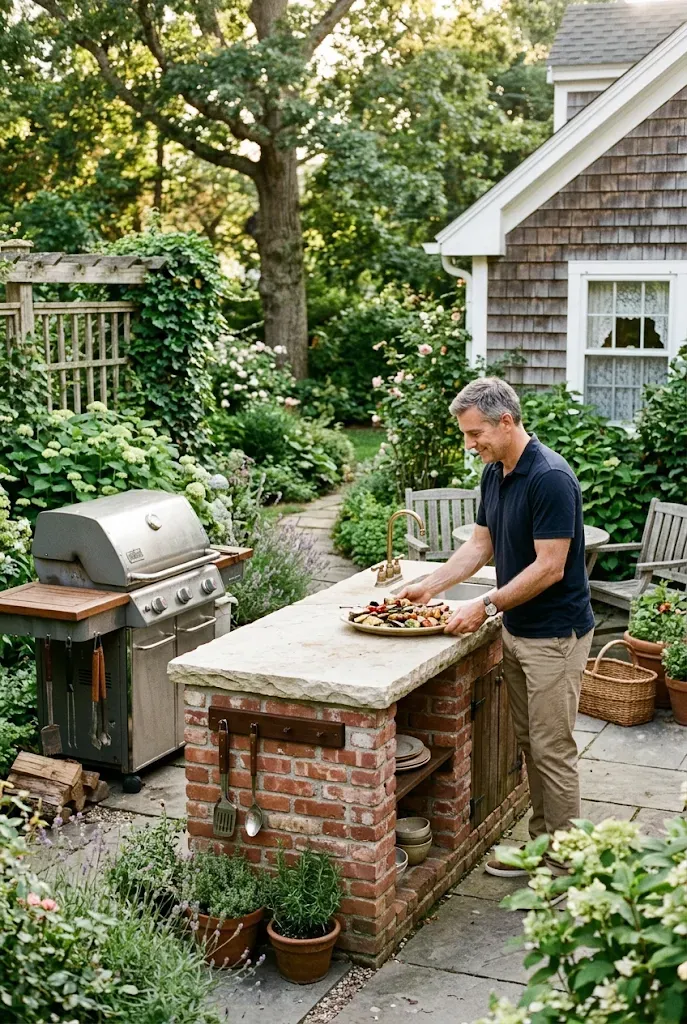
Reclaimed bricks can give an outdoor kitchen an established, character-filled appearance. Their natural variations in color and texture work especially well in cottage gardens, traditional patios, and rustic backyards.
Use sound, suitable masonry materials and have the structure designed to support the weight of the countertop and appliances. A brick-faced island can also be built around an appropriately engineered base.
To keep the design balanced, combine the warm brick with a simple countertop rather than adding several decorative finishes.
Do:
- Check reclaimed bricks for damage and suitability.
- Use appropriate masonry construction.
- Select a countertop designed for outdoor exposure.
Don’t:
- Use deteriorating bricks in structural applications.
- Position combustible materials against hot appliance surfaces.
- Block appliance ventilation openings.
8. Install a Portable Outdoor Kitchen Cart
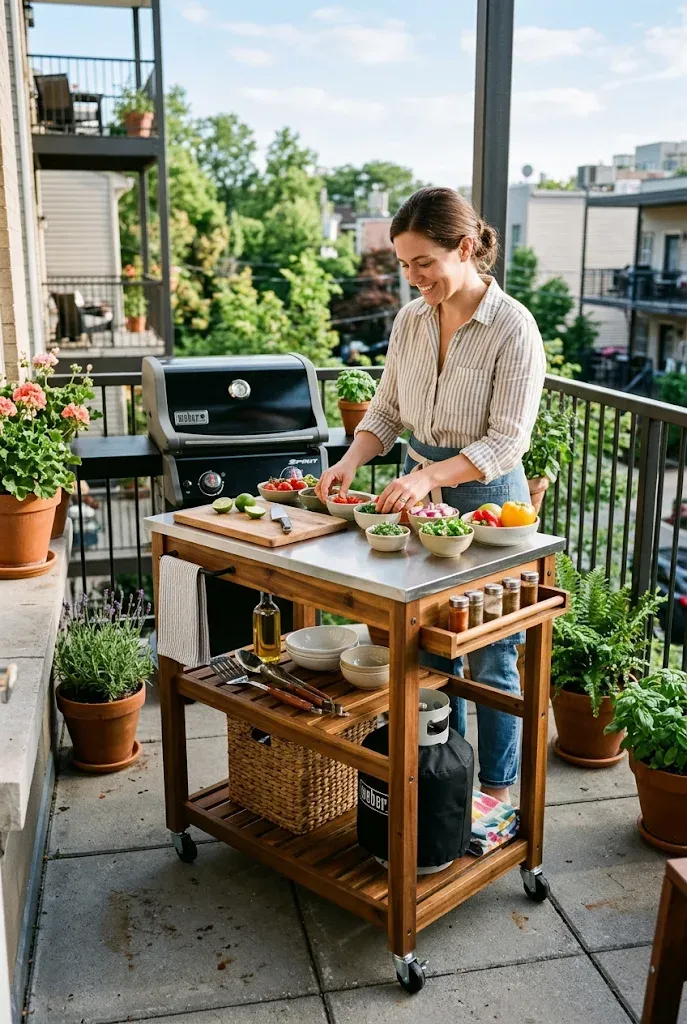
Not every outdoor kitchen needs permanent construction. A rolling kitchen cart offers a flexible option for renters, smaller patios, and homeowners who want to test an outdoor cooking layout before investing in a built-in design.
Choose a cart made for outdoor conditions, with locking wheels, a stable work surface, and storage that can be protected from rain. Keep the cart separate from the grill unless it is specifically designed and rated to support that appliance.
A practical cart can hold:
- Serving trays.
- Cooking utensils.
- Outdoor-safe containers.
- Seasonings.
- Towels.
- Plates and glasses.
When cooking is finished, move the cart to a protected storage location if its materials and manufacturer instructions allow.
9. Add a Built-In Grill Island
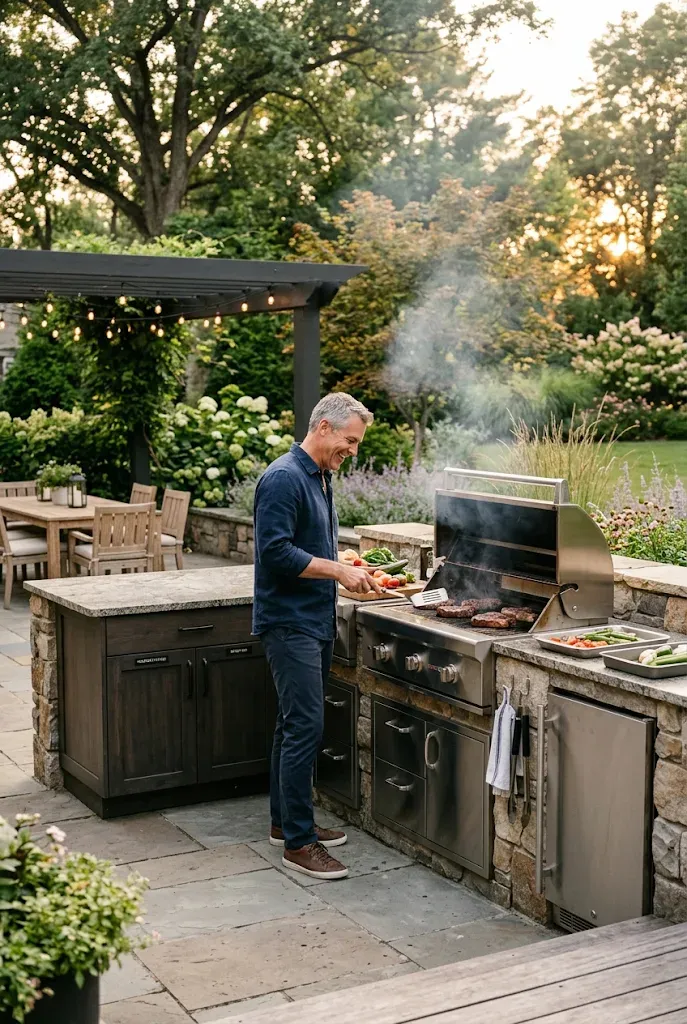
A built-in grill island creates a dedicated focal point for an outdoor kitchen. It can make the cooking area look more integrated than a freestanding barbecue, especially when the island matches the patio’s materials and color scheme.
Start with the exact grill model you plan to install. Built-in appliances have specific enclosure, ventilation, heat-clearance, and access requirements. The island must be designed around those instructions rather than simply built to the grill’s visible dimensions.
A balanced island can include:
- A built-in grill.
- A preparation counter.
- Weather-resistant cabinet doors.
- Access to required appliance service areas.
- A separate landing space for hot cookware.
This is a project where professional planning is particularly worthwhile.
10. Design a Farmhouse-Style Outdoor Kitchen
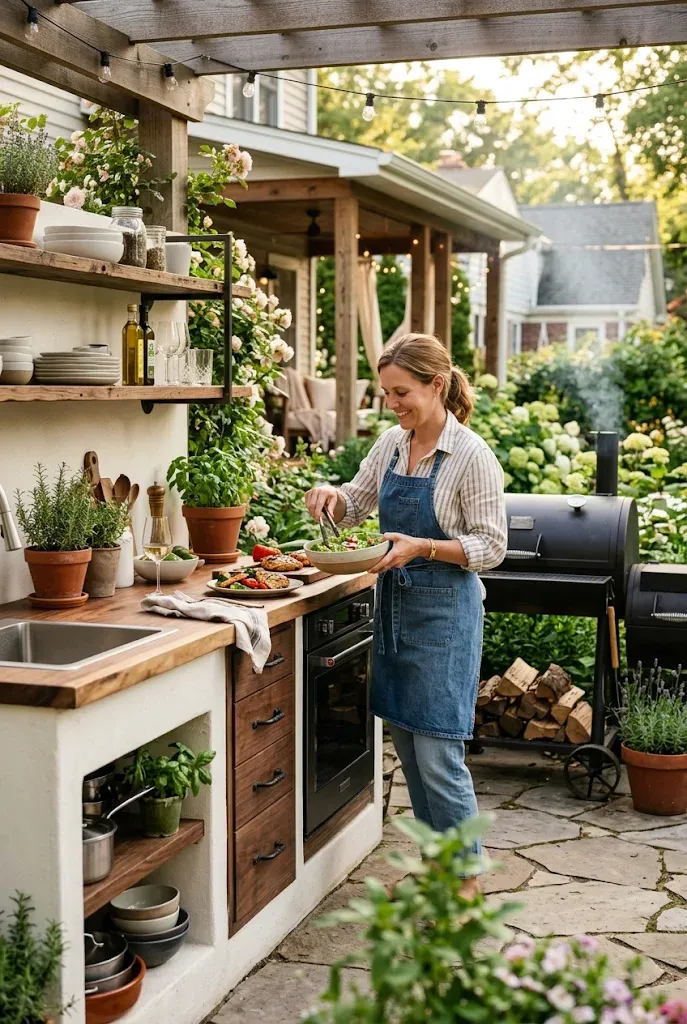
Farmhouse-inspired outdoor kitchens combine practical materials with a relaxed, welcoming appearance. White or warm neutral finishes, natural wood, simple metal details, and open shelving help create the look without requiring elaborate construction.
A useful approach is to build a simple masonry or weather-resistant cabinet base and finish it with a light-colored outdoor countertop. Add wooden serving boards and a few decorative containers to soften the overall appearance.
Details that work well:
- Warm white or cream finishes.
- Natural timber accents.
- Black metal hardware.
- Stone or concrete surfaces.
- Simple open shelving.
- Terracotta planters.
Keep decorative textiles and untreated wood away from the grill’s heat zone.
11. Create an Outdoor Kitchen With a Pizza Oven
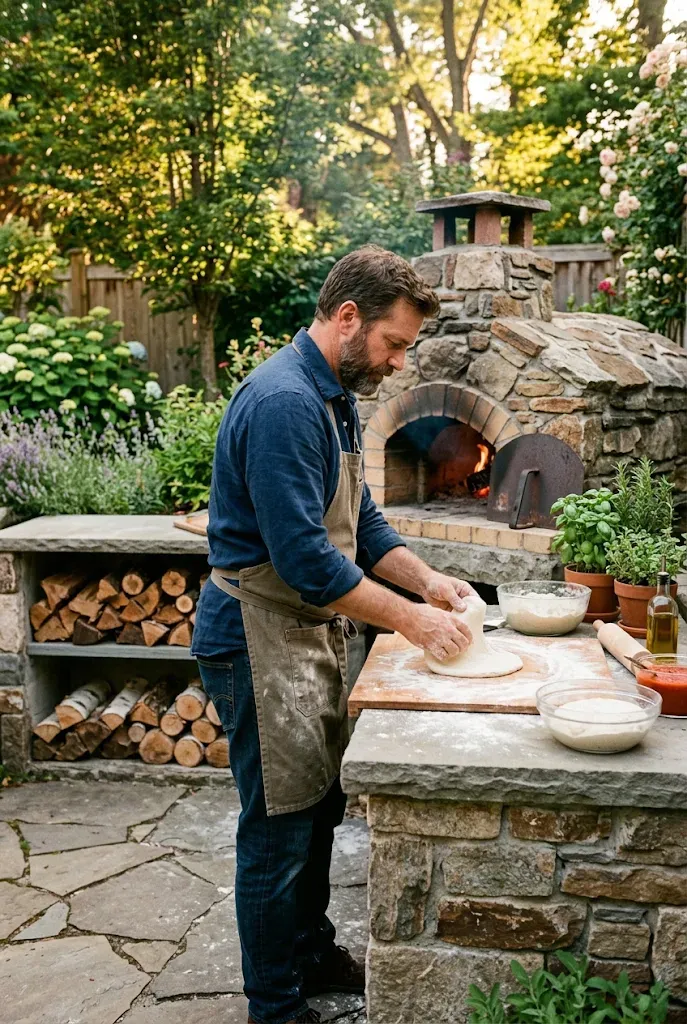
A pizza oven can turn a basic backyard cooking station into a more versatile entertaining space. It creates a natural focal point and gives family and guests something interesting to gather around.
You can incorporate a freestanding pizza oven into a custom masonry counter or build a separate oven station beside your main grill. The second option is often easier to plan because pizza ovens have their own heat, ventilation, support, and clearance requirements.
Consider including:
- A heat-resistant preparation surface.
- Storage for pizza peels and cooking accessories.
- A nearby counter for assembling pizzas.
- A small covered storage area for suitable cooking supplies.
- Comfortable seating within the entertaining area but away from heat.
Quick Tip: Keep the pizza preparation counter close enough to be convenient, but don’t crowd the oven opening or block its ventilation.
12. Build a Pallet-Inspired Outdoor Kitchen
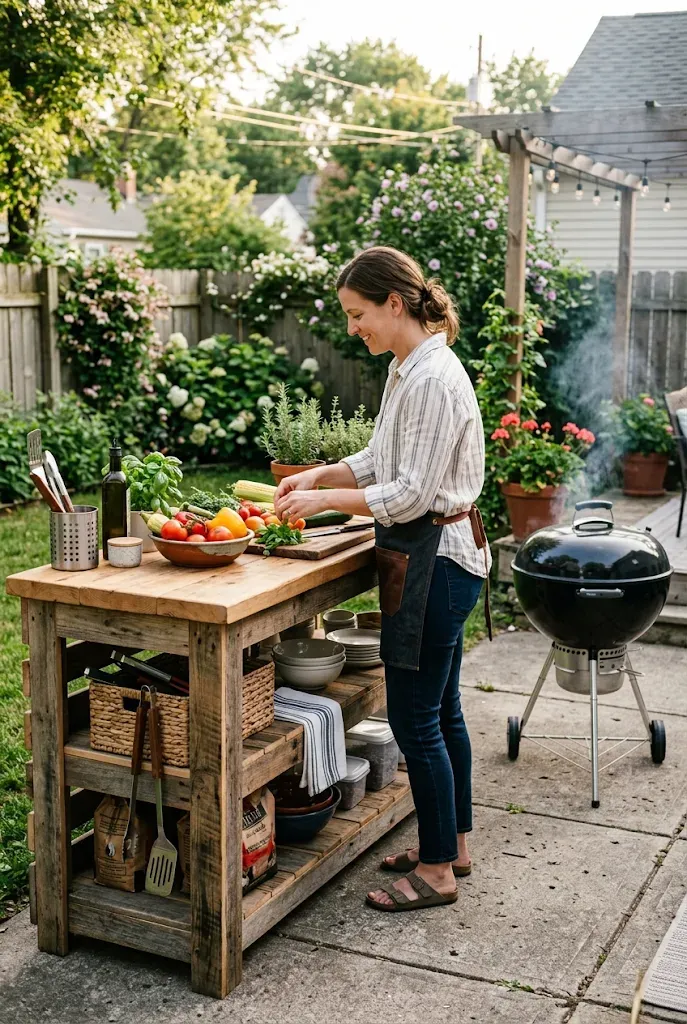
Repurposed pallets can be useful for creating an inexpensive outdoor preparation station or storage unit. Their rustic appearance works well in casual gardens and relaxed patio spaces.
Before using reclaimed pallets, check their condition and suitability. Avoid unknown or chemically contaminated wood, and never use pallet wood as a heat shield or as part of a grill enclosure unless the appliance design specifically permits it.
A practical pallet-inspired project could include:
- Selecting clean, suitable reclaimed timber.
- Building a stable storage frame.
- Adding a properly supported outdoor countertop.
- Sanding and finishing exposed wood.
- Installing shelves for lightweight accessories.
For a more finished appearance, use consistent wood tones and simple black metal hardware.
13. Make a Modern Black Outdoor Kitchen
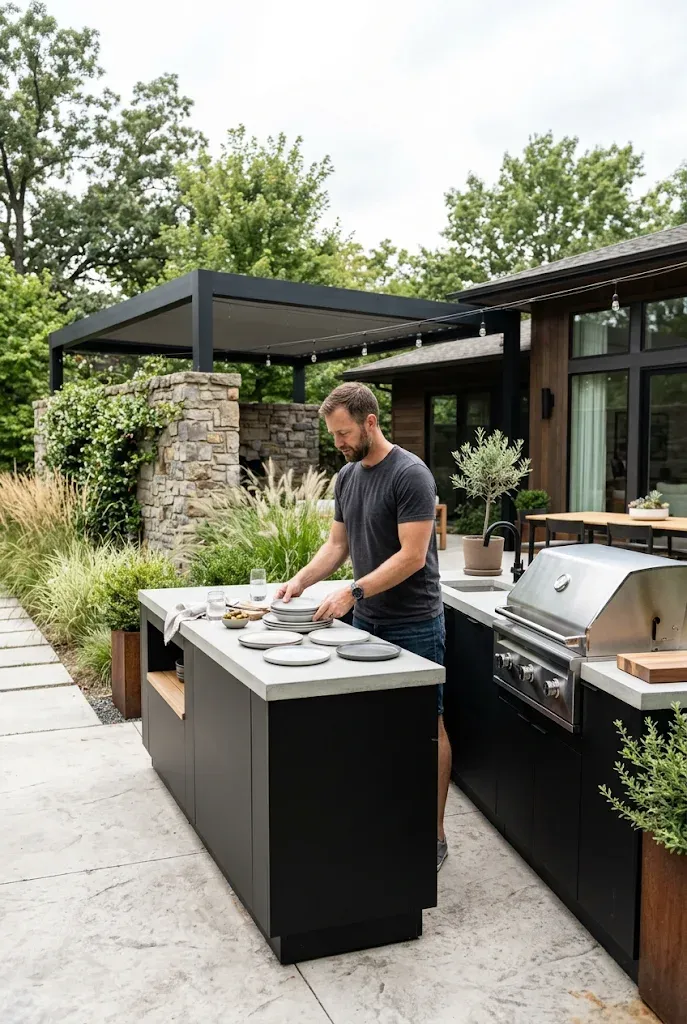
A black outdoor kitchen creates a bold contrast against green landscaping, light-colored paving, and natural wood. It is particularly suited to contemporary homes and patios with clean architectural lines.
You don’t need to make every component black. A more balanced design combines matte black cabinets with a pale stone or concrete-look countertop. Stainless steel appliances can provide another subtle contrast.
A simple material combination:
| Element | Suggested Finish |
|---|---|
| Cabinets | Matte black |
| Countertop | Light gray stone |
| Appliances | Stainless steel |
| Flooring | Pale concrete |
| Accessories | Natural wood |
Choose exterior-rated finishes that can tolerate the local climate, and consider how dark surfaces will absorb heat in sunny locations.
14. Add a Bar-Style Outdoor Kitchen Counter
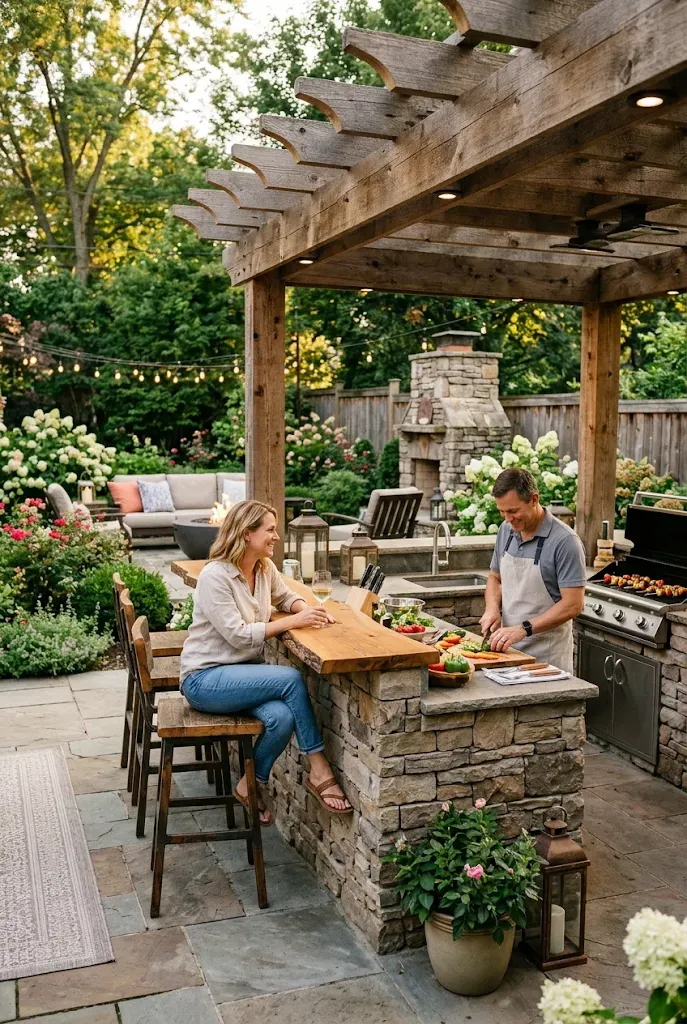
A bar-style counter makes an outdoor kitchen more social. It gives guests somewhere to sit and chat while food is being prepared, without requiring a completely separate dining setup.
A raised serving ledge or an extended countertop can create this arrangement. Make sure the seating height, counter overhang, and legroom work together. Choose outdoor-rated stools with stable bases and materials suited to your climate.
For a welcoming layout, consider:
- Two or three appropriately spaced stools.
- A durable serving counter.
- Subtle outdoor lighting.
- A separate preparation zone.
- A clear path between the cooking and seating areas.
Common Mistake: Avoid placing bar stools directly beside the hot grill. Keep the cooking zone and guest seating comfortably separated.
15. Create a Mediterranean-Inspired Outdoor Kitchen
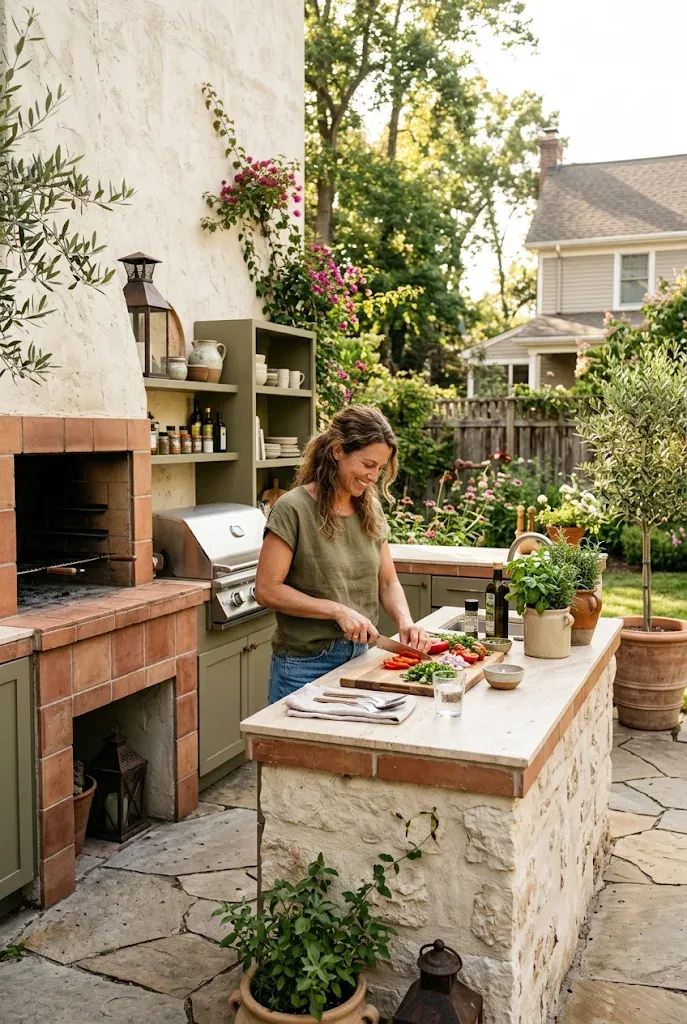
Mediterranean-inspired outdoor kitchens use earthy colors and natural materials to create a warm, relaxed atmosphere. Terracotta, pale stone, textured plaster, and muted olive green are useful starting points.
You can introduce this look through a few carefully chosen features instead of undertaking a full renovation. A terracotta backsplash in an appropriate noncombustible location, a textured masonry base, and large ceramic planters can establish the style.
Details worth incorporating:
- Sand-colored stone surfaces.
- Terracotta accents.
- Olive or sage green accessories.
- Warm neutral plaster finishes.
- Natural stone paving.
- Simple ceramic serving pieces.
For an authentic result, let the materials provide most of the decoration. Avoid overcrowding the counter with accessories.
16. Install Outdoor Kitchen Cabinets With Hidden Storage
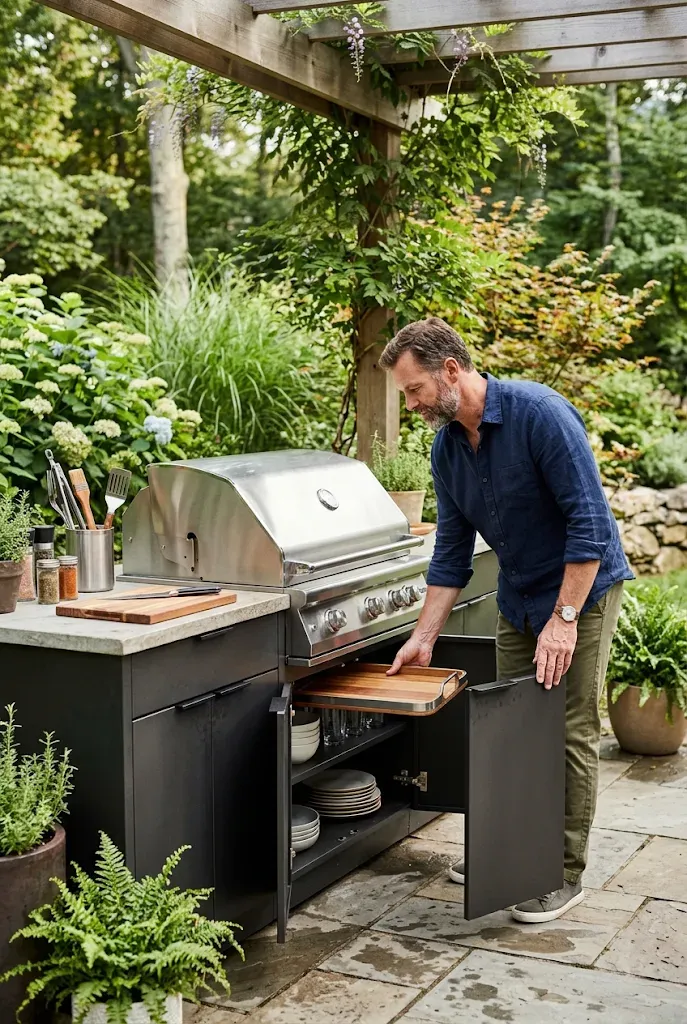
Storage can make the difference between an outdoor kitchen that looks organized and one that quickly becomes cluttered. Cabinets help keep frequently used supplies close to the cooking area while reducing the need to carry everything back and forth from the house.
Select cabinetry specifically designed for outdoor exposure. Stainless steel, suitable powder-coated metal, and exterior-rated cabinet systems are options worth considering. The best choice depends on moisture, temperature changes, and the level of protection available.
Plan separate storage areas for:
- Grilling tools.
- Serving dishes.
- Outdoor-safe containers.
- Cleaning supplies.
- Accessories that need protection from rain.
Avoid storing propane cylinders inside enclosed cabinets unless the appliance and cabinet are specifically designed for that purpose with the required ventilation and clearances.
17. Design a Cozy Outdoor Kitchen With a Fire Pit Seating Area
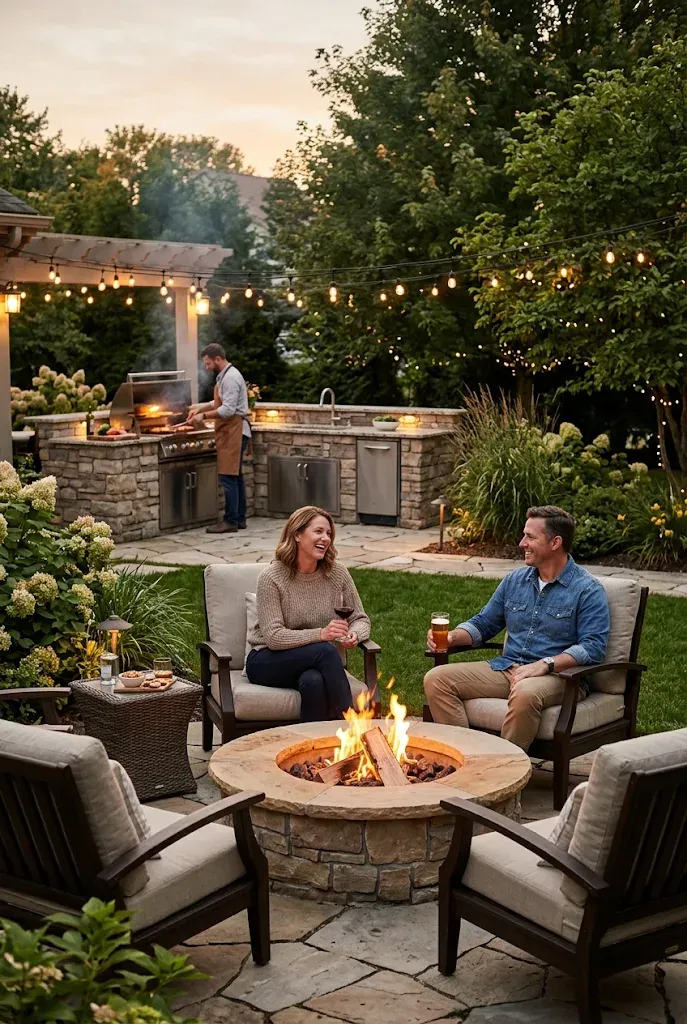
An outdoor kitchen can become part of a larger backyard entertaining area when you combine cooking, dining, and relaxing spaces.
A fire pit seating area adds another destination to the patio, making the backyard useful beyond meal preparation. Instead of placing everything close together, create separate zones that connect naturally.
A practical arrangement includes:
- A dedicated outdoor kitchen and grill area.
- A dining table near the serving counter.
- A separate lounge area with comfortable seating.
- A fire pit positioned according to its manufacturer’s clearances and local fire rules.
Choose outdoor furniture that coordinates with the kitchen rather than matching every piece exactly. Natural wood, neutral cushions, and dark metal frames can create a consistent look.
Editor’s Note: A fire pit and grill should each have their own safe operating space. Keep seating, fabrics, and combustible landscaping away from flames.
18. Build a DIY Outdoor Kitchen With a Pizza Prep and Serving Counter
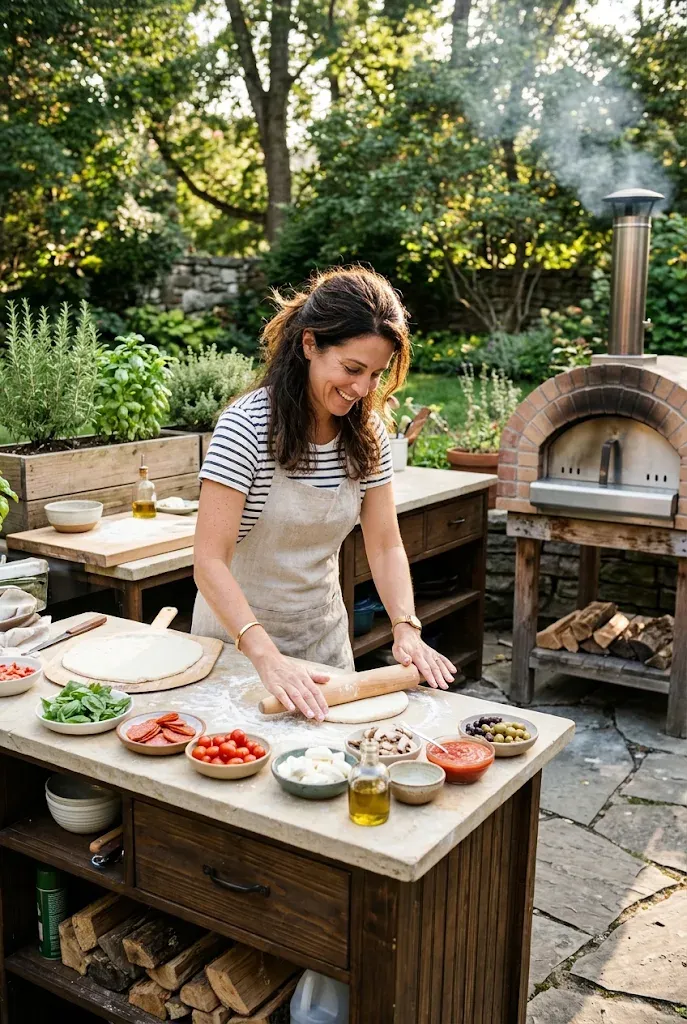
A dedicated pizza preparation counter is a useful addition for households that enjoy making homemade pizza outdoors. Instead of using the main grill counter for every task, you can create a separate surface for preparing dough, arranging toppings, and serving finished pizzas.
A durable, smooth countertop is especially helpful because it provides a practical work surface for rolling and handling dough. Add storage for pizza peels, cutting boards, and suitable containers.
For a flexible design, place the counter beside a freestanding pizza oven or another appropriately installed cooking appliance.
Materials to consider:
- Outdoor-rated stone or concrete.
- Weather-resistant lower storage.
- Stainless steel accessories.
- Easy-to-clean serving trays.
- Covered storage for utensils.
19. Add a Covered Outdoor Kitchen With a Weather-Resistant Roof
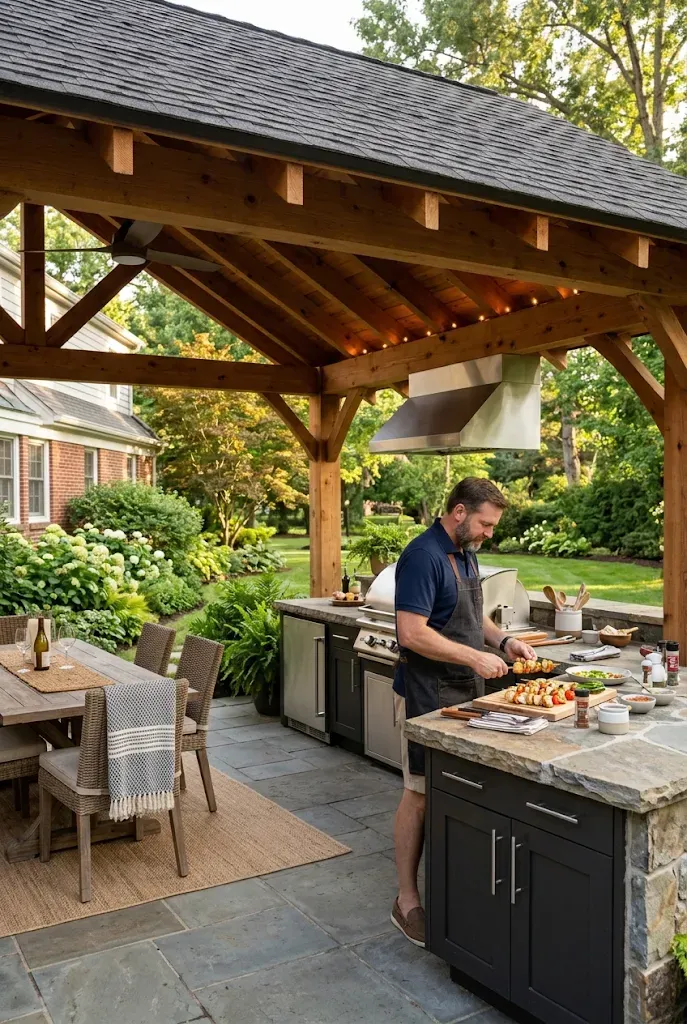
A covered outdoor kitchen can make the cooking and dining area more comfortable during light rain and strong sunshine. It also helps protect certain furniture and finishes from direct exposure, depending on the roof design and surrounding conditions.
Options include a properly engineered patio roof, a suitable pavilion, or a purpose-built outdoor structure. Choose roofing materials that coordinate with your home’s exterior.
A covered kitchen should be designed around the cooking appliance, not the other way around. Some grills cannot be installed beneath combustible roofs or in partially enclosed areas. Check the manufacturer’s installation instructions and local requirements before choosing the structure.
For a finished look, consider:
- Weather-rated ceiling lights.
- Durable outdoor flooring.
- A suitable ventilation plan.
- Protected dining furniture.
- Proper drainage.
20. Create a Complete Outdoor Kitchen With a Dining Area
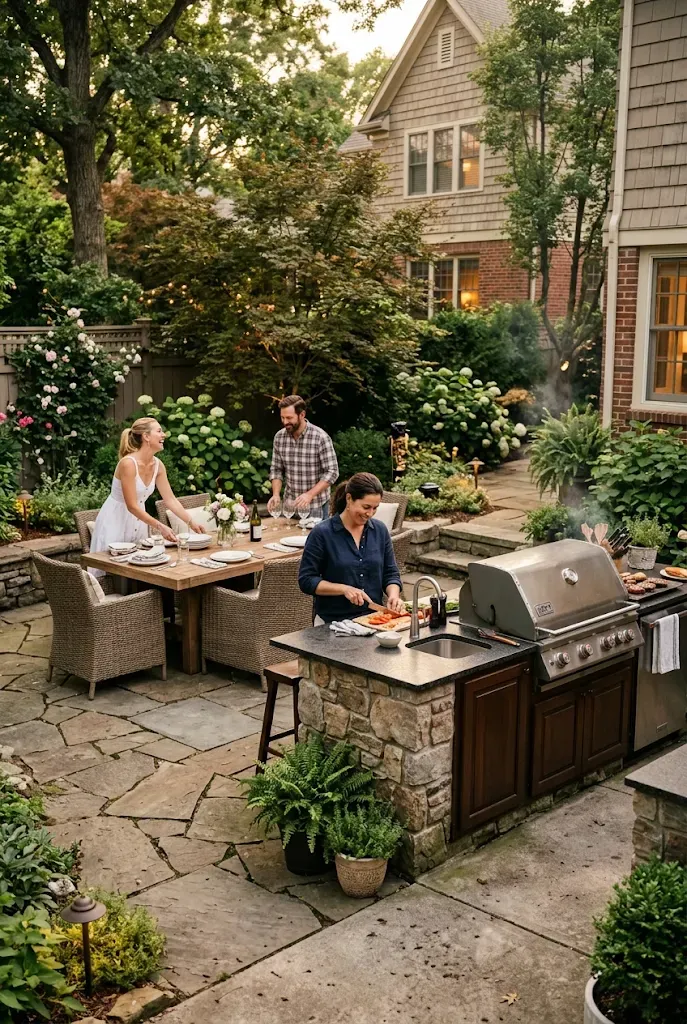
If you have enough outdoor space, combining a kitchen island with a dedicated dining area creates a backyard that feels like an extension of the home.
The key is to organize the different functions without allowing the cooking station to dominate the entire patio. Start with the grill and preparation area, then position the dining table where guests can enjoy meals without interfering with the cook’s working space.
A well-planned design might include:
- A built-in or freestanding grill.
- A generous preparation countertop.
- Weather-resistant storage.
- A separate dining table.
- Comfortable outdoor chairs.
- Layered landscape lighting.
- Planters that define the patio edges.
You can create this look at different investment levels. A simple masonry counter and ready-made dining furniture can be enough for a welcoming setup, while custom cabinetry and premium stone surfaces provide a more tailored finish.
Before building: Sketch the layout, measure walking paths, identify utility connections, and check applicable building, fire, and electrical requirements.
Important Safety Tips Before Building Your Outdoor Kitchen
A beautiful outdoor cooking area should also be safe and practical. Before starting a DIY project, consider these important points:
1. Choose the right grill location:
Keep grills away from siding, deck railings, overhanging branches, and other combustible materials. Follow the appliance manufacturer’s clearance instructions. NFPA+1
2. Use appropriate construction materials:
Choose suitable noncombustible materials around hot cooking appliances. Keep wood framing and combustible finishes outside required heat-clearance zones.
3. Plan gas connections carefully:
Have permanent gas lines and appliance connections installed by a qualified professional. Never use an appliance with a suspected gas leak. dcsappliances.com+1
4. Protect electrical installations:
Outdoor outlets, lighting, and appliances need weather-appropriate equipment and code-compliant installation. Consult a qualified electrician.
5. Keep the cooking area ventilated:
Never operate charcoal or propane grills indoors, inside garages, or in enclosed spaces.
6. Maintain a clean cooking station:
Remove grease buildup, inspect hoses, and keep children and pets away from the active grill.
For additional guidance, consult the National Fire Protection Association’s grilling safety guide
How to Choose the Right DIY Outdoor Kitchen Design
With so many possibilities, choosing a starting point can feel overwhelming. Focus on your backyard’s dimensions, the type of cooking you enjoy, and how much construction you’re comfortable handling.
| Your Priority | Ideas Worth Considering |
|---|---|
| Low-budget project | Cinder block, pallet-inspired, portable cart |
| Small backyard | Compact layout, straight-line counter |
| Rustic appearance | Reclaimed brick, natural stone, wood |
| Modern appearance | Black cabinetry, concrete counters |
| Entertaining guests | Bar counter, dining area, pergola |
| More cooking options | Pizza oven, built-in grill |
| Weather protection | Properly designed covered kitchen |
Start with the essential cooking and preparation areas. Additional features such as custom storage, dining furniture, and decorative lighting can be added as your budget allows.
Frequently Asked Questions
1. What is the cheapest way to build an outdoor kitchen?
A simple cinder block preparation counter or a portable outdoor kitchen cart can be an accessible starting point. Reclaimed materials may also reduce costs when they’re suitable and safe for the intended use. Remember to budget for the countertop, grill, and any required professional installation.
2. Can I build an outdoor kitchen myself?
Yes. Many projects, including simple counters, storage stations, and nonstructural decorative finishes, can be DIY-friendly. However, permanent gas connections, electrical work, structural construction, and complex appliance installations may require qualified professionals.
3. What is the best countertop material for an outdoor kitchen?
Concrete, suitable natural stone, and outdoor-rated manufactured surfaces are common choices. The best material depends on weather exposure, maintenance preferences, installation requirements, and your budget.
4. How do I make a small backyard outdoor kitchen?
Use a compact straight-line layout, a small preparation counter, and vertical or enclosed storage. A portable serving cart can provide additional workspace without permanently taking up patio space.
5. Does an outdoor kitchen need a roof?
No. An outdoor kitchen can work perfectly well in an uncovered patio area. A properly designed roof can provide shade and some weather protection, but cooking appliances must be installed according to their ventilation and clearance requirements.
Final Thoughts
Building an outdoor kitchen doesn’t have to mean taking on a massive backyard renovation. A simple grill station, a concrete countertop, or a compact masonry island can provide a useful starting point. If you have more space, consider adding a pizza oven, bar seating, or a separate dining area.
Choose materials that suit your climate, keep everyday cooking needs in mind, and plan safety requirements before construction begins. The best outdoor kitchen is one that feels connected to your home and makes spending time in your backyard more enjoyable.