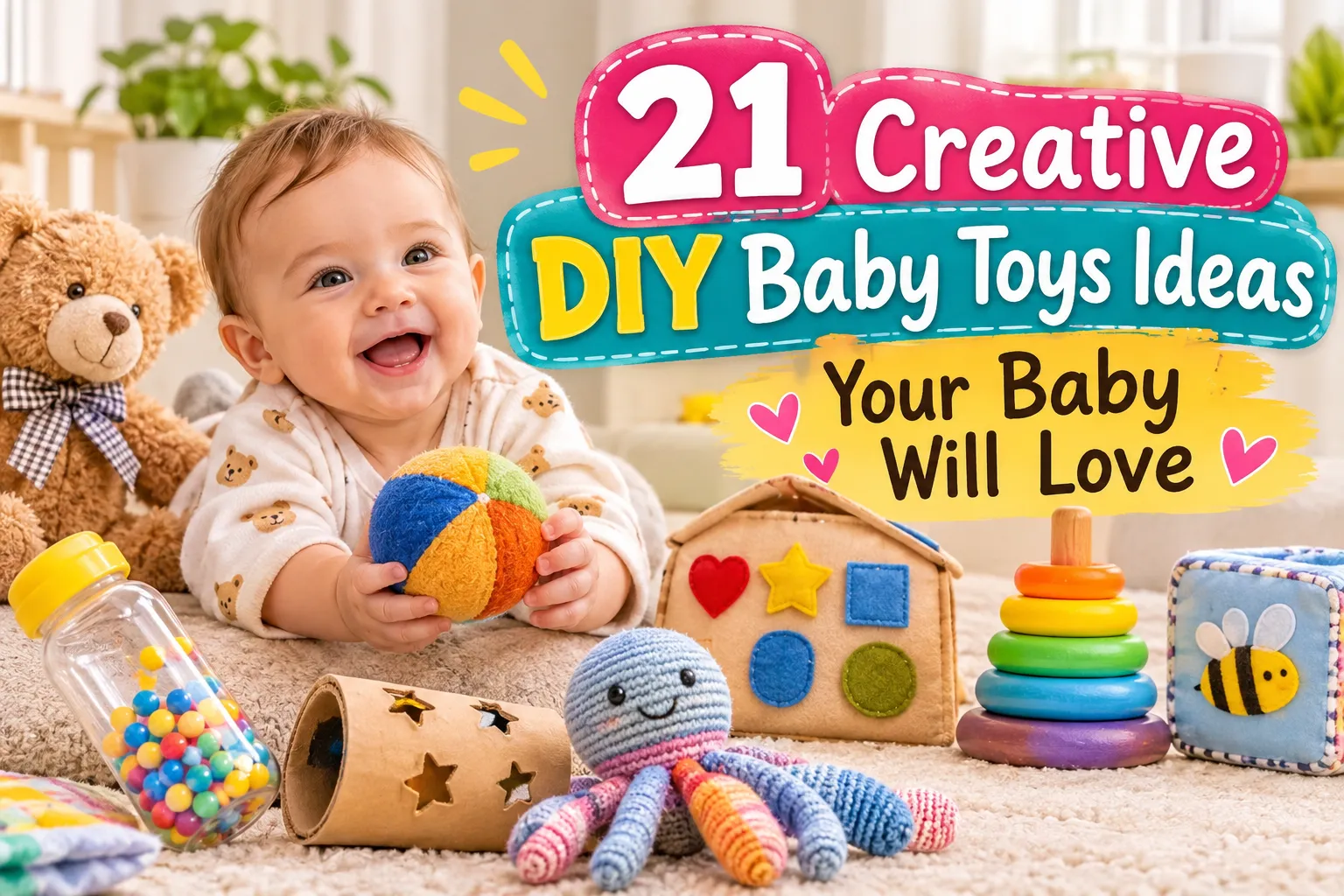
21 Creative DIY Baby Toys Ideas Your Baby Will Love
Babies are naturally curious about the world around them. They love exploring different textures, watching bright colors, listening to gentle sounds, and reaching for objects that catch their attention. You don’t need an expensive toy collection to encourage that curiosity. With a little creativity, everyday household materials and a few simple craft supplies can inspire enjoyable playtime activities.
These DIY baby toys ideas offer inspiration for parents who want to make thoughtful, homemade playthings at home. From soft fabric sensory toys and colorful tummy-time activities to simple grasping toys and interactive play boards, there’s something for different stages of early development.
The most important part of making baby toys is choosing age-appropriate materials and prioritizing safety. Homemade projects should always be inspected carefully and used with attentive adult supervision.
1. Soft Fabric Sensory Blocks

Soft fabric blocks are a lovely first DIY project for parents who enjoy sewing. Each block can feature a different color, pattern, or fabric texture, giving babies something interesting to look at and explore with their hands.
Choose washable cotton, soft fleece, or other baby-appropriate fabrics. Sew the blocks securely, use suitable washable stuffing, and close every seam firmly. Avoid buttons, beads, plastic eyes, and decorative pieces that could detach.
Materials:
- Soft cotton fabric in several colors
- Baby-appropriate washable stuffing
- Sewing machine or needle and thread
- Fabric scissors
Quick Tip: Make the blocks large enough for easy grasping and inspect every seam regularly.
2. DIY Fabric Crinkle Book
A fabric crinkle book introduces babies to colorful pictures, different textures, and the fun of turning pages. It can be made with simple sewing supplies and baby-friendly fabric.
Create several soft pages featuring large shapes such as stars, circles, animals, and flowers. If you want a crinkle effect, use a purpose-made baby-safe crinkle insert that is securely enclosed according to its manufacturer’s instructions.
Ideas for page themes:
- Farm animals
- Garden flowers
- Ocean creatures
- Basic shapes
- Bright contrasting patterns
Keep the book washable when possible and check that no insert or fabric layer becomes exposed.
3. Homemade Tummy Time Sensory Mat
A dedicated tummy-time mat makes floor play more inviting. Instead of buying an elaborate activity gym, create a comfortable padded surface with different fabric panels and simple visual patterns.
Use a washable play mat designed for floor activities, or sew a suitable padded cover with securely enclosed filling. Add contrasting fabric sections and large sewn shapes. Keep the surface flat and free of loose decorations.
Design ideas:
- Black-and-white geometric panels
- Soft pastel fabric squares
- Large animal illustrations
- Contrasting stripes
- Different flat fabric textures
Always supervise tummy time and move the baby onto their back for sleep.
4. DIY High-Contrast Baby Cards

Simple black-and-white cards are an inexpensive way to create a visual play activity. Large geometric shapes, stripes, circles, and bold patterns provide interesting images for babies to look at during supervised play.
Cut large cards from sturdy cardstock and cover them with a securely attached, smooth protective finish suitable for the intended use. Alternatively, print the designs on durable materials. Keep the cards in an adult’s hands rather than leaving paper pieces with a baby who mouths objects.
Try these designs:
- Large black circles on white backgrounds.
- Bold zigzag patterns.
- Simple checkerboard designs.
- Large spiral shapes.
5. Soft Homemade Fabric Animal Toys
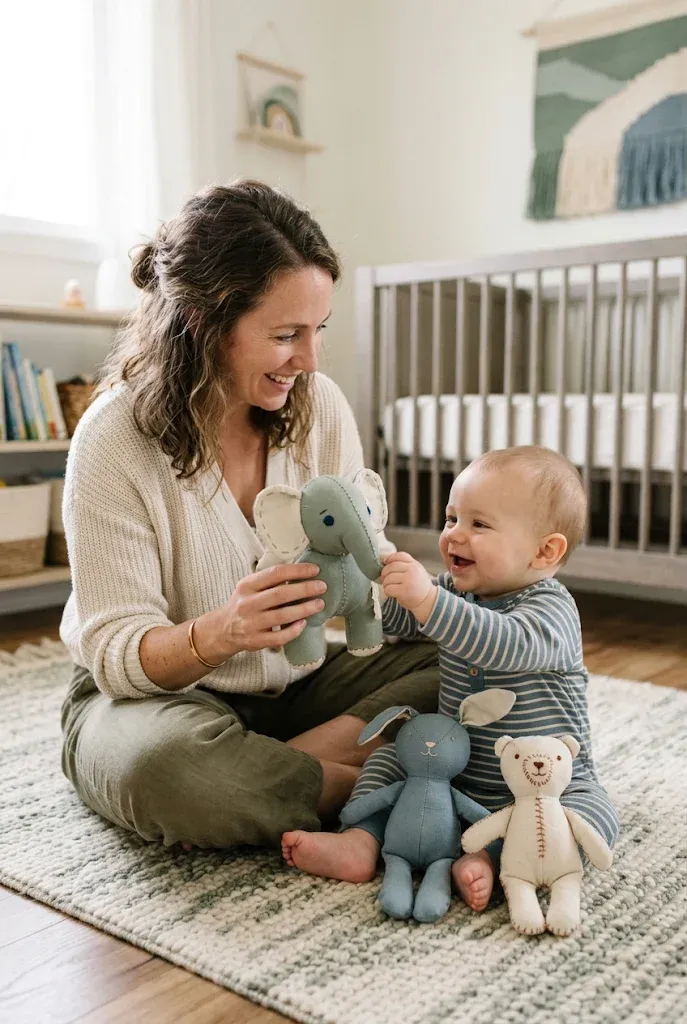
Homemade fabric animals add a personal touch to a baby’s toy collection. A simple bunny, bear, or elephant shape can be created using soft cotton fabric and washable stuffing.
Choose uncomplicated patterns with embroidered facial details rather than plastic eyes or glued decorations. Secure all seams and make sure the stuffing cannot escape.
Beginner-friendly animal shapes:
- Bunny
- Elephant
- Bear
- Whale
- Turtle
Choose washable materials and inspect the toy frequently for loose threads, damaged seams, or exposed stuffing. Keep soft toys out of the baby’s sleep space.
6. DIY Baby-Safe Mirror Play

Babies often enjoy looking at faces and reflections. A supervised mirror activity can turn ordinary floor play into an interesting visual experience.
Rather than making a mirror from glass or attaching reflective pieces to a homemade frame, choose a commercially manufactured baby-safe shatter-resistant mirror. Place it securely at floor level according to its instructions, and let your baby look at the reflection while you stay nearby.
Make the activity more engaging by:
- Sitting beside your baby.
- Smiling and making gentle facial expressions.
- Naming familiar body parts.
- Moving slightly within the baby’s view.
Editor’s Note: Never use ordinary glass mirrors, loose reflective sheets, or unstable mirror stands around babies.
7. Colorful Homemade Stacking Cups

Stacking activities introduce simple concepts such as size, order, and cause and effect. You can create a colorful play set using sturdy, smooth, one-piece cups that are specifically suitable for babies.
Choose cups without detachable handles, sharp edges, or small decorative additions. Use washable colors and different sizes that fit together safely.
Ways to play:
- Stack cups into a small tower.
- Place cups side by side.
- Let your baby reach toward a selected color.
- Demonstrate nesting larger cups over smaller ones.
For babies who are still mouthing everything, choose appropriately sized, age-suitable commercial cups rather than improvised household containers.
8. DIY Fabric Texture Squares

Texture squares are a simple sewing project that gives parents an opportunity to use different baby-appropriate fabrics. Each square can have its own appearance and feel, making the collection visually interesting.
Choose soft, washable fabrics with securely finished edges.
Fabric combinations to consider:
| Fabric | Texture |
|---|---|
| Cotton | Smooth and lightweight |
| Fleece | Soft and fluffy |
| Corduroy | Raised ridges |
| Terry cloth | Looped texture |
| Satin-like fabric | Smooth finish |
Keep each square large, securely sewn, and free from loose threads or embellishments. Present one at a time during supervised play.
9. Homemade Baby Activity Board

An activity board can provide a dedicated place for supervised exploration, but it needs careful planning for an infant. Avoid the small locks, loose switches, screws, beads, and other hardware commonly used in toddler busy boards.
For a baby-friendly alternative, create a large flat sensory panel featuring different colors and securely sewn fabric sections. An adult can hold the panel or position it outside the baby’s reach while introducing each visual feature.
Possible features:
- Large contrasting fabric shapes
- Smooth fabric panels
- Wide stitched patterns
- Large animal illustrations
- Different colors and textures
Do not leave the board unattended with a baby, and never use detachable hardware.
10. DIY Baby Sock Puppets

Sock puppets are a playful way to turn simple fabric materials into an entertaining storytelling activity. Use clean, soft socks to create large animal-inspired characters with securely embroidered facial features.
You can make a bunny, puppy, duck, or friendly monster. Instead of attaching plastic eyes, buttons, or beads, use embroidery to create the facial details.
How to make them:
- Choose a clean, soft sock.
- Add simple embroidered eyes and facial details.
- Check all stitching carefully.
- Use the puppet on an adult’s hand to entertain your baby.
The puppet is for adult-led play, not an unattended baby toy.
11. Homemade Baby Shape Matching Activity

Introduce basic shapes through a simple fabric matching activity. This project is especially useful for parents looking for a colorful play idea that can grow with their child’s interests.
Make large circles, squares, triangles, and stars from soft fabric. Sew each shape securely onto a larger fabric panel, leaving no detachable pieces.
For younger babies, simply point out the colors and shapes. As your child gets older, you can introduce simple matching games using larger, age-appropriate pieces.
Try these color combinations:
- Red and cream
- Blue and yellow
- Green and white
- Pink and lavender
12. DIY Baby Play Tunnel

As babies become more mobile, a play tunnel can make floor activities more interesting. A soft tunnel provides an inviting space to crawl through, explore, and play with a parent.
For this project, adapt a purpose-made baby-safe collapsible play tunnel rather than constructing a homemade structure with exposed wire, unstable supports, or loose fabric. Decorate its exterior with securely attached, washable fabric panels if the manufacturer’s instructions allow it.
Ways to encourage play:
- Sit at the opposite opening.
- Call your baby’s name gently.
- Place a familiar large toy beyond the tunnel.
- Encourage exploration without forcing movement.
Always supervise and make sure the tunnel cannot collapse onto the baby.
13. Homemade Baby Cloth Ball

A soft fabric ball is a classic homemade toy that can encourage reaching, grasping, and rolling activities. Its rounded shape makes it visually different from ordinary fabric blocks.
Use a sewing pattern designed for infant fabric balls and baby-appropriate washable stuffing. Make the ball large enough to avoid small-part hazards and ensure that every seam is firmly secured.
Design inspiration:
- Multicolored patchwork
- Soft pastel panels
- Contrasting geometric sections
- Animal-print cotton fabric
- Simple rainbow colors
Avoid bells, rattles, beads, and other loose objects inside the ball.
14. DIY Baby Color Sorting Baskets

Colorful baskets can turn an ordinary play session into a simple color exploration activity. This idea uses large, soft fabric baskets and encourages babies to notice different colors while interacting with their parents.
Choose stable, washable baskets without exposed wire frames, detachable handles, or decorative accessories. Introduce one or two colors at a time rather than overwhelming the play area.
Try these combinations:
- Blue and yellow
- Red and orange
- Green and purple
- Pink and cream
You can name the colors while placing large, age-appropriate soft toys into the baskets. Keep the baskets open and never place them over the baby’s head.
15. Homemade Baby Sensory Pillow

A small sensory cushion can add another texture-based activity to supervised playtime. Choose washable cotton covers with different fabric panels and securely enclosed filling.
Keep the design simple, flat, and easy to inspect. Avoid decorative buttons, zippers, tassels, beads, and loose attachments.
Helpful design features:
- Soft cotton panels
- Large embroidered shapes
- Contrasting fabric colors
- Securely finished seams
- Washable construction
This is a supervised awake-play accessory, not a sleeping pillow. Babies should not be placed on pillows or soft cushions for sleep.
16. DIY Baby Rainbow Fabric Toy

A rainbow-inspired fabric toy brings several colors together in one attractive handmade project. Its curved shape and contrasting fabric sections make it an appealing addition to a baby’s play collection.
Sew a large rainbow-shaped soft toy using washable cotton fabrics. Choose a simple design with securely enclosed stuffing and no detachable decorations.
Color inspiration:
- Red and orange
- Yellow and green
- Blue and purple
- Pink and cream
For younger babies, use the rainbow as a visual object during supervised interaction rather than placing it in a crib or sleeping area.
17. Homemade Baby Sensory Fabric Garland

A fabric garland can create a cheerful visual backdrop for supervised play. Use large, colorful fabric flags sewn securely onto a wall decoration intended to remain completely out of the baby’s reach.
This project is primarily nursery decor rather than a handheld baby toy. Keep it firmly mounted, away from the crib, and out of reach of children. Never use a hanging string or garland as an infant plaything.
Popular color themes:
- Rainbow pastels
- Sage and cream
- Soft blue and white
- Peach and dusty pink
- Neutral earth tones
18. DIY Baby Water Play Activity
Water play can offer an interesting sensory experience for babies who are ready for supervised hands-on activities. A simple shallow water activity can be arranged using a stable, wide container and a small amount of clean water.
Place the container on a non-slip surface and stay within arm’s reach throughout the activity. Use only large, age-appropriate objects that cannot break apart or become choking hazards.
Simple activity ideas:
- Let your baby pat the water gently.
- Demonstrate moving a large floating bath toy.
- Show how water ripples across the surface.
- Introduce a small amount of water at a time.
19. Homemade Baby Peekaboo Toy

Peekaboo is a simple activity that doesn’t require complicated materials. You can make it more playful by creating a large soft fabric animal or character that appears during the game.
A handmade fabric puppet can feature an embroidered face and bright colors. The parent holds and moves it while speaking gently to the baby.
Fun character ideas:
- Friendly teddy bear
- Smiling sunshine
- Soft bunny
- Colorful elephant
- Happy little cloud
Keep the activity interactive and avoid covering the baby’s face with fabric or placing objects over their head.
20. DIY Baby Soft Sensory Wrist Cuffs

Colorful fabric wrist cuffs can be used as a supervised visual activity, but they require particular care because anything worn around an infant’s wrist can become restrictive.
A safer alternative is to make large, soft fabric sleeves or hand-held sensory cuffs that the parent presents during play instead of fastening them onto the baby. Use washable fabrics, secure stitching, and no elastic loops, bells, or small attachments.
Fabric ideas:
- Bright cotton
- Soft fleece
- Contrasting stripes
- Large embroidered shapes
Never leave an infant wearing a home made accessory unattended, and do not use anything tight or restrictive around the wrists.
21. Homemade Baby Sensory Treasure Basket
A sensory treasure basket brings several safe household-inspired textures together in one supervised activity. It can be customized according to your baby’s age and interests.
Choose a stable, open basket and introduce only large, durable, baby-appropriate objects. Avoid ordinary household items that could break, splinter, detach, or become choking hazards.
Possible contents:
- Large soft fabric squares
- A sturdy one-piece silicone baby toy
- A large baby-safe textured ball
- A durable, age-appropriate sensory toy
- A large washable fabric animal
Let your baby explore one object at a time while you remain nearby. Inspect every item before and after play.
Quick Tip: Rotate the objects occasionally to keep the activity visually interesting without filling the basket with too many things.
Important Safety Tips for Homemade Baby Toys
Making toys at home can be enjoyable, but baby safety should always come before appearance or creativity.
Before introducing a homemade toy, keep these precautions in mind:
- Avoid small parts: Buttons, beads, loose eyes, bells, and detachable decorations can create choking hazards.
- Check every seam: Inspect fabric toys for loose stitching, exposed stuffing, and damaged edges.
- Choose appropriate materials: Use baby-appropriate, washable, non-toxic materials.
- Avoid dangerous components: Never use button batteries, powerful magnets, or water beads in homemade baby activities.
- Supervise play: Stay close whenever your baby explores homemade toys.
- Keep sleep spaces clear: Do not put homemade toys, cushions, or soft objects in an infant’s sleep area.
- Inspect regularly: Remove any toy that becomes damaged or develops loose components.
The American Academy of Pediatrics provides additional guidance on selecting age-appropriate toys and preventing choking and other injuries. The CPSC also explains the safety requirements concerning small parts in children’s products.
How to Choose the Best DIY Baby Toy
Not every homemade project is appropriate for every baby. Consider your child’s age, abilities, and interests before choosing a project.
| Baby’s stage | Suitable activity inspiration |
|---|---|
| Young infants | High-contrast cards and supervised mirror play |
| Babies developing grasping skills | Large soft fabric blocks and texture squares |
| Babies exploring movement | Supervised tummy-time mats and play tunnels |
| Older babies | Stacking cups and supervised sensory activities |
These are general activity suggestions, not formal age approvals. Check material safety and suitability for your individual baby’s developmental stage.