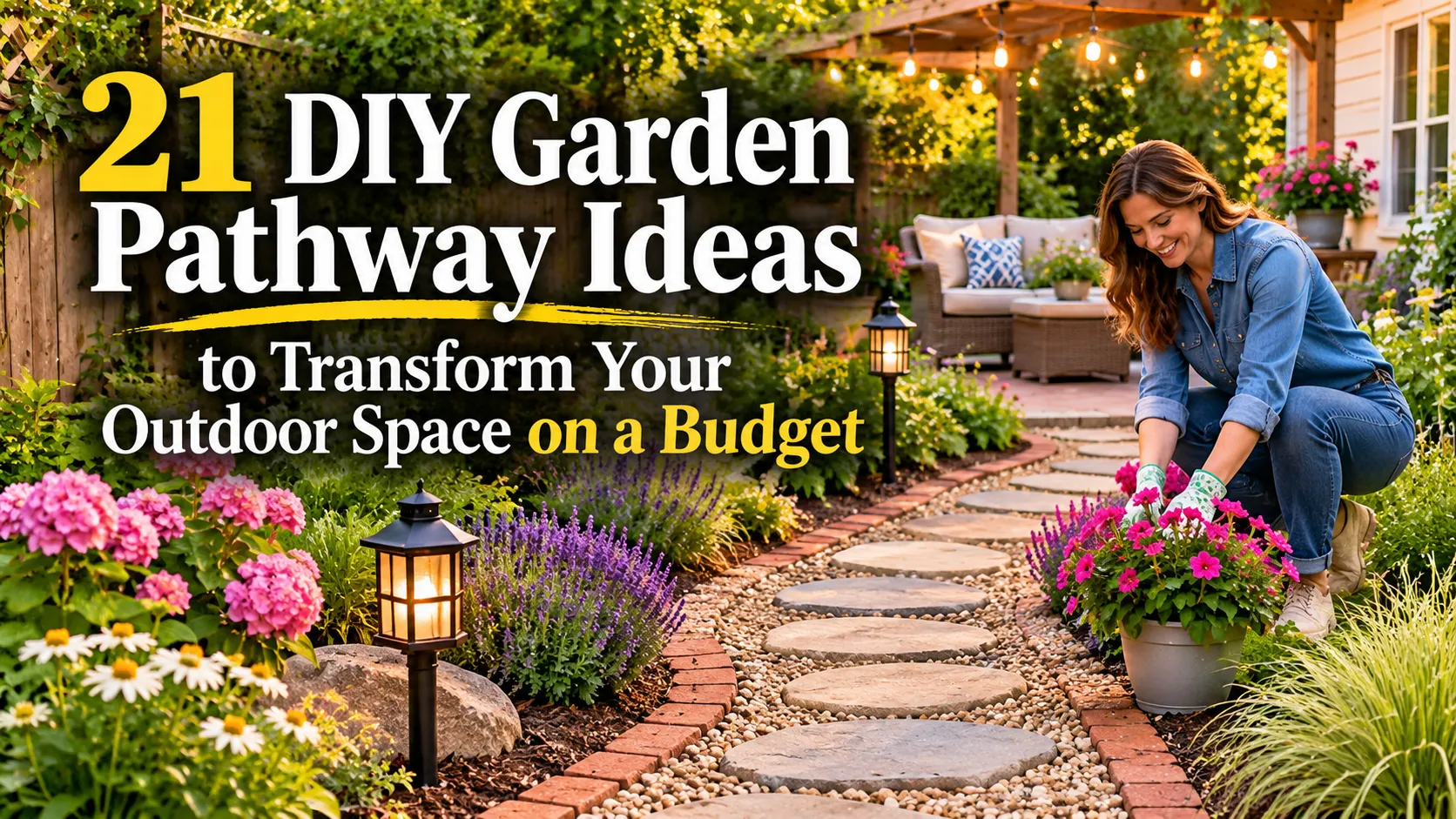
21 DIY Garden Pathway Ideas to Transform Your Outdoor Space on a Budget
A DIY Garden Pathway Ideas beautiful garden pathway can make an ordinary backyard feel more inviting, organized, and thoughtfully designed. It creates a natural route through flower beds, connects outdoor seating areas, and adds structure to spaces that might otherwise feel unfinished. The best part is that you don’t need an expensive landscaping project to achieve an attractive result.
With a little creativity, affordable materials such as gravel, stepping stones, reclaimed bricks, mulch, and concrete pavers can become charming garden walkways. Some projects are simple enough for a weekend DIY, while others offer inspiration for a more detailed outdoor makeover.
These 21 DIY garden pathway ideas feature different materials, layouts, and design styles to help you find an option that suits your yard, budget, and gardening needs.
1. Create a Simple Gravel Garden Pathway
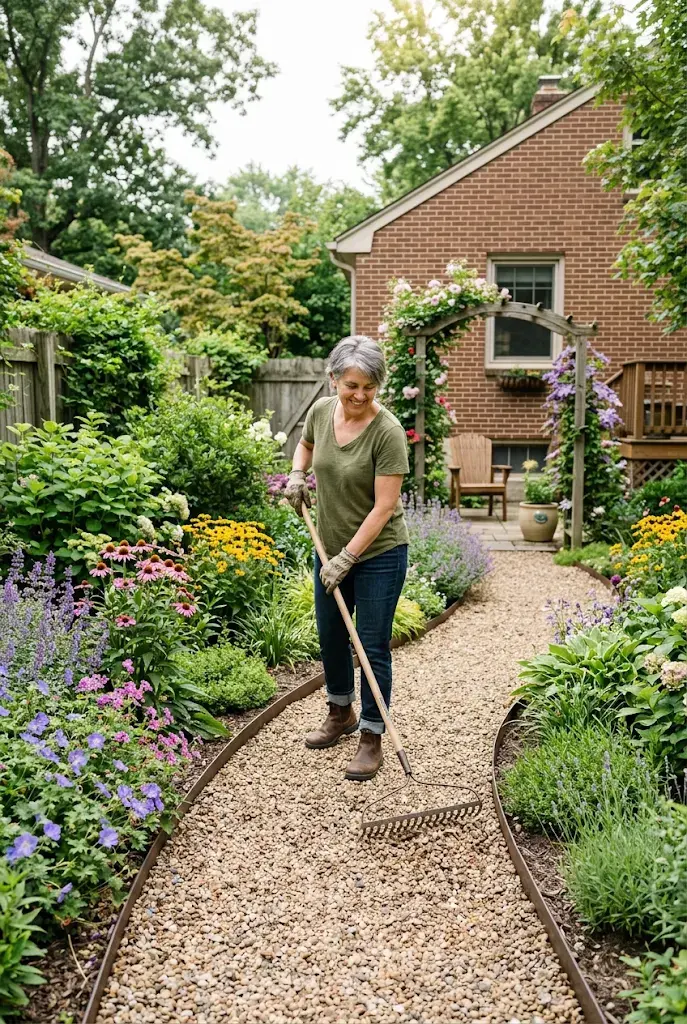
A gravel pathway is one of the most approachable ways to create a defined walking route without investing in expensive paving materials. Its loose, natural appearance works especially well in cottage gardens, relaxed backyard landscapes, and outdoor spaces with plenty of plants.
Choose pea gravel or another suitable pathway aggregate, then define the route with metal, plastic, stone, or brick edging. Landscape fabric can help separate the gravel from the soil, although proper ground preparation and drainage are still important. For a step-by-step walkthrough, see This Old House’s guide to laying a budget-friendly gravel path.
Materials to consider:
- Pea gravel or crushed stone.
- Landscape edging.
- Landscape fabric where appropriate.
- Shovel, rake, and hand tamper.
For a polished appearance, keep the pathway width consistent and use edging to prevent gravel from spreading into nearby flower beds. Avoid placing loose gravel where a firm, accessible walking surface is needed.
2. Use Large Concrete Stepping Stones DIY Garden Pathway Ideas
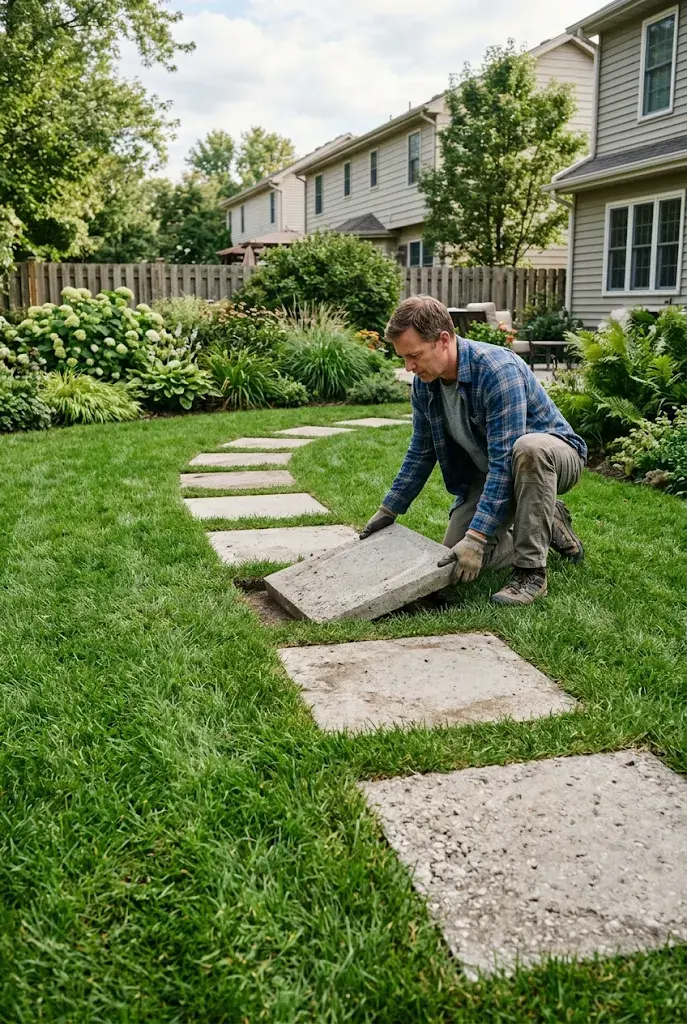
Large concrete stepping stones create a clean, modern pathway without requiring a fully paved walkway. Their simple geometric shapes look especially attractive against green grass, dark mulch, or decorative gravel.
Arrange square or rectangular pavers in a straight line for a contemporary look, or introduce a gentle curve to make the path feel more relaxed. Before setting them permanently, position the stones on the ground and walk the route to check comfortable spacing.
How to create the look:
- Mark the pathway using garden stakes or a hose.
- Position the stepping stones along the route.
- Prepare a stable, level base beneath each stone.
- Set the stones securely and check that they don’t wobble.
- Fill the surrounding spaces with grass, gravel, or ground cover.
The stones should sit securely and avoid creating raised edges that could become tripping hazards.
3. Build a Charming Brick Garden Walkway
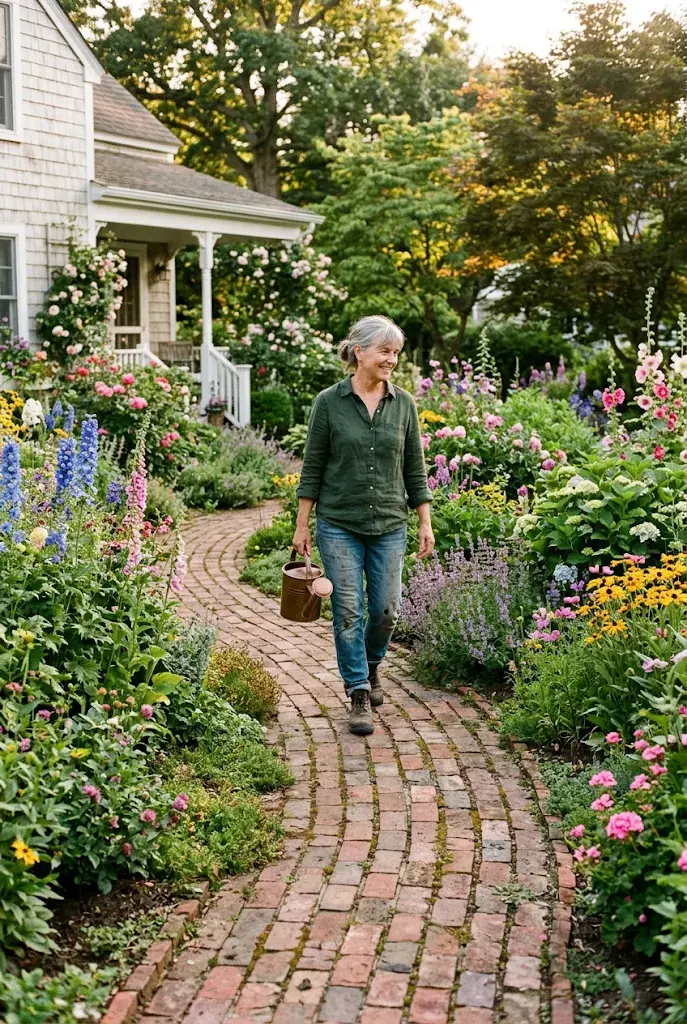
Brick pathways bring warmth, texture, and a traditional character to outdoor spaces. Reclaimed bricks are particularly appealing because their natural color variations can make a new garden project feel established.
You can arrange bricks in a running bond pattern, herringbone design, or simple basketweave layout. A herringbone pattern creates a distinctive visual effect, while straight rows offer a more understated appearance.
A few design details make a difference:
- Choose bricks intended for outdoor paving.
- Prepare a compacted, stable base.
- Include suitable edge restraints.
- Plan for water drainage.
- Keep the finished surface even.
For a budget-conscious project, consider using reclaimed bricks if they are in suitable condition and compatible with the intended outdoor use.
4. Try an Affordable Mulch Garden Path
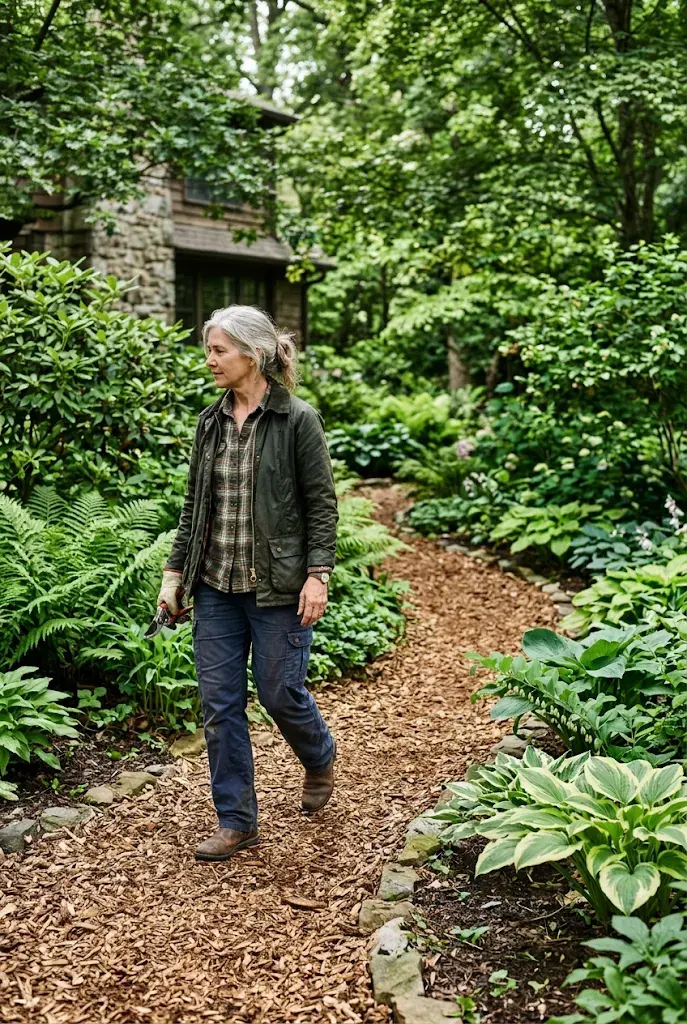
Wood mulch is an inexpensive material that can create a relaxed pathway through vegetable gardens, informal flower beds, or shaded backyard areas. Its earthy color blends naturally with surrounding plants, making it a good choice for a landscape that feels less formal.
Start by marking the walking route and removing unwanted vegetation. Prepare the ground, add suitable edging, and spread a consistent layer of mulch. Refresh the surface when it becomes thin or decomposes. Clemson Cooperative Extension’s mulch factsheet explains the different types and how to apply them.
Quick Tip: Use pathway edging to keep the mulch from spreading into the lawn or planting beds.
Mulch is best suited to informal garden paths rather than heavily trafficked routes where a firm, stable surface is necessary. It can also become slippery or shift when wet, so consider the location carefully.
5. Make a DIY Flagstone Garden Pathway
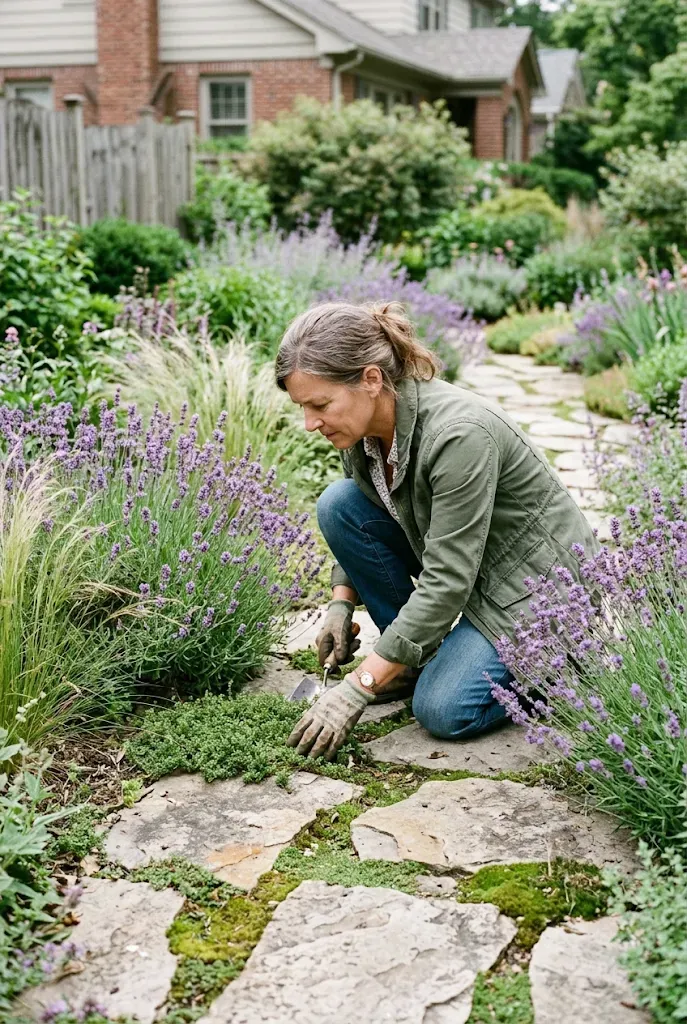
Flagstone is a beautiful option for anyone who wants a more organic-looking garden walkway. Its irregular shapes create a relaxed pattern that looks at home among flowering plants, ornamental grasses, and natural landscaping.
You can use flagstone with gravel joints, ground-cover plants, or carefully maintained grass between the pieces. The result feels less structured than a traditional concrete walkway.
Do / Don’t
- Do: Choose stones with suitable thickness and a stable base.
- Do: Check each stone for rocking or uneven edges.
- Don’t: Leave loose stones sitting directly on soft, shifting soil.
- Don’t: Allow plants to obscure the walking surface.
Flagstone may cost more than basic gravel, but using it only along a short garden route can keep the project manageable.
6. Design a Garden Path With Round Stepping Stones
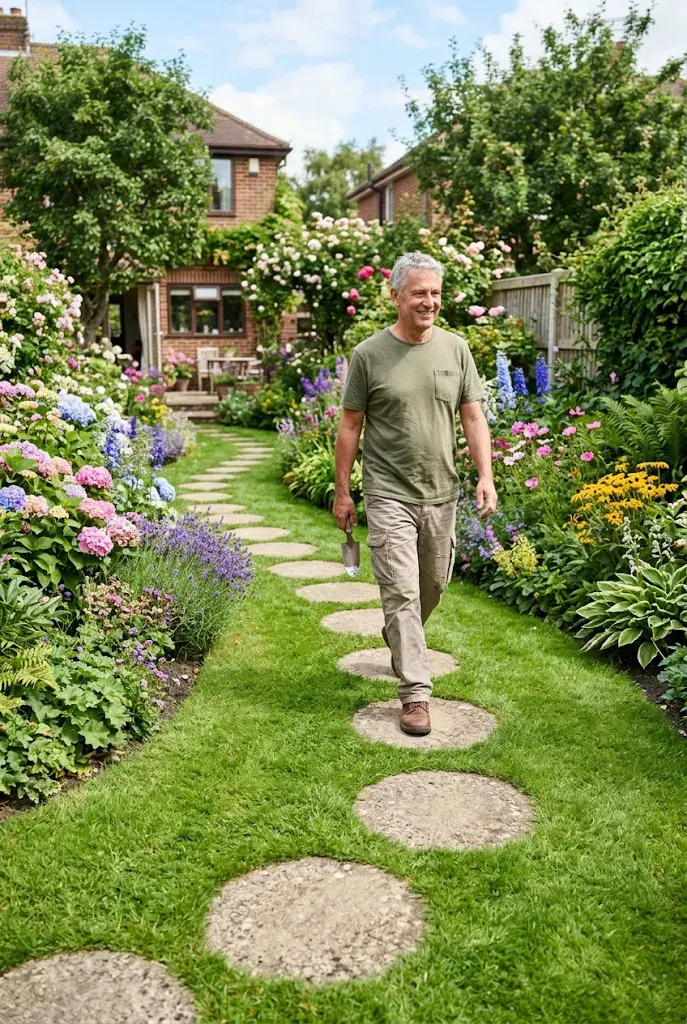
Round stepping stones offer a softer alternative to square pavers. Their curved shapes create a playful, relaxed appearance that works beautifully in family gardens, small lawns, and informal outdoor spaces.
You can purchase precast circular pavers or make your own using suitable concrete stepping-stone molds. Arrange them in a gentle curve through the grass or around a flower bed.
For a coordinated appearance, repeat the same stone color throughout the walkway. If you prefer a more natural design, mix slightly different sizes while maintaining comfortable walking distances.
Editor’s Note: Circular stones look best when the arrangement feels intentional rather than randomly scattered. Lay out the pattern before installing anything permanently.
7. Add a Budget-Friendly Crushed Stone Path
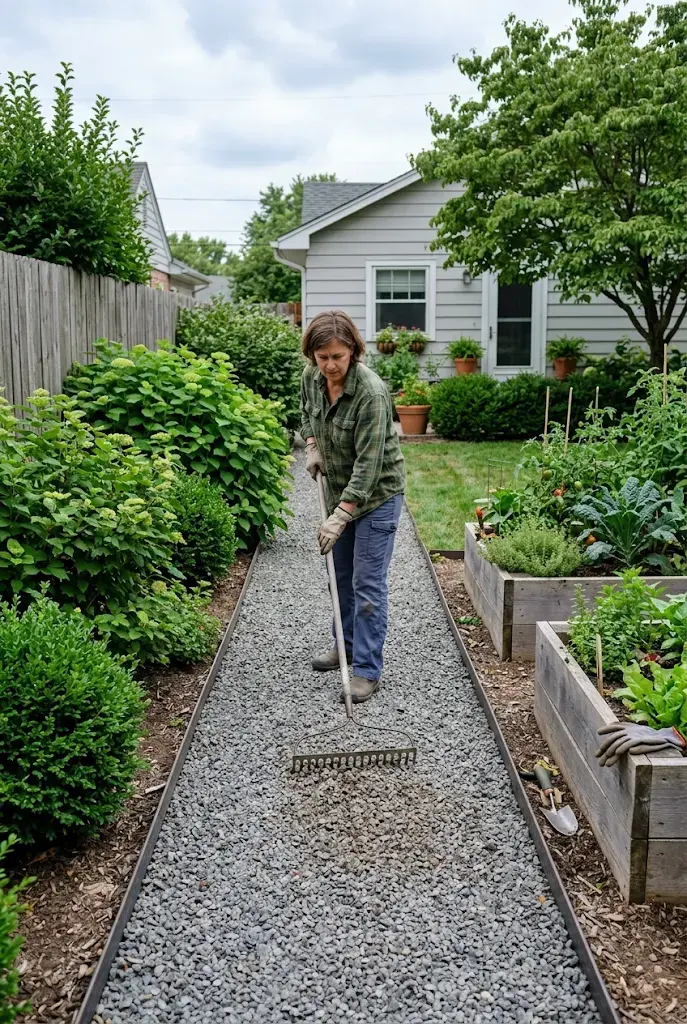
Crushed stone is a practical alternative to more expensive paving materials. Unlike decorative round gravel, angular crushed stone can interlock when properly compacted, helping create a firmer walking surface.
This style is particularly useful for longer garden routes, side yards, and pathways connecting a patio to a shed or vegetable garden.
For a clean finish, consider these details:
- Choose an aggregate appropriate for your intended use.
- Prepare and compact the underlying base.
- Install durable edging.
- Create a slight slope where necessary for drainage.
- Rake the surface periodically to maintain an even appearance.
Common Mistake: Spreading stone directly over soft, uneven ground can lead to sinking and ruts. Proper preparation matters more than adding extra decorative gravel.
8. Create a Wooden Garden Walkway
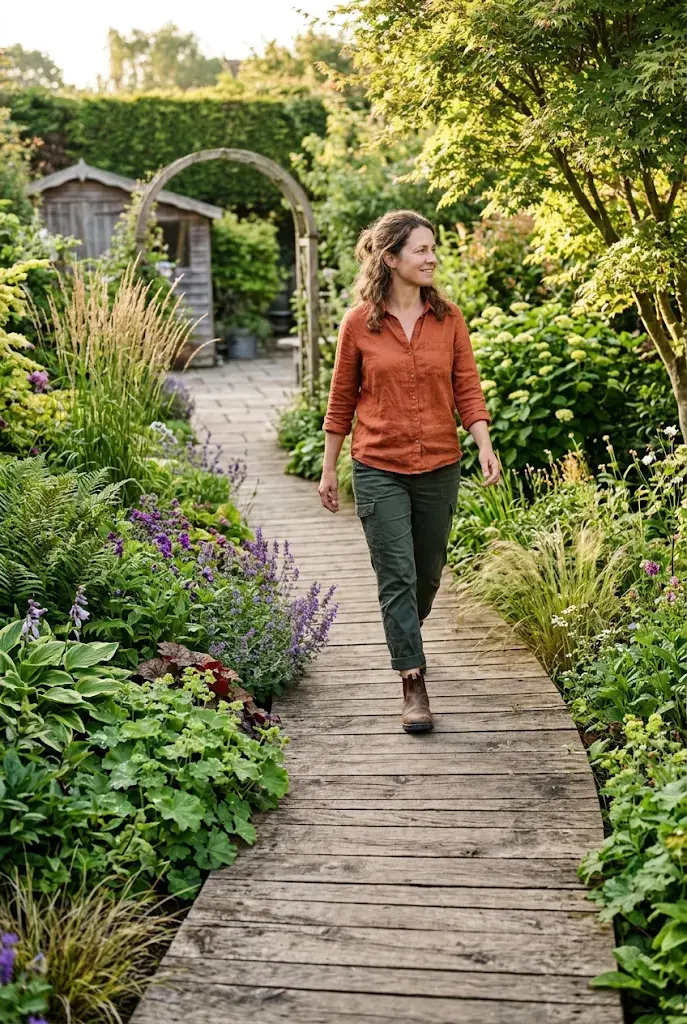
Wooden walkways add warmth and a natural outdoor character, especially in gardens with trees, shrubs, and informal planting. A simple timber boardwalk can also help define a route through an area where grass struggles to grow.
For this project, use lumber specifically suitable for exterior conditions. The wood should be supported by a stable structure and installed with appropriate drainage and fastening methods.
Design options include:
- Straight timber boardwalks.
- Narrow wooden paths between raised beds.
- Short timber platforms connecting garden zones.
- Simple raised walkways in suitable landscape settings.
Use exterior-rated fasteners and materials, and consider slip resistance and ongoing maintenance. Wood exposed to moisture needs particular attention.
9. Make a DIY Paver and Gravel Combination Path
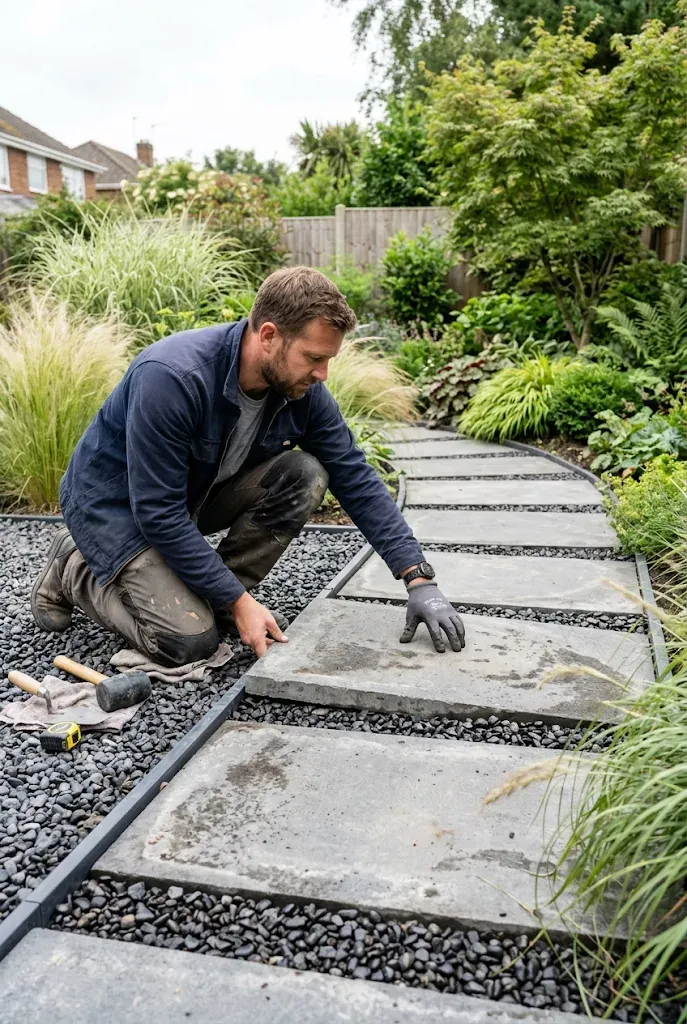
Combining concrete pavers with decorative gravel creates a visually interesting pathway without covering the entire route in expensive paving material.
Place rectangular pavers in a consistent arrangement and fill the spaces between them with contrasting gravel. Light gray pavers paired with charcoal gravel create a modern look, while warm-toned stones give the walkway a more natural appearance.
| Paver Color | Gravel Choice | Overall Look |
|---|---|---|
| Light gray | Dark charcoal | Contemporary |
| Warm beige | Cream gravel | Soft and natural |
| Terracotta | Earth-tone gravel | Rustic |
| Dark gray | Pale stone | High contrast |
The pavers need a stable, level foundation, and the gravel joints should be narrow enough to maintain a comfortable walking surface.
10. Use Reclaimed Pallet Wood for a Rustic Path
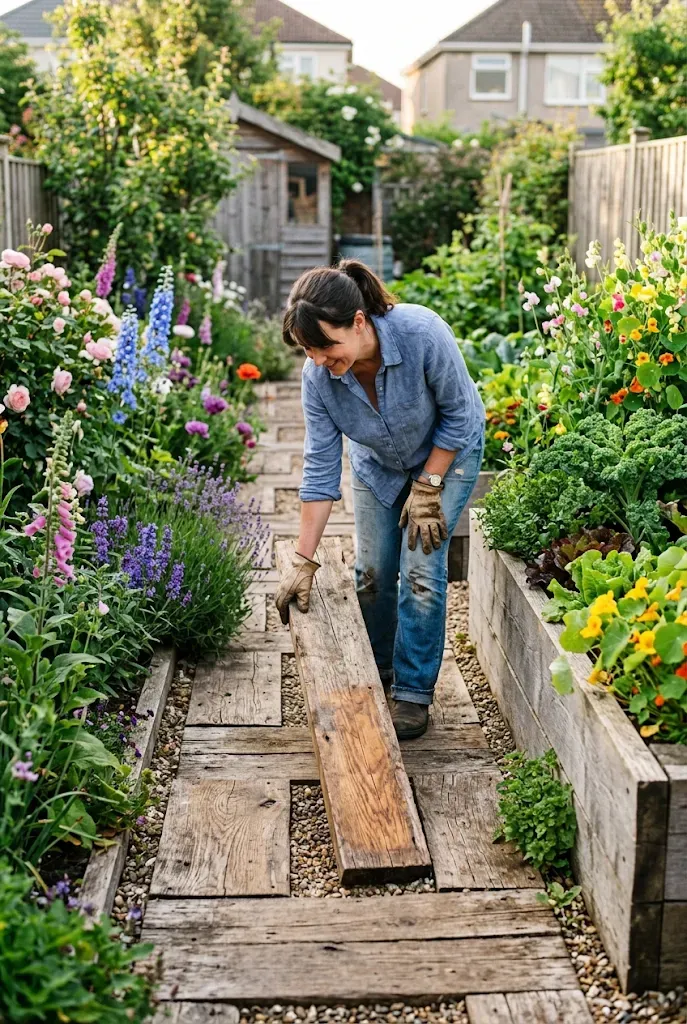
Reclaimed wood can inspire a rustic garden walkway, particularly in informal spaces with vegetable beds, wooden planters, or farmhouse-style outdoor decor.
However, not every discarded pallet is suitable for garden construction. Avoid wood with unknown chemical treatments, spills, contamination, rot, or structural damage. For a walking surface, use sound exterior-suitable timber rather than simply placing loose pallet boards on the soil.
A more practical DIY approach is to build short timber sections over a prepared and supported base.
Tips & Tricks:
- Check reclaimed lumber carefully before using it.
- Remove protruding nails and damaged pieces.
- Sand rough edges where appropriate.
- Apply a suitable exterior finish if needed.
- Keep the surface level and secure.
The rustic appearance is attractive, but safety and durability should come first.
11. Install a Simple Concrete Garden Path
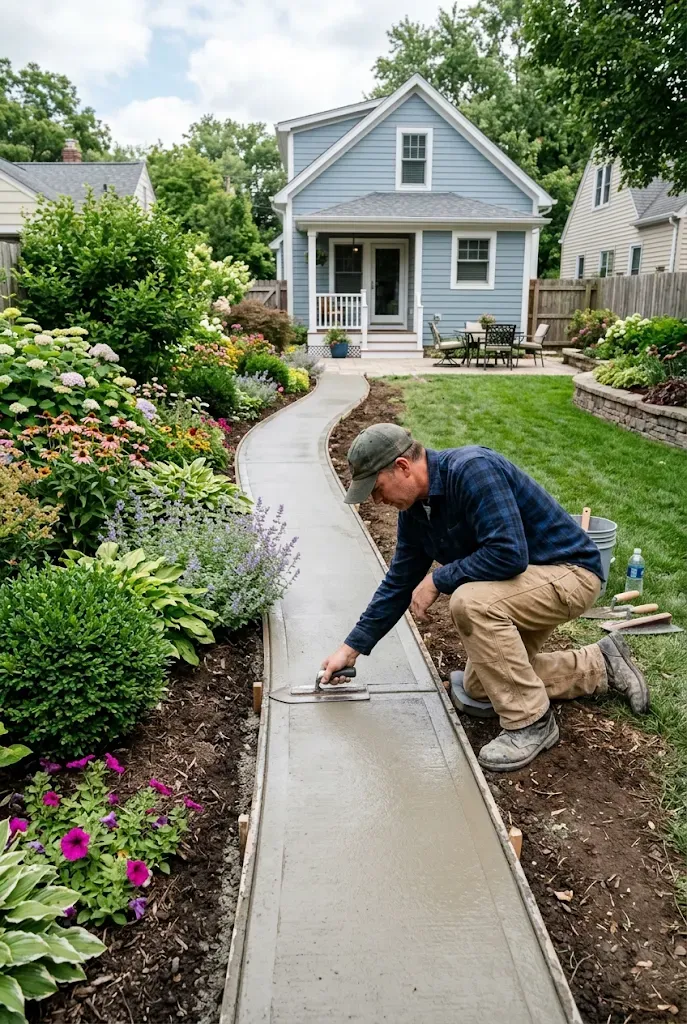
A poured concrete path offers a more continuous and stable surface than loose materials. Although it requires more preparation and skill, a narrow walkway can be a relatively straightforward way to connect different areas of a yard, such as a patio, a DIY outdoor kitchen, or a budget-friendly grill station.
You can keep the design simple with a smooth finish or introduce subtle texture using an appropriate finishing technique.
Before starting, plan for:
- The full route and finished dimensions.
- Ground preparation and a suitable base.
- Formwork that holds the intended shape.
- Reinforcement and control joints where required by the design.
- Appropriate curing and protection.
Concrete work requires attention to local conditions and installation requirements. For larger paths or complex drainage situations, professional assistance may be worthwhile.
12. Create a Curved Garden Pathway
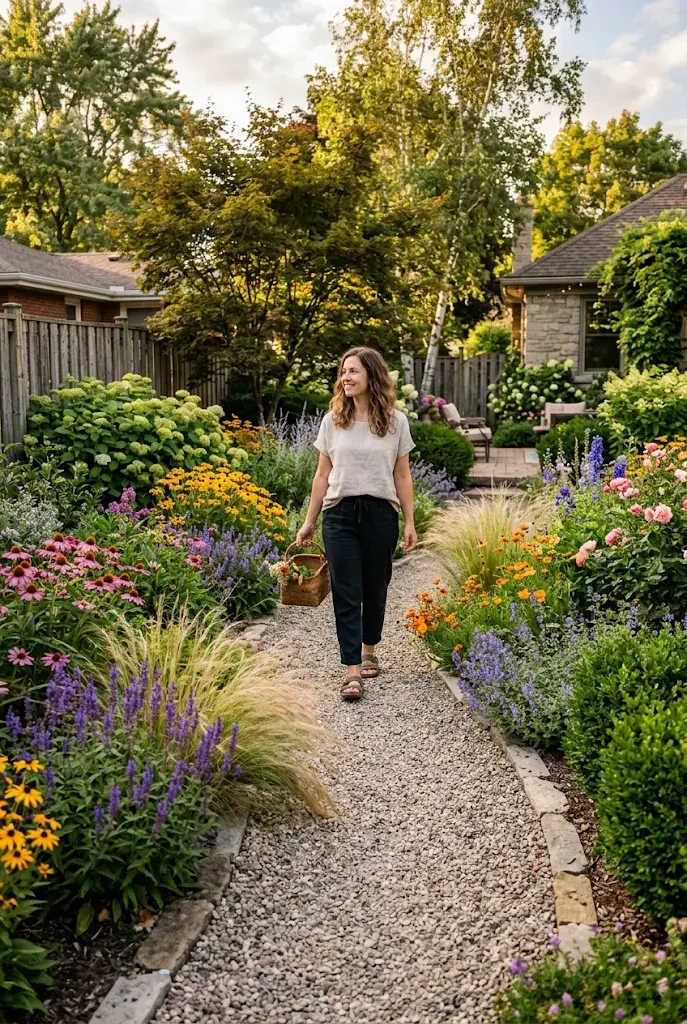
A curved pathway can make a garden feel more relaxed and visually interesting. Rather than revealing the entire yard at once, a gentle bend creates a sense of movement and encourages visitors to explore different planting areas.
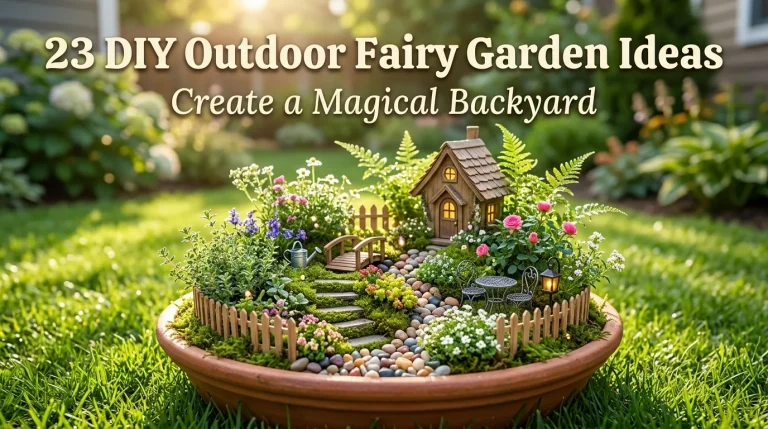
This layout works with several affordable materials, including gravel, mulch, brick, and stepping stones. A bend in the path is also a lovely way to lead visitors to a small DIY outdoor fairy garden.
To create a natural-looking curve, use a garden hose to mark the desired route before digging or installing edging. Walk along the proposed line to make sure the turns feel comfortable.
Quick Tip: Avoid unnecessary tight bends. A gentle curve usually feels more practical and is easier to maintain.
13. Build a Stepping-Stone Path With River Rocks
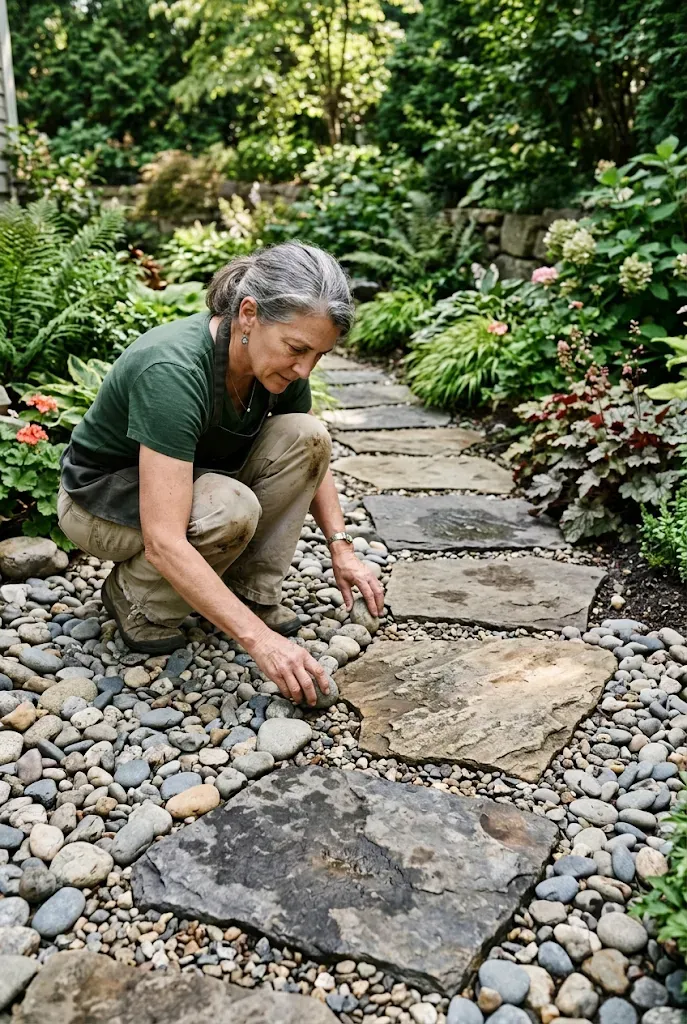
River rocks can create an attractive natural border around stepping stones. Their rounded shapes and varied tones provide texture, making even a simple walkway feel more thoughtfully landscaped.
Use larger, stable stepping stones as the main walking surface, then fill the surrounding spaces with decorative river rocks. A combination of gray, tan, and cream stones can create a soft, earthy appearance.
A useful material combination:
- Large flat concrete or natural stone pavers.
- Smooth decorative river rocks.
- Subtle metal or stone edging.
- Low-growing plants along the outer border.
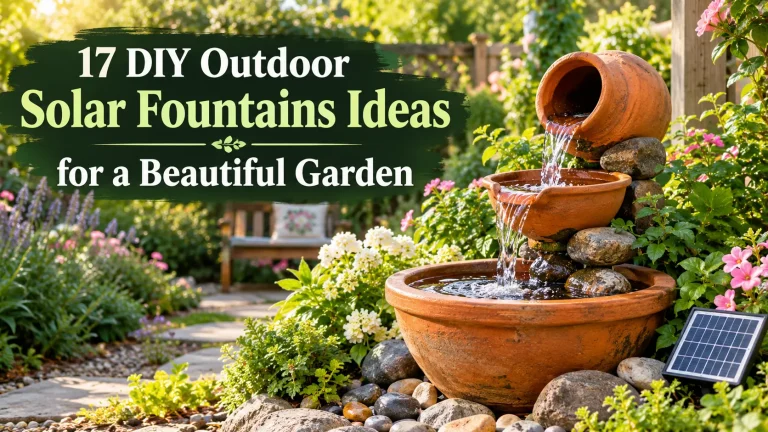
Keep the main walking surface stable and avoid relying on loose rounded rocks where people need secure footing. River rock borders also pair nicely with a small water feature, such as these DIY outdoor solar fountains.
14. Try a Herringbone Brick Pathway
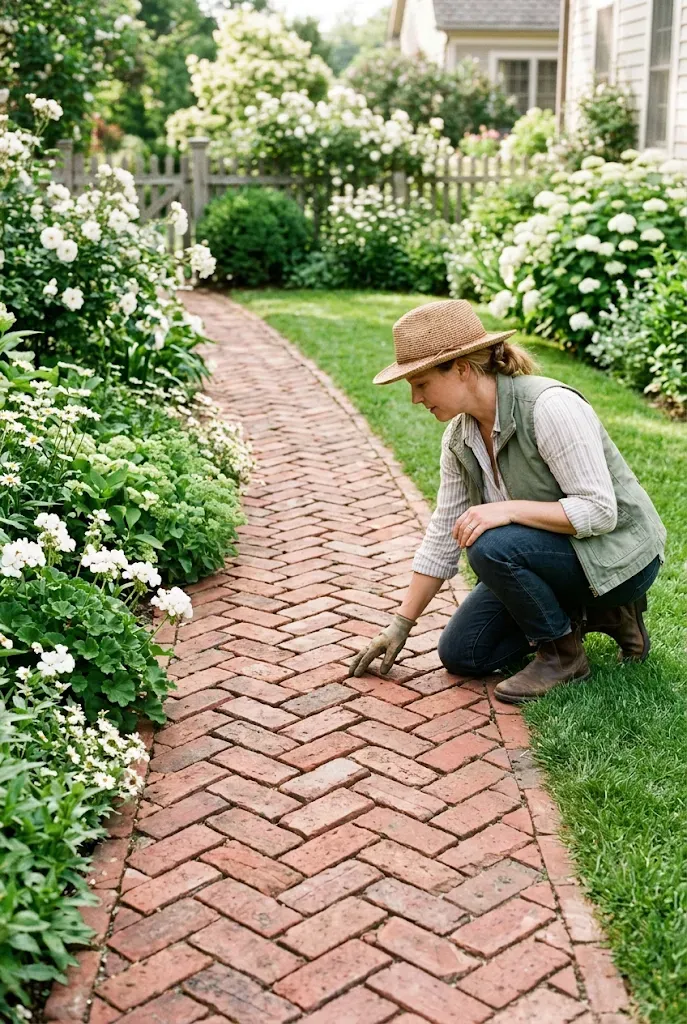
A herringbone brick pattern gives a garden pathway a decorative finish without needing complicated colors or expensive materials. The distinctive zigzag arrangement creates movement and adds visual interest to an otherwise simple walkway.
Traditional red bricks work beautifully with green lawns, white flowers, and cottage-style planting. For a slightly more contemporary appearance, consider muted gray or brown paving bricks.
How to plan the pattern:
- Choose suitable outdoor paving bricks.
- Prepare a stable, level base.
- Establish a straight starting edge.
- Lay the bricks in a consistent herringbone arrangement.
- Cut edge pieces carefully and secure the finished surface.
If you’ve never laid paving before, practice a small section first. Accurate alignment makes a noticeable difference.
15. Add a Natural Stone and Grass Walkway
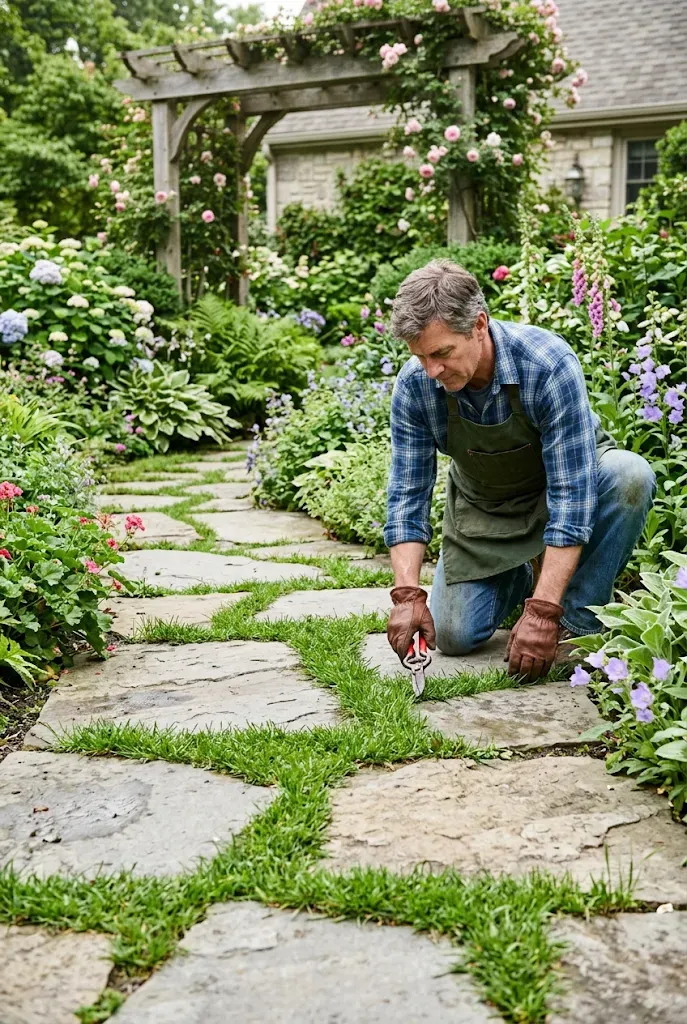
If you love a natural landscape, consider placing flat stone pavers with grass growing in the spaces between them. This combination creates a softer appearance than a fully paved walkway and works well in gardens with a relaxed, organic style.
Choose stones with relatively flat surfaces and arrange them with comfortable walking distances. The surrounding grass can visually connect the pathway to the rest of the lawn.
Best design considerations:
- Use stones that are stable and suitable for foot traffic.
- Maintain consistent stepping distances.
- Choose grass that suits your climate and light conditions.
- Keep the joints manageable for mowing and maintenance.
This idea is especially attractive in open gardens where the pathway can blend naturally into the surrounding landscape.
16. Create a Small Garden Path With Concrete Pavers and Plants
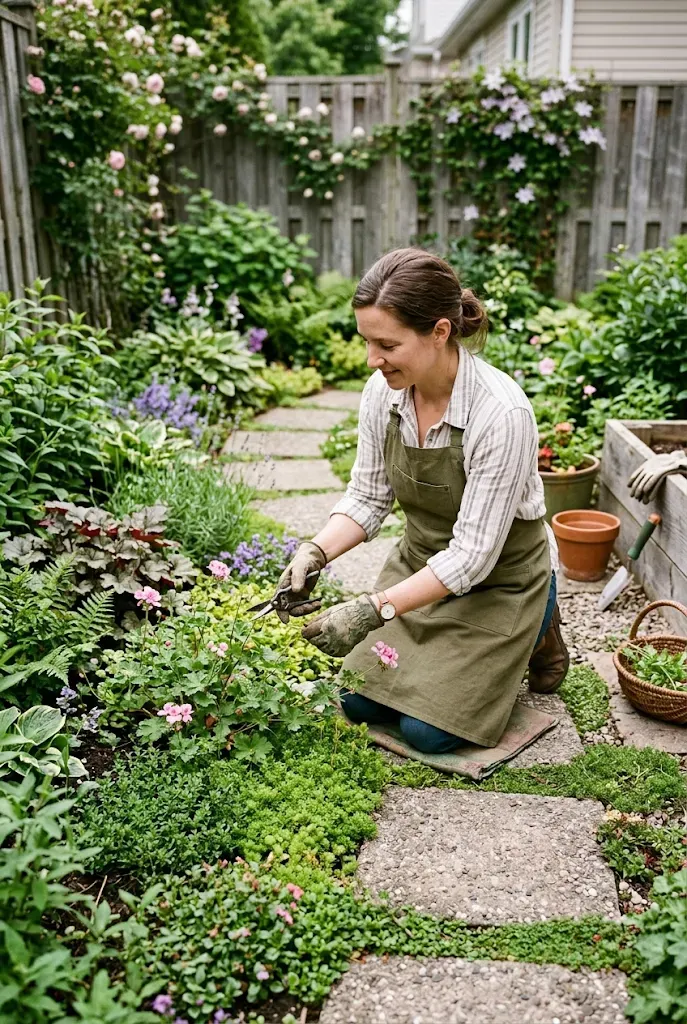
A small backyard doesn’t need an elaborate walkway. A simple line of square concrete pavers surrounded by low-growing plants can create enough structure to make the garden feel organized.
This design is especially useful beside compact patios, raised garden beds, and narrow planting areas. Instead of filling the entire space with paving, allow the plants to remain the main visual feature.
Consider using low-growing ground cover that is suitable for your local climate and intended foot traffic. Keep the paver surfaces visible and accessible so the path remains easy to use.
Common Mistake: Allowing plants to grow too aggressively over the pavers can hide the walking surface. Choose varieties with manageable growth habits.
17. Use Gravel and Timber Edging for a Farmhouse Look
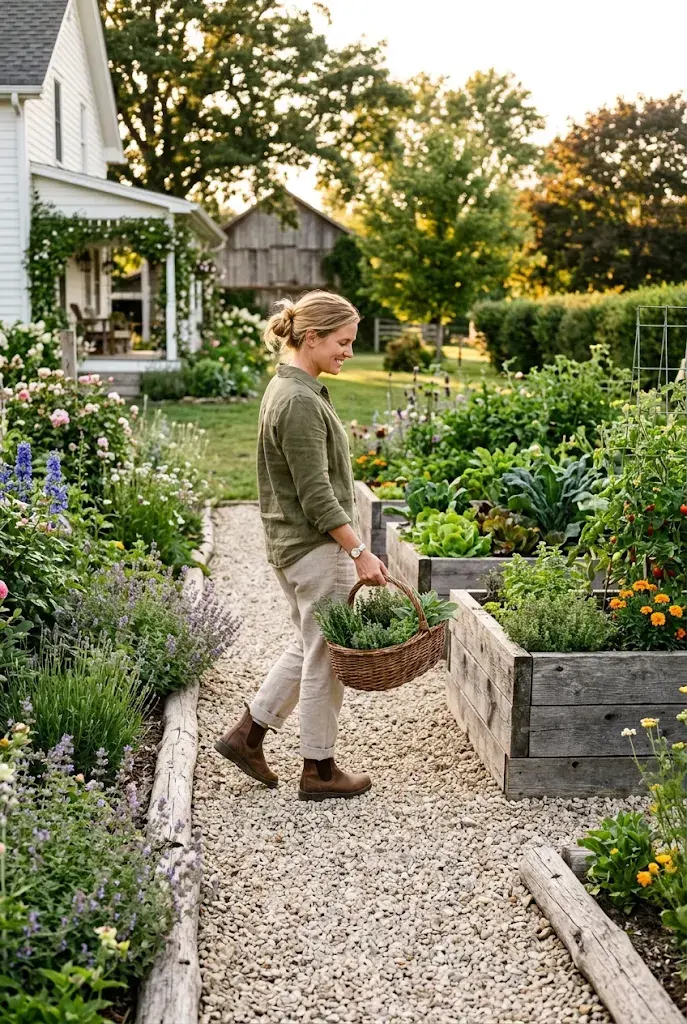
For a warm farmhouse-inspired garden, combine light-colored gravel with simple timber edging. The wood creates a defined border, while the loose stone keeps the overall project relatively simple.
This combination looks particularly appealing near raised vegetable beds, wooden planters, sheds, and outdoor seating areas.
To recreate the look:
- Mark the path with a garden hose.
- Prepare the soil and establish a suitable base.
- Install exterior-suitable timber edging.
- Secure the edging properly.
- Add and level the selected gravel.
Choose wood that can withstand outdoor exposure. Timber in direct contact with damp soil may need additional protection or a different construction detail.
18. Make a DIY Mosaic Stone Pathway
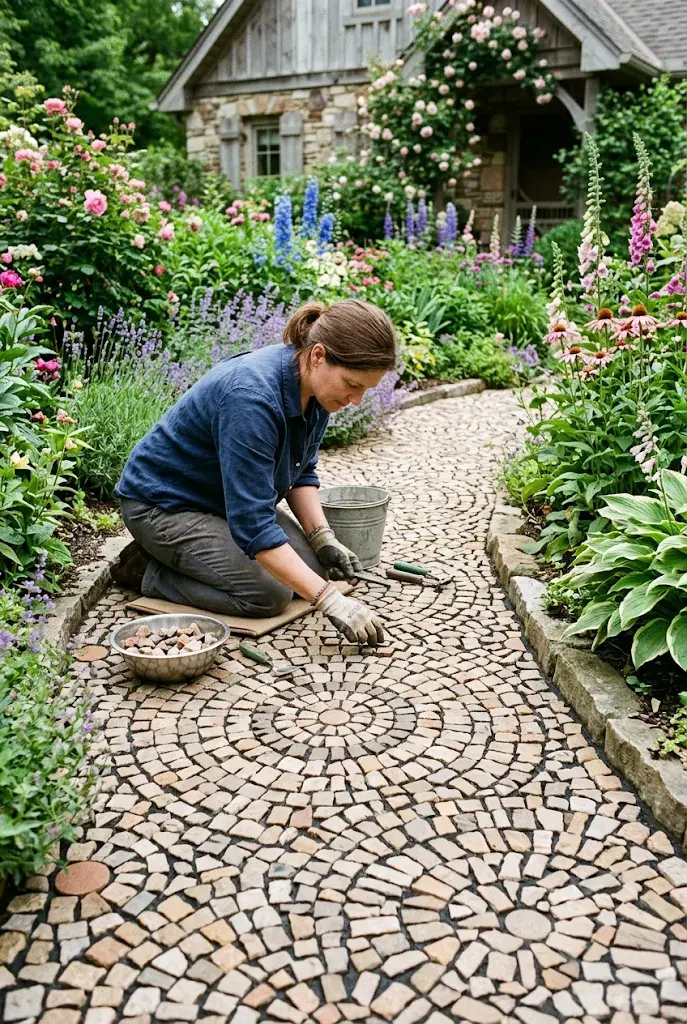
A mosaic pathway is a creative way to introduce personality into an outdoor space. Instead of using plain paving stones, arrange different colors and shapes of suitable outdoor materials into decorative patterns.
You could create simple geometric designs, circular patterns, or subtle color gradients. A small mosaic section can become a focal point near a garden entrance or seating area without requiring the entire walkway to be decorative.
Materials might include:
- Outdoor-rated mosaic tiles.
- Suitable decorative stone pieces.
- A stable prepared base.
- Appropriate exterior installation materials.
- Suitable jointing products.
Mosaic installation needs careful planning and appropriate materials for outdoor weather conditions. Keep the finished surface even and avoid slippery polished pieces.
19. Design a Narrow Side-Yard Walkway
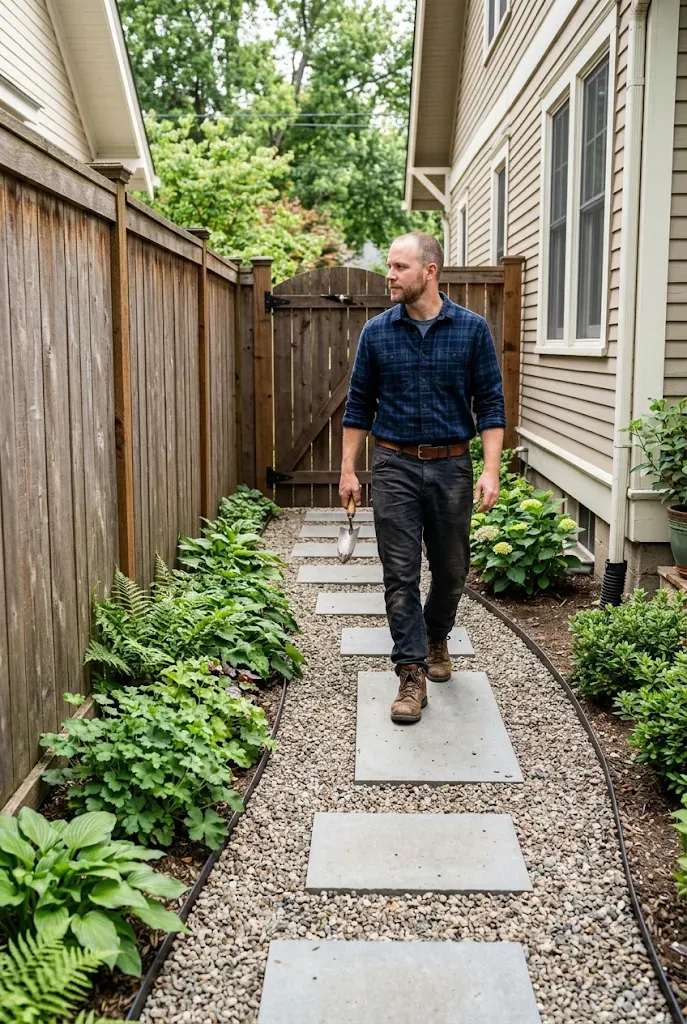
Side yards are often overlooked, but a well-planned walkway can make these narrow spaces more useful. A defined route between the house and fence provides easier access to outdoor storage, garden tools, or the backyard.
Gravel, compact pavers, and stepping stones are all possible materials, depending on the available width and how frequently the route is used.
For a narrow side yard, focus on:
- A practical walking width.
- A surface that drains appropriately.
- Low-profile plants that won’t block the route.
- Clear access to gates and utility areas.
- Materials that are easy to maintain.
Before installing the path, check drainage around the house and make sure the finished landscape directs water appropriately.
20. Create a Garden Path With Large Natural Boulder Stones
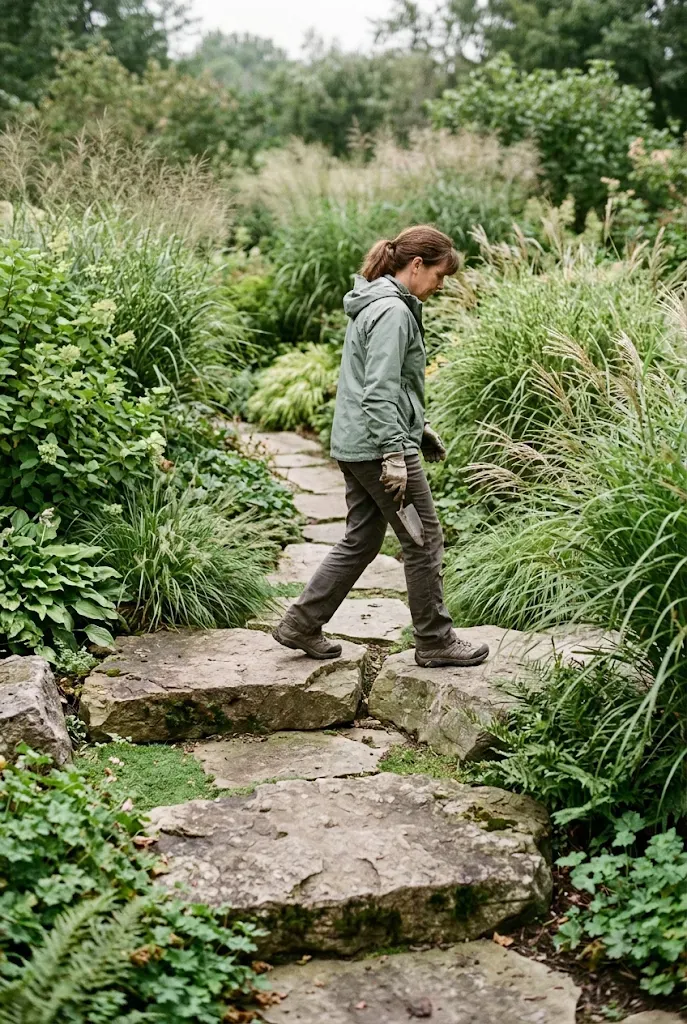
Large natural stones can give a garden pathway a more organic, sculptural appearance. Their varied shapes and earthy tones work particularly well in woodland-inspired landscapes, rock gardens, and yards with ornamental grasses.
Rather than creating a perfectly straight line, arrange the stones to follow the natural shape of the planting beds. Leave enough room between them for comfortable walking and use a stable installation base.
Quick Tip: Select stones with relatively flat walking surfaces. Highly irregular rocks may look attractive but can be uncomfortable or unsafe underfoot.
You can soften the surrounding area with low plants, decorative gravel, or mulch, depending on the garden’s overall style.
21. Build a Simple Garden Path With Recycled Concrete Pavers
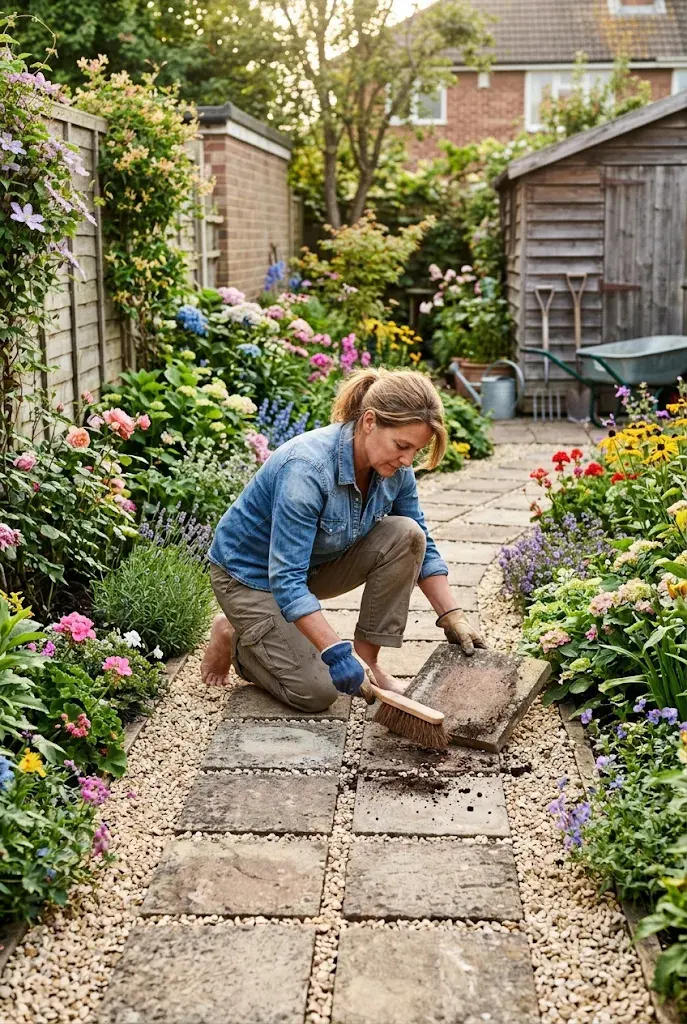
Reusing suitable concrete pavers is a practical way to create an attractive garden walkway while making use of materials you may already have available. Leftover pavers from an old patio or landscaping project can become a new pathway when they are still structurally sound.
The key is to choose pieces that are suitable for outdoor foot traffic and have reasonably consistent thickness. Clean them thoroughly, inspect for cracks, and arrange them in a pattern that makes the best use of their existing shapes.
Ways to make recycled pavers look intentional:
- Group similar sizes together.
- Use gravel to fill compatible gaps.
- Create a consistent border.
- Repeat the same arrangement along the route.
- Combine the pavers with simple planting.
Avoid using cracked, unstable, or badly uneven pieces. Reclaimed materials can look attractive without compromising the safety of the finished walkway.
How to Choose the Best DIY Garden Pathway for Your Yard
With so many materials available, the best pathway depends on how you plan to use your garden. A decorative route through flower beds has different requirements from a walkway that connects your driveway to the back door.
Here are a few things to consider before choosing your project. For even more inspiration, you can also browse these pretty DIY garden path and walkway ideas.
Compare Popular Garden Pathway Materials
| Material | Visual Style | Best Use |
|---|---|---|
| Pea gravel | Natural and relaxed | Curved garden paths |
| Concrete pavers | Clean and modern | Everyday walkways |
| Reclaimed brick | Traditional and rustic | Cottage gardens |
| Flagstone | Organic and natural | Flower gardens |
| Wood mulch | Informal and earthy | Woodland paths |
| Timber | Warm and rustic | Boardwalk-style paths |
| River rocks | Decorative and textured | Stepping-stone borders |
Consider Your Budget
If you’re trying to keep costs down, start with materials that are readily available locally. Reclaimed bricks, leftover pavers, and suitable recycled materials can reduce purchasing costs.
Remember that the total project cost includes more than the visible pathway material. Edging, base preparation, delivery, tools, and drainage considerations can all affect your budget.
Think About Maintenance
Some pathways need more attention than others.
- Gravel may need occasional raking and replenishment.
- Mulch decomposes and needs refreshing.
- Brick and paver joints may need periodic maintenance.
- Wood requires inspection and suitable exterior protection.
- Concrete generally needs less routine surface maintenance, although cracks and drainage issues should still be addressed.
Don’t Forget Safety and Drainage
A beautiful walkway should also be comfortable to use. Prepare a stable base, avoid loose or rocking stones, and consider how rainwater will move through the area.
For frequently used routes, prioritize a firm, even surface. Check local requirements if your project involves significant grading, drainage changes, or construction near utilities.
Frequently Asked Questions
1. What is the cheapest material for a garden pathway?
Mulch and locally available gravel are often among the more affordable pathway materials. However, the final cost depends on preparation, delivery, edging, and the size of the walkway.
2. How can I make a garden pathway look expensive on a budget?
Focus on a clean layout, consistent spacing, attractive edging, and a limited color palette. Even simple concrete pavers can look polished when surrounded by carefully maintained plants and decorative gravel.
3. Can I make a garden walkway without concrete?
Yes. Gravel, mulch, reclaimed bricks, natural stones, and suitable timber can all be used to create garden pathways without pouring concrete.
4. What is the best DIY walkway for a small backyard?
A short stepping-stone pathway or narrow gravel walkway is a practical option for many small backyards. Both can define a walking route without taking up too much garden space.
5. How do I prevent weeds from growing through a gravel pathway?
Start by removing existing vegetation and preparing the ground properly. Suitable landscape fabric can help separate the aggregate from the soil, but it doesn’t eliminate all weed growth. Regular maintenance is still necessary. University of Illinois Extension also points out the drawbacks of landscape fabric as a long-term weed solution.
Final Thoughts
Creating a beautiful garden pathway doesn’t have to mean hiring a landscaping company or spending a fortune on expensive materials. A simple gravel route, reclaimed brick walkway, or carefully arranged stepping stones can make your outdoor space feel more organized and welcoming.
Start by choosing a pathway that fits your garden’s layout and everyday needs. Then select materials that complement your existing plants, lawn, and outdoor features. With thoughtful planning and a little DIY effort, you can create a walkway that adds both beauty and practical value to your backyard.