35 DIY Canvas Wall Art Ideas for a Pinterest-Worthy Home
Blank walls can make a room feel unfinished, but filling them doesn’t have to mean buying expensive artwork. DIY canvas wall art gives you a chance to create pieces that match your colors, furniture, and personal style while adding something genuinely original to the space.
The best projects aren’t necessarily complicated. A simple combination of paint, texture, fabric, natural materials, or carefully arranged shapes can become a focal point when the scale and palette are right. You can also adapt many of these ideas to suit a bedroom, living room, entryway, office, dining area, or rental.
From oversized abstract canvases and minimalist line art to pressed botanicals and dimensional plaster designs, these 35 ideas cover a wide range of styles and skill levels.
1. Oversized Neutral Abstract Canvas
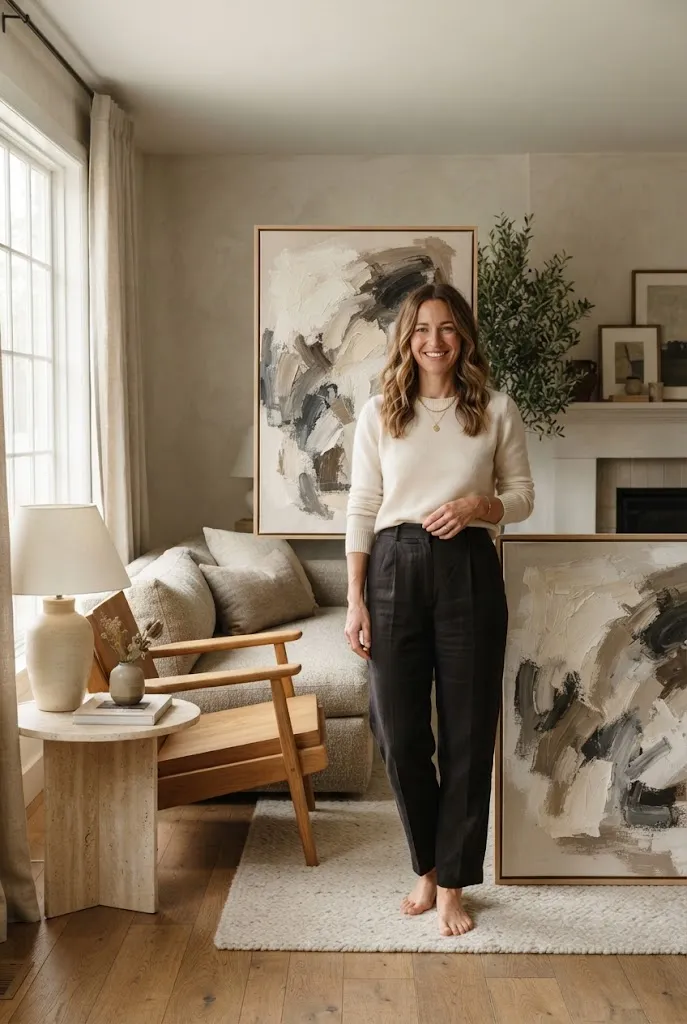
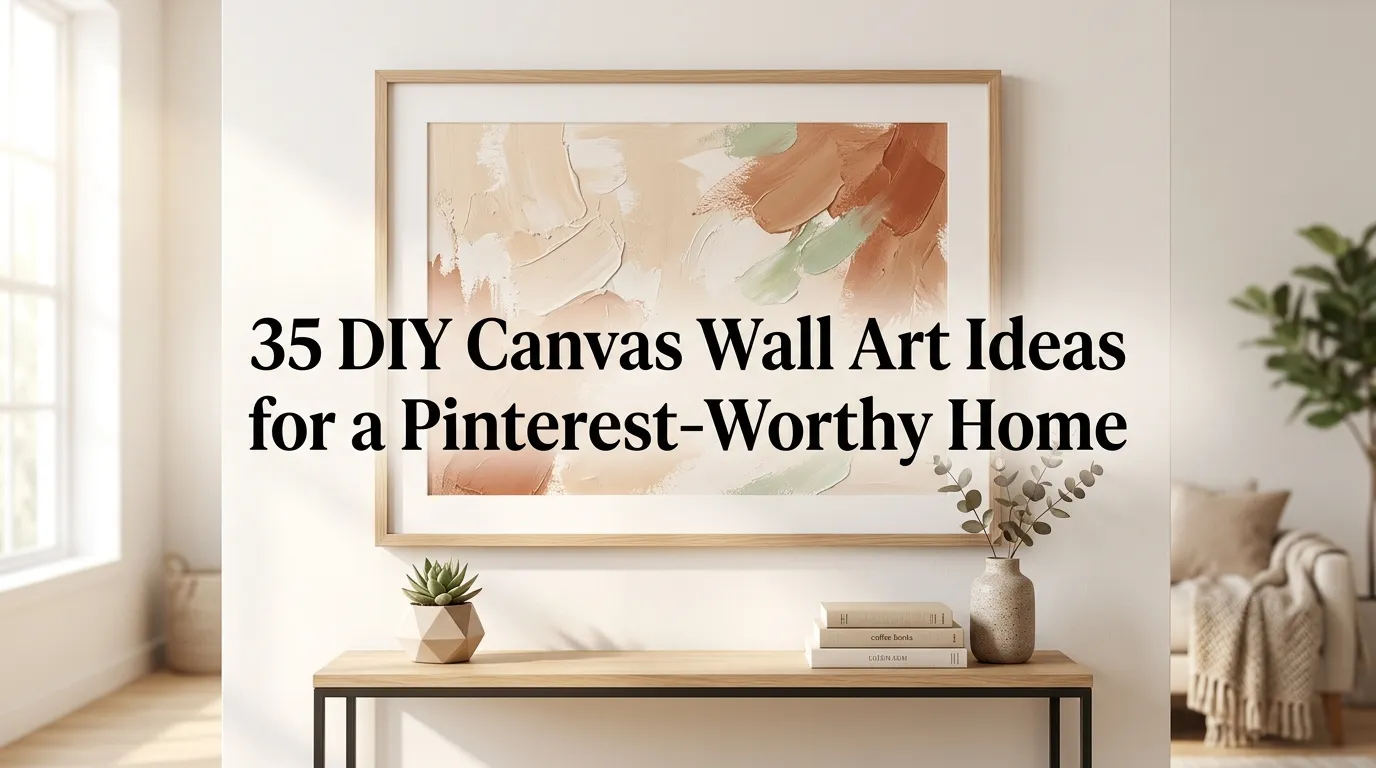
An oversized abstract canvas can fill a large blank wall without making the room feel visually crowded. Build the composition around two or three related neutrals such as warm white, sand, taupe, and muted brown and let broad brushstrokes create movement.
Use a large canvas when the wall needs one strong focal point. For a smaller room, a medium canvas with generous negative space can create a similar effect without overwhelming the furniture.
Quick Tip: Step back frequently while painting. Abstract work often looks more balanced when individual marks aren’t overworked.
2. Textured Plaster Canvas

Give a basic canvas an architectural feel with modeling paste or a suitable textured medium. Spread it in sweeping curves, ridges, arches, or irregular layers, then leave the finished piece mostly monochromatic.
A creamy white or soft greige finish works especially well with modern interiors because the interest comes from shadow and texture rather than strong color.
Materials to consider:
- Stretched canvas
- Modeling or texture paste
- Palette knife
- Primer
- Acrylic paint
- Protective finish if appropriate
Let the material dry completely according to the manufacturer’s instructions before painting or hanging.
3. Minimalist Black Line Art
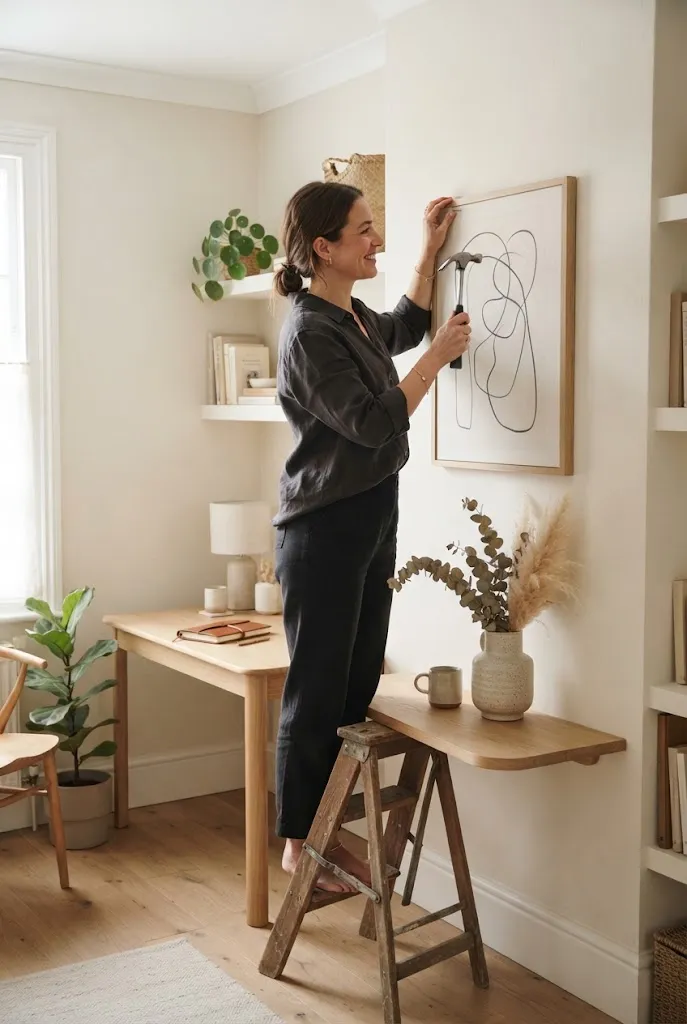
For a clean, graphic look, create a simple composition from continuous black or charcoal lines on an off-white canvas. The design might suggest a face, abstract profile, botanical stem, or architectural silhouette.
Keep the background quiet so the linework becomes the focal point. This approach works particularly well above a console, desk, or small accent table.
4. Botanical Silhouette Canvas
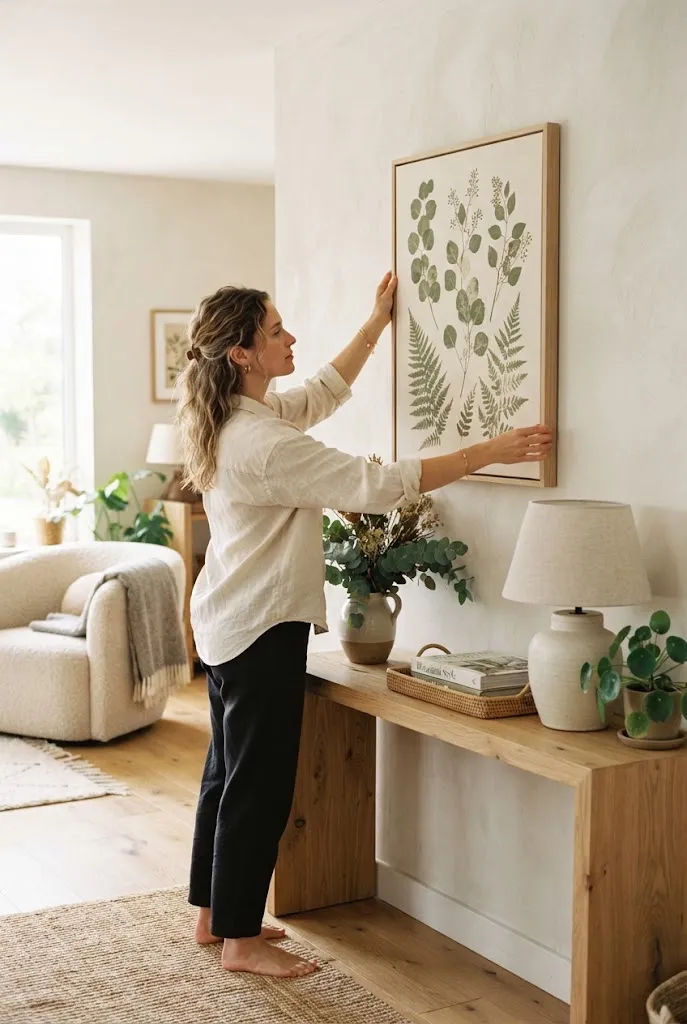
Paint or stencil large botanical leaves onto a neutral canvas for an organic statement piece. Rather than filling the entire surface, allow sections of the background to remain visible.
Olive, eucalyptus, fern, and muted sage tones can introduce nature without turning the artwork into a literal botanical illustration.
5. Layered Arch Canvas

Arches instantly give a canvas a softer architectural quality. Paint overlapping arches in related shades, allowing some shapes to sit behind others.
Try clay, cream, terracotta, dusty rose, or muted olive depending on the room’s existing palette. A simple repeated arch pattern can look especially polished when the spacing is consistent.
6. DIY Dip-Dyed Canvas

Create a soft ombré effect by gradually blending one color from deeper saturation into a pale neutral. A dusty blue, muted green, terracotta, or warm beige can work beautifully.
The trick is to keep the transition gradual rather than creating a hard horizontal stripe.
Do:
- Test the color on scrap material first.
- Blend while the paint is still workable.
- Keep the lower section slightly deeper if you want visual weight.
Don’t: Saturate the entire canvas equally if your goal is a subtle gradient.
7. Geometric Color-Block Canvas
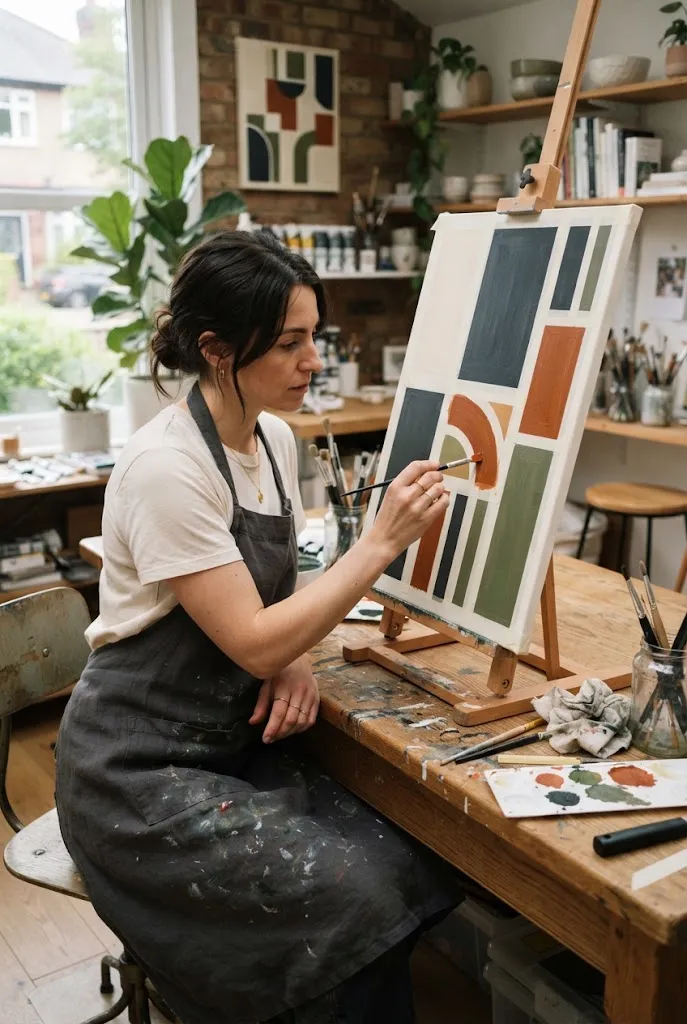
Use painter’s tape to create clean geometric sections, then fill each shape with a carefully chosen color. Instead of using many bright colors, try three shades that relate to the room.
For a modern look, combine cream, charcoal, rust, olive, or muted blue.
8. Raised Wave Texture Art

Create flowing horizontal or vertical waves using a thick texture medium. The repeating ridges catch light differently throughout the day, giving the finished piece subtle movement.
This style is particularly effective when the surrounding decor is restrained and tactile.
9. Painted Terracotta Shapes

Warm terracotta creates an earthy focal point without requiring a complicated painting technique. Combine circles, arches, half-moons, and irregular blocks against a cream background.
Repeat a small amount of terracotta elsewhere in the room through cushions, pottery, or a rug so the artwork feels connected to its surroundings.
10. Fabric-Covered Canvas

Not every canvas needs paint. Stretch attractive fabric over a blank canvas and secure it neatly at the back for an instant textile artwork.
Linen, block-print fabric, subtle stripes, or woven material can add softness to rooms that already contain hard surfaces.
11. Gold Leaf Accent Canvas
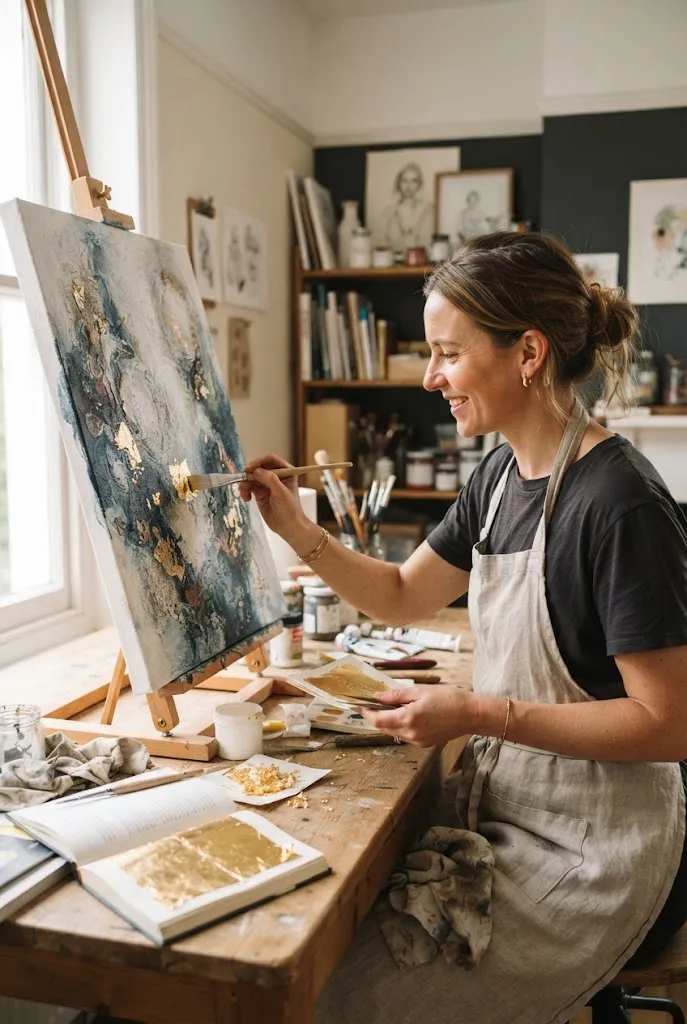
Use small amounts of metallic leaf to highlight selected sections of an abstract painting. Instead of covering the whole canvas, let metallic details function like visual punctuation.
A restrained gold accent can work particularly well with warm neutrals and darker furniture.
12. Tonal Monochrome Canvas
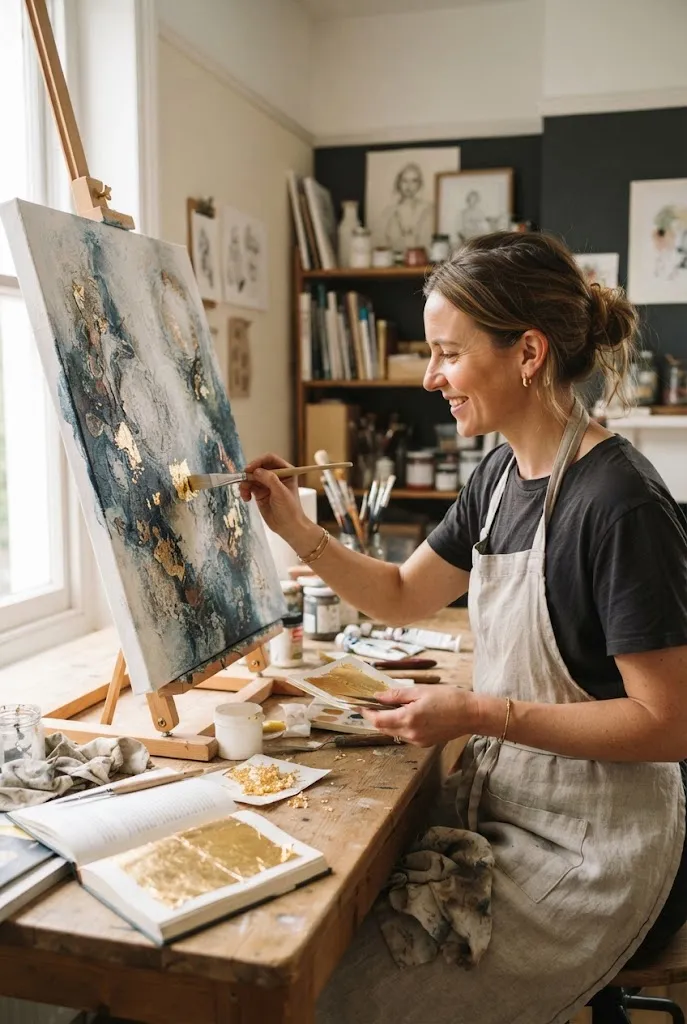
Choose one color family and work through several shades of it. A monochrome blue canvas might combine navy, slate, mist, and pale blue, while a green version could use moss, sage, olive, and eucalyptus.
The result feels coordinated without relying on a busy pattern.
13. Abstract Landscape Canvas

Suggest a landscape without painting a literal scene. Layer horizontal bands of earth, sky, hills, and distant shapes using muted colors.
This gives you the atmosphere of landscape art while keeping the finished piece contemporary.
14. Pressed Botanical Canvas

Preserved leaves and flowers can turn a plain canvas into a delicate nature-inspired artwork. Arrange dried botanicals in a simple composition and secure them carefully before framing or protecting the piece.
Choose materials that are already fully dried and suitable for decorative use.
Common Mistake: Overfilling the canvas.
Better Approach: Leave intentional empty space around each botanical element so the composition can breathe.
15. DIY Checkerboard Canvas

A checkerboard pattern gives a room graphic energy. For a sophisticated version, skip stark black and white and choose two muted colors such as cream and olive or beige and terracotta.
Use painter’s tape and measure carefully to keep the squares consistent.
16. Oversized DIY Diptych
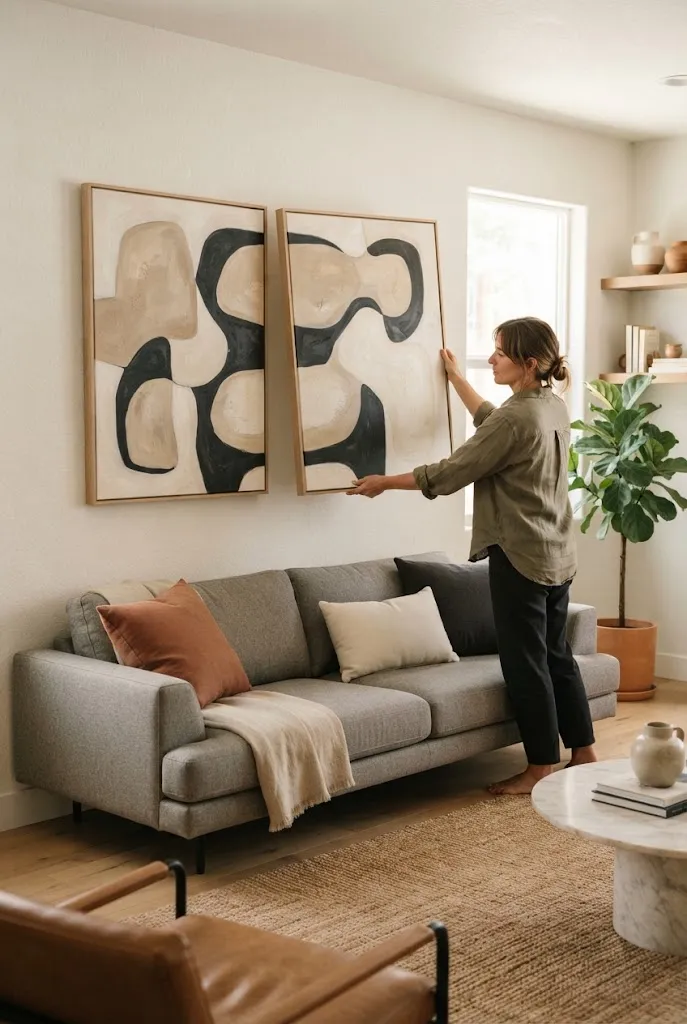
Instead of one large painting, divide one composition across two canvases. The two pieces should relate visually while maintaining a small gap between them.
Diptychs are especially useful over wide furniture because they can mirror the horizontal proportions of a sofa, bed, or sideboard.
17. Textured Linen Canvas

Create a soft, understated piece by combining a linen-covered surface with subtle painted marks. Keep the colors close to the fabric tone so the texture does most of the work.
This approach is ideal for bedrooms and quiet reading spaces where highly graphic artwork might feel too energetic.
18. Bold Color-Field Canvas

Let one or two saturated colors dominate the canvas. Deep cobalt, forest green, burnt orange, burgundy, or mustard can become the room’s strongest accent.
Balance bold artwork with quieter furniture and accessories so the wall remains intentional rather than visually chaotic.
19. DIY Stenciled Botanical Art
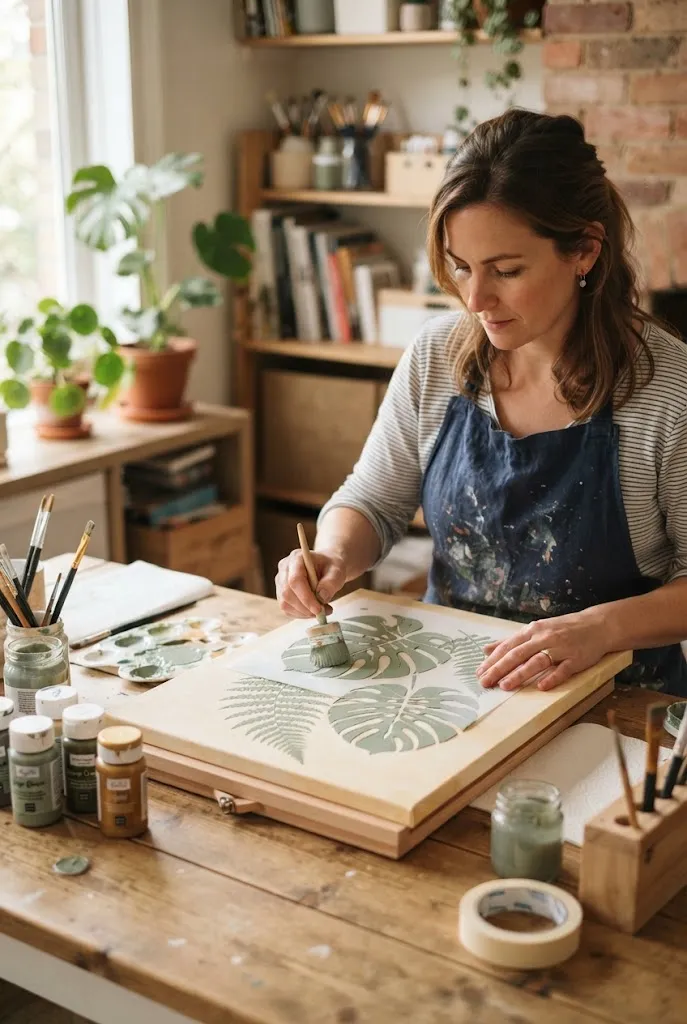
Stencils make detailed botanical forms easier to reproduce. Choose one oversized leaf or several smaller stems and repeat them across the canvas.
A limited palette keeps the design looking artistic rather than overly crafty.
20. Minimalist Sun Canvas
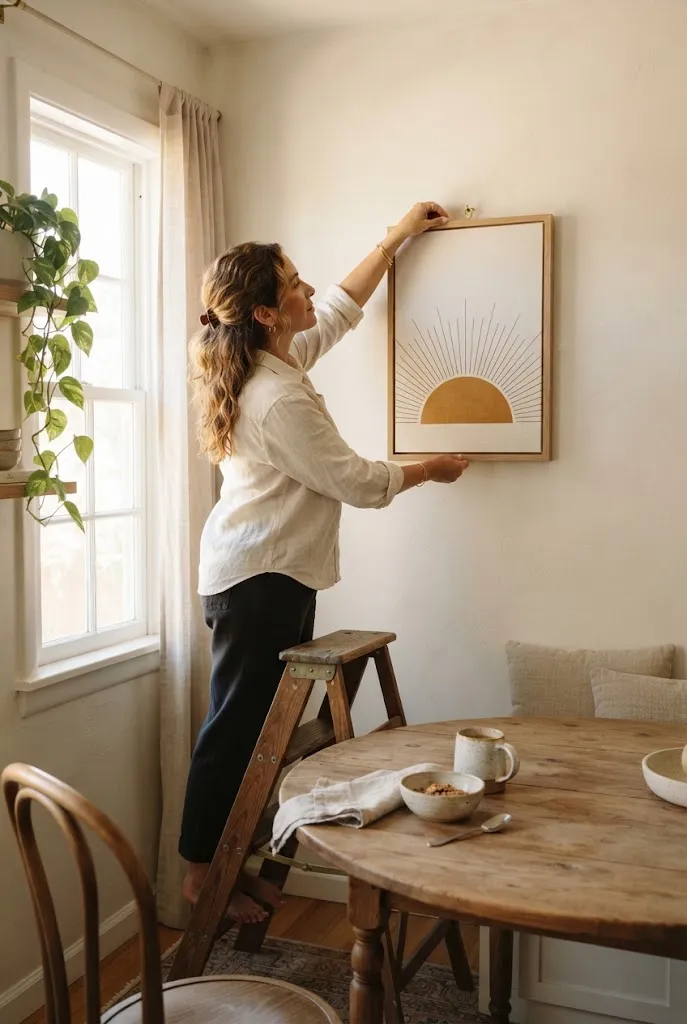
A simple rising-sun motif can add warmth without becoming overly decorative. Use a semicircle, thin rays, and a restrained palette such as ochre, cream, and clay.
The design works particularly well in breakfast areas, entryways, and relaxed bedrooms.
21. DIY Ombre Brushstroke Canvas
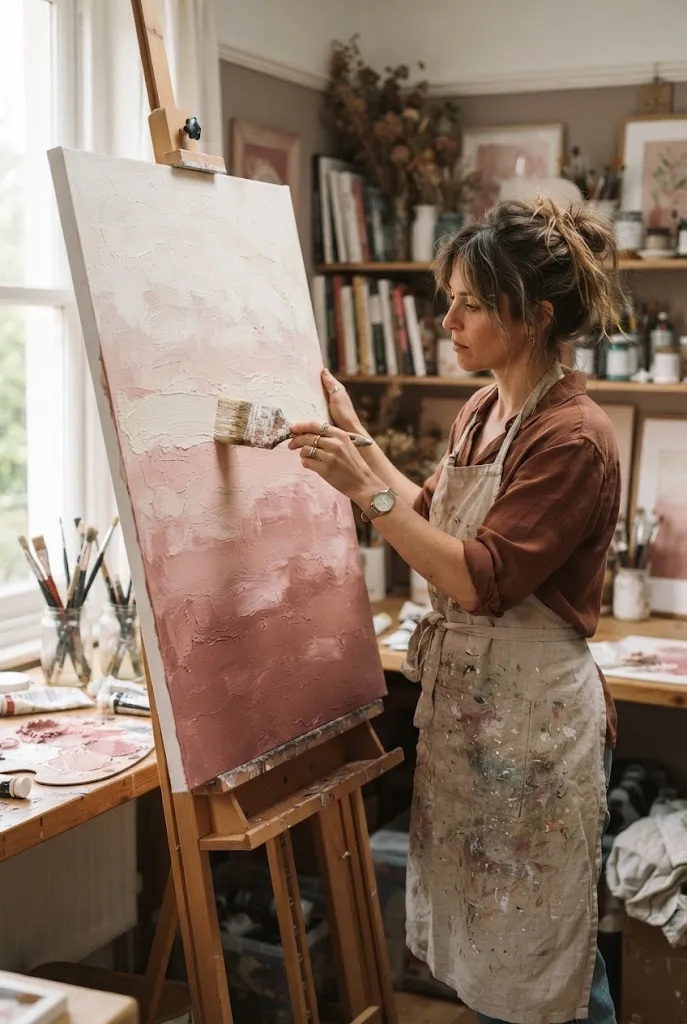
Instead of a smooth gradient, create an ombré effect through visible horizontal or diagonal brushstrokes. Each layer should slightly overlap the next.
This method keeps the surface painterly and gives a handmade piece more character.
22. Sculptural Circle Canvas
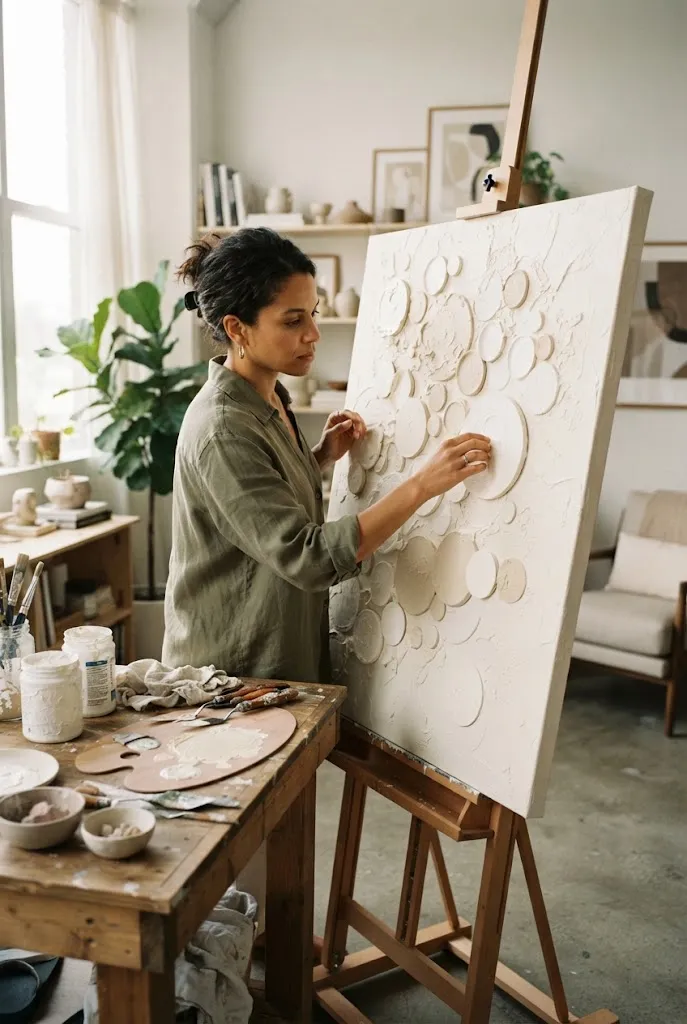
Build a dimensional composition from raised circles or discs. Vary their sizes and placement so the piece feels organic rather than mechanically patterned.
Paint the entire work in one color for a sculptural appearance, or use two closely related tones for extra depth.
23. DIY Floral Brushstroke Art
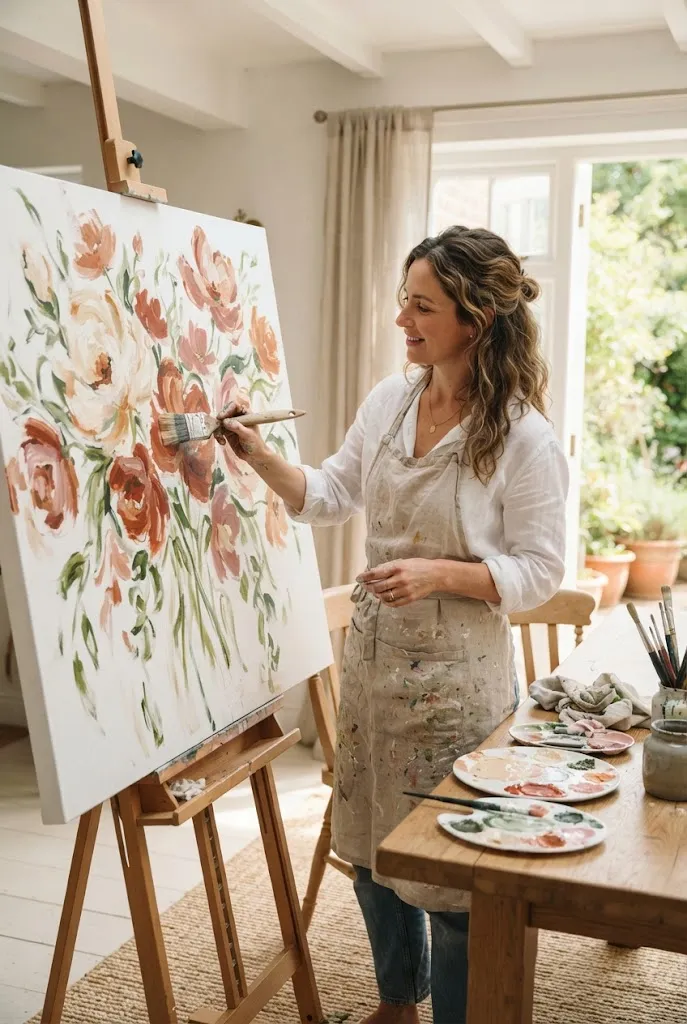
Simplify flowers into loose brushstrokes instead of detailed botanical illustrations. A few oversized stems and petals can create a relaxed artwork with a handmade feel.
Use an uneven arrangement rather than placing every flower at the same height.
24. Clay-Inspired Abstract Canvas

Use warm clay, cinnamon, sand, and cream shades to mimic the palette of handmade pottery and natural earth pigments.
Layer irregular shapes and soft edges instead of precise geometry for a relaxed organic-modern effect.
25. DIY Fabric Collage Canvas

Combine small fabric pieces into an abstract collage. Mixing linen, cotton, woven scraps, or subtle prints creates tactile depth without requiring advanced painting skills.
Keep one visual connection—such as color, pattern scale, or fabric texture—to make the finished piece feel cohesive.
26. Black-and-Cream Abstract Canvas
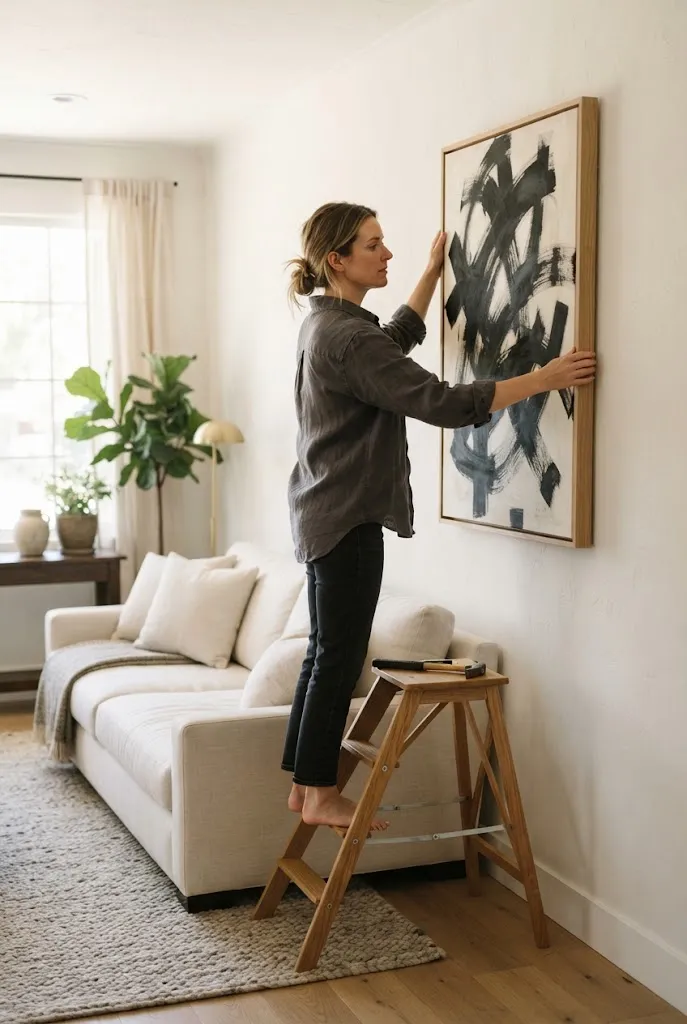
Black and cream create a high-contrast combination that works with both modern and transitional interiors. Use irregular brush marks, large blocks, or sweeping arcs instead of perfectly symmetrical shapes.
A natural wood frame can soften the contrast.
27. DIY Botanical Monoprint

Create a one-of-a-kind botanical print by applying paint to a leaf and pressing it onto the canvas. Each impression will have natural variation, making the result feel less manufactured.
Experiment with one oversized leaf or a collection of smaller prints.
Quick Tip: Practice the pressure and paint amount on paper before working directly on the canvas.
28. Painted Organic Shapes

Organic shapes are more forgiving than precise geometric patterns and can be rearranged until the composition feels right. Try blobs, arches, curved blocks, and elongated forms.
Use colors already present in the room to make the artwork feel custom-designed.
29. DIY Textured Neutral Triptych

Three narrow canvases can create a balanced focal point over a wide wall. Give each panel a related neutral texture while allowing small differences between them.
This works especially well when you want the impact of oversized artwork without painting one enormous canvas.
30. DIY Abstract Floral Silhouette
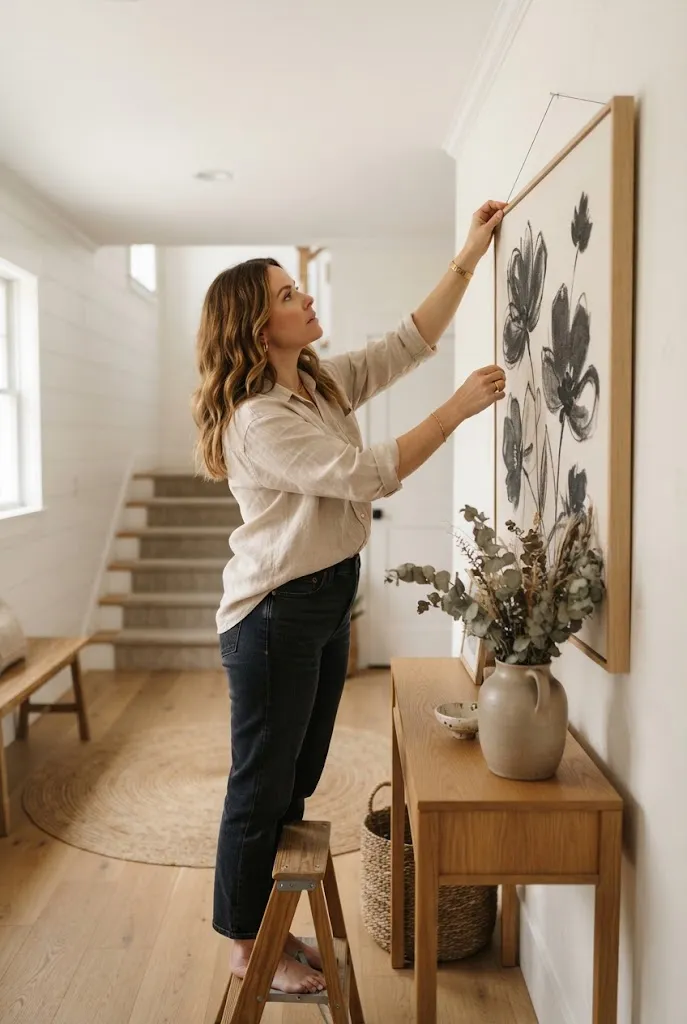
Combine a flat painted background with oversized dark floral silhouettes. The contrast creates a graphic effect while the organic flower shapes keep the artwork approachable.
Try a deep green, navy, or charcoal silhouette against a warm cream background.
31. Textured Horizontal Stripe Canvas

Create broad horizontal bands using paint and texture medium. Vary the thickness of the stripes slightly so the finished piece feels handmade rather than mechanically uniform.
This design can visually reinforce the width of a long wall or piece of furniture.
32. DIY Speckled Canvas Art
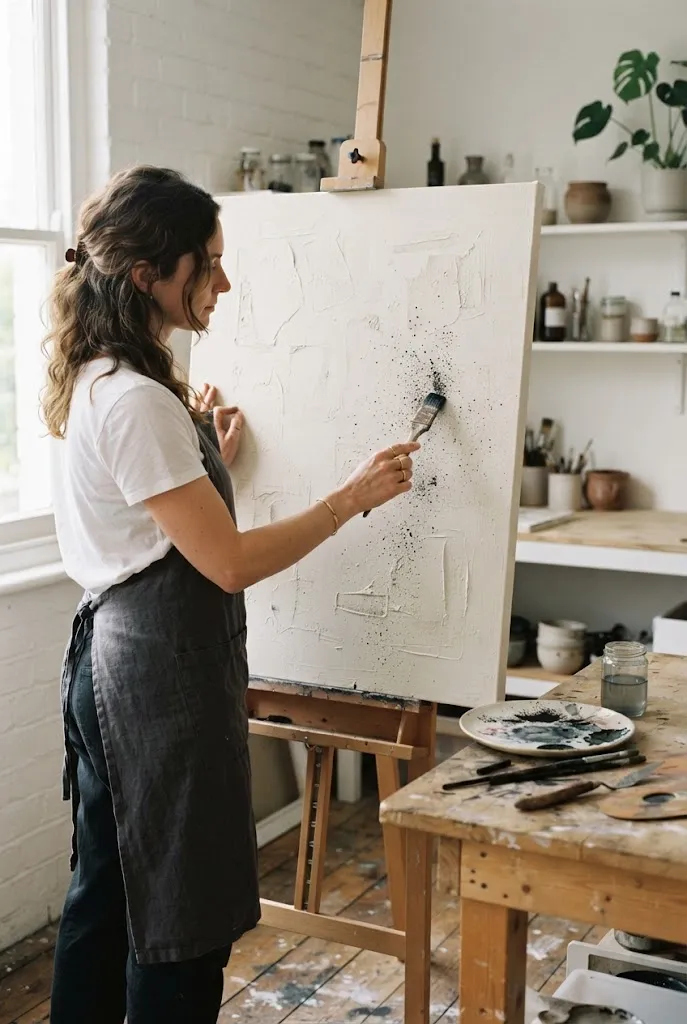
A restrained speckled finish can add texture to an otherwise simple painted background. Use a stiff brush to create controlled flecks rather than covering the surface randomly.
A cream canvas with charcoal or terracotta speckles works particularly well with minimalist furniture.
33. DIY Moody Abstract Art
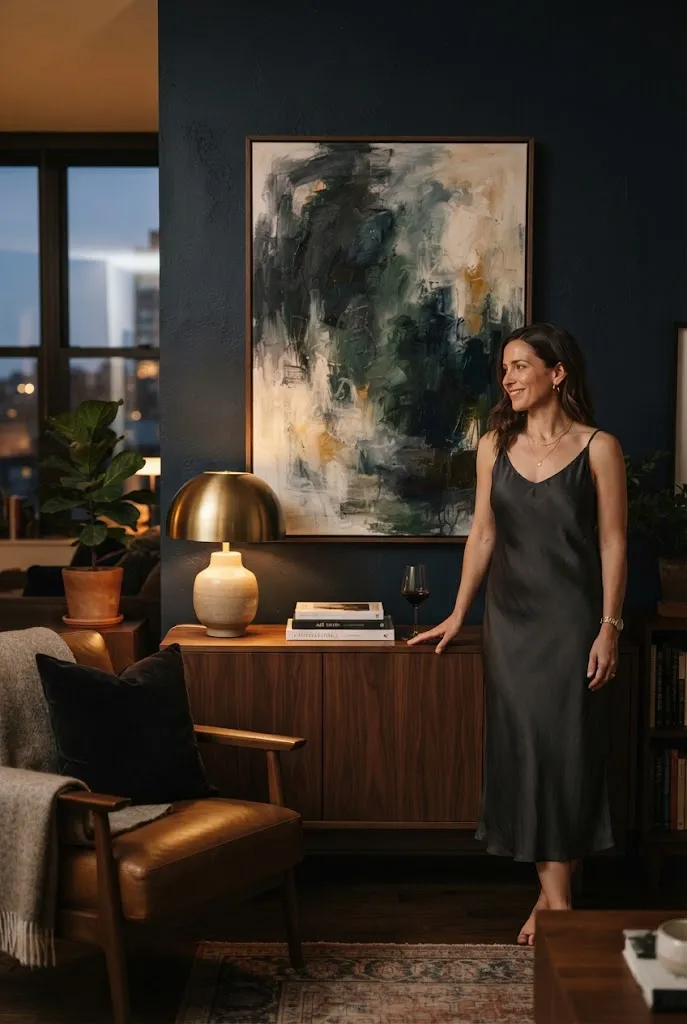
For a dramatic room, use deeper shades such as charcoal, navy, espresso, forest green, or burgundy. Keep some lighter areas visible so the painting doesn’t become a flat block of dark color.
Moody artwork can work beautifully above a fireplace, dark wood console, or upholstered bed.
34. DIY Coastal-Inspired Canvas
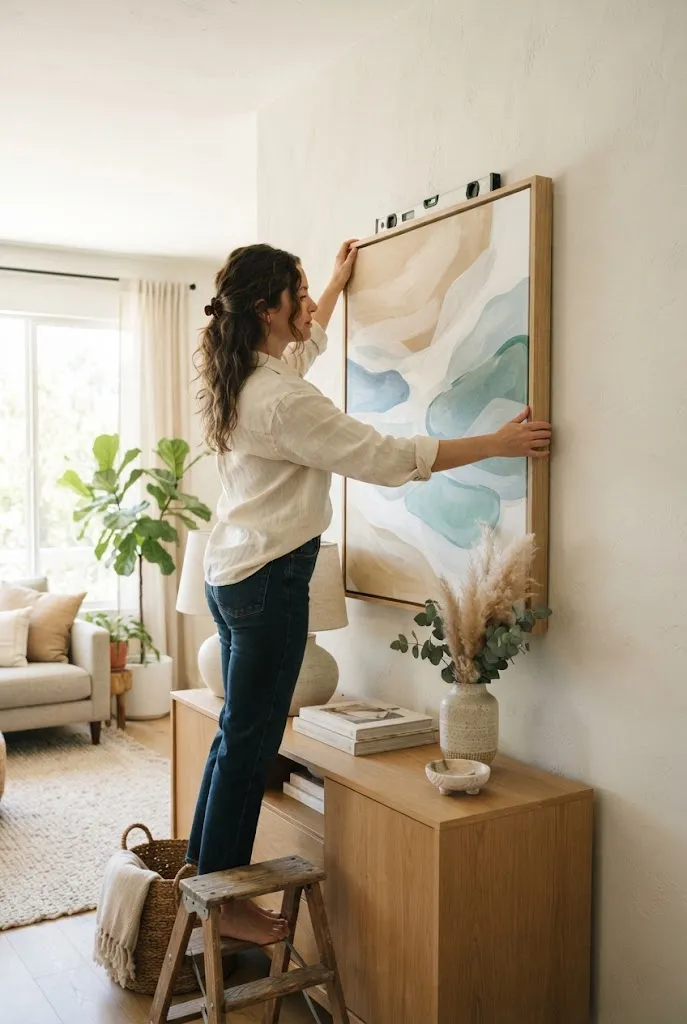
Instead of using literal seashells or beach imagery, borrow the colors and movement associated with the coast. Layer sandy beige, soft blue, sea-glass green, and white in loose horizontal forms.
This approach gives a room a relaxed coastal feeling without turning the artwork into themed decor.
35. Personalized Family Memory Canvas
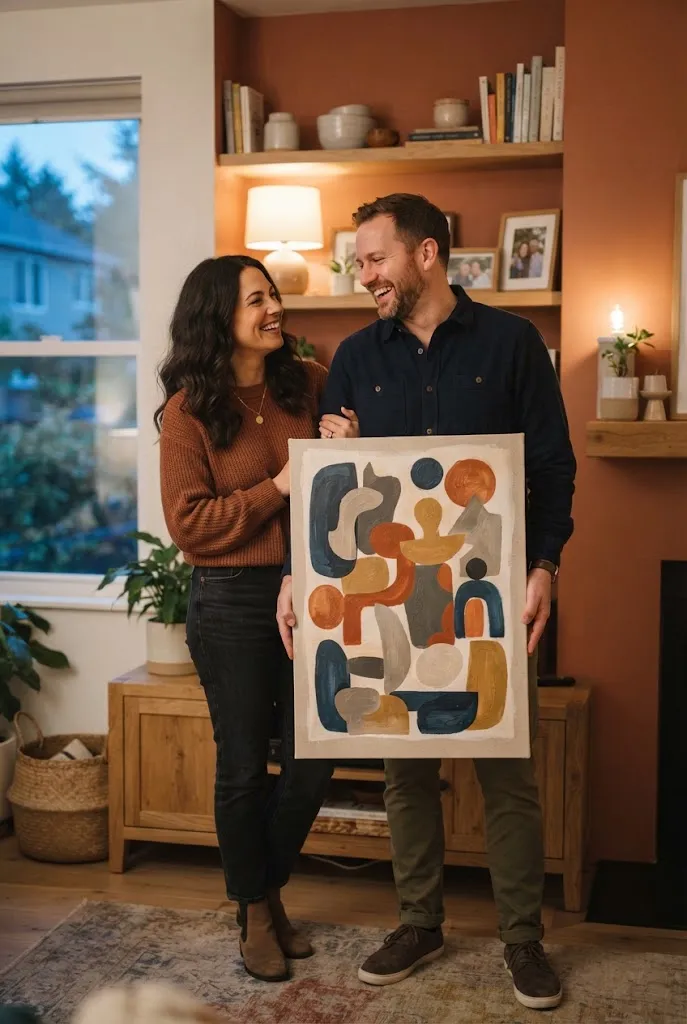
Turn a canvas into meaningful wall art by incorporating a subtle personal element, such as handwritten initials, a simplified family symbol, a meaningful color palette, or an abstract representation of a favorite place.
If you want the artwork to remain visually timeless, keep the personal reference understated rather than covering the entire piece with text.
Editor’s Note: The strongest personalized artwork usually balances sentimental meaning with the room’s existing design language. It should feel like part of the space, not an unrelated object attached to the wall.
How to Make DIY Canvas Art Look More Polished
The difference between a homemade-looking piece and a deliberately designed one often comes down to composition rather than artistic skill.
A few details can make a major difference:
- Match the palette to the room: Pull one or two colors from nearby furniture, textiles, or accessories.
- Consider scale first: A tiny canvas can disappear above a large sofa, while an oversized piece may dominate a narrow wall.
- Leave breathing room: Negative space can make simple artwork feel more intentional.
- Repeat a material: If the artwork contains warm wood, linen, clay, or woven texture, echo that material somewhere else in the room.
- Frame when appropriate: A simple wood or painted frame can give a DIY canvas a more finished appearance.
- Don’t overwork it: Especially with abstract art, knowing when to stop can be more important than adding another layer.
Choosing the Right Canvas Style for Your Room
| Canvas Style | Best Visual Effect | Works Especially Well In |
|---|---|---|
| Textured neutral | Soft, dimensional | Bedrooms, living rooms |
| Geometric | Crisp and graphic | Offices, modern living rooms |
| Botanical | Organic and relaxed | Bedrooms, entryways |
| Bold abstract | Strong focal point | Large living spaces |
| Fabric collage | Warm and tactile | Bedrooms, reading areas |
| Coastal abstract | Airy and relaxed | Casual living spaces |
A Simple Way to Plan Your Wall Art
Before buying materials, photograph the wall and consider the furniture beneath it. Measure the available width and decide whether one large canvas, a diptych, or a triptych will create the strongest proportion.
Then choose your palette. If the room already has several patterns, a tonal or minimally abstract canvas may provide balance. If the room is mostly neutral, stronger color or texture can give the wall more presence.
For DIY beginners, start with a simple abstract composition rather than a highly detailed painting. Shapes, texture, color fields, and botanical silhouettes are forgiving because small variations can become part of the design.