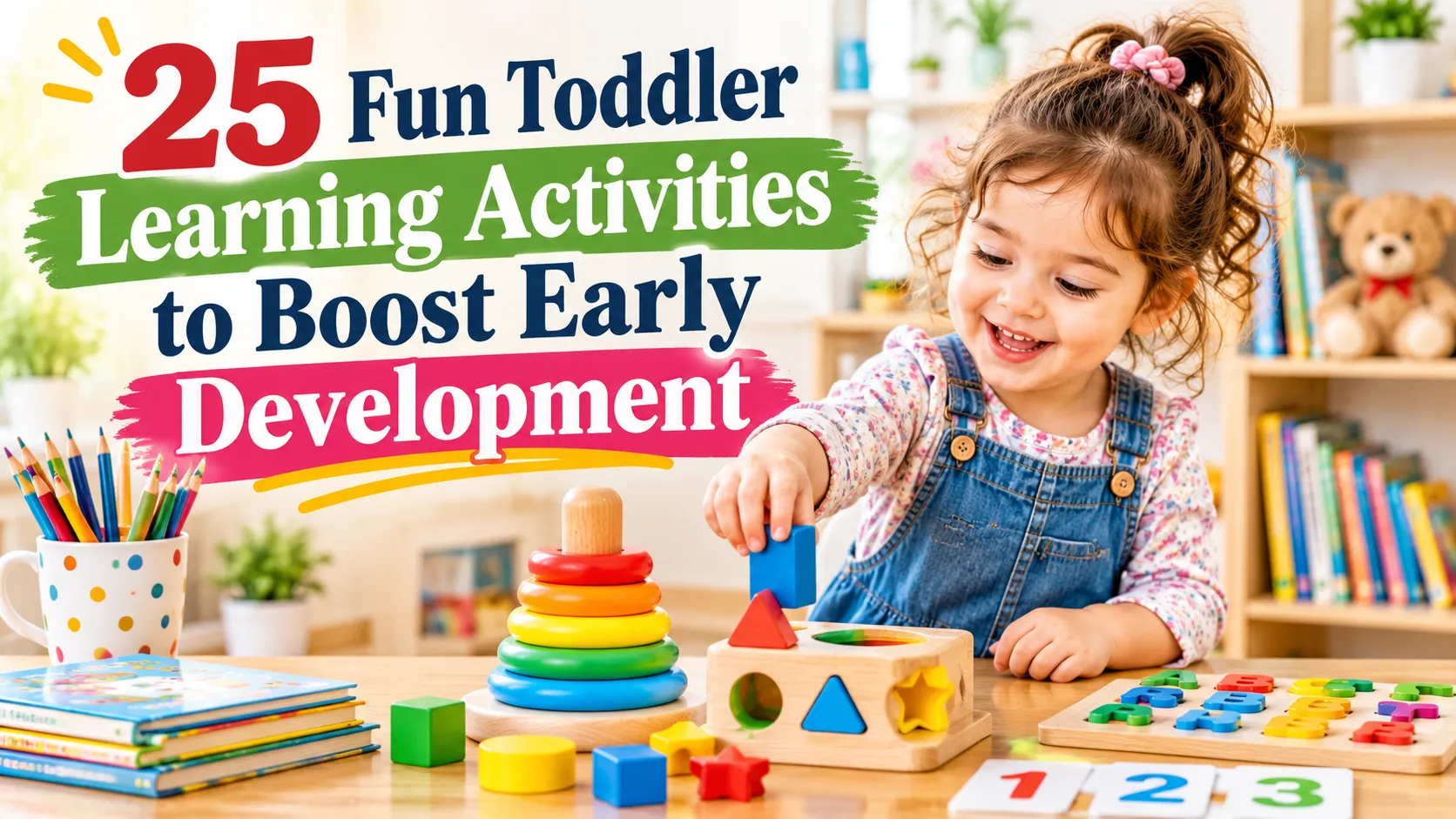
25 Fun Toddler Learning Activities to Boost Early Development
Toddlers are naturally curious about the world around them. From stacking blocks and turning book pages to sorting colorful objects, everyday play gives little ones opportunities to explore new ideas and practice important skills. The best toddler learning activities don’t need expensive toys, complicated supplies, or a dedicated classroom. A few household materials and some time with a caring adult can turn an ordinary afternoon into an enjoyable learning experience.
Whether you’re looking for educational activities for a 2-year-old, creative indoor games, or simple preschool preparation ideas, these activities offer plenty of inspiration. They encourage toddlers to develop language, coordination, early math concepts, imagination, and independence while keeping play enjoyable.
Here are 25 engaging activities you can try at home using simple materials and age-appropriate toys.
1. Color Sorting With Everyday Objects
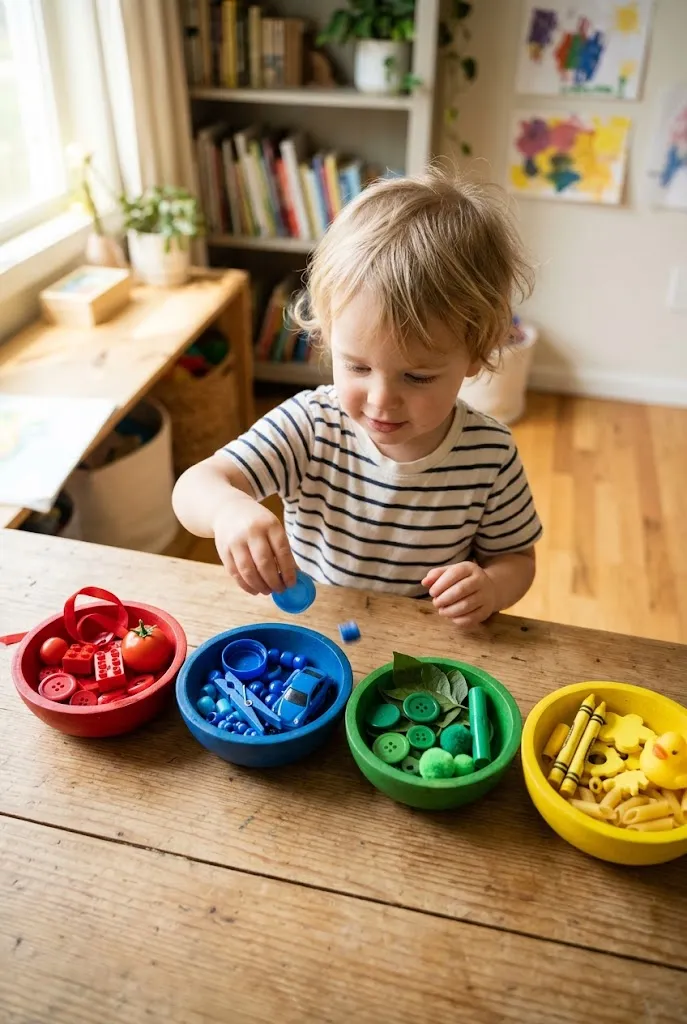
Color sorting is a simple way to introduce toddlers to early classification and visual recognition. Gather a few large, age-appropriate colored toys and matching containers. Invite your little one to place the red objects in the red bowl, blue objects in the blue bowl, and so on.
Start with just two colors so the activity feels manageable. As your toddler becomes familiar with the game, introduce additional colors and ask simple questions such as, “Can you find something yellow?”
What children practice:
- Recognizing and naming colors.
- Comparing similar and different objects.
- Following simple directions.
- Hand-eye coordination.
Quick Tip: Use large toddler-safe toys rather than buttons, beads, coins, or other small objects that could present a choking hazard.
2. Build a Tower With Stacking Blocks
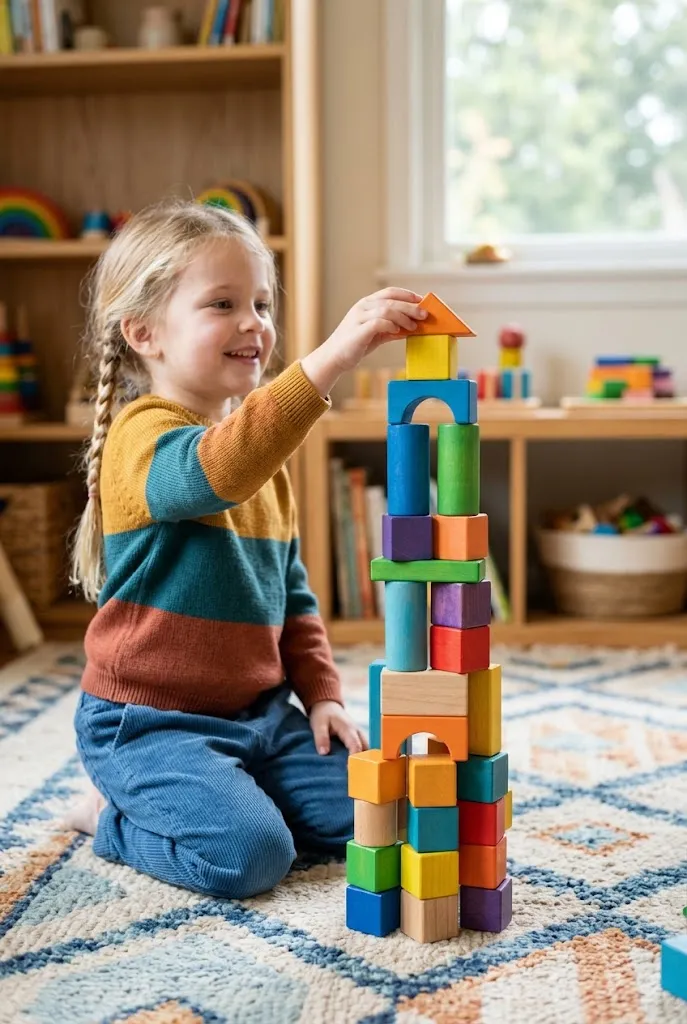
Building block towers combines creativity, coordination, and early problem-solving. Give your toddler a set of large, lightweight blocks and begin by stacking two or three pieces together.
Let your child add another block, experiment with different arrangements, and knock the tower down when it’s finished. Rebuilding is part of the fun.
You can introduce simple concepts while playing:
- Count each block as it is added.
- Compare tall and short towers.
- Identify different block colors.
- Talk about what happens when a tower becomes unstable.
The activity also introduces basic cause-and-effect relationships. Your toddler begins to notice how changing the position of one block can affect the entire structure.
Editor’s Note: Allow your toddler to experiment rather than correcting every uneven tower. The process of trying different arrangements is valuable learning.
3. Finger Painting With Washable Paint
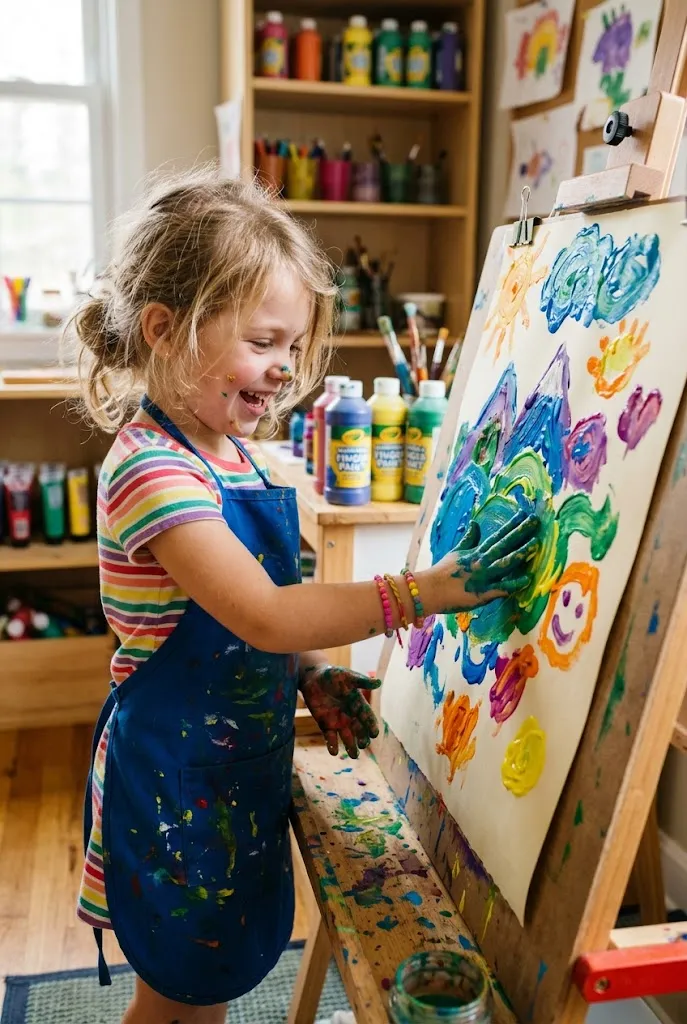
Finger painting gives toddlers an opportunity to explore color, texture, and creative expression. Cover a child-sized table with a washable protective surface and provide large sheets of paper along with non-toxic, age-appropriate washable finger paint.
Show your child how to make dots, lines, circles, and gentle swirls using their fingers. You can also demonstrate how two colors blend together.
Try these simple variations:
- Make handprints using washable paint.
- Create colorful dots with fingertips.
- Spread paint across paper using broad hand movements.
- Experiment with two colors at a time.
Don’t worry about creating recognizable pictures. At this age, exploring the materials is often more important than producing a finished artwork.
Safety Note: Use products specifically labeled for young children, supervise closely, and prevent paint from entering the mouth or eyes.
4. Read Interactive Picture Books Together
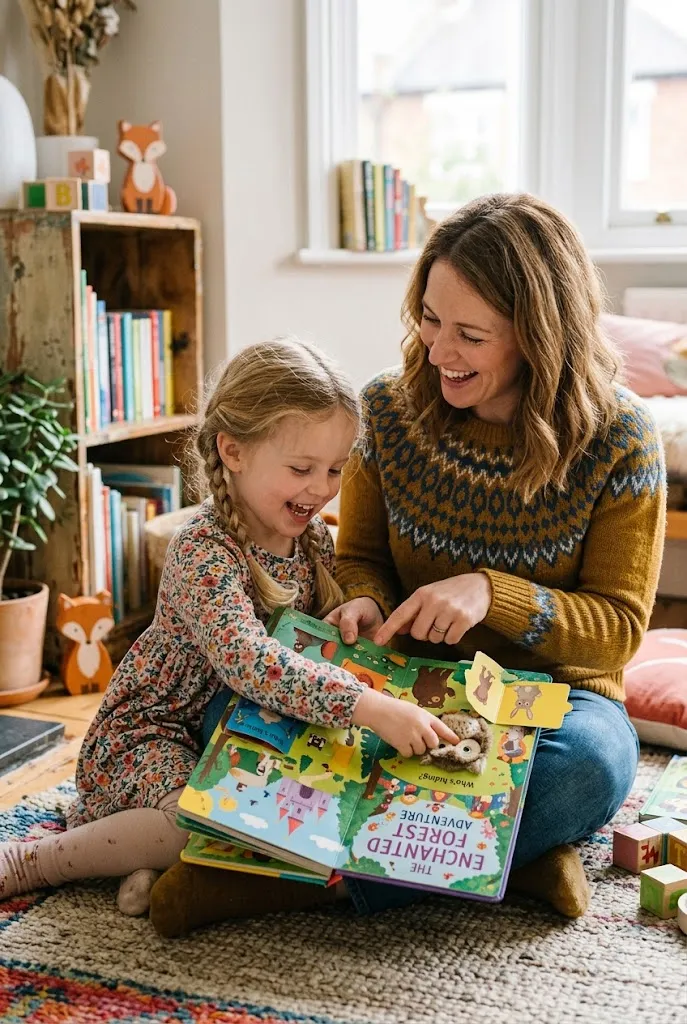
Reading together is one of the simplest ways to encourage early language development. Choose sturdy board books featuring familiar objects, animals, vehicles, foods, or everyday activities.
Instead of reading every sentence from beginning to end, pause to explore the pictures. Ask your toddler to point to a familiar animal or find something red on the page.
For example:
- Open a page showing several animals.
- Point to one animal and say its name.
- Invite your toddler to find another animal.
- Make simple animal sounds together.
- Repeat familiar words throughout the story.
Allow your child to turn pages, point at pictures, and revisit favorite books.
Quick Tip: Repeatedly reading a favorite book is perfectly fine. Familiar stories give toddlers more opportunities to recognize words and participate.
5. Match Shapes With a Wooden Shape Sorter
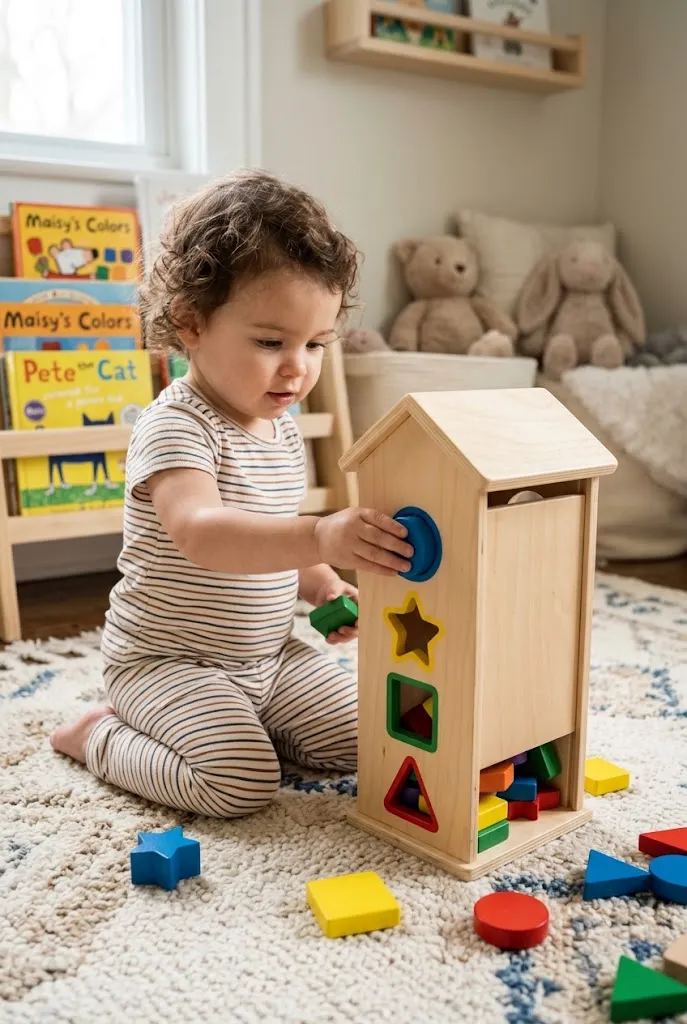
Shape-sorting toys help toddlers explore how different objects fit into corresponding spaces. A wooden shape sorter with large pieces is a useful addition to a playroom or learning corner.
Begin with two or three simple shapes, such as a circle, square, and triangle. Show your toddler how to turn each piece until it fits through the correct opening.
Rather than immediately showing the answer, give your child time to experiment.
Learning opportunities include:
- Recognizing basic geometric shapes.
- Developing visual-spatial awareness.
- Practicing hand-eye coordination.
- Learning to solve simple problems.
Do: Name each shape as your child handles it.
Don’t: Turn the activity into a race. Toddlers benefit from having time to explore at their own pace.
6. Create a Sensory Bin With Large Safe Objects
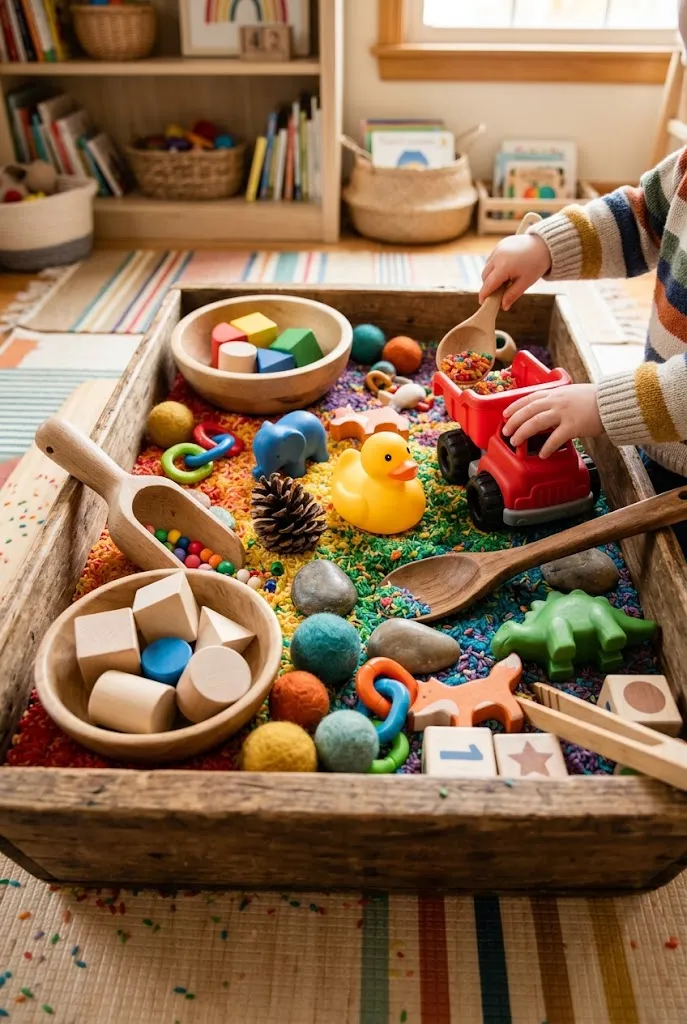
Sensory play allows toddlers to explore different textures through touch and movement. You can create a simple sensory activity using a shallow container and larger, toddler-safe objects with different surfaces.
For example, arrange large textured silicone toys, soft fabric squares, and oversized stacking cups in a low-sided bin.
Encourage your toddler to touch, pick up, compare, and move the objects from one side to another.
Try introducing descriptive words:
- Soft
- Smooth
- Bumpy
- Squishy
- Rough
These simple descriptions help connect physical experiences with language.
Important: Avoid loose rice, dry beans, water beads, buttons, beads, and other small materials for toddlers who may put objects in their mouths. Stay within arm’s reach throughout the activity.
7. Practice Counting With Toy Animals
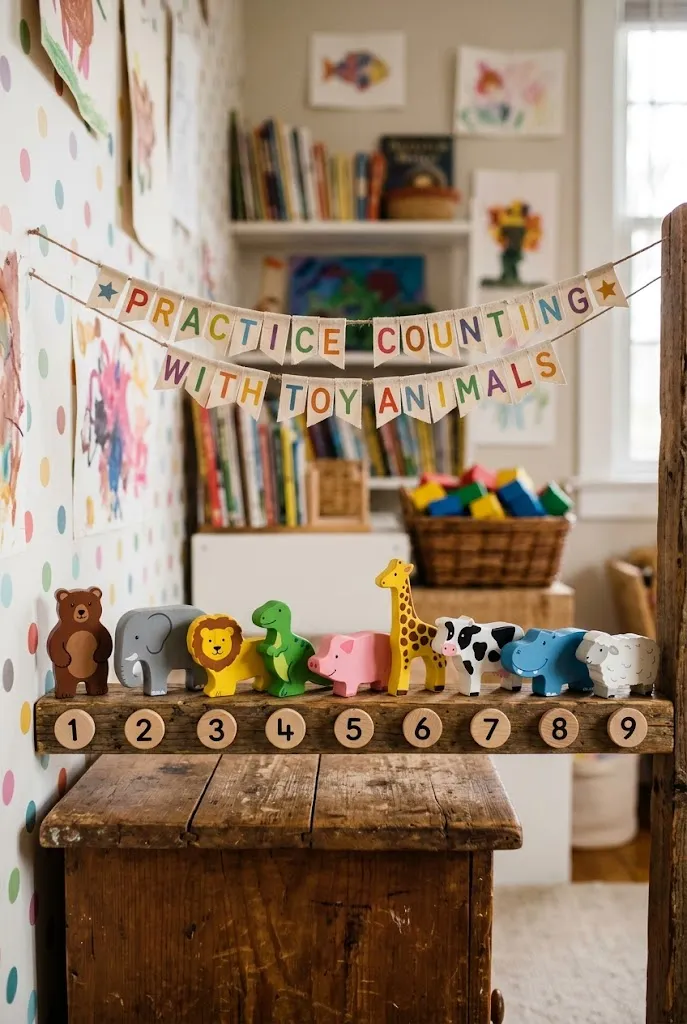
Counting becomes more engaging when toddlers can touch and move the objects they are counting. Large toy animals offer a playful introduction to numbers.
Arrange two or three animal figures on a play mat. Point to each one and count slowly together: one, two, three.
You can extend the activity by asking your toddler to:
- Find one animal.
- Give you two animals.
- Put three animals in a row, with help if needed.
- Count the animals as you move them.
Use repetition instead of expecting your child to memorize numbers immediately.
Quick Tip: Connect counting with everyday experiences, such as counting stuffed animals before bedtime or counting steps while walking together.
8. Make a Simple Pasta-Free Water Pouring Station
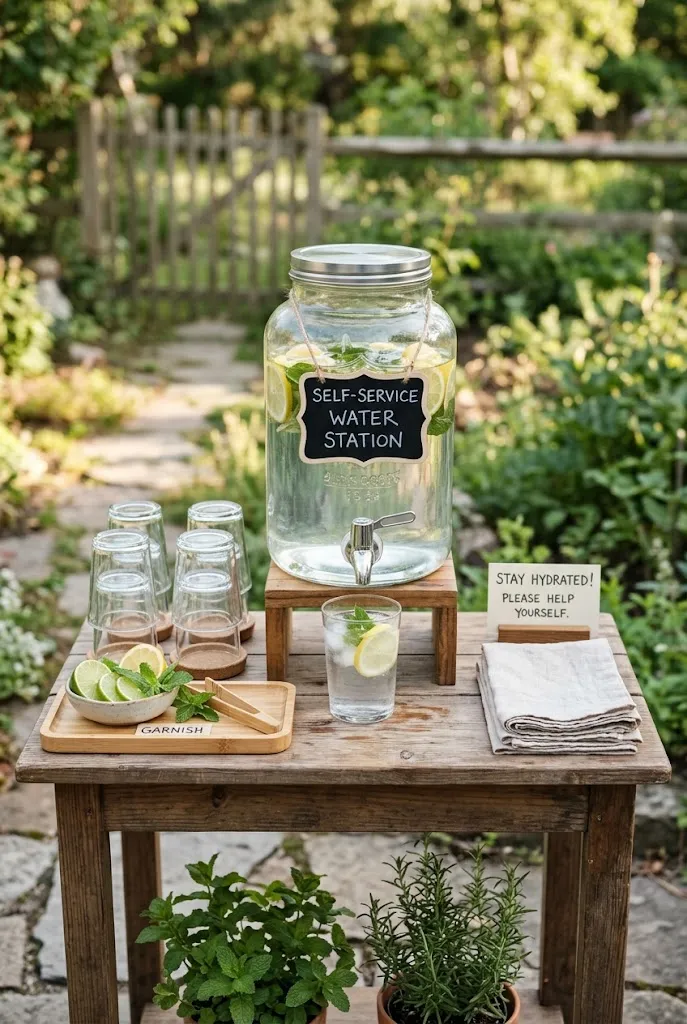
Pouring activities introduce toddlers to early concepts involving volume, movement, and coordination. A simple water station can be set up in a bathroom or another easy-to-clean area.
Use a shallow basin containing only a small amount of water, along with large unbreakable cups and child-safe scoops. Sit beside your toddler and demonstrate transferring water from one container to another.
Introduce simple comparisons:
- Full and empty.
- More and less.
- Wet and dry.
- Pour and stop.
The goal isn’t to complete a particular task. Let your toddler explore how water moves between containers.
Safety Note: Water play requires continuous, close adult supervision. Keep the activity shallow, stay within arm’s reach, and empty the basin immediately afterward. Never leave a toddler alone near water, even briefly.
9. Explore Letters With Alphabet Board Books
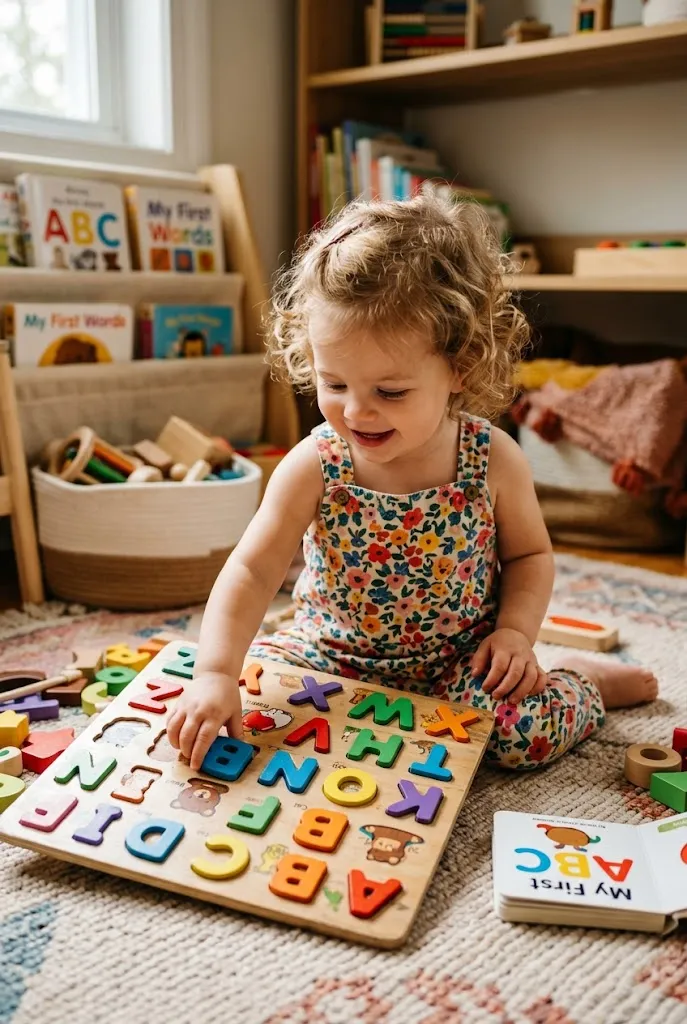
Introducing letters doesn’t need to involve worksheets or formal lessons. Alphabet board books provide an enjoyable way to become familiar with letter shapes and their associated sounds.
Choose a colorful book with one large letter and a recognizable object on each page.
As you read together, point to the letter and name the object. For example, you might say, “B is for ball.”
Keep the activity relaxed and conversational.
You can also:
- Find familiar letters in picture books.
- Sing a simple alphabet song.
- Point out letters on large household labels.
- Connect letters with familiar names when appropriate.
At this age, exposure and curiosity matter more than memorizing the entire alphabet.
10. Create a Shape Hunt Around the House
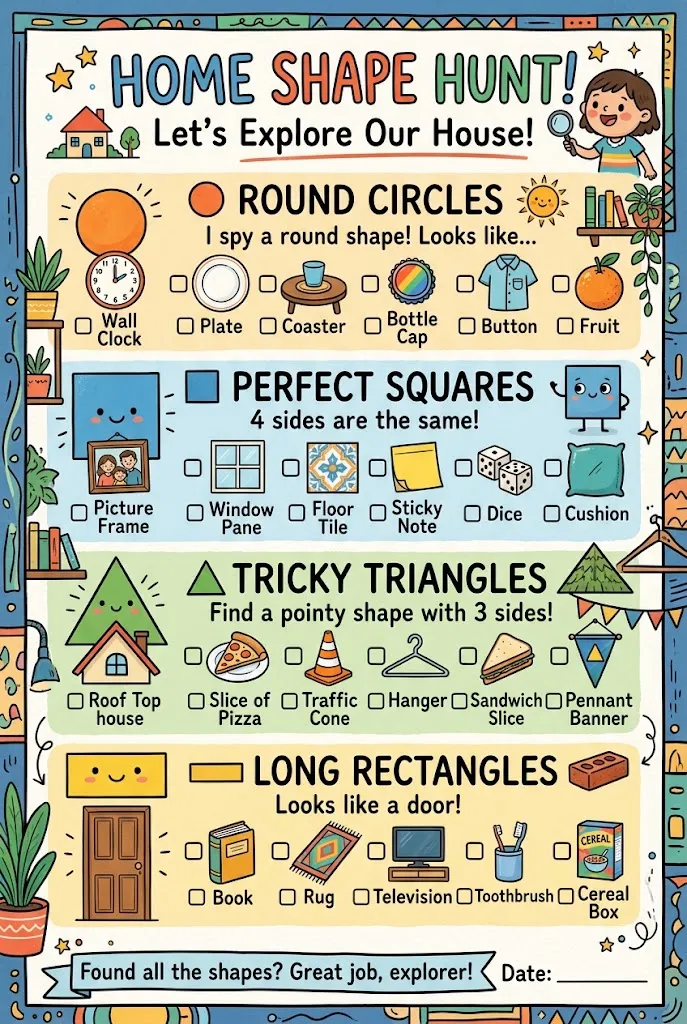
A shape hunt turns an ordinary room into an interactive learning environment. Instead of relying on flashcards, encourage your toddler to find familiar shapes in everyday surroundings.
Start with easy examples:
- A round clock.
- A square cushion.
- A rectangular book.
- A circular plate.
Walk around together and point out the shapes you discover.
As your child becomes familiar with the activity, ask questions such as, “Can you find something round?”
This encourages observation and helps toddlers connect simple learning concepts with the world around them.
Editor’s Note: Choose objects that are safe to observe without climbing, reaching toward hot surfaces, or handling fragile household items.
11. Make Homemade Playdough Creations
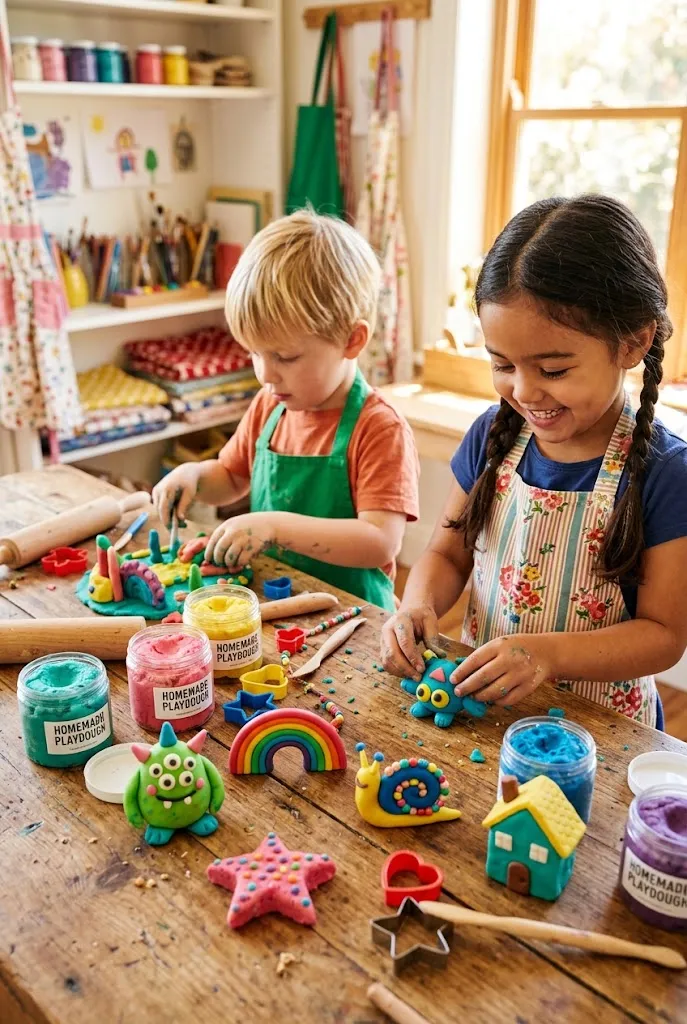
Playdough offers an engaging way for toddlers to explore texture, movement, and imagination. A child-safe, age-appropriate modeling dough can be used to make simple shapes and pretend objects.
Sit together at a small table and demonstrate how to roll a ball, flatten a piece, or make a simple snake shape.
Ideas to try:
- Roll several large dough balls.
- Flatten dough with a child-safe roller.
- Make pretend food shapes.
- Press large, safe toy shape stamps into the dough.
- Compare long and short dough pieces.
The squeezing, pressing, and rolling movements encourage hand and finger coordination.
Safety Note: Use commercially prepared non-toxic playdough suitable for your child’s age. Homemade dough may contain large amounts of salt and should not be treated as edible. Supervise closely and put materials away after play.
12. Play a Simple Animal Sound Matching Game
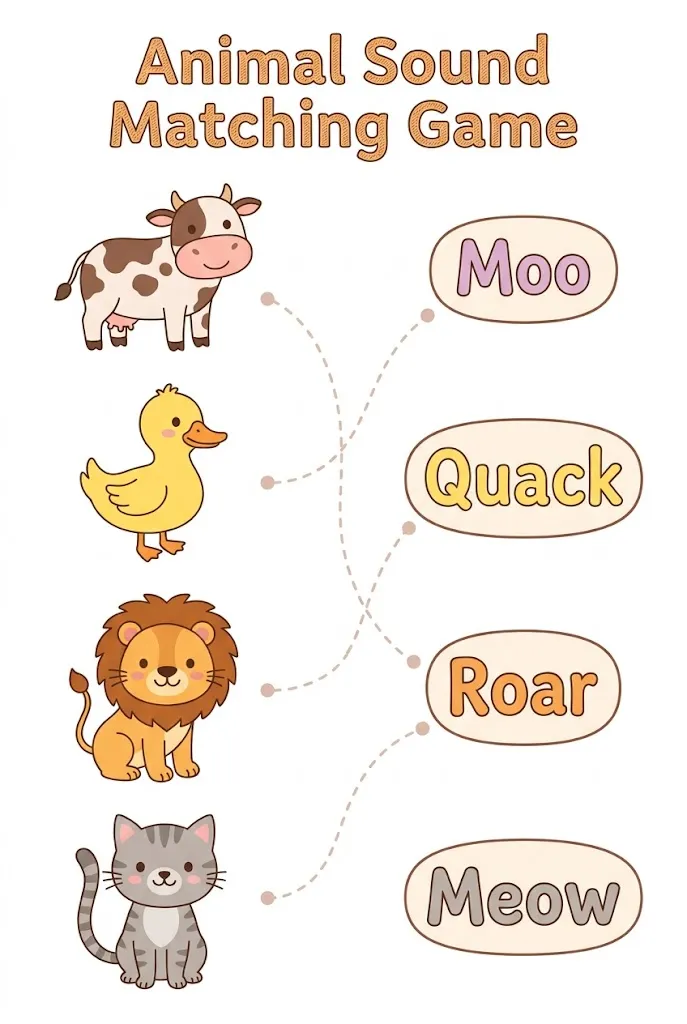
Animal sounds make language practice entertaining. Toddlers often enjoy imitating familiar sounds, especially when animals are represented through toys, books, or pictures.
Place a few large animal figures on the floor. Choose familiar animals such as a cow, dog, cat, and duck.
Point to each figure and make its sound. Then pause to give your toddler a chance to imitate you.
You can vary the activity by:
- Naming an animal.
- Making its familiar sound.
- Asking your toddler to find the matching toy.
- Repeating the game with another animal.
Even if your child responds with gestures rather than spoken words, they can still participate.
Quick Tip: Use animal sounds naturally during everyday conversations and storytime rather than treating them as a formal test.
13. Build a Toddler-Friendly Obstacle Course
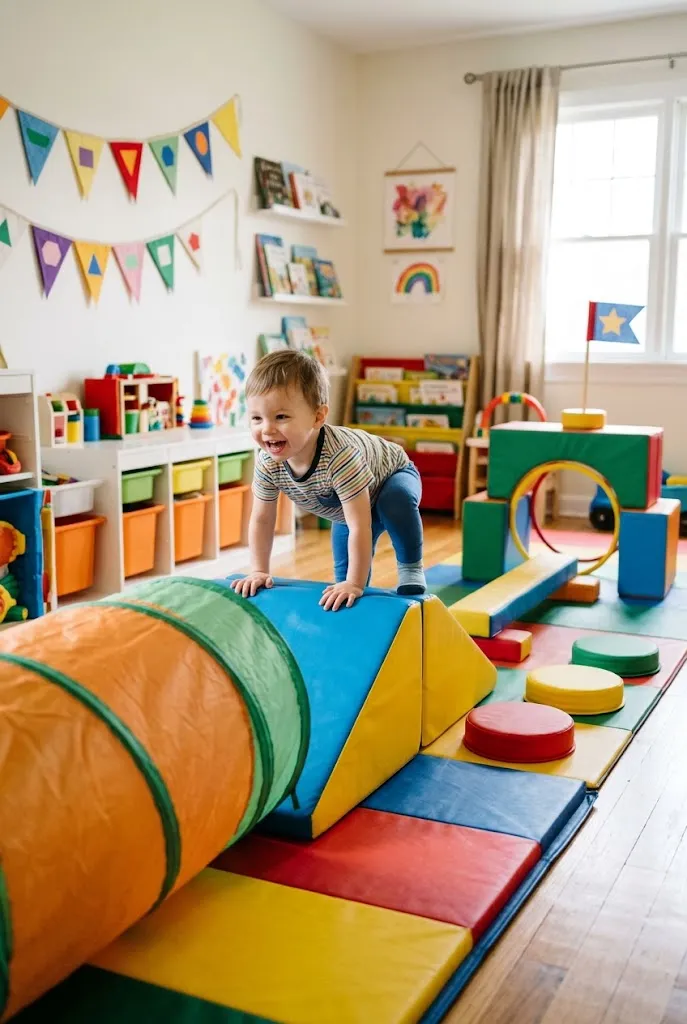
A simple obstacle course gives toddlers opportunities to practice movement, balance, and body awareness.
Use soft floor cushions, a low foam play tunnel, and a large padded mat to create a short route through a safe indoor area.
You might invite your child to:
- Walk around a cushion.
- Crawl through a play tunnel.
- Step onto a low padded mat.
- Roll a soft ball toward a target.
- Walk back to the starting point.
Keep the course simple and appropriate for your toddler’s current abilities.
Common Mistake: Making obstacles too high or complicated. The purpose is enjoyable movement, not testing how much your toddler can accomplish.
14. Try a Sticker-Free Picture Matching Game
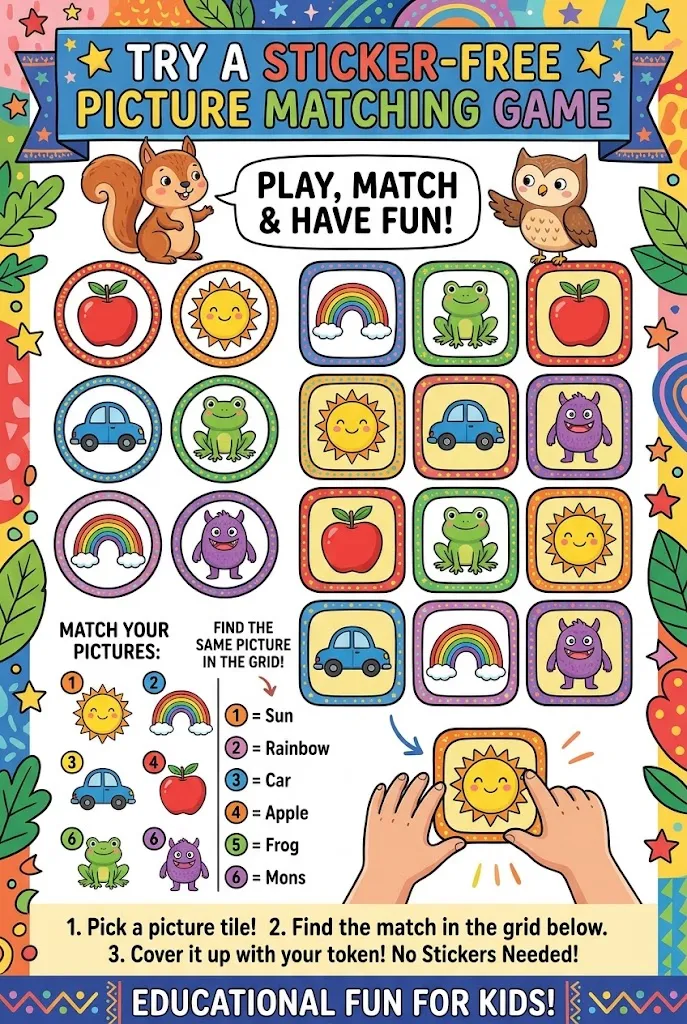
Picture matching helps toddlers notice similarities between familiar objects. Instead of small cards or stickers, use large, sturdy toddler-safe picture boards or matching books.
Place two large animal pictures in front of your child. Show a matching pair and help your toddler identify the same animal.
For example:
- Match two pictures of cats.
- Find two pictures of apples.
- Match two pictures of cars.
- Find two pictures of familiar household objects.
Start with only a couple of pairs. Add more when your toddler shows interest.
Why it works: Children practice visual attention, comparison, recognition, and early classification while interacting with familiar images.
15. Make Music With Homemade Instruments
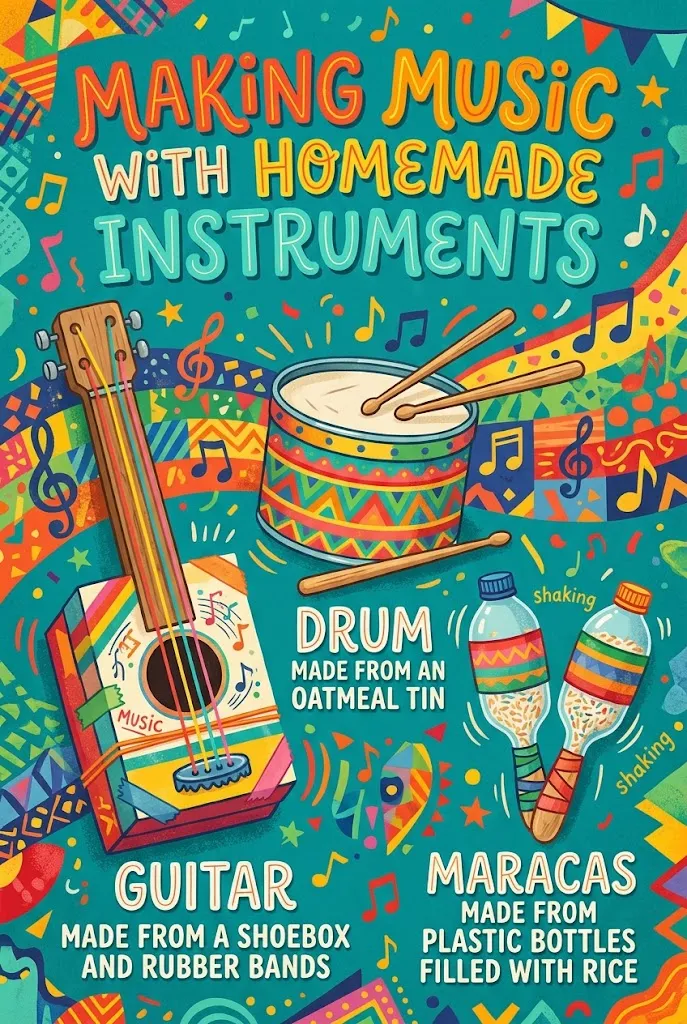
Music activities combine listening, movement, rhythm, and imitation. You don’t need a collection of expensive instruments to introduce your toddler to music.
Use age-appropriate toddler instruments such as a large hand drum, sturdy toddler xylophone, or maracas specifically designed for young children.
Play a simple rhythm and encourage your child to repeat it.
Try different variations:
- Tap slowly and then quickly.
- Make a soft rhythm followed by a louder one.
- Pause the music and begin again.
- Clap hands along with a familiar song.
Learning Benefit: These activities encourage auditory attention, rhythm recognition, coordination, and early communication.
Avoid homemade shaker containers with loose fillings or small detachable parts that could become choking hazards.
16. Practice Everyday Sorting With Laundry
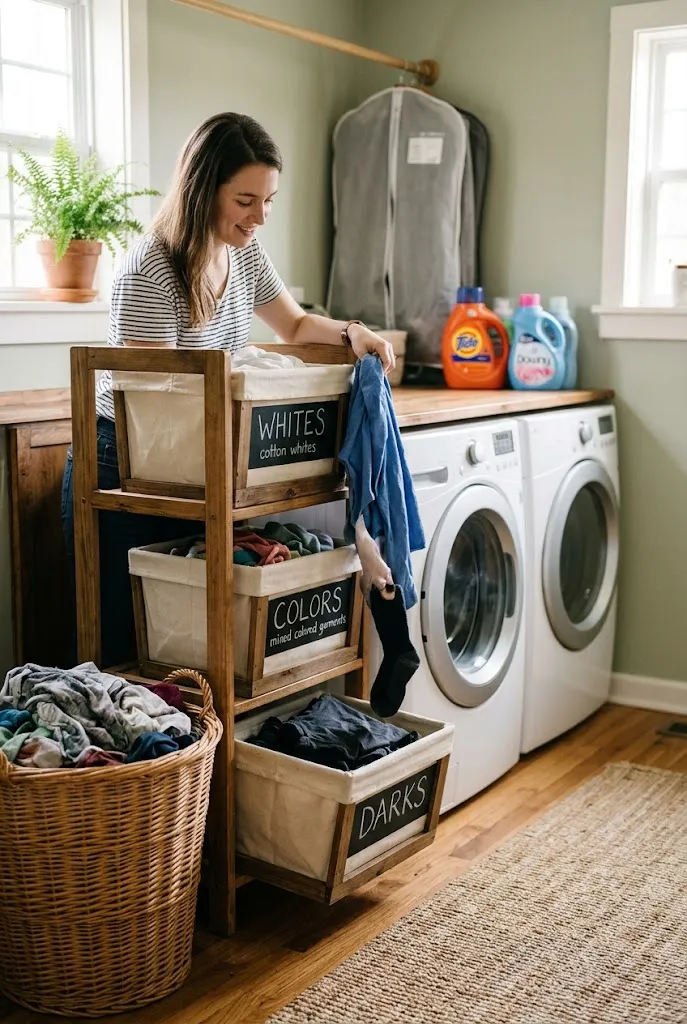
Household routines can become simple learning opportunities when toddlers are invited to participate safely.
Place a small collection of clean, large clothing items on a low surface. Ask your toddler to help sort them into two groups, such as shirts and socks.
You can introduce basic categories:
- Light and dark colors.
- Shirts and pants.
- Towels and clothing.
- Large and small garments.
Once the items are sorted, let your toddler help place them into a laundry basket.
Quick Tip: Use the activity to introduce words such as “same,” “different,” “big,” and “small.”
Keep the activity supervised, and avoid drawstrings, loose accessories, plastic bags, or items that could create entanglement risks.
17. Explore Nature With a Backyard Scavenger Hunt
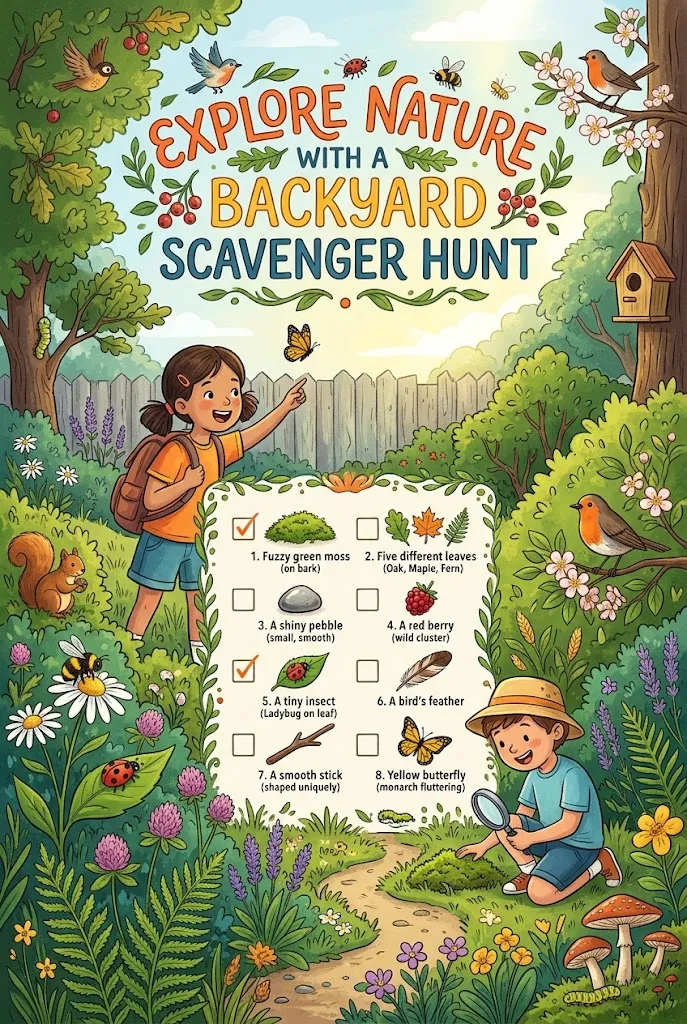
Outdoor exploration gives toddlers an opportunity to notice natural textures, colors, sounds, and shapes.
Take a short supervised walk through your backyard, garden, or local park. Instead of collecting potentially unsafe objects, invite your child to observe the surroundings.
Look for:
- A green leaf.
- A colorful flower.
- A smooth-looking stone.
- A bird in a tree.
- A large tree trunk.
- A butterfly or other insect from a safe distance.
Talk about what you see and encourage your toddler to describe familiar features.
Before heading outside: Check the area for unsafe plants, sharp objects, animal waste, insects, and other hazards. Keep children away from mushrooms and unknown plants.
18. Create a Simple Shape and Color Collage
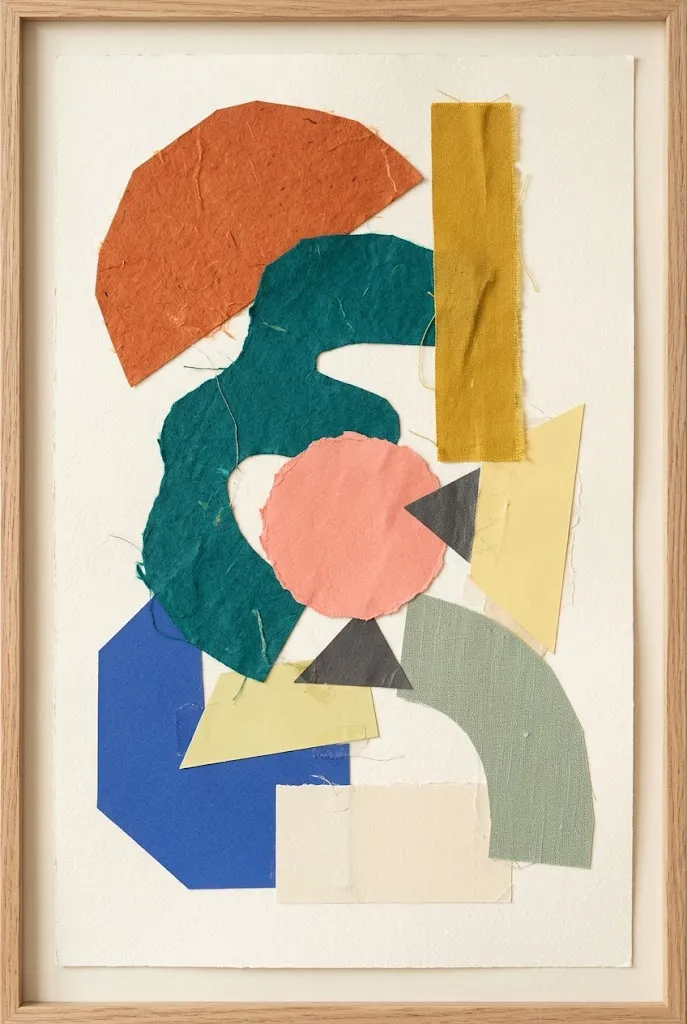
Collage-making introduces toddlers to creative arrangement and visual comparison. Use large pre-cut shapes made from child-safe paper and a large sheet of paper as the base.
Offer a small selection of shapes in different colors. Let your toddler arrange them across the paper while you name the colors and shapes.
Try these simple themes:
- A colorful garden made from large paper flowers.
- A house made from squares and rectangles.
- A pretend rainbow using broad paper strips.
- An arrangement of different colored circles.
For younger toddlers, an adult should handle scissors and apply the adhesive. Use child-safe materials and supervise closely.
The finished collage can become a cheerful decoration for a playroom or refrigerator.
19. Play With a Simple Wooden Puzzle
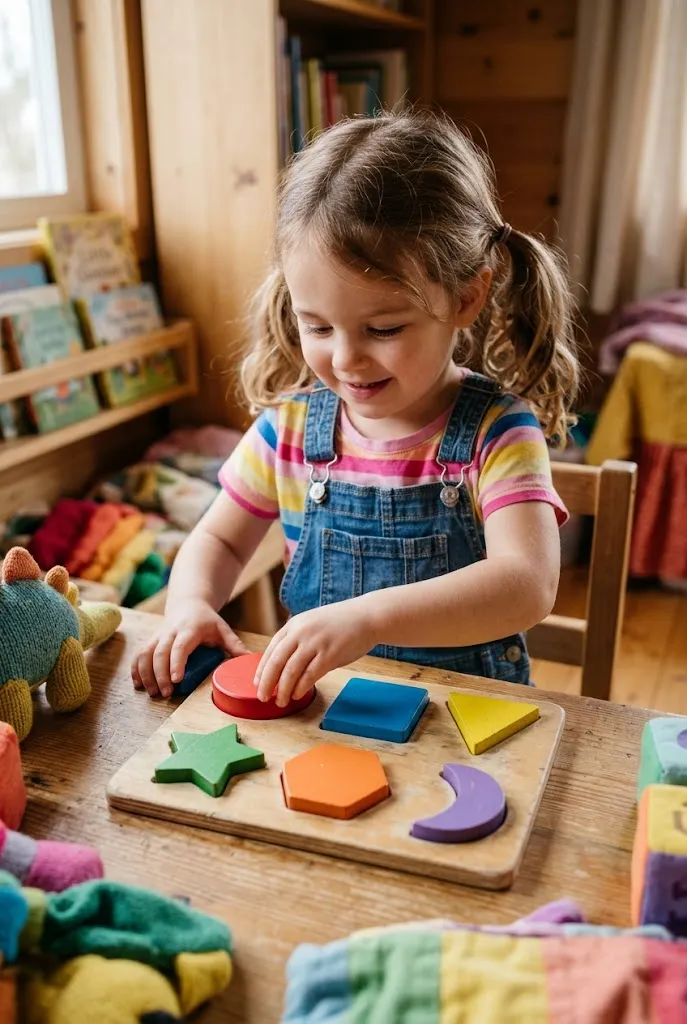
Puzzles help toddlers practice observation and problem-solving. Start with large wooden puzzles featuring familiar animals, vehicles, or everyday objects.
Choose a design with chunky pieces that are easy for small hands to grasp.
Begin by removing one or two pieces and placing them beside the board. Encourage your child to examine the matching spaces.
You can make the experience more interactive by:
- Naming each picture.
- Pointing out its colors.
- Talking about the shape of each piece.
- Offering gentle hints when needed.
Common Mistake: Choosing a puzzle with too many pieces too soon. A simpler design often makes it easier for toddlers to understand the matching process.
20. Play Pretend With a Toy Kitchen
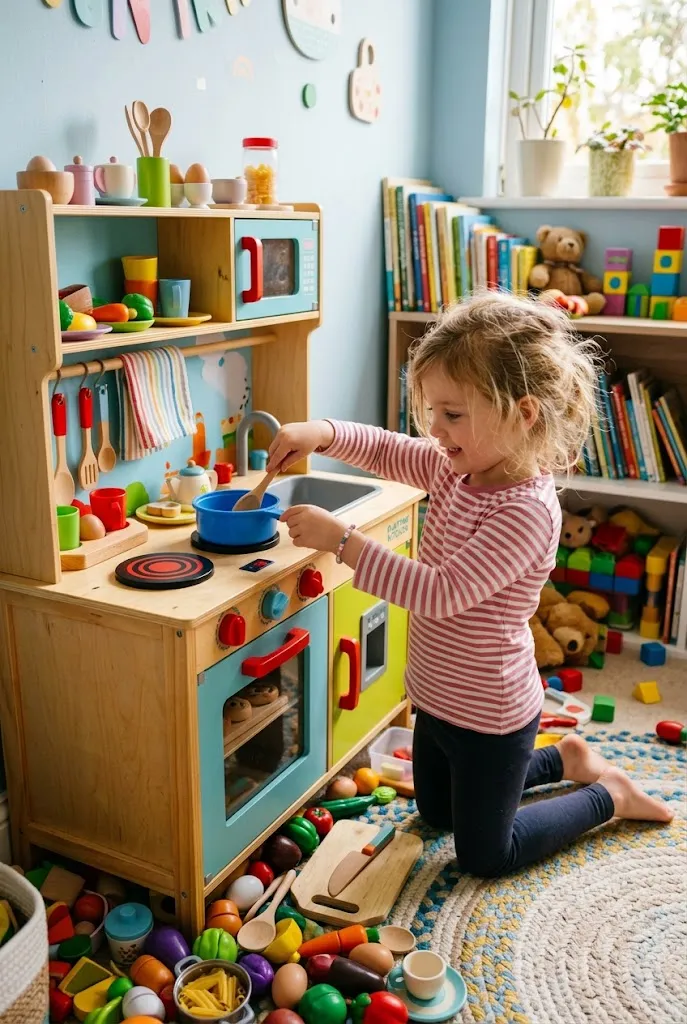
Pretend play gives toddlers opportunities to imitate familiar experiences and experiment with imagination.
A small play kitchen or a simple collection of large toy food items can become the setting for a pretend restaurant, grocery store, or family meal.
Invite your child to prepare a pretend lunch, serve food to a stuffed toy, or arrange toy vegetables on a plate.
You can encourage language by asking:
- “What are you cooking?”
- “Can I have an apple?”
- “Where is the plate?”
- “Who are you serving?”
This type of play helps toddlers practice familiar words, social interaction, and imaginative thinking.
Accessible Alternative: You don’t need a complete play kitchen. A low table, large toy food pieces, and a few sturdy play plates can create a similar opportunity.
21. Learn Body Parts With a Fun Song
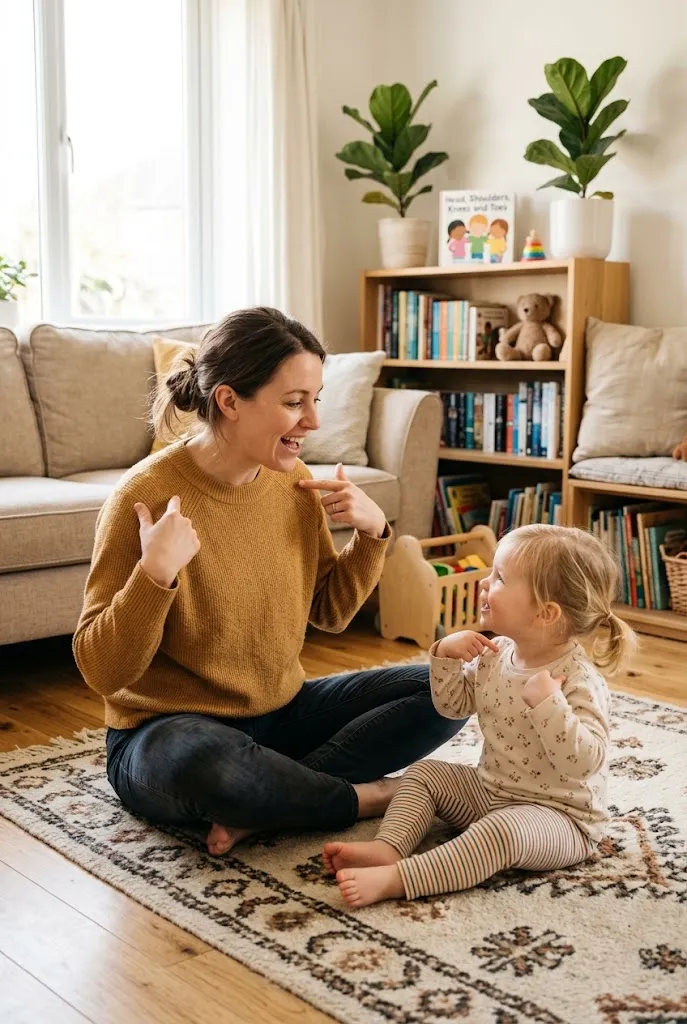
Songs that mention body parts combine music, movement, and language practice. A familiar song such as “Head, Shoulders, Knees, and Toes” can turn learning into an enjoyable interactive activity.
Sing slowly and demonstrate each movement. Invite your toddler to touch their head, shoulders, knees, or toes as the song continues.
You can introduce additional body parts during everyday routines:
- Eyes and ears while getting dressed.
- Hands and fingers during playtime.
- Feet and toes while putting on shoes.
- Nose and mouth during storytime.
Why it works: Repetition, gestures, and spoken words help toddlers connect language with physical experiences.
22. Make a Simple Toddler Art Gallery
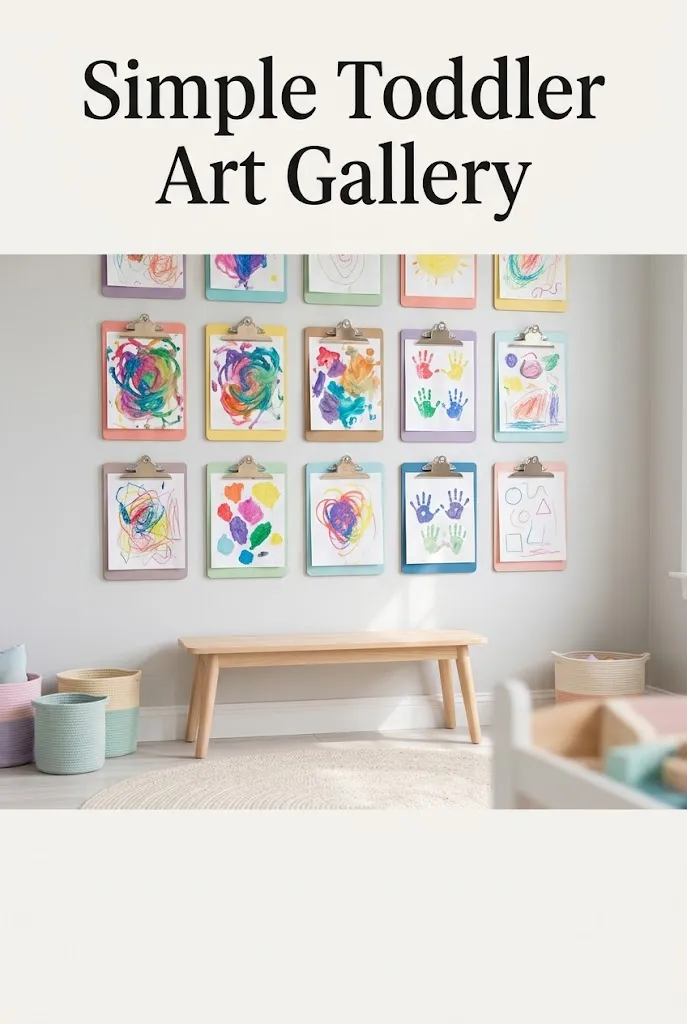
Displaying your toddler’s artwork gives creative activities an exciting sense of completion. It also provides an opportunity to talk about colors, shapes, and the process of making something.
Choose a small wall area, a child-height display board, or a few frames with shatter-resistant fronts.
Let your toddler help select which paintings or drawings to display.
Create a mini gallery with:
- Finger paintings.
- Large crayon drawings.
- Paper collages.
- Handprint artwork.
- Simple seasonal crafts.
Change the artwork occasionally so your child can see different creations displayed around the home.
Editor’s Note: The goal isn’t to judge the artwork or compare it with other children’s creations. Make the display about creativity and participation.
23. Try a Ball Rolling and Catching Game
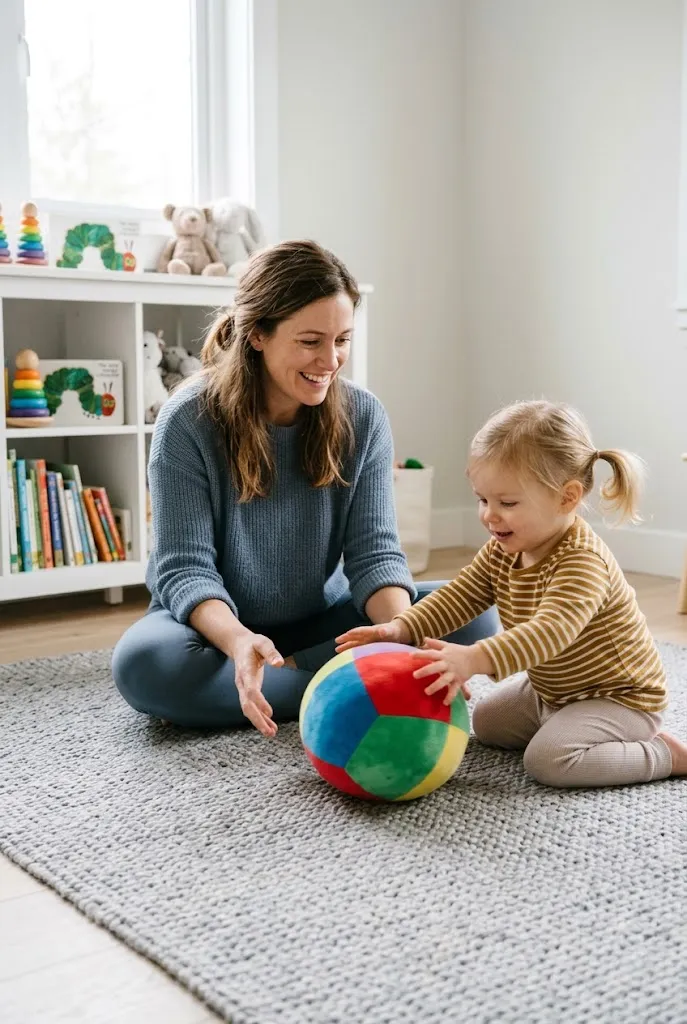
A soft ball provides a simple way to practice movement, coordination, and turn-taking.
Sit facing your toddler with enough open floor space between you. Roll a large, lightweight ball slowly toward your child and encourage them to roll it back.
Once your toddler understands the activity, introduce different variations:
- Roll the ball slowly.
- Roll it toward a nearby target.
- Take turns pushing it back and forth.
- Practice gentle kicking in an open area.
You can also introduce words such as “stop,” “go,” “fast,” and “slow.”
Choose a soft, appropriately sized ball rather than a small ball that could be a choking hazard.
24. Practice Matching Socks and Shoes
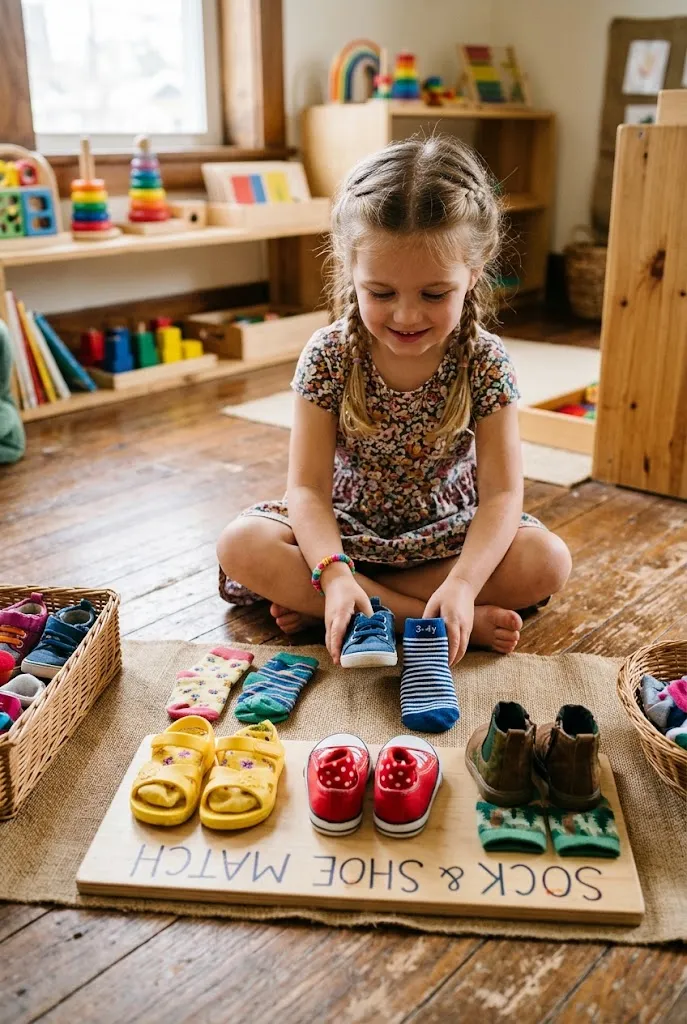
Getting dressed can become an enjoyable learning opportunity when toddlers are encouraged to participate.
Place a few pairs of clean, familiar toddler socks or shoes on a low surface. Ask your child to find two that belong together.
Start with matching identical colors and patterns. Later, you can introduce slightly different designs.
Simple ways to extend the activity:
- Find two matching socks.
- Match shoes from the same pair.
- Compare large and small clothing items.
- Sort shoes by color.
- Place matching pairs in a basket.
This activity encourages visual recognition, categorization, and growing independence.
Quick Tip: Let your child make mistakes and try again. Gentle encouragement is more useful than immediately correcting every selection.
25. Go on a Mini Grocery Store Pretend Adventure
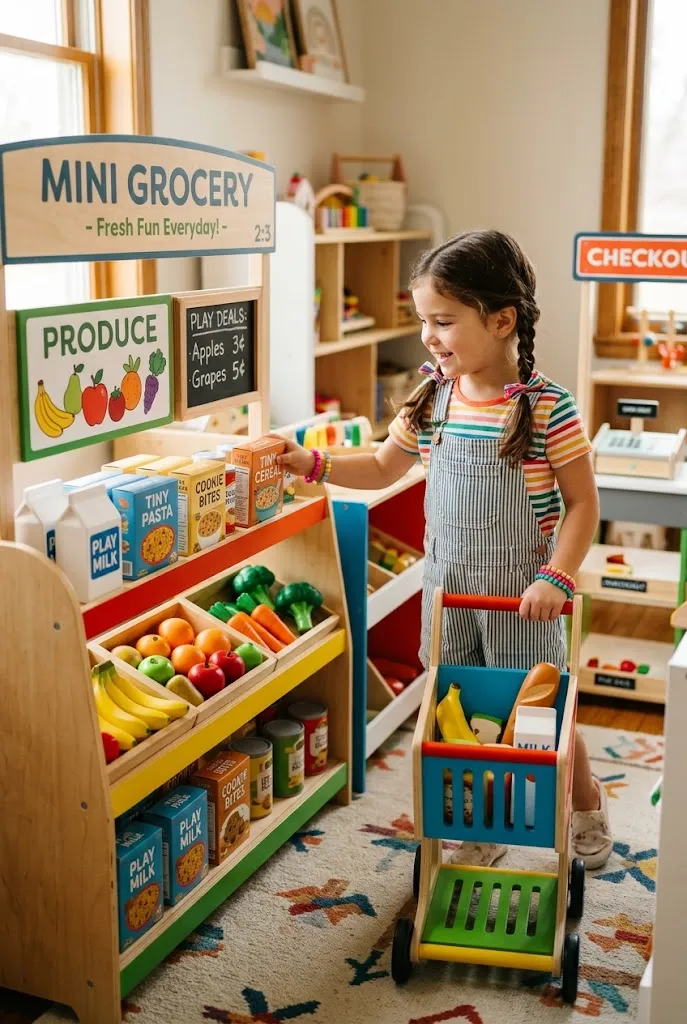
A pretend grocery store gives toddlers a playful introduction to everyday vocabulary, sorting, and social interaction.
Arrange a few large, safe toy food items on a low table. Give your child a sturdy toy shopping basket and invite them to choose what they would like to buy.
You can take turns being the shopper and cashier.
Try asking:
- “Can you find an apple?”
- “What would you like to buy?”
- “Where should the fruit go?”
- “Can you put the food in the basket?”
As your child becomes familiar with the game, introduce simple pretend transactions using imaginary exchanges rather than small coins or loose objects.
Budget-Friendly Variation: Use large toy food items you already own and a sturdy household basket. A full toy supermarket isn’t necessary.
How to Make Toddler Learning Activities More Enjoyable
For more inspiration, explore these fun learning activities for toddlers from Oxford Owl. You’ll discover additional ideas for reading, singing, painting, and hands-on play that can support your toddler’s early learning and development.
A few simple habits can make playtime more meaningful.
Follow Your Toddler’s Interests
Notice which activities attract your child’s attention. Some toddlers enjoy building towers, while others prefer books, music, pretend play, or outdoor exploration.
Use those interests as a starting point for introducing new experiences.
Keep Activities Short and Flexible
Toddlers have different attention spans. One child might enjoy a puzzle for several minutes, while another may move between activities quickly.
There’s no need to finish every activity. Let your toddler take breaks and return when interested.
Talk During Everyday Activities
Learning doesn’t happen only at a play table. You can introduce new vocabulary while preparing meals, getting dressed, putting away toys, or taking a walk.
Describe what you’re doing using simple, familiar language.
Encourage Independence
Allow your toddler to make small choices, attempt simple tasks, and explore materials safely.
For example, offer two books and let your child choose which one to read. Small opportunities like these encourage participation and confidence.
Choose Age-Appropriate Materials
Select toys and supplies that are appropriate for your child’s age and developmental abilities. Check for small detachable pieces, sharp edges, loose cords, and damaged materials.
Active adult supervision is especially important during sensory play, water activities, art projects, and outdoor exploration.
Simple Toddler Learning Activities: What Skills Do They Encourage?
Different activities offer different opportunities for learning. Here’s a quick reference to help you choose what to try.
| Activity Type | Skills Practiced | Examples |
|---|---|---|
| Language activities | Vocabulary and communication | Books, songs, animal sounds |
| Fine motor activities | Hand and finger coordination | Puzzles, blocks, playdough |
| Sensory activities | Exploring textures and materials | Sensory bins, water play |
| Early math activities | Counting and comparing | Sorting, stacking, matching |
| Creative activities | Imagination and expression | Painting, collages, pretend play |
| Gross motor activities | Movement and coordination | Ball games, obstacle courses |
Remember that these categories overlap. A toddler building a block tower may simultaneously practice counting, coordination, language, and problem-solving.
Frequently Asked Questions
1. What are the best learning activities for toddlers at home?
Some excellent options include block building, color sorting, interactive reading, shape puzzles, pretend play, finger painting, and simple counting games. These activities use familiar materials and encourage toddlers to explore through play.
2. How can I teach my 2-year-old at home?
Use everyday experiences to introduce basic concepts. Read picture books, sing songs, identify colors, count toys, sort household items, and encourage simple pretend play. Keep activities relaxed and follow your child’s interests.
3. How long should a toddler spend on learning activities?
There is no single ideal duration for every activity. Follow your toddler’s attention and interest rather than expecting them to sit through a fixed lesson. Short, enjoyable play sessions can be repeated throughout the day.
4. Are household items good for toddler learning activities?
Yes. Large plastic cups, sturdy containers, soft fabrics, board books, and age-appropriate kitchen play items can provide useful learning opportunities. Always check materials for choking, sharp-edge, and other safety hazards before introducing them.
5. What skills do toddlers develop through play?
Play offers opportunities to practice communication, coordination, creativity, social interaction, problem-solving, and early thinking skills. Different activities encourage different abilities, and children develop at their own pace.
A Little Play Can Create Meaningful Learning Opportunities
You don’t need an elaborate preschool setup to make learning part of your toddler’s day. Simple experiences such as reading a favorite book, building a block tower, sorting colorful toys, or singing together can encourage curiosity and exploration.
Parents looking for more educational resources and learning inspiration can also visit Education STZ to explore additional educational information and resources.
Start with one or two activities that match your child’s interests and use materials you already have at home. Let your toddler experiment, make choices, and enjoy the process without worrying about creating perfect results.
Most importantly, remember that play is not just something toddlers do between lessons. It’s one of the ways they discover, communicate, and make sense of the world around them.