22 Macrame Wall Hanging DIY Ideas for a Cozy and Stylish Home
Macrame wall hangings are an easy way to bring texture and handmade character into a room without taking up valuable floor space. With knotted cotton cord, a simple wooden dowel, and a little creativity, you can create everything from small minimalist pieces to large statement designs.
The beauty of macrame is its versatility. A simple neutral hanging can soften a modern bedroom, while layered knots, fringe, beads, or wooden details can give a living room a warmer boho feel. You can also adjust the size and pattern to suit an apartment, rental, hallway, nursery, or larger home.
These macrame wall hanging DIY ideas offer different shapes, textures, materials, and levels of complexity so you can choose a project that fits both your decorating style and crafting skills.
1. Classic Natural Cotton Macrame Wall Hanging

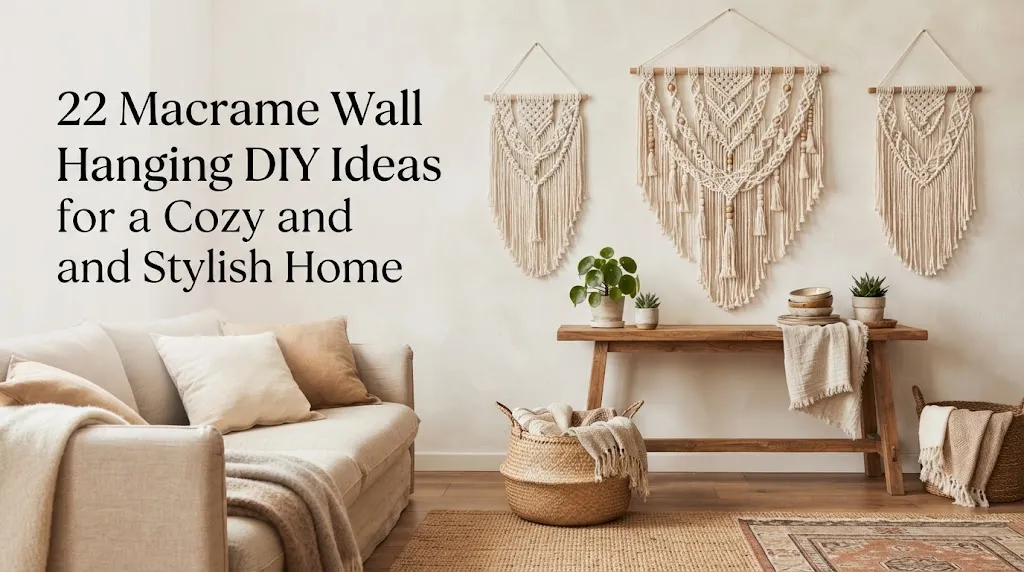
Start with the timeless version: natural cotton cord knotted onto a smooth wooden dowel. The creamy cord and warm wood combination works especially well with white walls, light wood furniture, woven baskets, and neutral textiles.
For a beginner project, keep the pattern relatively simple and let the natural fringe create the visual interest. A medium-sized design can become a focal point above a console table, dresser, or reading chair.
Quick Tip: Comb the finished fringe with a wide-tooth comb before trimming it so the strands separate evenly.
2. Large Statement Macrame for a Blank Wall

A large macrame piece can fill an otherwise empty wall without requiring multiple decorations. Choose a wider dowel and create several rows of knots that gradually become more elaborate toward the bottom.
This approach works particularly well behind a sofa, bed, or large entryway bench. Keep the surrounding decor restrained so the handcrafted piece remains the main focal point.
Common Mistake: Making a large wall hanging too narrow for the wall.
Better Approach: Scale the width to the furniture beneath it so the composition feels intentional.
3. Minimalist Macrame Wall Hanging
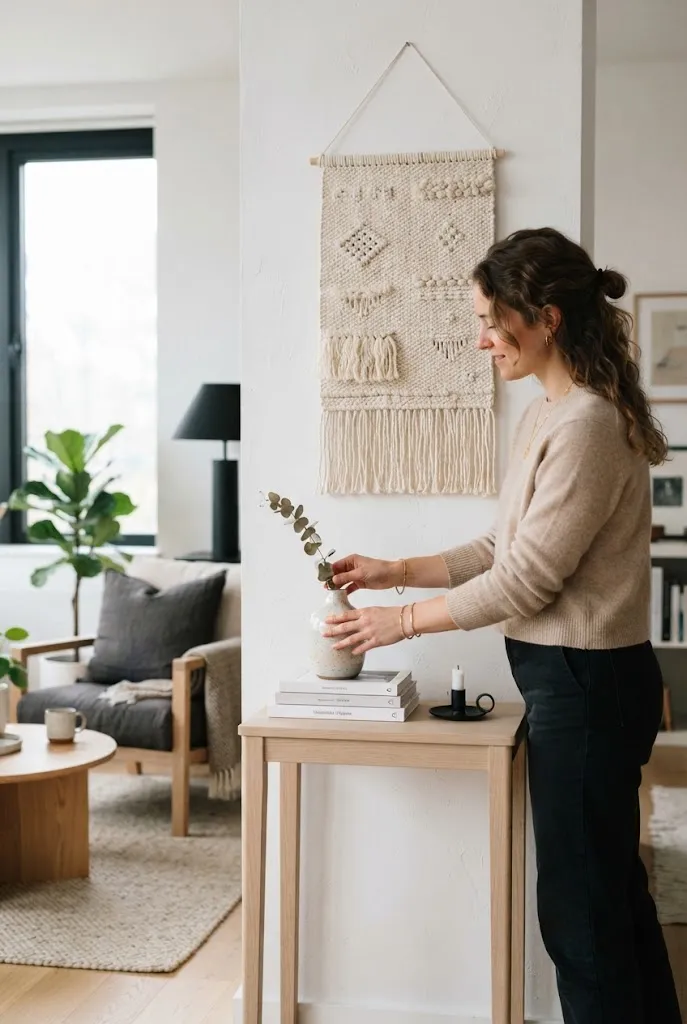
For a modern home, simplify the design rather than filling the entire dowel with complicated knots. Use a small number of clean knot patterns and leave generous negative space around the design.
A minimalist hanging looks especially polished with modern furniture, white walls, pale oak, black accents, and simple ceramics.
4. Boho Macrame With Long Fringe

Long fringe immediately gives macrame a relaxed bohemian character. Let the strands fall well below the main knotted section and vary the lengths for a softer silhouette.
Pair it with rattan furniture, woven baskets, houseplants, textured pillows, and warm wood for a cohesive boho-inspired room.
Tips & Tricks
- Use sturdy cotton cord for longer fringe.
- Brush the strands before cutting.
- Keep the surrounding wall relatively uncluttered.
- Use warm neutrals for a softer appearance.
5. Macrame With Wooden Beads
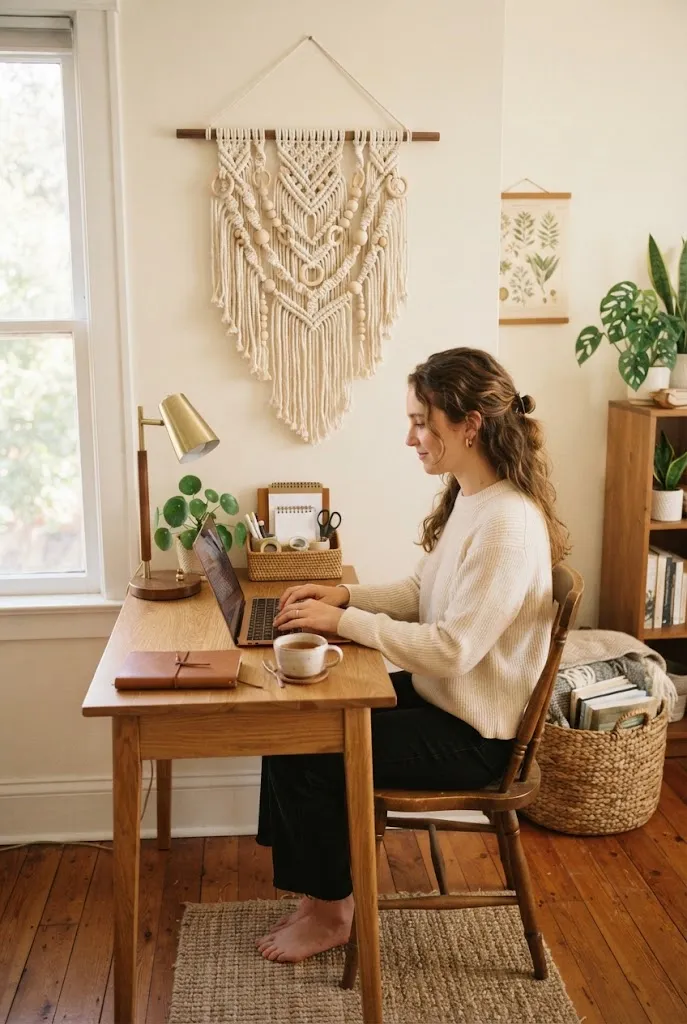
Wooden beads can add subtle visual rhythm to a traditional knot pattern. Choose unfinished or lightly stained beads if you want an earthy appearance, or darker wood for stronger contrast.
This style works nicely in bedrooms, nurseries, home offices, and relaxed living spaces.
6. Macrame Plant Hanger Wall Display
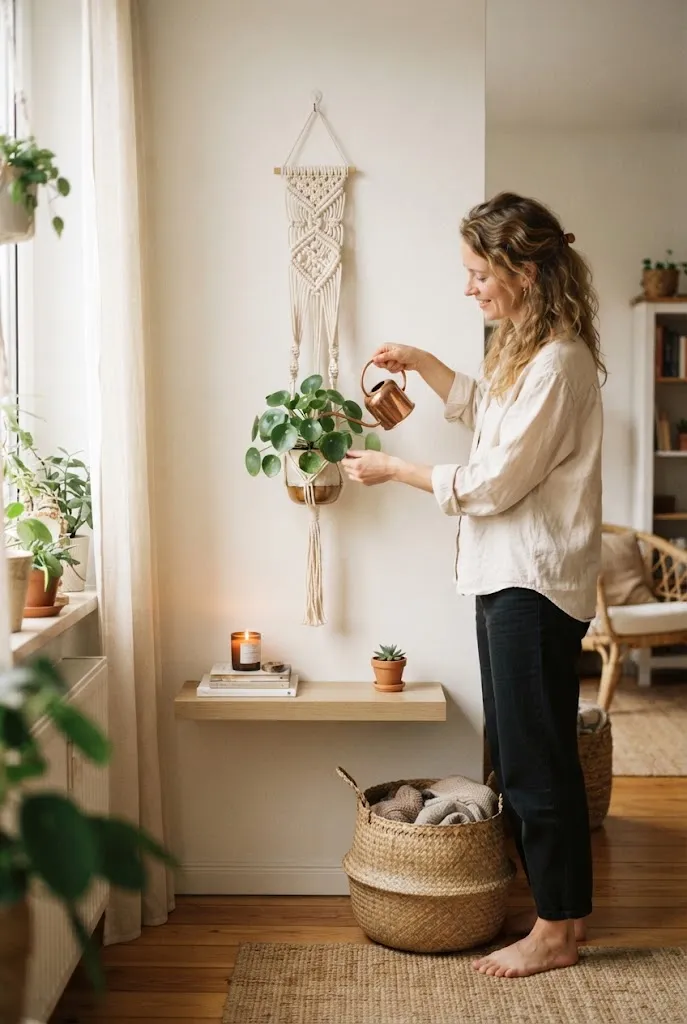
Combine macrame with greenery by creating a wall-mounted display around a hanging plant. The fibers add warmth while the leaves provide a natural contrast.
Use a lightweight planter and make sure the wall hardware is appropriate for the weight of the planter and plant.
Quick Tip: Choose plants according to the actual light available rather than selecting one based only on appearance.
7. Layered Macrame Wall Art
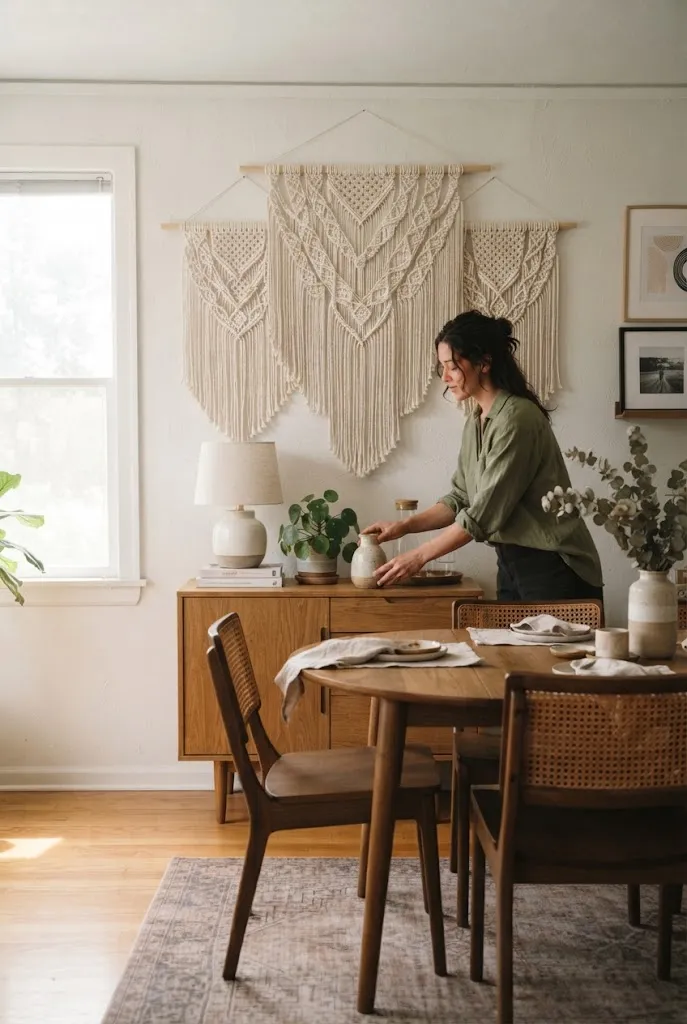
Instead of making one complicated piece, combine two or three smaller macrame hangings at slightly different heights.
The layered approach creates movement while allowing each piece to remain relatively simple. Keep a common color palette so the collection feels connected rather than chaotic.
8. Geometric Macrame Wall Art
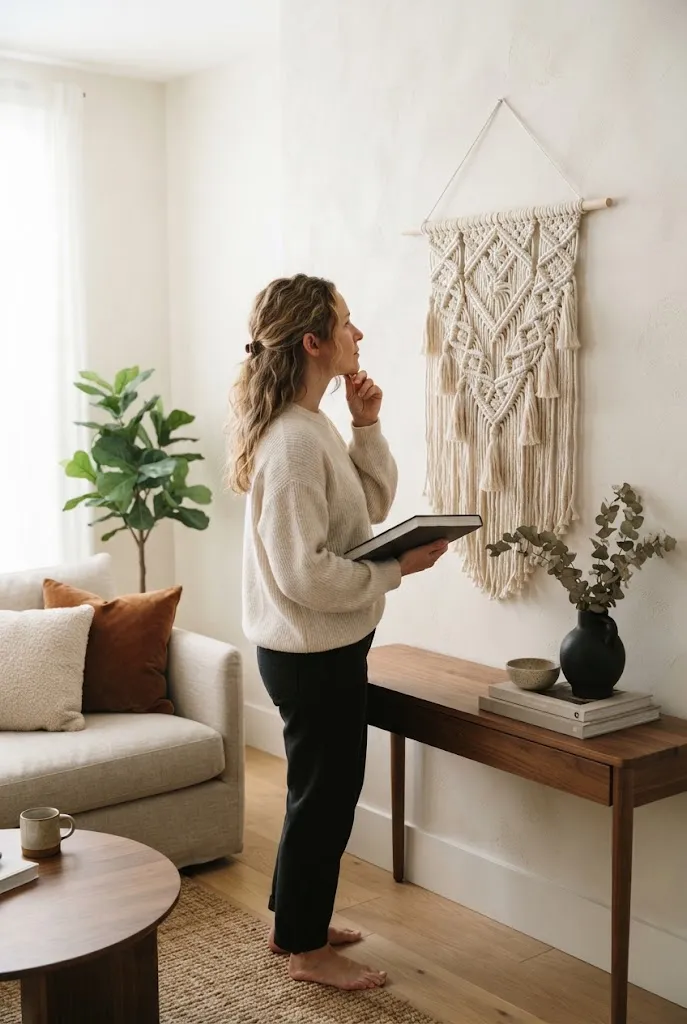
Geometric knot patterns create a more structured appearance than traditional flowing designs. Use repeated diamonds, triangles, lines, and symmetrical sections to build the pattern.
This version is a good fit for contemporary spaces where you want handmade texture without an overly rustic look.
9. Small Macrame Accent Piece

Not every project needs to cover an entire wall. A small macrame hanging can fill a narrow section beside a doorway, above a nightstand, or between two larger pieces of furniture.
Its smaller scale also makes it a practical starting point for someone learning basic macrame knots.
10. Rainbow-Inspired Macrame Wall Hanging

A rainbow silhouette gives traditional macrame a playful update. Use several curved rows of different neutral or muted colors, then finish each section with carefully trimmed fringe.
This idea can work especially well in a nursery, playroom, craft room, or cheerful bedroom.
11. Macrame With a Driftwood Branch
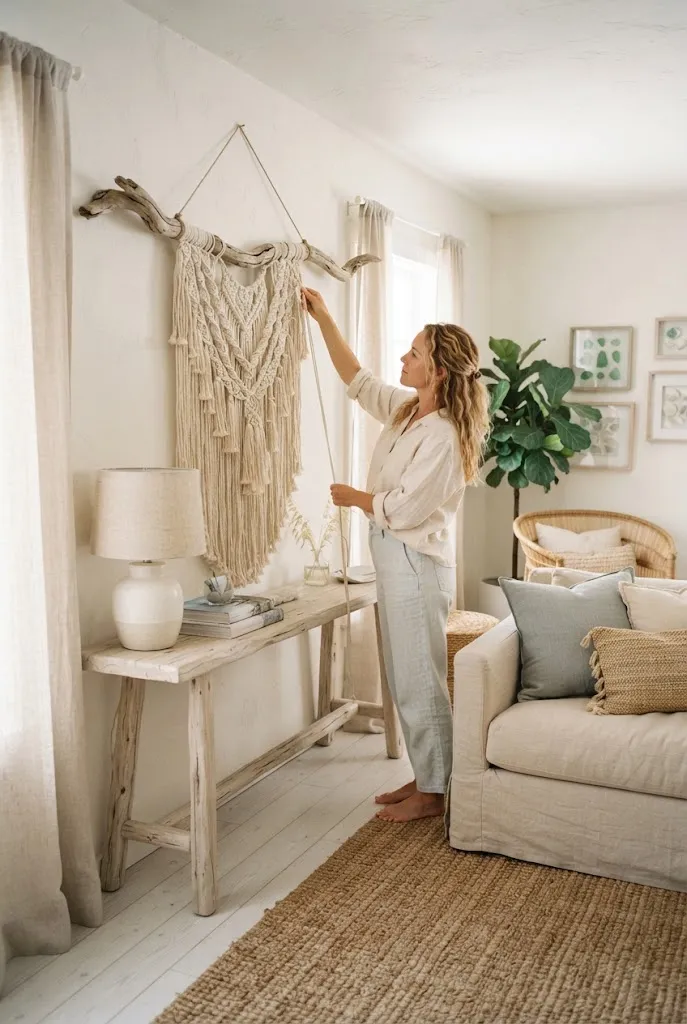
Replace the traditional dowel with a naturally shaped driftwood branch for a more organic look. The irregular wood shape gives the piece character before you even add the knots.
Choose a branch that is clean, dry, structurally sound, and suitable for securely supporting the finished piece.
Editor’s Note: The branch should complement the knotwork rather than overpower it. A relatively simple shape usually looks more intentional.
12. Two-Tone Macrame Design
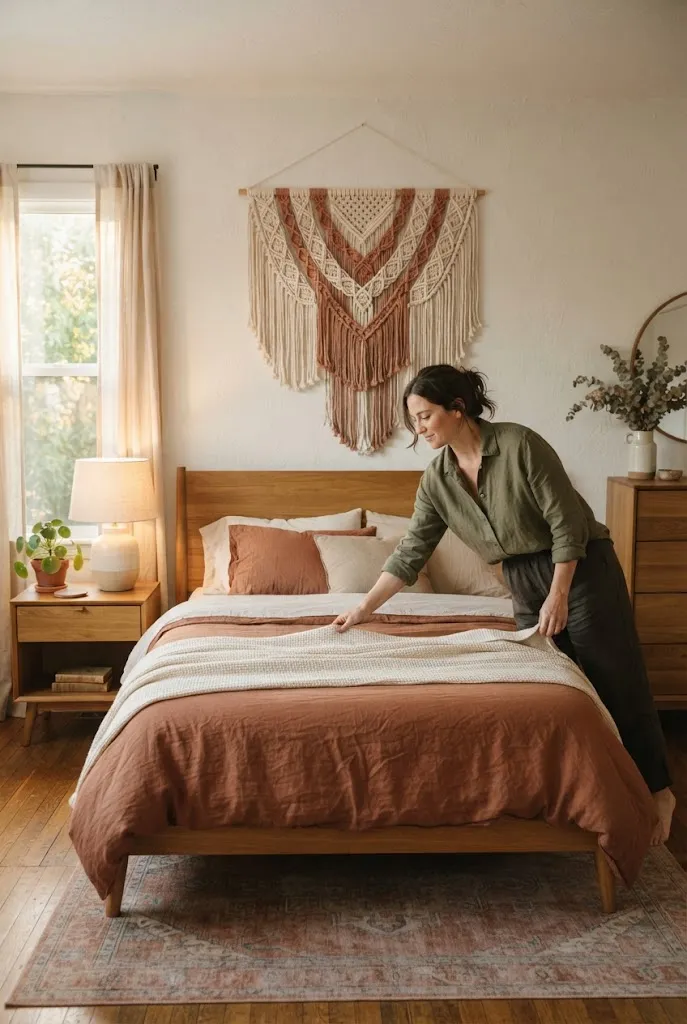
Mix two complementary cord colors instead of relying entirely on natural cotton. Cream and warm tan, ivory and muted rust, or white and soft gray can create subtle contrast.
Keep the darker color concentrated in selected sections so the pattern remains easy to read.
13. Macrame Wall Hanging With Tassels
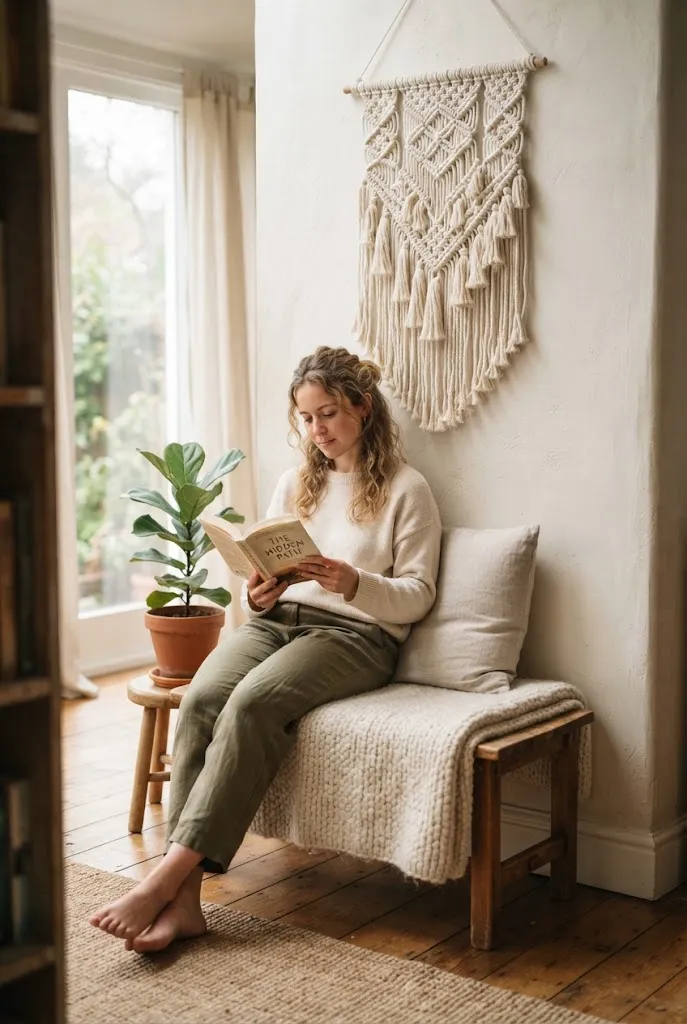
Tassels can make a simple knot pattern feel more decorative without requiring an extremely complicated design. Place them at the ends of the dowel or incorporate them into selected sections of the hanging.
For a balanced result, repeat the tassel shape consistently rather than adding too many unrelated details.
14. Macrame Above a Bedroom Headboard
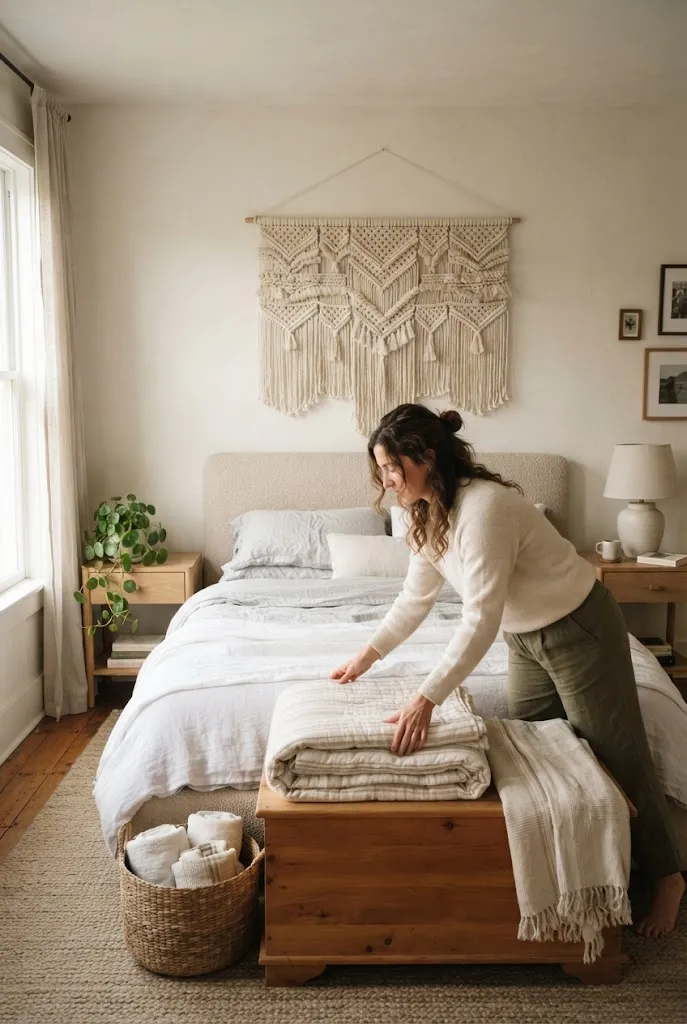
A macrame wall hanging can act as a soft decorative focal point above the bed. Choose a design that is wide enough to relate visually to the headboard without extending so far that the wall feels crowded.
A simple cream piece works beautifully with linen bedding and natural wood.
Do: Keep the hanging securely mounted.
Don’t: Position a heavy or poorly secured piece directly above where someone sleeps.
15. Macrame Entryway Statement Piece

A narrow entryway can benefit from vertical wall art that doesn’t consume floor space. Hang a medium-sized macrame piece above a slim console or bench to create a welcoming focal point.
Add only a few supporting elements such as a small lamp, bowl, or basket so the wall hanging remains visually prominent.
16. Circular Macrame Wall Hanging
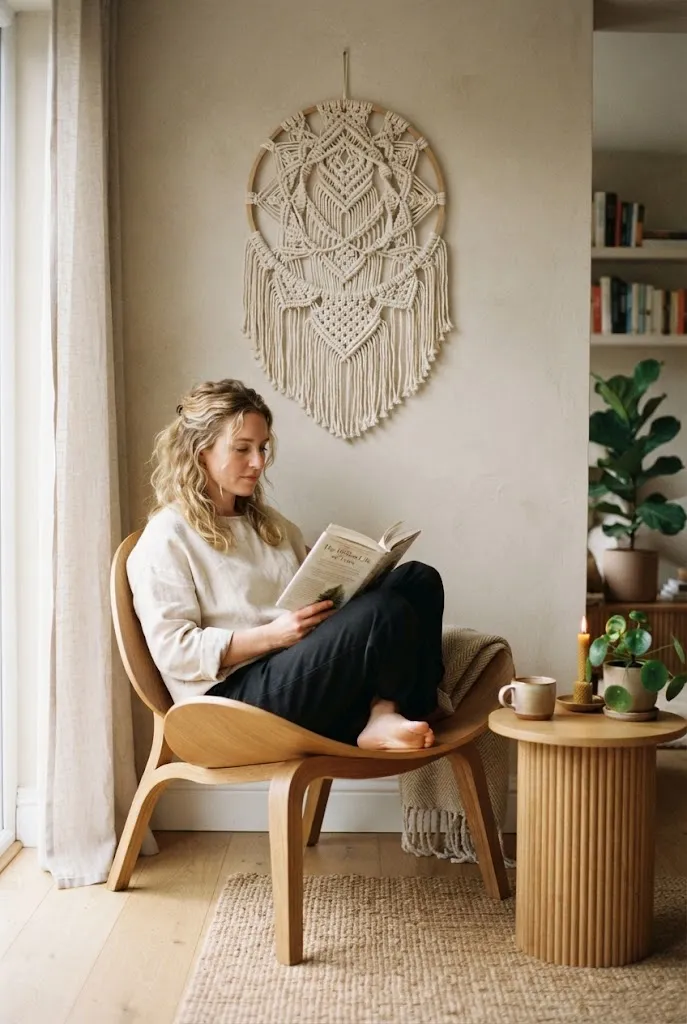
Move away from the classic rectangular silhouette with a circular design. A round frame or circular knot arrangement introduces softer lines and can work well beside angular furniture.
Keep the center relatively open if you want a lighter appearance.
17. Macrame Wall Hanging With Wooden Dowels
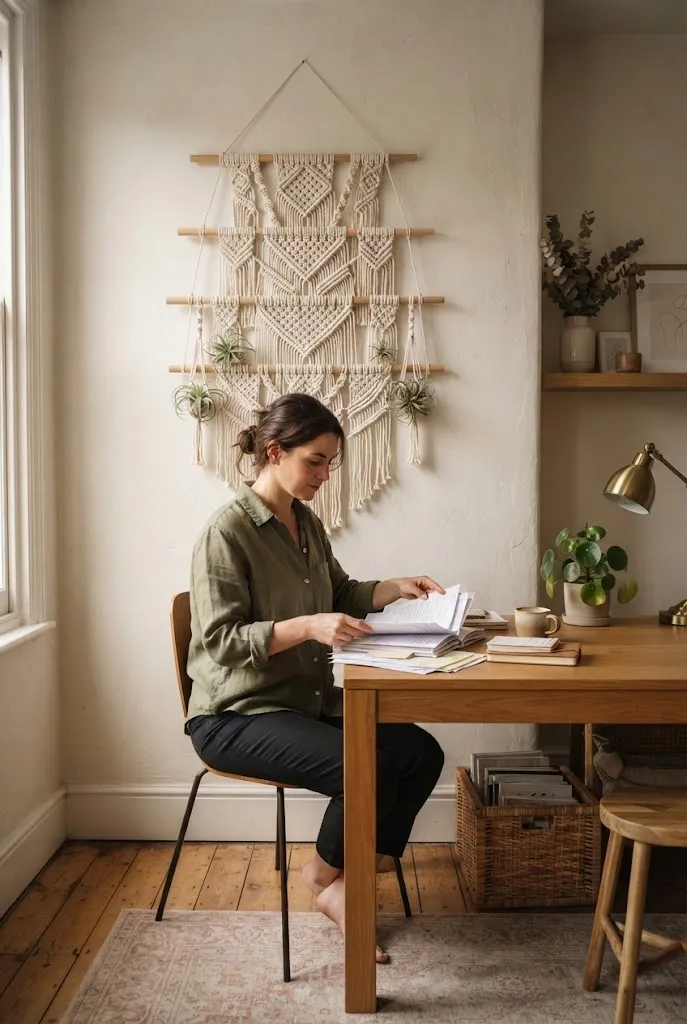
Use multiple slim wooden dowels to divide the knotwork into distinct horizontal sections. This creates a structured, layered appearance while giving you more opportunities to experiment with patterns.
Choose dowels in a finish that relates to nearby furniture for a cohesive result.
18. Oversized Fringe Macrame

For a dramatic wall treatment, let long strands extend significantly below the central knotwork. The resulting vertical movement can make the wall feel taller.
Because the fringe becomes the dominant feature, keep nearby decorations relatively simple.
Quick Tip: Trim the bottom edge only after the hanging has been mounted and allowed to settle naturally.
19. Macrame With Natural Wood Accents

Combine knotted cotton with small wooden rings, beads, or carved elements for a tactile design. The wood adds warmth and creates subtle breaks within the soft fibers.
This approach works particularly well when the room already includes natural wood furniture or woven accessories.
20. Macrame Gallery Wall Combination
Macrame doesn’t have to stand alone. Combine one textile wall hanging with framed artwork, a small woven piece, or simple botanical prints.
The key is to give each item enough breathing room while using a shared palette to connect the arrangement.
21. Macrame With a Clean Scandinavian Feel
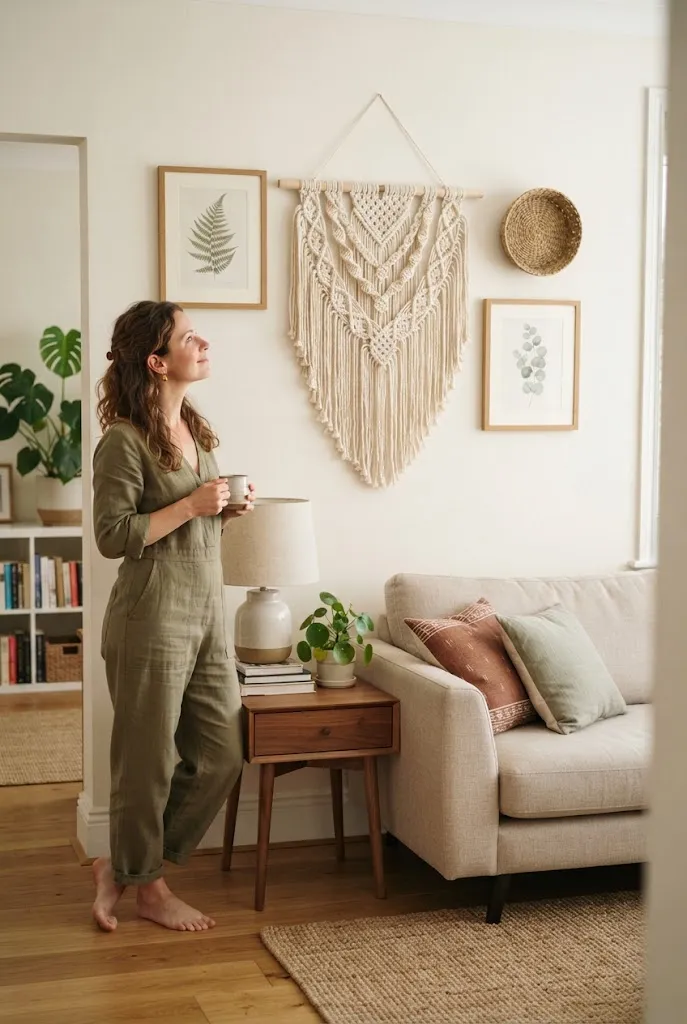
For a Scandinavian-inspired interpretation, focus on simplicity, pale wood, restrained colors, and plenty of open space. Use a clean knot pattern with a short or medium fringe.
The goal is texture without visual clutter.
Best For: Bright bedrooms, home offices, reading corners, and minimalist living rooms.
22. Personalized Macrame Wall Hanging
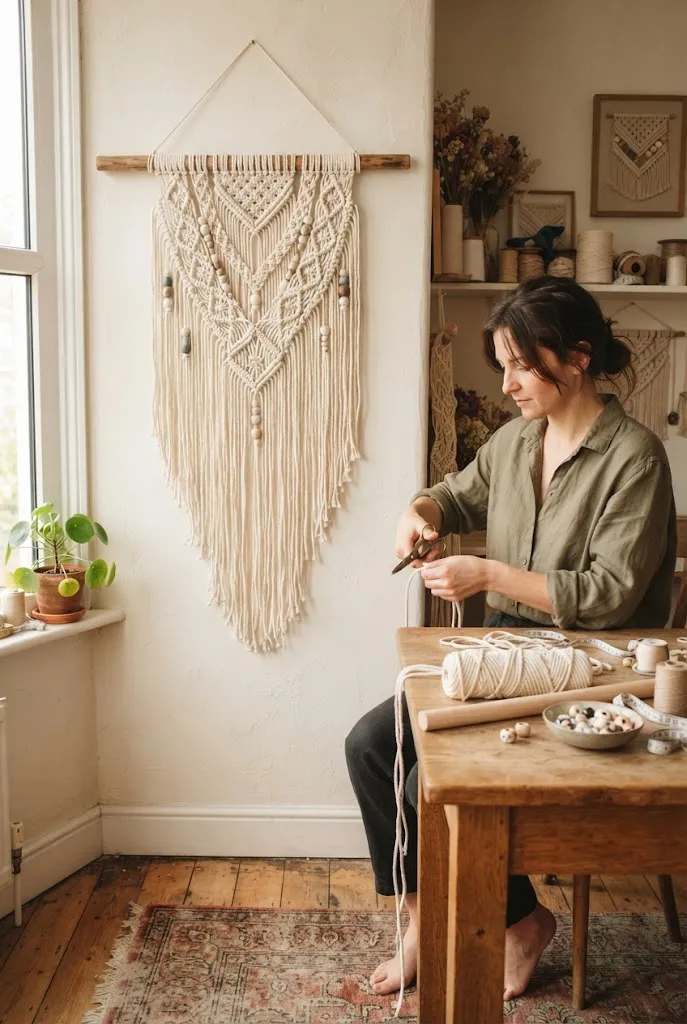
Finish your collection with a piece designed around your own space. You can change the size, cord thickness, knot pattern, fringe length, dowel material, and decorative accents to create something that feels personal rather than mass-produced.
A customized piece is especially meaningful when made for a bedroom, nursery, home office, or gift.
1-2-3 Steps
- Choose the location: Measure the wall and decide how much visual space the piece should occupy.
- Select the materials: Pick cord, dowel, beads, or other accents that coordinate with the room.
- Build and finish: Create the knot pattern, mount the piece securely, then comb and trim the fringe.
Common Mistake: Starting the knotwork before deciding on the final dimensions.
Better Approach: Sketch the basic silhouette first and measure the available wall space so the finished piece feels proportionate.
Choosing the Right Macrame Style for Your Space
With so many possibilities, the best design is usually the one that fits the room rather than simply the most complicated pattern.
| Style | Visual Effect | Best Fit |
|---|---|---|
| Minimalist | Light and uncluttered | Modern rooms |
| Long fringe | Soft and relaxed | Boho bedrooms |
| Geometric | Structured and graphic | Contemporary spaces |
| Wooden accents | Warm and organic | Natural interiors |
| Layered pieces | Collected and artistic | Living rooms |
| Circular design | Soft and sculptural | Reading corners |
When deciding between designs, consider the wall size, nearby furniture, existing materials, and amount of visual activity already present. A highly detailed macrame piece can become overwhelming if surrounded by many other decorative elements.
Tips for a Better DIY Macrame Project
A few small decisions can make the finished piece look much more polished:
- Measure the wall before choosing the size.
- Select cord thickness according to the scale of the design.
- Keep your knot tension reasonably consistent.
- Comb fringe before trimming it.
- Use a level when mounting the finished piece.
- Match the wood finish to nearby furniture when possible.
- Leave enough negative space around a statement piece.
- Secure heavier pieces with appropriate wall hardware.
For beginners, a smaller design with a straightforward pattern is often easier to finish neatly than an oversized project with dozens of complicated knots.